2.986 resultados
1915ref. 38835Braunschweig Vieweg & Sohn 1915. Contemp. hcalf gilt. Spine with a few scratches and light wear to spine ends. "Verhandlungen der Deutschen Physikalischen Gesellschaft im Jahre 1915. 17. Jahrgang. Im Auftrage der Gesellschaft herausgegeben von Karl Scheel." VI489 pp. textillustr. Einstein/Haas papers: pp. 152-170 a. p. 203 a. p. 420. - Planck paper: pp. 407-418 a. 418-19 a. 438-51. - Laue paper: pp. 198-202. Internally clean and fine. The whole volume offered. All papers first edition. - In the papers by Einstein and Haas prooved the Ampere hypothesis that permanent magnetism is caused by the microscopic circular motions of electric charges. The experimental results was very close to the theoretical value and as such they gave a brilliant proof of the soundness of the hypothesis. unknown
1917ref. 46895Leipzig S. Hirzel 1917. Royal8vo. Bound in contemporary half calf with gilt lettering to spine and 5 raised bands with ornaments in gilt. In "Physikalische Zeitschrift" Bd. 18 1917. Spine and hinges with wear otherwise a fine and clean copy. Pp. 121-128. Entire volume: XI 1 604 pp. 14 plates. The paper was first published in 1916 in Mitteilungen der Physikalischen Gesellschaft in Zürich but here for the first time in Physikalische Zeitschrift. All subsequent research on absorption and emission of radiation and the entire discovery of the maser later the laser was based on the research presented in the present paper. The paper is also notable for introducing the concept but not the name of the photon; Einstein argues that in the interaction of matter and radiation there must be in addition to the processes of absorption and spontaneous emission a third process of stimulated emission. If stimulated emission exists then he can derive the Planck distribution for blackbody radiation and without it the same argument implies the invalid Wien-distribution theory."In this paper he derived Planck's original quantum law from a different starting point he suggested that as well as spontaneous emission and absorption there could also take place the process of stimulated emission. In 1917 this seemed mainly of theoretical interest; forty years later it was utilized to provide the maser and laser of modern technology. In 1916 "Einstein came back once more to blackbody radiation and made further progress. In November 1916 he wrote to Besso: 'A splendid light has fallen on me about the absorption and emission of radiation'. His reasoning is divided into three papers two of which appeared in 1916 and the third one early in 1917 the two papers above - note that these are the two papers of Einstein on radiation theory cited by Weil as "principal works"; a third paper from 1916 is not. In these papers Einstein proposed a statistical theory of the interaction between atoms and photons gave a new demonstration of Planck's radiation theory and introduced the concept of 'stimulated emission' providing the basis for the discovery of masers and lasers " Bertolotti The History of the Laser."When Einstein returned to the radiation problem in 1916 the quantum theory had undergone a major change. Niels Bohr's papers had opened a new and fertile domain for the application of quantum concepts-the explanation of atomic structure and atomic spectra. In addition Bohr's work and its generalizations by Arnold Sommerfeld and others constituted a fresh approach to the foundations of the quantum theory of matter. Einstein's new work showed the influence of these ideas . He had found still another derivation of Planck's black-body radiation law an "astonishingly simple and general" one which he thought mightproperly be called "the derivation" 12 of this important law. It was based on statistical assumptions about the processes of absorption and emission of radiation and on Bohr's basic quantum hypothesis that atomic systems have a discrete set of possible stationary states. The proof turned on the requirement that absorption and emission of radiation both spontaneous and stimulated suffice to keep a gas of atoms in thermodynamic equilibrium. This paper introduced the concept of stimulated emission into the quantum theory and is therefore often described as the basis of laser physics. Einstein himself considered the most important contribution of this work to be not the new derivation of the distribution law but rather the arguments he presented for the directional character of energy quanta. DSB Weil No 91 with an asterix denoting major paper. hardcover
1950ref. 32447N.Y. Philosophical Library 1950. Orig. full cloth. Very light wear to spine ends. 7282 pp. First edition. Schilpp:446 - Weil: Appendix. hardcover
1910ref. 29307Leipzig Barth 1910. 8vo. Extracted from "Annalen der Physik IV Bd. 33" pp. 1096-1104 and pp. 1105-1115. Fine and clean. Supplied with a facsimile wrapper from the offprint to the first paper. Both works in first edition. - Weil No. 34 and 35. unknown
1922ref. 34667Berlin Julius Springer 1922-24. 8vo. In: "Zeitschrift für Physik" Vol. 10 pp. 377 ff.Vol.11 pp.326 vol.16 pp.228 vol.21 pp.326-332. The entire four volumes offered here. Contemporary half cloth bindings. Two landmark papers in the history of cosmology: All first editions. In 'Über die Krümmung des Raumes' Friedman derived the non-stationary solutions to Einstein's field equations. Einstein quickly responded in a short comment 'Bemerkung' in which he expressed his suspicion of such a model of the Universe and apparently pointed out an error in Friedman's calculations. However Friedman now wrote a letter to Einstein in which he enclosed his full calculations. Shortly after this Einstein submitted a short notice Notiz in which he admitted that he himself had performed a calculation error and that Friedman's solutions which shed new light on the matter were valid. Friedman's expanding universe model was corroborated by Edwin Hubble's red-shift observations in 1929. In 'Über die Möglichkeit einer Welt mit konstanter negativer Krümmung des Raumes' Friedman derived the Friedman-equations and demonstrated that he had command of all three Friedman-models describing positive zero and negative curvature respectively nearly a decade before the independent discoveries of the same models by Lemaître Robertson and Walker. hardcover
1928ref. 28363Berlin Gruyter u. Co. 1928. 4to. Orig. printed orange wrappers. Offprint/Sonderabdruck aus Sitzungsberichten.pp. 1-6. Fine fresh copy. First edition in the rare Offprint still called "Abdruck" but having separate printed title and separate pagination. See Weil: 162 where this is not mentioned.Weil No. 162.The early Offprints from "Sitzungsberichten." are called "Sonderabdruck" up to Weil No.165 including this. From Weil 166 they are called "Sonderausgabe.". - Before 161 up to 160 the Offprints do not have separate title and pagination the pagination follows the numbering in the periodical. From 166 the Offprint has both separate printed title and pagination. - So Weil Nos 161-165 is still "Abdruck" but with separate title and pagination. These facts are not mentioned in the bibliographies. unknown
1929ref. 22771Berlin 1929. Orig. printed orange wrappers. Back strengthend with matching paper. Fresh copy. Offprint/Sonderabdr. aus "Sitzungsberichte". pp. 1-8. First edition. Weil No. 165 - with asterics denoting major work. Printing and the Mind of Man 416. unknown
1913ref. 47060Leipzig S. Hirzel 1913. Royal8vo. Uncut unopened in the original wrappers. In "Physikalische Zeitschrift" Vol. 14 1913. Entire issue offered. Front wrapper detached and lower right corner is missing. Extremities with nicks otherwise very fine and clean. Rare unopened. Pp. 1249-1266. Discussion; Pp. 1262-66. Entire volume: XXXI 1 1312 pp. LVI plates. First printing the famous address that Einstein gave on the occasion on the 85th Congress "Versammlung Deutscher Naturforscher und Aerzte zu Wien" in their meeting September 23 1913 together with the ensuing discussion. In it he compared the development of the various theories of gravitation with the development of successive concepts of electricity.Weil No. 54. unknown
1941ref. 46477Tucuman Argentina 1941. Royal8vo. Orig. printed wrappers. Offprint from "Revista. Universidad Nacional de Tucuman" Series A Matematicas y Fisica Teorica Vol. 2 Diciembre de 1941 Nos 1 y 2. Pp. 11-15. Fine and clean. First edition of a scarce paper in the offprint version. The paper "represents the basis of the one written by the same author in collaboration with Wolfgang Pauli in 1943 in which by following analogous lines the proof of the non-existence of regular particle-type solutions was generalized to the case of cilyndrical geometries in Kaluza-Klein theory Einstein & Pauli 1943. Besides other generalizations were subsequently presented. The non-existence of such solutions in classical unified field theory was undoubtedly an important criterion leading Einstein's investigations."Galvagno and Giribet."In his search for a unified field theory that could undercut quantum mechanics Einstein considered five-dimensional classical Kaluza-Klein theory. He studied this theory most intensively during the years 1938-1943. One of his primary objectives was finding a non-singular particle solution. In the full theory this search got frustrated and in the x5-independent theory Einstein together with Pauli argued it would be impossible to find these structures." Jeroen van Dongen.Weil: 208. - Boni: 243. unknown
1911ref. 50604Leipzig J.A. Barth 1911. 8vo. In Contemporary half calf with gilt lettering to spine. In "Annalen der Physik. Vierte Folge. Band 34. Hrsg. von W.Wien und Max Planck.". The whole volume offered. A tear to lower part of spine and small stamp to title page otherwise fine. Einstein papers: pp. 165-169; pp. 170-174; pp.; 175-176; p. 590; pp. 591-592. Entire volume: VIII1032 pp. 6 plates. First edition of all 5 papers. In "Relation between elastic behaviour and specific heat of solid bodies with monatomic molecules" Einstein comments Sutherlands importent paper in Philosophical Magazine from 1910. Sutherland made the importent remark that the infrared eigenfrequencies of solid bodies have their origin possibly in the elastic vibrations of these bodies. Einstein impressed by this remark adds that electrically charged ions are the sources of optical vibrations whreas elastic vibrations are caused by the mutual motion of the entire molecule. Hence he prefers to test the hypothesis of Sutherland by solid bodies which are composed of monatomic molecules."Lanczos. - Weil Nos 38 39 this with an asterix denoting major work40 1-2 and 41. unknown
1913ref. 46938Leipzig S. Hirzel 1913. Royal8vo. Bound in contemporary half cloth with gilt lettering to spine. In "Physikalische Zeitschrift" Vol. 14 1913. Entire issue offered. Binding with wear front hinge loose. Front free end-paper and title page with library stamps. Internally fine and clean. Pp. 1249-1266. Discussion; Pp. 1262-66. Entire volume: XXXI 1 1312 pp. LVI plates. First printing the famous address that Einstein gave on the occasion on the 85th Congress "Versammlung Deutscher Naturforscher und Aerzte zu Wien" in their meeting September 23 1913 together with the ensuing discussion. In it he compared the development of the various theories of gravitation with the development of successive concepts of electricity.Weil No. 54. hardcover
ref. 6133475412Princeton University Press . Hardback. New. pp. 1192 Princeton University Press hardcover
1988ref. DADAX05173458031988-12-12. Avenel 1981 ed. hardcover. New. xx. Buy with confidence. Excellent Customer Service & Return policy. hardcover
2004ref. DADAX0805854037Routledge 2004-08-26. 1. paperback. New. 8.27x0.59x11.00. Buy with confidence. Excellent Customer Service & Return policy. Routledge paperback
1994ref. DADAX0691102503Princeton University Press 1994-01-24. First Edition. paperback. New. 7.75x0.75x10.25. Buy with confidence. Excellent Customer Service & Return policy. Princeton University Press paperback
1955ref. 21242781955. London: Victor Gollancz Ltd. 1955. offered with:BLACKETT Patrick Maynard Stuart. The Atom and the Charter. London and Hereford: the Hereford Times for 'Fabian Publications ltd in conjunction with Victor Gollancz Ltd'. September 1946. offered with:BLACKETT Patrick Maynard Stuart. The Atom and the Charter. London and Hereford: the Hereford Times for 'Fabian Publications Ltd in conjunction with Victor Gollancz Ltd'. September 1946.8vo. Publisher's blue cloth lettered in gilt to spine in yellow dust-jacket printed in red and black; pp. 22 2 blank; maps and tables in the text spine of jacket sunned a little spotting to back cover small closed tear to back flap hinge c. 10 mm lettering to spine rubbed small chip to upper joint; very good; contemporary Foyles label to pastedown 'P. M. S. Blackett' see below with Blackett's ownership inscription in blue ink to front free endpaper.First English edition with a preface by Einstein of this work arguing for nuclear disarmament translated by the gardener novelist and anarchist Edward Byams this copy from the library of Nobel Prize-winning physicist Patrick Blackett whose own work is discussed at length in the book.Jules Moch 1893-1985 worked as a French Resistance organiser during the war later became a senior minister in several post-war governments and was France's delegate to the UN Disarmament Committee for 1951-1960. It was this latter role that informed the principles he sets forth in Human Folly which argue for multilateral nuclear disarmament. Divided into two parts the first examines the destructive capacities of modern warfare before tracing the recent history of disarmament negotiations. Moch attempts to represent both Soviet and Western positions with fairness concluding that the divisions between the two are gradually narrowing. Though he does not regard the situation as entirely hopeless he presents it as one of pressing urgency. The preface by Albert Einstein one of Moch's most eminent supporters makes clear peace can only arise from political will: 'Those who do not believe in the possibility of the attainment of a lasting and assured peace or have not the courage to act accordingly are ripe for destruction' p. 8. Provenance: front free endpaper with the ownership inscription of Patrick Blackett 1897-1974 with his occasional underlining throughout and one word 'Target' in pencil to the top of p. 10. Blackett was awarded the 1948 Nobel Prize in Physics for his pioneering work in nuclear physics and cosmic radiation including experiments demonstrating nuclear transmutation and important early research into the positron. During the Second World War he headed Operational Research at the Admiralty where his statistical criticism of the RAF blanket bombing campaigns led to increasing ostracism from the military authority. His opposition to mass destruction later informed his belief that Britain should not develop nuclear weapons. Combined with his openly socialist views this attracted the attention of MI5 and led to his inclusion on George Orwell's list of alleged 'crypto-communists' contributing to his marginalisation by the post-war Labour government. Blackett's book The Military and Economic Consequences of Atomic Energy 1948 is discussed at length by Moch pp. 117-19. Written before the development of second-generation thermonuclear weapons Blackett had estimated that thousands of atomic bombs would be required to destroy the United States or the Soviet Union when at the time only a few dozen existed. As Moch observes on p. 121 however 'today a few dozen thermonuclear bombs would produce the same results'. It is particularly notable that Blackett has not annotated the passages explicitly discussing his work. This copy of Human Folly is offered with Blackett's pamphlet The Atom and the Charter which discusses the extent to which 'the advent of atomic bombs necessitates changes in the procedure for the application of sanctions under the Charter of the United Nations Organisation' issued by Victor Gollancz and the socialist Fabian Society on behalf of the Association of Scientific Workers a scientific trade union of which Blackett was president. hardcover
ref. BN157357Braunschweig Vieweg 1992. Softcover. Über die spezielle und allgemeine Relativitätstheorie. 23. Auflage. Über die spezielle und allgemeine Relativitätstheorie. 23. Auflage. Albert Einstein Braunschweig, Vieweg 1992. paperback
ref. BN156976Bern Herbert Lang & Cie 1975. Hardcover. Über den Frieden. Weltordnung oder Weltuntergang Hgg. von Otto Nathan und Heinz Norden. Vorwort von Bertrand Russell. Übersetzung der englischen und französischen Originale von Will Schaber. Über den Frieden. Weltordnung oder Weltuntergang Hgg. von Otto Nathan und Heinz Norden. Vorwort von Bertrand Russell. Übersetzung der englischen und französischen Originale von Will Schaber. Albert Einstein Bern, Herbert Lang & Cie 1975. hardcover
ref. BN168894WEKA MEDIA. Physik unterrichten: Der Mensch und Physiker Albert Einstein m. CD-ROM Physik unterrichten: Der Mensch und Physiker Albert Einstein m. CD-ROM Physik unterrichten: Der Mensch und Physiker Albert Einstein m. CD-ROM WEKA MEDIA unknown
ref. BN164304Merve. Kritisches Wörterbuch: 'Documents' Internationaler Merve Diskurs: Perspektiven der Technokultur Kritisches Wörterbuch: 'Documents' Internationaler Merve Diskurs: Perspektiven der Technokultur Henning Schmidgen; Rainer Maria Kiesow; Georges Bataille; Carl Einstein; Marcel Griaule and Michel Leiris Merve unknown
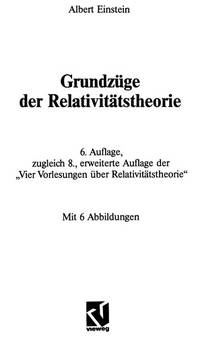
ref. BN303257Grundzüge der Relativitätstheorie Grundzüge der Relativitätstheorie Albert Einstein unknown
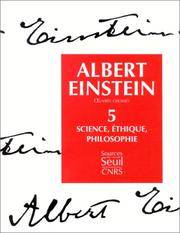
ref. BN327717Seuil CNRS Editions. Oeuvres choisies tome 5 : Science éthique philosophie Oeuvres choisies tome 5 : Science éthique philosophie Albert Einstein Seuil CNRS Editions unknown
1980ref. BN350920Schott Music 1980. 1980. Don Giovanni: Oper in zwei Akten. KV 527. Soli Chor und Orchester. Studienpartitur. Eulenburg Studienpartituren Don Giovanni: Oper in zwei Akten. KV 527. Soli Chor und Orchester. Studienpartitur. Eulenburg Studienpartituren Mozart Wolfgang Amadeus and Alfred Einstein Schott Music unknown
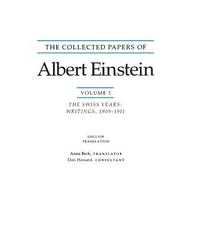
2006ref. BN344905PRINCETON UNIV PR 2006. 2006. The Collected Papers of Albert Einstein Volume 10: The Berlin Years: Correspondence May-December 1920 and Supplementary Correspondence 1909-1920 . PAPERS OF ALBERT EINSTEIN 10 Band 10 The Collected Papers of Albert Einstein Volume 10: The Berlin Years: Correspondence May-December 1920 and Supplementary Correspondence 1909-1920 . PAPERS OF ALBERT EINSTEIN 10 Band 10 Einstein Albert Kormos Buchwald Diana und Tilman Sauer PRINCETON UNIV PR unknown
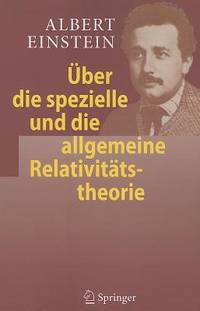
2008ref. BN341091Springer 2008. 2008. Über die spezielle und die allgemeine Relativitatstheorie German Edition Über die spezielle und die allgemeine Relativitatstheorie German Edition Albert Einstein Springer unknown