1.909 Ergebnisse
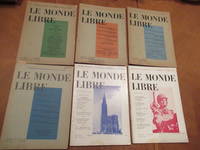
1944Best.-Nr. 020487Montreal / London 1944 and 1945: Free World Inc 1944. First Editions . Printed Wrappers. Very Good. Drawings and Other Artwork. Six Issues. The French Language Edition Of "The Free World". No. 1 Has Chipping At Lower Corner Of Front Cover And Adjacent Pages Adjacent To Spine; Others Are Vg To Near Fine. Free World Inc unknown
Best.-Nr. DADAX0195007328Oxford University Press 1965-12-31. Reprint. paperback. New. 8.50x5.50x1.40. Buy with confidence. Excellent Customer Service & Return policy. Oxford University Press paperback
2012Best.-Nr. DADAX0520266528University of California Press 2012-04-26. First Edition. hardcover. New. 6.00x0.83x9.00. Buy with confidence. Excellent Customer Service & Return policy. University of California Press hardcover
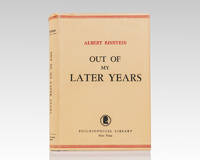
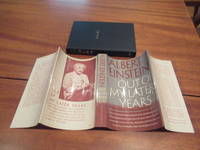
1950Best.-Nr. 152705New York: Philosophical Library 1950. First edition of Einstein's collection of social science-related articles addresses and speeches. Octavo original cloth frontispiece of Einstein. very good in a very good price-clipped dust jacket with bumping and chipping to the rear panel. Out of My Later Years 1950 is the second and final collection of essays assembled by Albert Einstein 1879-1955 the German-born theoretical physicist whose Special and General Theories of Relativity revolutionized modern thought on the nature of space and time and whose Nobel Prize in Physics in 1921 for his explanation of the photoelectric effect confirmed his standing as the most celebrated scientist of the twentieth century. Drawing on Einstein's articles addresses letters and assorted papers across a fifteen-year period from 1934 to 1950 the volume encompasses his personal convictions on religious and humanitarian issues in the wake and aftermath of the Second World War alongside reflections on scientific method the philosophy of physics education and the moral responsibilities of scientists in the atomic age that Einstein's own theories had helped to bring into being. Philosophical Library hardcover
2026Best.-Nr. x-0691300550Princeton University Press 2026. Paperback. New. 360 pages. 7.50x0.75x10.00 inches. Princeton University Press paperback
2026Best.-Nr. x-0691300372Princeton University Press 2026. Paperback. New. 272 pages. 7.50x0.57x10.00 inches. Princeton University Press paperback
Best.-Nr. 9788244-6Princeton University Press. Used - Good. Pages intact with minimal writing/highlighting. The binding may be loose and creased. Dust jackets/supplements are not included. Stock photo provided. Product includes identifying sticker. Better World Books: Buy Books. Do Good. Princeton University Press unknown
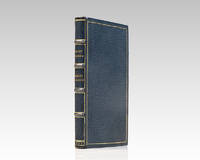
1931Best.-Nr. 153158New York: The Macmillan Company 1931. First American edition of this volume of Einstein's speeches and letters concerning his views on Zionism. Octavo bound in full morocco by the Harcourt Bindery with gilt titles and tooling to the spine in five compartments within raised gilt bands gilt ruling to the front and rear panel gilt inner dentelles stamp-signed by the Harcourt Bindery marbled endpapers all edges gilt. In fine condition. Translated and edited with an introduction by Leon Simon. An exceptional presentation. Einstein was a prominent supporter of both Labor Zionism and efforts to encourage Jewish-Arab cooperation. He supported the creation of a Jewish national homeland in the British mandate of Palestine but was opposed to the idea of a Jewish state "with borders an army and a measure of temporal power." In a letter to Jawaharlal Nehru dated June 13 1947 he asserted "Long before the emergence of Hitler I made the cause of Zionism mine because through it I saw a means of correcting a flagrant wrong.The Jewish people alone has for centuries been in the anomalous position of being victimized and hounded as a people though bereft of all the rights and protections which even the smallest people normally has.Zionism offered the means of ending this discrimination." Einstein's speeches lectures and letters concerning Zionism were first published in 1930 by The Soncino Press and eleven of these essays were later collected in The World as I See It published in 1933 which Einstein dedicated "to the Jews of Germany". The Macmillan Company unknown
2026Best.-Nr. x-9376461843Rupa Publications India Pvt. Ltd 2026. Hardcover. New. 176 pages. 8.50x5.51x0.79 inches. Rupa Publications India Pvt. Ltd hardcover
1950Best.-Nr. 060426New York: Philosophical Library 1950. 1st Edition 1st Printing. Hardcover. Fine/Fine. 282 Pp. Dark Blue Cloth Gilt. First Edition By Basic Points But Issued In A Variety Of Bindings And Dust Jackets Priced $4.75. Pages Of This Copy Are Same As Issue In Light Blue Boards Including Title And Copyright Pages "1" On Copyright Page But Binding Is Cloth. No Frontispiece; That Portrait Is Printed In Red On The Rear Panel Of The Dust Jacket. Dj On Heavy Paper Priced $4.75 Same As Issue In Blue Boards But Dj Is Gray Red-Brown And White With Author In Red-Brown And Title In White. Book Is Fine No Damage Bookplate Of A Prominent Military Cryptographer. Dj Is Also Fine. A Review By Harlow Shapley Is Discussed On The Front Flap Of The Dj; Note That W We Had Another Exactly Similar Fine Copy In Original Dust Jacket Which Came With A Book Club News Brochure Also Discussing The Harlow Review; It Is Possible That This Is A Book Club Issue Simultaneous Or Nearly So With Other Issues But Definitive Information Is Not Available To Us. Philosophical Library hardcover
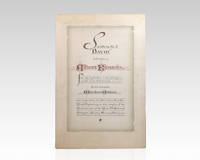
1951Best.-Nr. 153420Tel-Aviv: Israeli Music Publications 1951. First edition of the published facsimile score of Menachem Avidom’s Symphony No. 2 “David” together with the painted calligraphic broadside dedicating the symphony to Albert Einstein. Folio the manuscript orchestral score reproduced in facsimile spiral bound in plain black boards published by Israeli Music Publications of Tel-Aviv. Accompanied by an elaborate painted calligraphic presentation broadside by the artist Sol Nodel reading “Symphony No. 2 ‘David’ dedicated to Albert Einstein for his inspiration to the Jewish people and to all humanity by the composer Menahem Avidom and presented by the American Fund for Israel Institutions on the occasion of the American tour of the Israel Philharmonic Orchestra January February March 1951.” The broadside is additionally inscribed by the composer in black ink at the top left corner “To the greatest man in our generation Prof. A. Einstein humbly from the Composer M. Avidom Princeton 10/1/51.” The symphony was dedicated to Albert Einstein for his inspiration to the Jewish people and to all humanity. Einstein the most celebrated scientist of the twentieth century was also a lifelong and devoted musician a gifted violinist who adored Mozart and revered Bach and who once said that had he not been a scientist he would have become a musician and that the greatest joy of his life had come to him from his violin. A passionate champion of Jewish cultural and educational causes and of the young State of Israel he was among the founders of the Hebrew University of Jerusalem and lent his name and moral authority to the building of its institutions. The presentation of Avidom’s score took place during the first American tour of the Israel Philharmonic Orchestra in the opening months of 1951 when the orchestra led by Leonard Bernstein and Serge Koussevitzky gave fifty-three concerts in forty cities. Together with an original photograph showing the composer presenting the broadside to Einstein and a photocopy of a 1986 letter recording that the score and broadside were the gift of Einstein’s daughter Margot Einstein. In very good condition with light toning and soiling the front cover of the spiral-bound score detached. A remarkable Einstein association uniting a dedicated symphonic score its presentation broadside and a photograph of the moment it was given to him. Menachem Avidom 1908-1995 was one of the founding figures of modern Israeli classical music. Born Menahem Mahler-Kalkstein in Stanislaviv then part of Austria-Hungary he was reportedly a cousin of the composer Gustav Mahler. He studied in Paris and spent several years in Egypt an experience that led him to look beyond the European traditions in which he had been trained. In 1939 he wrote arrangements for the Yemenite-Jewish singer Bracha Zefira and the encounter kindled a lasting interest in fusing Middle Eastern and European musical idioms. In 1944 he produced a series of works in this new style that shaped the rest of his career and helped lay the groundwork for later Mizrahi and Sephardic composers in Israel. From 1945 he served as general secretary of the Israel Philharmonic Orchestra and in 1955 he was named director of ACUM the Israeli performing rights society. His Symphony No. 2 “David” drawing on the biblical shepherd king is among his best-known works and the present copy presented and inscribed to Albert Einstein is the most storied of its kind. Israeli Music Publications hardcover
Best.-Nr. 2930273H. Good. unknown
Best.-Nr. 10361210-6Taylor & Francis Group. Used - Very Good. Former library copy. Pages intact with possible writing/highlighting. Binding strong with minor wear. Dust jackets/supplements may not be included. Includes library markings. Stock photo provided. Product includes identifying sticker. Better World Books: Buy Books. Do Good. Taylor & Francis Group unknown
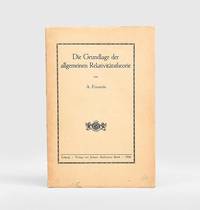
1916Best.-Nr. 189311Leipzig: Johann Ambrosius Barth 1916. The foundation of general relativity First separate edition first issue of the work presenting the finalized version of general relativity. The Grundlage was also published in the Annalen der Physik in 1916 but Weil clarifies that the separate publication is now accepted as the earliest published edition of the paper. Einstein had almost finalized the general theory of relativity in 1913. However an error led him to contend that his equations could not be covariant - that they could not be applied without a system of spacetime co-ordinates devised by humans and therefore contextually specific. His first attempt at an overall presentation of the theory as delivered in 1914 was based on this assumption. By 1915 his subsequent reflections had driven him to reapply covariance and in November he published several papers outlining covariant field equations of general relativity. The present work adapts the comprehensive perspective of the 1914 paper with the revised mathematics of the 1915 equations to present "the first systematic exposition of general relativity" Janssen p. 1. Tilman Sauer notes that "in essence Einstein's general theory of relativity of 1916 remains today's accepted theory of the gravitational field" p. 24. This copy includes all the necessary first issue points: the imprint "Druck von Metzger & Wittig in Leipzig. 314" on the title page verso; Ziehen's Die Psychologie as the last title listed in the publisher's advertisement on the rear wrapper; and the imprint "Metzger & Wittig Leipzig" on the rear wrapper. Octavo. Device to title page formulae in the text. Original tan vertically ribbed wrappers printed in black. Light browning and rubbing several small ink spots to foot of front cover wrappers neatly re-glued to block contents crisp: a very good copy. Norman 696; Printing and the Mind of Man 408; Weil 80a. Michael Janssen "Einstein's First Systematic Exposition of General Relativity" 2004; Tilman Sauer "Albert Einstein's 1916 Review Article on General Relativity" in Ivor Grattan-Guiness ed. Landmark Writings in Western Mathematics 1640-1940 2004. unknown
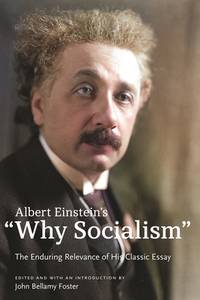
2025Best.-Nr. SKU1748358Monthly Review Press 2025-05-05. hardcover. New. 5x0x8. New Book Ships with Tracking Monthly Review Press hardcover
Best.-Nr. 753958-75Princeton University Press. Used - Very Good. Pages intact with possible writing/highlighting. Binding strong with minor wear. Dust jackets/supplements may not be included. Stock photo provided. Product includes identifying sticker. Better World Books: Buy Books. Do Good. Princeton University Press unknown
Best.-Nr. 56748204-75Princeton University Press. Used - Very Good. Pages intact with possible writing/highlighting. Binding strong with minor wear. Dust jackets/supplements may not be included. Stock photo provided. Product includes identifying sticker. Better World Books: Buy Books. Do Good. Princeton University Press unknown
Best.-Nr. 56748208-75Princeton University Press. Used - Very Good. Pages intact with possible writing/highlighting. Binding strong with minor wear. Dust jackets/supplements may not be included. Stock photo provided. Product includes identifying sticker. Better World Books: Buy Books. Do Good. Princeton University Press unknown
Best.-Nr. 56748556-75Princeton University Press. Used - Very Good. Pages intact with possible writing/highlighting. Binding strong with minor wear. Dust jackets/supplements may not be included. Stock photo provided. Product includes identifying sticker. Better World Books: Buy Books. Do Good. Princeton University Press unknown
2026Best.-Nr. x-1032358459Taylor & Francis Ltd 2026. Paperback. New. 612 pages. 7.00x1.27x10.00 inches. Taylor & Francis Ltd paperback
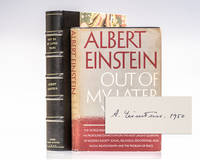
1950Best.-Nr. 149463New York: Philosophical Library 1950. First edition of Einstein's collection of social science-related articles addresses and speeches. Octavo original cloth. Boldly signed by Einstein on the front free endpaper in the year of publication "A. Einstein. 1950." Near fine in a very good dust jacket. Housed in a custom half morocco clamshell box by the Harcourt Bindery. Out of My Later Years is Einsteins collection of essays considering everything that interests him as a scientist philosopher and humanitarian. Einsteins essays share how one of the greatest minds of all time interprets the changing world of his time. Philosophical Library hardcover
1950Best.-Nr. 149411New York: Philosophical Library 1950. First edition of Einstein's collection of social science-related articles addresses and speeches. Octavo original cloth frontispiece of Einstein. Near fine in a very good dust jacket. Out of My Later Years is Einsteins collection of essays considering everything that interests him as a scientist philosopher and humanitarian. Einsteins essays share how one of the greatest minds of all time interprets the changing world of his time. Philosophical Library hardcover
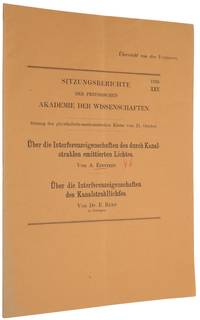
1926Best.-Nr. 6414Berlin: Akademie der Wissenschaften 1926. First edition. First edition very rare author's presentation offprint extremely rare author's presentation offprint not to be confused with the much more common trade separate - see below from the library of the great German physicist Arnold Sommerfeld of the notorious Einstein/Rupp experiments which demonstrated the wave-theory of light contrary to Einstein's expectations. . SCIENTIFIC FRAUD: THE EINSTEIN-RUPP EXPERIMENTS. First edition extremely rare author's presentation offprint not to be confused with the much more common trade separate - see below from the library of the great German physicist Arnold Sommerfeld of the notorious Einstein/Rupp experiments. "In the fall of 1926 Albert Einstein published the outline of two experiments in the Proceedings of the Berlin Academy. They addressed one of the most urgent questions in physics at the time: the experiments were to show if the emission of light was a process that was extended in time or if instead light emission occurred in an instantaneous act. Of course the first possibility would confirm a traditional oscillator-and-wave-like view whereas the second possibility would cohere well with Einstein's own ideas on light quanta. It is quite surprising that these experiments are so unfamiliar today. Apart from addressing a central question and being proposed by no lesser figure than Einstein they also circulated at a crucial moment in the history of quantum theory. Still the experiments are not mentioned in any of the standard Einstein biographies and there is no substantial treatment of them in histories of the quantum theory . The likely cause for this lack of attention is at least as surprising: the experiments were-supposedly-conducted by Emil Rupp yet a decade later Rupp was exposed as a scientific fraudster; the results obtained by Rupp in close consultation with Einstein and published back-to-back with the latter's theoretical paper were in the end generally believed to have been fabrications" Van Dongen. As Walter Gerlach of Stern-Gerlach fame said in an interview with Thomas Kuhn in 1963 "Rupp in the late twenties early thirties was regarded as the most important and most competent physicist. He did incredible things. . Later it turned out that everything that he had ever published everything was forged. This had gone on for ten years ten years!" Nevertheless "these experiments played a substantial role in developments in 1926. Most importantly they confirmed a wave picture of light when many including Einstein himself initially expected a particle-like instantaneous picture of light emission to be confirmed. After all only a few years before Compton scattering had been shown and as little as a year before the Einstein-Rupp experiments Walther Bothe and Hans Geiger had done the experiments that dismissed the BKS theory. But the experiments of Einstein and Rupp also influenced events in other ways. For instance their initial interpretation was most likely of direct importance for Max Born when he proposed the probabilistic interpretation of the wave function. The experiments further played a role in the thinking of Werner Heisenberg as he formulated his uncertainty relations . these experiments deserve renewed attention and their current obscure status is not warranted by their historical importance" Van Dongen. OCLC locates only three copies two in Switzerland one in Germany but it is unclear which of these if any are author's presentation offprints. The presentation offprint was not present in the collection of Einstein's son Hans Albert Christie's 2006 but it was in Einstein's own collection of his offprints Christie's 2008. Provenance: Arnold Sommerfeld 1868-1951 his characteristic numbering '46' in red pencil on front cover. "The son of a physician Sommerfeld was educated at the University of Königsberg. After teaching briefly at the universities of Göttingen Clausthal and Aachen he was appointed professor of physics at the University of Münich in 1906. Sommerfeld should have retired in 1936 in favour of his pupil Werner Heisenberg. Opposition from the Nazi party to Heisenberg's appointment prolonged Sommerfeld's tenure and it was not in fact until late 1939 that he finally retired to be succeeded not by Heisenberg but by Wilhelm Müller a Nazi aerodynamicist without a single publication in physics to his credit. Although Sommerfeld and Heisenberg were not Jewish they were regarded by the Nazis as Jewish sympathizers. Sommerfeld however survived the war and returned to his Münich chair in 1945 continuing to work at physics until he died in a car accident in 1951" Oxford Reference. "Arnold Sommerfeld was one of the most distinguished representatives of the transition period between classical and modern theoretical physics. The work of his youth was still firmly anchored in the conceptions of the nineteenth century; but when in the first decennium of the century the flood of new discoveries experimental and theoretical broke the dams of tradition he became a leader of the new movement and in combining the two ways of thinking he exerted a powerful influence on the younger generation. This combination of a classical mind to whom clarity of conception and mathematical rigour are essential with the adventurous spirit of a pioneer are the roots of his scientific success while his exceptional gift of communicating his ideas by spoken and written word made him a great teacher" Max Born p. 275. "Born in 1898 Rupp began his career in the 1920s studying canal rays beams of positive ions and atoms formed between an anode and cathode the latter punctured with holes or "canals" in a gas discharge tube. When these rays shoot through the canals and into a vacuum chamber the ions rapidly lose and gain charge emitting visible light that becomes less intense at the other end of the canal. "In his first experiments in the mid-1920s Rupp measured the coherence length of light - the distance over which the light maintains a consistent phase - emitted by hydrogen and mercury atoms in the canal rays. He measured these lengths as 62 centimeters for hydrogen and 15.2 centimeters for mercury. These were blockbuster results: A moving hydrogen atom was expected to stay coherent over a much smaller distance. "What's more Rupp's extra-long hydrogen canal ray seemed like it could be used to test one of physics' biggest questions at the time: Is light a particle or a wave Einstein had devised experiments to test if light was emitted instantaneously or over time but he needed a light with an extra-long coherence length - and only Rupp had achieved it. "After reading Rupp's 1926 paper Einstein published his own "Proposal for an Experiment on the Nature of the Elementary Process of Radiation Emission" and reached out to Rupp directly to discuss a collaboration. But because Rupp's boss at Heidelberg University the physicist Philipp Lenard was "a fervent anti-relativist - and anti-Semite" writes van Dongen Einstein chose to forgo a visit to the institution and sent instructions for Rupp to do the experiments on his own. "There were red flags from the start. In one instance Rupp appeared to have altered the mirrors in his interferometer the instrument he used to study interference just so into an arrangement that would obtain desired outcomes. In another instance when Einstein corrected the settings Rupp reported using for another instrument Rupp chalked the mistake up to a typo. There were other 'alarming discrepancies' in Rupp's calculations van Dongen writes and Einstein's letters show that he pushed back on several occasions. Each time Rupp responded with new results that perfectly explained the oddities Einstein questioned. "Initially Einstein expected to find that light was emitted instantaneously. But as the collaboration stretched on he began to expect the experiments would confirm the alternative the 'classical' theory. 'One of the reasons for his changing position likely was that that outcome had inadvertently already been corroborated by Rupp' van Dongen writes. "When Rupp furnished Einstein with a final set of results supporting the classical emission picture Einstein facilitated their publication in the proceedings of the Prussian Academy of Sciences. They were published back-to-back with a paper by Einstein explaining the theory behind the experiments in which Einstein cited Rupp's work. Einstein even helped Rupp draft his paper's abstract. "The association with Einstein rocketed Rupp to scientific prominence and in 1928 he accepted a position in the research labs of German electronics company AEG 'a kind of counterpart to General Electric' writes MIT physicist Anthony French in his 1999 retrospective of Rupp's case. "However scientists had begun voicing skepticism about Rupp's canal ray work. Among them were British spectroscopist Robert d'Escourt Atkinson who doubted Rupp's extraordinary coherence lengths and a researcher named Harald Straub who tried and failed to replicate Rupp's measurements in 1930. Rupp came down hard on Straub with a rebuttal sending photographs that supposedly showed his interference fields and forcefully defending his work in the same journal where Straub published his. Straub wrote that he had nothing else to add and the matter appeared settled. "But Rupp's reputation was bruised in the episode and his letters from the time indicate that his funding at AEG was drying up. He published work on electron scattering then took up experiments with positrons producing them by pounding lithium with protons. In a 1934 paper Rupp claimed to have accelerated protons at potential differences of 500 kV. This was impossible for him to have done - he simply did not have the requisite accelerator in his lab. "In December 1934 two of Rupp's fellow scientists at AEG brought the glaring problem to the attention of the institute's director who launched an investigation and subsequently fired Rupp. In January 1935 Rupp published the retraction statement appended to his doctor's note claiming he had no knowledge of or control over the fabrications. And later that year experimentalists Walther Gerlach and Eduard Rüchardt published 'On the Coherence Length of Light emitted by Canal Rays' which essentially confirmed that Rupp's early canal ray work was also erroneous. Amid this public humiliation Rupp experienced a nervous breakdown and spent time in a sanatorium. He never worked in physics again. "Einstein however escaped from the episode unscathed. Historians like van Dongen think his credulousness was an honest mistake underpinned by his desire to see his theories confirmed by experiments. Rupp's work and life are now a footnote but following his downfall it appears that German scientists mentioned his name often. According to French 'for a number of years afterward the word 'geruppt' became an epithet among German physicists to describe questionable work'" Jooss. This author's presentation offprint is of extreme rarity and must be distinguished from other so-called 'offprints' of papers from the Berlin Sitzungsberichte many of which are commonly available on the market. The celebrated bookseller Ernst Weil 1919-1981 in the introduction to his Einstein bibliography wrote: "I have often been asked about the number of those offprints. It seems to be certain that there were few before 1914. They were given only to the author and mostly 'Überreicht vom Verfasser' Presented by the Author is printed on the wrapper. Later on I have no doubt many more offprints were made and also sold as such especially by the Berlin Academy." If the term 'offprint' means as we believe it should a separate printing of a journal article given only to the author for distribution to colleagues then 'offprints' were not commercially available. Although there is certainly some truth in Weil's remark in our view it requires clarification and explanation. Until about 1916 most of Einstein's papers were published in Annalen der Physik; from 1916 until he left Germany for the United States in 1933 most were published in the Berlin Sitzungsberichte. The Sitzungsberichte differed from other journals in which Einstein published in that it made separate printings of its papers commercially available. These separate printings have 'Sonderabdruck' printed on the front wrapper the usual German term for offprint but they are not offprints according to our definition. They were available to anyone; indeed a price list of these 'trade offprints' is printed on the rear wrapper. True author's presentation offprints can be distinguished from these trade separates by the presence of 'Überreicht vom Verfasser' on the front wrapper. In the period 1916 to 1919 or 1920 the Sitzungsberichte trade separates are themselves rare. After 1919 or 1920 however the trade separates become much more common although the author's presentation offprints are still very rare. The reason for this change is that it was only in 1919 that Einstein became famous among the general public. It might seem obvious that Einstein's fame dates from 1905 his 'annus mirabilis' in which he published his epoch-making papers on special relativity and the light quantum. However these works did not make him immediately well known even in the physics community - many physicists did not understand or accept his work and it was two or three years before his genius was fully accepted even by his colleagues. Einstein did not secure an academic position until 1908. Among the general public Einstein became well known only in late 1919 following the success of Eddington's expedition to observe the bending of light by the Sun which confirmed Einstein's general theory of relativity. This was front-page news and made Einstein universally famous. See Chapter 16 'The suddenly famous Doctor Einstein' in Pais Subtle is the Lord for an account of these events. Before 1919 the trade separates of Einstein's papers would probably only have been purchased by professional physicists; after 1919 everyone wanted a memento of the famous Dr. Einstein whether or not they understood anything of theoretical physics and the trade separates of his papers were printed and sold in far greater numbers than before to meet the demand. It is telling that when these post-1919 trade separates appear on the market they are often in mint condition - they were never read simply because their owners were unable to understand them. BRL 160; Weil 153. Born 'Arnold Johannes Wilhelm Sommerfeld 1868-1951' Obituary Notices of Fellows of the Royal Society 8 1952 pp. 275-296. French 'The strange case of Emil Rupp' Physics in Perspective 1 1999 pp. 3-21. Joosse 'December 1934: Emil Rupp's research which fooled even Einstein is exposed as fraud' APS News Nov. 14 2023. Van Dongen 'Communicating the Heisenberg uncertainty relations: Niels Bohr complementarity and the Einstein-Rupp experiments' Scientia Danica. Series M Mathematica et physica 1: One Hundred Years of the Bohr Atom Proceedings 2015 pp. 310-343. 8vo 252 x 180 mm pp. 334-340; 341-351. Original printed wrappers portion of ink postmark stamp on lower cover just into text of publisher's advertisements light vertical crease for posting. Akademie der Wissenschaften unknown
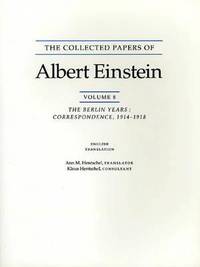
1993Best.-Nr. ANAIS-0691087725Princeton University Press 1993-12-13. First Edition. hardcover. Good. 26.8x20.5x4.8. Buy with confidence. Excellent Customer Service & Return policy. Princeton University Press hardcover
1967Best.-Nr. DADAX0412205602Springer 1967-08-31. 1922. paperback. New. 5.00x0.40x7.99. Buy with confidence. Excellent Customer Service & Return policy. Springer paperback