1956 risultati
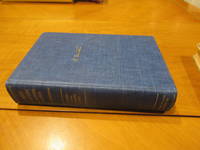
1969rif. 043016New York ./ La Salle Ilk / Cambridge Uk: The Library Of Living Philosophers / Open Court / Cambridge University Press 1969. 3rd Edition 1st Printing. Hardcover. Very Good/Very Good. Xviii 781 Pp. Blue Cloth Gilt. Stated Third Edition Newly Corrected And With Updated Bibliography. Includes Einstein's Autobiography With Text In Both German And English; Major Essays On Einstein; And An Important Discussion With Niels Bohr. Covers Near Fine Gilt Bright No Marks Small Browned Area On Front Free Endpaper From A Loose Clipping About Einstein's Bequests. Dj Clean And Bright Light Chipping And Small Tears At Edges No Loss Of Lettering Or Design. The Library Of Living Philosophers / Open Court / Cambridge University Press hardcover
1922rif. 58148Braunschweig Vieweg & Sohn 1922. Uncut and unopened in orig. printed wrappers. 470 pp. Publisher's announcements 2 pp. In mint condition. First edition. An abstract in English was published the year before. These four lectures were published the same year as "The Meaning of Relativity".Weil 124 unknown
1954rif. 042247New York: Crown Publishers 1954. 1st Edition 1st Printing. Hardcover. Very Good/Good. Vii 377 Pp. Grey Cloth Spine Lettered In Gilt On Maroon Background. First Edition 1954 First Printing No Statement Of Printing Dj Priced $4.00. Book With Gilt Bright Just Slight Wear At Corners But Fraying Along Top And Bottom Edges Of Spine No Marks Aging To Outer Edges Of Page Block. Dj Very Good Small Chips At Corners 1 1/4" V-Chip At Bottom Of Rear Panel Removing 4 Letters In Title And Author's Name No Browning. Crown Publishers hardcover
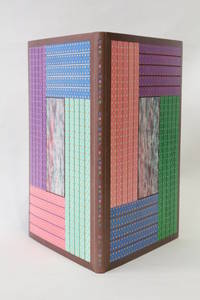
1930rif. 67602Paris: Edition de la Galerie Simon 1930. Fine. Edition de la Galerie Simon Paris 1930 19 x 25 cm relié Entwurf einer Landschaft Sketch of a Landscape Édition de la Galerie Simon Paris 1930 19 x 25 cm full calf First edition one of 90 numbered copies on Holland paper signed by Carl Einstein and Gaston-Louis Roux on the justification page the only issue with 10 copies on Japan paper and 10 on Chapelle paper. With five full page black lithographs by Gaston-Louis Roux one of which on the frontispiece. Binding in full brown-pink box spine with blue pink and green title in ser significant inlaid decoration on the boards four bands of five strips of pink purple green and blue calf arranged around a central piece of rectangular multi-colored marbled box endpapers in flesh-side pink suede wrappers and spine preserved all edges gilt dust jacket in half brown-pink box spine with blue pink and green title in ser slip case lined with brown-pink box binding signed by Georges Leroux and dated 1994. Carl Einstein is an anarchist writer art historian friend of George Grosz Georges Braque and Pablo Picasso collaborator of Jean Renoir lived through the wars and revolutions that shook Europe during the first part of the twentieth century. He volunteer during the Spanish civil revolution in 1936 and went to Barcelona to fight in the ranks of the Confédération nationale du tra vail National Labor Confederation before joining the Groupe international de la Colonne Durruti Durruti Column International Group. Of Jewish faith he committed suicide in 1940 to avoid failing into the hands of the Nazis. Magnificent copy perfectly set in a full inlaid box binding signed by Georges Leroux one of the greatest binders of the second part of the 20th century. Edition de la Galerie Simon hardcover
1949rif. 041325New York: The Library Of Living Philosophers 1949. 1st Edition 1st Printing. Hardcover. Near Fine/No Jacket. Xvi 781 Pp. Blue Cloth Gilt. Stated First Edition. First Printing Of Einstein's Autobiography With Text In Both German And English; First Publication Of Major Essays On Einstein And An Important Discussion With Niels Bohr. Book Is Near Fine Gilt Brilliant Lightly Used. Short Owner's Last Name On Front Pastedown. Light Browning To Endpapers As Usual. Small Dampstain At Bottom Of Text Block Adjacent To Spine. The Library Of Living Philosophers hardcover
1951rif. 041150New York: Tudor Publishing Company 1951. 2nd Edition 1st Printing. Hardcover. Near Fine/Very Good DJ. Xvi 781 Pp. Blue Cloth Gilt. Second Edition With Bibliography Brought Up To 1951. Contains Einstein's Autobiography With Text In Both German And English; And Major Essays On Einstein Including An Important Discussion With Niels Bohr. Book Is Near Fine Gilt Brilliant Hinges Tight Touch Of Rubbing At Corners Bookplate Of Philosophy Professor David R. Luce And His Name Stamps On Rear Endpapers. Dj With Light Usage A Small Tape Reinforcement To Inside Of Dj At Spine With No Visible Trace On Outside A Few Small Edge Tears And Chips Fading To Spine Panel Tudor Publishing Company hardcover
rif. DADAX0192861964New unknown
1938rif. 46954Baltimore Princeton University Press 1938 a.1940. Royal8vo. Bound in 2 full cloth gilt lettering to spines. In: Annals of Mathematics" Series 2 Vol. 39 and vol. 40. Entire volumes offered. The papers: pp. 65-100 a. pp. 455-464. Clean and fine.også on a generalization. pais p. 496 First appearance of these two importent papers on the General theory of Relativity in which is shown that the equation of motion follows directly from the field equation that defined the geometry."Einstein's last importent contribution to general relativity deals again with the problem of motion. It is the work done with Leopold Indfeld and Banesh Hoffmann on the N-body problem of motion. In these papers the gravitational field is no longer treated as external. Instead it and the motion of its singular sources are treated simultaneously. A new approximation scheme is introduced in which the fields are no longer necessarily weak but in which the source velocities are small compared with the light velocity. These equations are widely used in analyses of planetary orbits in the solar system."Pais "Subtle is the Lord" pp. 290-91.Weil: 202 a. 205 both with an asterix denoting a major paper. - Boni: 236 a. 236.1. hardcover
1923rif. 28359Berlin Gruyter & Co. 1923. 4to. Orig. orange printed wrappers. Offprint/Sonderabdruck aus Sitzungsberichten.pp. 32-38. Fine fresh copy. First edition in the rare Offprint stilled called "Abdruck". Weil No. 131.The early Offprints from "Sitzungsberichten." are called "Sonderabdruck" up to Weil No.165 including this. From Weil 166 they are called "Sonderausgabe.". - Before 161 up to 160 the Offprints do not have separate title and pagination the pagination follows the numbering in the periodical. From 166 the Offprint has both separate printed title and pagination. - So Weil Nos 161-165 is still "Abdruck" but with separate title and pagination. These facts are not mentioned in the bibliographies. unknown
1913rif. 38832Berlin J.A. Barth 1913. Later full cloth. "Annalen der Physik. Vierte Folge. Band 40. Hrsg. von W. Wien und M. Planck." VIII1056 pp. 1 plate. Einstein paper: pp. 551-60. Internally fine and clean. The whole volume offered. First edition. In this paper "Some arguments for the existance of a molecular agitation at the absolute zero point" Einstein derives Planck's radiation law without the usual discontinuity assumptions.The volume contains also papers by W. Pauli Stark Nordström and others. - Weil No 53. hardcover
1911rif. 38841Leipzig J.A. Barth 1911. Contemp. hcalf spine gilt. "Annalen der Physik. Vierte Folge. Band 34. Hrsg. von W.Wien und Max Planck." VIII1032 pp. 6 plates. Einstein papers: pp. 165-169; pp. 170-174; pp.; 175-176; p. 590; pp. 591-592. Fine and clean. The whole volume offered. First edition of all 5 papers. In "Relation between elastic behaviour and specific heat of solid bodies with monatomic molecules" Einstein comments Sutherlands importent paper in Philosophical Magazine from 1910. Sutherland made the importent remark that the infrared eigenfrequencies of solid bodies have their origin possibly in the elastic vibrations of these bodies. Einstein impressed by this remark adds that electrically charged ions are the sources of optical vibrations whreas elastic vibrations are caused by the mutual motion of the entire molecule. Hence he prefers to test the hypothesis of Sutherland by solid bodies which are composed of monatomic molecules."Lanczos. - Weil Nos 38 39 this with an asterix denoting major work40 1-2 and 41. unknown
1927rif. 46968Berlin Julius Springer 1927. Lex8vo. In "Die Naturwissenschaften" 15. jahrgang 1927. Entire volume offered bound in contemporary half calf with gilt lettering to spine. Minor wear to upper capitals otherwise a fine and clean copy. Einstein: Pp. 273-76; Born: Pp. 238-42; Planck: Pp. 529-31; Sommerfeld: Pp. 825-32; Frisch: Pp. 321-326; pp. 963-968. Entire volume: XXV1100016 pp. First edition of all papers. The Einstein paper is his contribution to the Anniversary volume of Newton's death. Frisch received the Nobel Prize for his works on animal psychology and behaviour in 1975.Weil No 158. - Planck: Akademie No. 165 - K. v. unknown
1908rif. 39155Leipzig J.A. Barth 1908. 2 contemp. hcalf and hcloth. Spines slightly rubbed. In "Annalen der Physik. Hrsg. von W. Wien und M. Planck" vol. 26 and 27. VI1032 and plates pp. VIII1112 pp. and plates.- Einstein & Laub papers: pp.532-541 pp. 541-550 pp. p. 232. Whole volumes offered. First editions of all three papers.- Volume 26 contains also a first printing of Max Planck. "Zur Dynamik bewegter Systeme". Pp. 1-34. Planck Akademie No 76. - Weil: 22 1-2 and 23. hardcover
1924rif. 47162Berlin Julius Springer 1924. Royal8vo. Bound in contemporary half cloth with gilt lettering to spine. In "Die Naturwissenschaften" 12. Jahrg 1924. The whole year offered. "12" written in hand to spine otherwise a very fine and clean copy. Pp. 601-602. Entire volume: XXV 1 1412 60 pp. First printing of Einstein's paper on Lord Kelvin and his scientific work. The occasion was the Centenary Year of Thomson's birth and Einstein wrote 'Zum hundertjährigen Gedenktag von Lord Kelvins Geburt 26. Juni 1824'. In the mid-nineteenth century Thomson's ideas on thermodynamics established the base line for future generations of scientists. Likewise in 1905 Einstein changed the world of physics forever with the publication of his radical new ideas on special relativity."We may learn from Einstein the philosopher of his interest in the founding scientists of the nineteenth century such as Kelvin and Maxwell of science being not only about instrumentation mathematics and formulae but also about sharing in the aspirations and achievements of other scientists past or present." Trainer Einstein's Centenary Tribute The volume contain several other papers by influential contemporary phycisians. Weil 140. hardcover
1911rif. 38845Leipzig Hirzel 1911. 4to. Contemp. modest hcloth. Light wear to spine. Stamp on title. "Physikalische Zeitschrift. Hrsg. von E. Riecke und F. krüger. Zwölfter Jahrgang." XXIII1256 pp Illustrated. Einstein paper pp. 509-10. The whole volume offered. First printing of Einstein's paper on the Paradox of Ehrenfest first presented by Paul Ehrenfest in 1909.Weil No 44. hardcover
1906rif. 39057Leipzig Johann Ambrosius Barth 1906. Bound in a fine recent hmorocco. Gilt lettering on spine. "Annalen der Physik" Bd. 20 Heft 8 pp. 433-640. The Einstein paper pp. 627-633. First edition of this paper in the periodical form in which Einstein shows that the conservation of mass is a special application of his energy principle E= Mc2 - "Einstein considers a weightless horizontal cylinder filled with electromagnetic radiation and closed to the external world. A certain amount of radiating energy E moves from the left end of the cylinder to the right end transferring a certain amount of momentum due to radiation pressure to the left end which translates the cylinder to the left. When the radiation arrives at the right end the motion stops. We now imagine that a practically massless body absorbs this radiation moves back to the left and deposits it to its original state. Then the body moves back to right end into its original position. Now a complete cycle has taken place the system is back in its original state but the center of mass has moved by a certain amount to the left. This process can be repeated any number of times with the result that a body all by itself without any external forces can change its centre of mass by an arbitrary amount in contradiction to all physical evidence. This conclusion is avoided if we assume that the energy E is associated with the mass M=E/c2 in which case the centre of mass remains permanently at rest in agreement with our ecpectations." Cornelius Lanczos. - Weil: 13. unknown
1924rif. 38641Berlin Julius Springer 1924. 4to. Orig. printed wrappers. In "Die Naturwissenschaften" 12. Jahrg. Heft 30 pp. 601-602. The whole of Heft 30 present. First edition. - Weil 140. unknown
1911rif. 46958Leipzig Barth 1911. Plain wrappers. In: "Annalen der Physik" Vierte Folge Bd. 35 No 9. With titlepage to vol. 35. Pp. 617-816 a. 3 plates. Entire issue offered. Einstein'spaper: pp. 679-694. Clean and fine. First edition. In the paper "Elementary observations concerning the thermal molecular motion in solid bodie" he continues his earlier investigations of the specific heat of solids in which the heat agitation of solids was reduced to a monochromatic oscillation of the atom and the specific heat calculated on the basis of the quantum treatment of an oscillator put in the radiation field. Here he deals with with the discrepancies between his formula of the measurements at low temperature." Cornelius Lanzos.Weil: 42. - Boni: 38. unknown
1923rif. 38826Berlin Verlag der Akademie der Wissenschaften 1923. 4to. Uncut and partly unopened in orig. wrappers to issue XXVIII-XXIV of "Sitzungsberichte der Preussischen Akademie der Wissenschaften". Wrappers with nicks and tears especilly frontwrapper with marginal loss. Die Energieschwankungen.pp. 350-354. - Bemerkung zu Quantenstatistik.pp. 355-58.- Bietet die Feldtheorie.pp. 359-364. - Zur Theorie der von glühende.pp. 334-348. All four papers first edition. - Planck: Akademie both :145. - Eionstein: Weil No 137. unknown
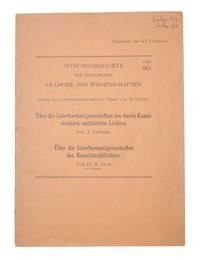
1926rif. 465401926. Royal8vo. Author's presentation offprint with the printed presentation statement on top of frontwrapper "Überreicht von den Verfassern" i.e. "Given by the authors". Original printed wrappers. Front wrapper loose but fully intact. "Chilpp 202" and "Recdese 160" written in hand to top of front wrapper. A very fine and clean copy. Pp. 334-351. First edition in the scarce author's presentation offprint issue of this important paper which contains Einstein's theories on wave-particle duality and German physicist Rupp's work on the same subject seemingly to corroborating Einstein's theories. Rupp's experimental results later turned out to have been falsifications and today he is mainly known as the protagonist in one of the biggest scandals in physics in the 20th century.Rupp published a number of papers on the interference properties of light emitted by canal ray sources. These articles particularly the present that came into being in close collaboration with Albert Einstein attracted quite a lot of attention as they probed the wave versus particle nature of light. They also significantly propelled Rupp's career even though they were considered highly controversial to begin with.In April 1926 Albert Einstein proposed to Emil Rupp to carry out two experiments that were to prove the wave nature of light versus the particle nature of light: the so-called 'Wire Grid Experiment' and the 'Rotated Mirror Experiment' experiments that Einstein had worked on theoretically and now would like to gain confirmation of through experiments. Rupp at the time regarded as one of the most important and most competent experimental physicists gladly took up the challenge. Rupp's observations - though highly controversial - confirmed Einstein's theory. Due to the surprising outcome of the experiments Einstein was interested in exactly how it they were conducted as Rupp's initial descriptions did not convince him that the results were feasible."Rupp stood by his observations and suggested yet other circumstances that might explain them. Did Einstein now realize that there was something rather dubious about Rupp's work He had seen him change his data repeatedly-and each time in better accordance with his own criticism and on one occasion in no less than two days. He had had to accept that Rupp claimed to earlier have "unknowingly" or "unconsciously" rotated a mirror and he will likely have seen that Rupp's work was highly controversial amongst experimentalists leading to very public criticism in Die Naturwissenschaften. He himself was now also convinced that in fact Rupp's results were incomprehensible. So did Einstein choose to suspend the publication of Rupp's piece so that an additional round of checks and balances could take place The answer is no: Rupp's paper was presented by Einstein to the Prussian Academy in a session on 21 October 1926 and it appeared in print in the Academy's proceedings in November of 1926-the articles by Einstein and Rupp came out back to back and reprints circulated with both papers bound together with a joint cover page that displayed both titles. Einstein referred in his article to Rupp's claims and he had even written the abstract of Rupp's paper" Dongen: "Emil Rupp Albert Einstein and the Canal Ray Experiments on Wave-Particle".The first clear indication that Rupp's work was impossible to recreate came in 1930 in a paper published by Staub - nothing was wrong with Einstein's theory but Rupp's work was simply impossible: "Rupp immediately set out to respond to Straub's publication. On 12 July 1930 he sent a first draft to Einstein to whom he also announced his intention of redoing his canal ray experiments-Straub was dismissed as a clumsy graduate student with a lousy apparatus. Einstein suggested inviting Straub once Rupp had his experiment up and running again but cautioned him not to engage the polemic in too sharp a tone". Rupp managed to convince the physics society and continued to publish the new few years. In 1934 various different physicians pointed out that Rupp's work was impossible to recreate and in 1935 the final blow to Rupp's career came about when the German Physical Society's decided not to allow any citations of Rupp's work. This seems to have had very severe consequences as today it is almost impossible to find any quotations - or even mentioning of Rupp in general let alone his fraud - in any historical studies of either quantum theory or of Einstein.Despite the unquestionable fraud by Rupp his experiments and collaboration with Einstein might have had a positive influence on the further progression to quantum mechanics. The two present papers became of seminal importance in the discussions between Bohr and Heisenberg which eventually in 1927 resulted in Heisenberg publishing his landmark thesis on the uncertainty principle. When Max Born received the Nobel Prize in physics he stated that: "An idea of Einstein gave me the lead From the present paper. He had tried to make the duality of particles-light quanta or photons-and waves comprehensible by interpreting the square of the optical wave amplitudes as probability density for the occurrence of photons."Boni 160; Weil 153. unknown
1924rif. 49431Berlin Springer 1924. 8vo. Bound in contemporary half cloth. In "Zeitschrift für Physik" Bd. 27. Entire volume offered. Stamp to front free end paper. Fine and clean. Einstein: Pp. 1-6; P. 392. Bose: P. 392. Entire volume: IV 395 1 pp. First appearance of Einstein's paper on statistical mechanics and the physics of radiometers. Weil 139 143a hardcover
1930rif. 46969New York The Science Press 1930. Royal8vo. Bound in contemporary black full cloth with gilt lettering to spine. In "Science" Vol. 71 1930. Small stamp to lower part of front free end-paper. Otherwise a very fine and clean copy. Pp.608-10. Entire volume: VIII 670 pp advertisements. First printing. Einstein was invited to give a lecture at the University of Nottingham by a lecturer there Henry Brose who also acted as interpreter. Einstein came with his wife Elsa on 6th June 1930. He was due to start the lecture at 3.45pm but did not arrive until 6.30 as he took a detour to visit the birth place of Isaac Newton. The blackboard on which he wrote was quickly varnished over when the lecture was over and is still preserved in the university. While in Nottingham Einstein commented on George Green's contribution to mathematics saying that he had been 20 years ahead of his time.Weil no 174a. hardcover
1931rif. 28366Berlin Gruyter & Co. 1931. 4to. Orig. printed orange wrappers. Offprint/Sonderausgabe aus Sitzungsberichten.pp.1-5. Fine fresh copy. First edition in the rare Offprint with the separate printed title and separate pagination. See Weil No. 179 where this is not mentioned.The early Offprints from "Sitzungsberichten." are called "Sonderabdruck" up to Weil No.165 including this. From Weil 166 they are called "Sonderausgabe.". - Before 161 up to 160 the Offprints do not have separate title and pagination the pagination follows the numbering in the periodical. From 166 the Offprint has both separate printed title and pagination. - So Weil Nos 161-165 is still "Abdruck" but with separate title and pagination. These facts are not mentioned in the bibliographies. unknown
1906rif. 50324Leipzig Ambrosius Barth 1906. 8vo. In contemporary halv calf with four raised bands and gilt lettering to spine. In "Annalen der Physik" Vierte Folge Band 21. Entire volume offered. Stamp to title page. Wear to extremities. Internally fine and clean. Pp. 583-86. Entire volume: 1055 VIII pp. First printing of Einstein's paper on a method for the determination of the transversal and longitudinal mass of the electron. This eventually caused a major breakthrough in Weil no. 14 hardcover
1920rif. 29309Berlin Julius Springer 1920. Clothbacked boards. Bound with orig. printed wrappers. Small inkspots in inner margins of wrappers. 15 pp. First edition. - Weil No. 111. hardcover