1.911 Ergebnisse
1950Best.-Nr. P-27103Princeton: Princeon University Press 1950. Hardcover. Fine/3rd Edition. Duodecimo. The revised third edition including The Generalized Theory Of Gravitation.' 12mo 165 pp 2 leaves index. Original cloth. Book is fine in very good unclipped dust jacket with light spine tanning and a small 1/$" V chip to the lower spine. Attractive and solid in the archival Mylar jacket cover. Princeon University Press hardcover
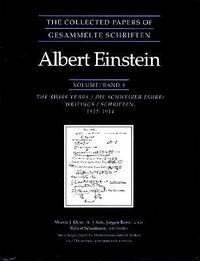
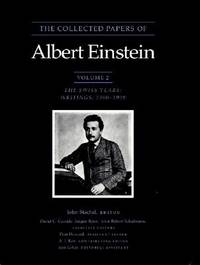
1979Best.-Nr. P-18052Princeton NJ: Princeton University Press 1979. Hardcover. As New/First Edition. Octavo. With the reeata slip laid in. First publication of these letters by Einstein. A clean unmarked and unclipped copy. Princeton University Press hardcover
Best.-Nr. 9788244-6Princeton University Press. Used - Good. Pages intact with minimal writing/highlighting. The binding may be loose and creased. Dust jackets/supplements are not included. Stock photo provided. Product includes identifying sticker. Better World Books: Buy Books. Do Good. Princeton University Press unknown
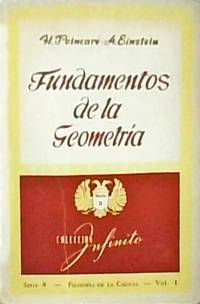
Best.-Nr. $A33551.- Buenos Aires. 1948. Ibero Americana. 8º mayor. 1 tomo. 127 pgs. Rústica editorial . Pequeñas imperfecciones extremos lomera. Buen estado general. . . Matemáticas paperback
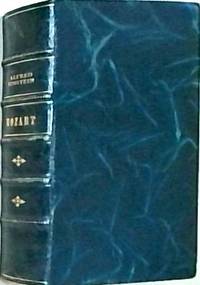
Best.-Nr. $A34422.- Buenos Aires. 1948. Espasa Calpe. 8º mayor. 1 tomo. 471 pgs. Con ilustraciones intercaladas y láminas fuera de texto. Plena piel nervios hierros. Pequeño sello anterior poseedor. Unas pocas anotaciones tinta en índice. Muy buen estado. . . Biografías / Música unknown
2004Best.-Nr. 24446London: The Folio Society 2004. A first Folio edition second printing of Relativity - The Special and the General Theory by Albert Einstein published by The Folio Society London in 2004 authorised translation by Robert W. Lawson and introduced by Roger Penrose. A fine copy in a fine slipcase with some light shelf wear to the paper-covered boards. The Folio Society hardcover
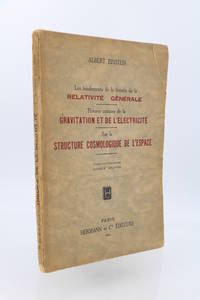
1933Best.-Nr. 91965Paris: Hermann & Cie 1933. Fine. Hermann & Cie Paris 1933 16 x 25 cm Broché First edition of the French translation illustrated with a photographic portrait of Albert Einstein as frontispiece. A small loss at the foot of the spine which also shows rubbing along the joints upper right corner of the front board starting to come loose a slight marginal tear just below pleasant internal condition manuscript bookplate at the head of a flyleaf. Annotations and markings in red pen on pages 8 and 9. Work illustrated with figures in the text. Hermann & Cie unknown
Best.-Nr. 401434-nnew. unknown
Best.-Nr. DADAX0198785496New unknown
1950Best.-Nr. 059077New York: Philosophical Library 1950. 1st Edition Reprint. Hardcover. Near Fine. 282 Pp. Dark Blue Cloth Lettered In Gilt. First Edition But A Later Printing Lacking The Frontispiece Portrait Of Einstein By Lotte Jacobi. Book Is Near Fine Light Rubbing At Corners Lettering Strong No Marks. Philosophical Library hardcover
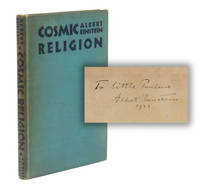
1931Best.-Nr. 021909New York: Covici Friede 1931. First Edition. hardcover. Some pencil markings in text title page and endpapers darkened not really affecting Einstein's inscription; covers a little soiled. Good to Very Good and quite scarce. With a long biographical note and an appreciation by George Bernard Shaw. Subjects include Disarmament Pacifism the Jewish Homeland and more. This copy INSCRIBED and SIGNED by the author with his scarcer full signature on the front endpaper: "To little Pauline/Albert Einstein/1933." An uncommon title to find signed by the man of the century. With a letter of authenticity from James Spence if you need that kind of security blanket. Covici Friede hardcover
Best.-Nr. 400332like new. unknown
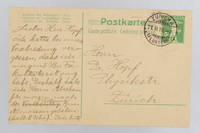
1910Best.-Nr. 83637Zurich Zurich 1910. Fine. Einstein writes to a friend who introduced him to Carl Jung Zurich Zurich 21 juin 1910 9 x 14 cm une carte postale Autograph postcard signed by Albert Einstein to Ludwig Hopf. 18 lines written verso and recto address also in Einstein's handwriting. Postmarked June 21 1910. Published in The Collected Papers of Albert Einstein Volume 5: The Swiss Years: Correspondence 1902-1914 Princeton University Press 1993 n°218 p. 242. An exceptional and highly aesthetic card from Albert Einstein to ""the friend of the greatest geniuses of his time"" - according to Schrödinger - mathematician and physicist Ludwig Hopf who introduced Einstein to another 20th-century genius: Carl Jung. The master invites his pupil Hopf to a dinner party whose guests include scientist Max Abraham future great rival during Einstein's Zurich years and a fervent opponent of his theory of relativity. The recipient Ludwig Hopf joined Einstein in 1910 as an assistant and student at his physics and kinetic theory seminars at the University of Zürich. They signed two fundamental papers on the statistical aspects of radiation and gave their names to the ""Einstein-Hopf"" velocity-dependent drag force. Their letter exchanges retrace the complex path of Einstein's work on relativity and gravitation bearing witness to their great complicity and Hopf's invaluable contribution to the Master's research. A few months after writing the postcard Hopf even found an error in Einstein's calculations of the derivatives of certain velocity components which Einstein corrected in a paper the following year. They also formed a musical duo Hopf accompanied on the piano the Master's violin performing pieces by great musical geniuses like Bach and Mozart. With this card Einstein invited his pupil and friend Hopf to dinner with Max Abraham at the dawn of a major scientific controversy that would pit them against each other from 1911 onwards. Abraham's theory of special relativity failed to convince Einstein who criticized its lack of observational verification and its failure to predict the gravitational curvature of light. In 1912 their dispute became public through scientific articles. Abraham never acknowledged the validity of Einstein's theory. During their brilliant artistic and intellectual exchanges Hopf undoubtedly succeeded where Freud had failed as he declared to him in a letter: ""I shall break with you if you boast of having converted Einstein to psychoanalysis. A long conversation I had with him a few years ago showed me that analysis was as hermetic to him as the theory of relativity can be to me"" Vienna September 27 1931. As a fervent supporter of psychoanalysis Hopf is known to have introduced the famous psychoanalyst Carl Jung to Einstein. Hopf and his teacher both left for Prague's Karl-Ferdinand University in 1911 where they met writer Franz Kafka and his friend Max Brod in Madame Fanta's salon. With the rise of the Nazi regime the fates of the two theoreticians were plagued by persecution and exile. Einstein first took refuge in Belgium Hopf in Great Britain after his dismissal in 1934 from the University of Aachen because of his Jewish origins. They continued their prolific correspondence in the midst of the turmoil Einstein suggesting to Hopf the opening of a university abroad for exiled German students. Hopf died shortly after his appointment as chair of Mathematics studies at Trinity College Dublin in July 1939. A precious invitation from the great physicist to one of the final dinner gatherings of the ""old school"" of science embodied by Max Abraham on the eve of the publication of the theory of general relativity which would overturn classical conceptions of space and time and propel Science into the 20th century. unknown
1973Best.-Nr. 054767Horizon Press 1973. 2nd Edition 1st Printing. Hardcover. Near Fine/Near Fine. Xxiii 246 Pp. First Reprinting Of The Scarce 1921 Book Here With A New 1970 Introduction. Fine In Near Fine Dust Jacket Priced $8.50. Horizon Press hardcover
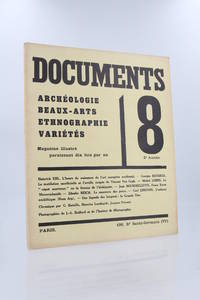
1930Best.-Nr. 80796Paris: Calmann Lévy 1930. Fine. Calmann Lévy Paris 1930 22 x 27.50 cm broché First edition of this issue of the important journal dealing notably with archaeology fine arts and ethnography with Georges Bataille and Carl Einstein as principal editors. Very handsome copy. Contributions by Heinrich Ehl: ""L'heure de naissance de l'art européen occidental"" Georges Bataille ""La mutilation sacrificielle et l'oreille coupée de Vincent Van Gogh"" Michel Leiris: ""Le ""caput mortuum"" ou la femme de l'alchimiste"" Jean Bourdeillette: ""Franz Xaver Messerschmidt"" Zdenko Reich: ""Le massacre des porcs"" Carl Einstein: ""L'enfance néoloithique Hans Arp"" Jacques Prévert Maurice Leenhardt. Issue illustrated with photographs by Jacques-André Boiffard Calmann Lévy unknown
1930Best.-Nr. 81582Paris: Calmann Lévy 1930. Fine. Calmann Lévy Paris 1930 22 x 27.50 cm broché First edition of this issue of this important journal dealing notably with archaeology fine arts and ethnography and whose principal editors were Georges Bataille and Carl Einstein. A small tear at the foot of the spine a slight tear without loss at the foot of pages 21-22. Contributions by Heinrich Ehl: ""L'heure de naissance de l'art européen occidental"" Georges Bataille ""La mutilation sacrificielle et l'oreille coupée de Vincent Van Gogh"" Michel Leiris: ""Le ""caput mortuum"" ou la femme de l'alchimiste"" Jean Bourdeillette: ""Franz Xaver Messerschmidt"" Zdenko Reich: ""Le massacre des porcs"" Carl Einstein: ""L'enfance néoloithique Hans Arp"" Jacques Prévert Maurice Leenhardt. Issue illustrated with photographs by Jacques-André Boiffard. Calmann Lévy unknown
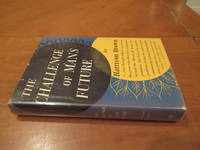
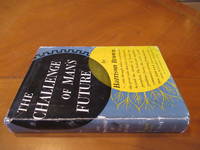
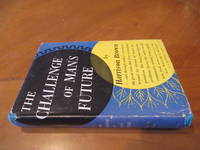
1954Best.-Nr. 052515New York: Viking 1954. 1st Edition 1st Printing. Hardcover. Fine/Very Good Jacket. Xii 290 Pp. Turquoise Cloth Spine Gilt. First Printing Indicated. Fine No Marks Gilt Brilliant. Dust Jacket Priced $3.75 Slight Usage. Dust Jacket Blurbs By William O. Douglas Robert M. Hutchins Paul B. Sears Harold C. Urey Albert Einstein H. J. Muller; Brown Was An Outstanding Scientist Himself; But Few World Politicians Or Business Leaders 1946 To Present Ever Tried To Seriously Address These Issues Apparently Because They're Not There Primarily For The General Welfare. Harrison Scott Brown 1917 - 1986 Was An American Nuclear Chemist And Geochemist. He Was A Political Activist Who Lectured And Wrote On The Issues Of Arms Limitation Natural Resources And World Hunger. During World War Ii Brown Worked At The Manhattan Project's Metallurgical Laboratory And Clinton Engineer Works Where He Worked On Ways To Separate Plutonium From Uranium. The Techniques He Helped Develop Were Used At The Hanford Site To Produce The Plutonium Used In The Fat Man Bomb Dropped On Nagasaki. After The War He Lectured On The Dangers Of Nuclear Weapons. After The War He Worked At The University Of Chicago Where He Pioneered Nuclear Geochemistry. The Study Of Meteorites By Brown And His Students Led To The First Close Approximation Of The Age Of The Earth And The Solar System. In 1948 Brown Was Awarded The American Association For The Advancement Of Science Prize For His Work On Meteorites.Between 1951 And 1977 He Worked At The California Institute Of Technology Caltech Where He Contributed To Advances In Telescopic Instrumentation Jet Propulsion And Infrared Astronomy. While There He Attracted Several Former Colleagues And Highly Regarded Scientists To The Team. Together They Made Advancements In Telescopic Instrumentation Jet Propulsion Contributing To Nasa's Early Planetary Exploration Missions And Infrared Astronomy. In June 1954 He Was One Of Twenty Scientists Under The Age Of Forty Identified By Fortune Magazine As "Top Young Scientists In U. S. Universities And Industry". In The Early 1970S He Began Working More Directly On The Resource/Environment Issues That He Had Been Developing In His Books. In 1977 He Became Director Of The Newly Created Resource Systems Institute Of The East-West Center In Hawaii Where He Turned Full Time To Work On Understanding And Influencing The Interactions Of Energy Mineral And Food Systems In The Asia-Pacific Region Themes He Had Developed In His Books Since The 1950S. Viking hardcover
1954Best.-Nr. 052602New York: Viking 1954. 1st Edition 1st Printing. Hardcover. Good/Fair. Xii 290 Pp. Turquoise Cloth Spine Gilt. First Printing Indicated. Light Wear Gilt Brilliant Faint Dampstainig To Cloth. Dust Jacket Priced $3.75 Very Worn Dampstainied Extensive Tape Repairs To Inside Of Jacket Fair Only. Dust Jacket Blurbs By William O. Douglas Robert M. Hutchins Paul B. Sears Harold C. Urey Albert Einstein H. J. Muller; Brown Was An Outstanding Scientist Himself; But Few World Politicians Or Business Leaders 1946-Present Out Of Hundreds Of Thousands Ever Tried To Seriously Address These Issues Apparently Because They're Not There For The General Welfare. Harrison Scott Brown 1917 - 1986 Was An American Nuclear Chemist And Geochemist. He Was A Political Activist Who Lectured And Wrote On The Issues Of Arms Limitation Natural Resources And World Hunger. During World War Ii Brown Worked At The Manhattan Project's Metallurgical Laboratory And Clinton Engineer Works Where He Worked On Ways To Separate Plutonium From Uranium. The Techniques He Helped Develop Were Used At The Hanford Site To Produce The Plutonium Used In The Fat Man Bomb Dropped On Nagasaki. After The War He Lectured On The Dangers Of Nuclear Weapons. After The War He Worked At The University Of Chicago Where He Pioneered Nuclear Geochemistry. The Study Of Meteorites By Brown And His Students Led To The First Close Approximation Of The Age Of The Earth And The Solar System. In 1948 Brown Was Awarded The American Association For The Advancement Of Science Prize For His Work On Meteorites.Between 1951 And 1977 He Worked At The California Institute Of Technology Caltech Where He Contributed To Advances In Telescopic Instrumentation Jet Propulsion And Infrared Astronomy. While There He Attracted Several Former Colleagues And Highly Regarded Scientists To The Team. Together They Made Advancements In Telescopic Instrumentation Jet Propulsion Contributing To Nasa's Early Planetary Exploration Missions And Infrared Astronomy. In June 1954 He Was One Of Twenty Scientists Under The Age Of Forty Identified By Fortune Magazine As "Top Young Scientists In U. S. Universities And Industry". In The Early 1970S He Began Working More Directly On The Resource/Environment Issues That He Had Been Developing In His Books. In 1977 He Became Director Of The Newly Created Resource Systems Institute Of The East-West Center In Hawaii Where He Turned Full Time To Work On Understanding And Influencing The Interactions Of Energy Mineral And Food Systems In The Asia-Pacific Region Themes He Had Developed In His Books Since The 1950S. Viking hardcover
1954Best.-Nr. 052601New York: Viking 1954. 1st Edition 1st Printing. Hardcover. Fine/Good. Xii 290 Pp. Turquoise Cloth Spine Gilt. First Printing Indicated. Near Fine No Marks Gilt Brilliant Bumping To Spine Ends. Dust Jacket Priced $3.75 Wear Chipping At Corners Short Edge Tears Good Only. Dust Jacket Blurbs By William O. Douglas Robert M. Hutchins Paul B. Sears Harold C. Urey Albert Einstein H. J. Muller; Brown Was An Outstanding Scientist Himself; But Few World Politicians Or Business Leaders 1946-Present Out Of Hundreds Of Thousands Ever Tried To Seriously Address These Issues Apparently Because They're Not There For Our General Welfare. Per Wikipedia Harrison Scott Brown 1917 - 1986 Was An American Nuclear Chemist And Geochemist. He Was A Political Activist Who Lectured And Wrote On The Issues Of Arms Limitation Natural Resources And World Hunger. During World War Ii Brown Worked At The Manhattan Project's Metallurgical Laboratory And Clinton Engineer Works Where He Worked On Ways To Separate Plutonium From Uranium. The Techniques He Helped Develop Were Used At The Hanford Site To Produce The Plutonium Used In The Fat Man Bomb Dropped On Nagasaki. After The War He Lectured On The Dangers Of Nuclear Weapons. After The War He Worked At The University Of Chicago Where He Pioneered Nuclear Geochemistry. The Study Of Meteorites By Brown And His Students Led To The First Close Approximation Of The Age Of The Earth And The Solar System. In 1948 Brown Was Awarded The American Association For The Advancement Of Science Prize For His Work On Meteorites.Between 1951 And 1977 He Worked At The California Institute Of Technology Caltech Where He Contributed To Advances In Telescopic Instrumentation Jet Propulsion And Infrared Astronomy. While There He Attracted Several Former Colleagues And Highly Regarded Scientists To The Team. Together They Made Advancements In Telescopic Instrumentation Jet Propulsion Contributing To Nasa's Early Planetary Exploration Missions And Infrared Astronomy. In June 1954 He Was One Of Twenty Scientists Under The Age Of Forty Identified By Fortune Magazine As "Top Young Scientists In U. S. Universities And Industry". In The Early 1970S He Began Working More Directly On The Resource/Environment Issues That He Had Been Developing In His Books. In 1977 He Became Director Of The Newly Created Resource Systems Institute Of The East-West Center In Hawaii Where He Turned Full Time To Work On Understanding And Influencing The Interactions Of Energy Mineral And Food Systems In The Asia-Pacific Region Themes He Had Developed In His Books Since The 1950S. Viking hardcover
Best.-Nr. SONG1913057305Used: Good unknown
Best.-Nr. DADAX0367731339New unknown
Best.-Nr. DADAX1936488175New unknown
1971Best.-Nr. 046762New York: Walker & Company 1971. 1st Edition 1st Printing. Hardcover. Near Fine/Very Good. Xi 240 Pp. First Printing. Near Fine Book No Marks. Dj Priced $8.50 Light Wear Walker & Company hardcover