Einstein, AlbertABAA
2 557 résultats
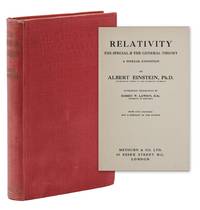
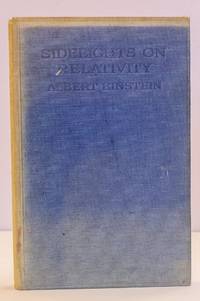
1922réf. 1415530London UK: Methuen & Co 1922. First Edition Thus. Hardcover. Small octavo 60 10 pages. In Good Plus condition. Bound in publisher's blue fabric with gilt lettering on spine. Light general shelfwear. Agetoning to spine and top edge of front board. Small spots of discoloration on back board spine hinges and front board. Mild foxing to text block and paste downs. Pencil marks from previous owner in text block concentrated in first section. Shelved in Case 10. 1415530. Shelved Dupont Bookstore. Methuen & Co hardcover books
réf. GF15174Dessin original à l'encre de chine sur calque signé - format 13,5 x 10,5 cm -
1920réf. 140949340London: Methuen & Co 1920. First Edition. Near Fine. First British edition first printing. xiii 3 138 2 8 pp. Bound in publisher's red cloth lettered in blind on front board and gilt on spine. Near Fine with light wear and fading to covers light foxing to upper textblock edge. Light foxing and offsetting to endpapers bookseller ticket to back pastedown and light toning to contents. Binding starting at pp. 33 and 97. A much nicer copy than normally found. The first British edition of Einstein's seminal work translated by Robert W. Lawson from the third German edition. Einstein's introduction to his revolutionary theory was written to be accessible to the general public. Methuen & Co unknown books
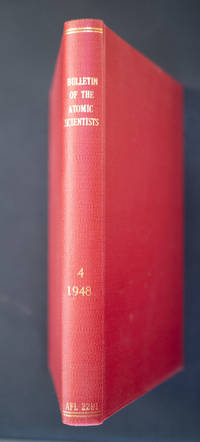
1948réf. 6625Chicago: The Atomic Scientists of Chicago 1948. Original edition. Ex-library. Very Good. 28 cm; 384 pages. Cloth-bound volume of 12 issues. Duplicate surplus stamp of Library of Congress on front free endpaper. Later owner's stamp on free endleaves blacked out. Lively forum of discussion of various scientific social and political implications of atomic energy as the post-war radioactive dust settled over the Pacific and wherever else open-air tests of atomic weaponry took place. Opens with Einstein's "Plea for International Understanding." Issue #2 features a written debate between Einstein and four Soviet scientists Semyonov Vavilov Frumkin and Ioffe. A scenario describes the potential effect of an atomic bomb on Washington DC. Justice William O. Douglas contributes "Democracy and Communism." Harry Truman presents a "Message to the Atomic Scientists." Other contributors include Cardinal Cushing Thomas E. Dewey Max von Laue and many other scientists and statesmen involved in the post-war debates The Atomic Scientists of Chicago hardcover books
1917réf. 6547Braunschweig: Friedrich Vieweg 1917. Ninth printing. Acceptable. 23 cm; iv. 79 pages. Three figures in text along with numerous equations. In original printed wraps. Acceptable only with paper peeling from the spine and sewing tender. Paper cover is completely detached in front and hanging by a thread in back. The pages are yellowed. There is an ownership autograph of one E. Bodländer. That said a clean unmarked copy in original state. The original German edition of Einstein's epoch-making "On the Special and General Theory of Relativity. Friedrich Vieweg paperback books
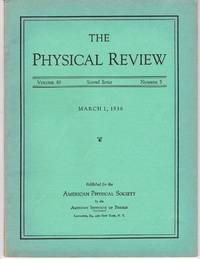
1936réf. 6550Lancaster PA: American Physical Society 1 March 1936. Second series volume 49 number 5. Very Good. ppl 341-422. Original green wraps. Slight nick at bottom edge of lower wrap else better than very good. Includes the retort by Einstein and Rosen originators of speculation on the existence of "worm-holes" in spacetime to objections made to the general theory of relativity. According to Galina Weinstein: "Between 1935 and 1936 Einstein was occupied with the Schwarzschild solution and the singularity within it while working in Princeton on the unified field theory and with his assistant Nathan Rosen on the theory of the Einstein-Rosen bridges. He was also occupied with quantum theory. He believed that quantum theory was an incomplete representation of real things. Together with Rosen and Boris Podolsky he invented the EPR paradox. I demonstrate that the two-body problem in general relativity was a heuristic guide in Einstein's and collaborators' 1935 work on the Einstein-Rosen bridge and EPR paradox." Also articles by notable physicists on radioactivity electron mobility quantum-mechanical measurement and so on. American Physical Society paperback books
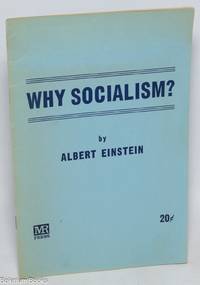
1958réf. 325801New York: Monthly Review Press 1958. 12p. staplebound pamphlet very good. Reprinted from the May 1949 issue of Monthly Review. Monthly Review Press unknown books
réf. 9476EINSTEIN Carl. DIE KUNST DES 20 JAHRHUNDERTS. Berlin: Im Propylaen 1926. 4to. Cloth spine boards. 575 1 pages 43 plates. First edition. Arntzen I-19. An illustrated survey of 20th-century art featuring the work of Andre Derain Picasso Braque Juan Gris and others including 43 color photographs. Covers rubbed ex-library copy with markings front hinge internally cracked else good. unknown books
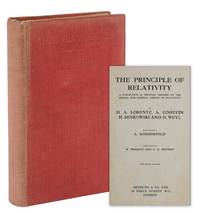
1923réf. 140949178London: Methuen & Co 1923. First Edition. Very Good. First British edition first printing. viii 216 8 ads pp. Bound in publisher's red cloth lettered in blind on front board and in gilt on spine; lacking the dust jacket. Very Good with fading light wear and soiling to covers. Evidence of bookplate removal to front pastedown offsetting to free endpapers rear hinge starting. Contents lightly toned with foxing to first and last few pages and textblock edges. An influential collection of eleven papers on relativity. Seven are authored by Einstein two by Henrik Lorentz and one each by Hermann Minkowski and Hermann Weyl. The first edition of this translation of Das Relativitaetsprinzip taken from the fourth German edition. Methuen & Co unknown books
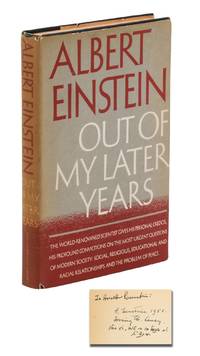
1950réf. 140948403New York: Philosophical Library 1950. First Edition. Near Fine/Near Fine. First edition first printing. Signed by Albert Einstein on the front free endpaper and dated the year of publication. Above and beneath Einstein's signature Rabbi Irving Levey has inscribed this book to former owner Harold Rosenstein and written two lines of Hebrew that translate to "A day that is exceptionally good 19 Kislev 5711." According to Rosenstein's grandson Einstein's signature was procured by Rabbi Levey who lead temple at the Jewish Center at Princeton from 1949-51. Levey and Einstein and worked together on issues relating to the then-newly formed State of Israel. vi 282 pp. Bound in publisher's blue cloth stamped in gilt. Near Fine with light rubbing to corners and spine ends offsetting at endsheets. In a Near Fine unclipped dust jacket with toning light edge wear small stain to rear flap. The iconic theoretical physicist's second collection of essays covering the years 1934-1950 surrounding his personal convictions around religious and humanitarian issues in the wake and aftermath of WWII. Boni 515. Philosophical Library unknown books
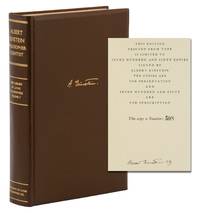
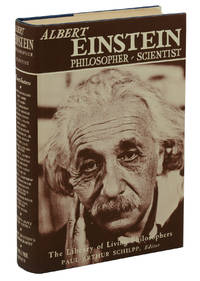
1949réf. 140948474Evanston Illinois: The Library of Living Philosophers Inc 1949. Signed Limited First Edition. Near Fine. First edition. Number 508 of a limited 760 copies signed and dated by Albert Einstein. 777 pp. Bound in publisher's brown leatherette stamped in gilt; top edge gilt; lacking the glassine dust jacket and slipcase. Text in English and German. Near Fine with very faint tidemark to edge of half-title frontisportrait and title page. A collection of critical essays devoted to the theoretical physicist by twenty-five eminent scholars and scientists with Einstein's remarks. Published on Einstein's 70th birthday the work has contributions by noted contemporaries such as Max Born Kurt Godel and Wolfgang Pauli. The Library of Living Philosophers, Inc unknown books
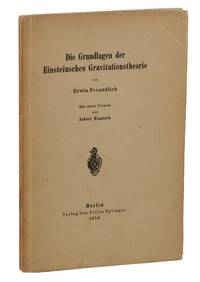
1916réf. 140945574Berlin: Verlag von Julius Springer 1916. First edition. First edition. 64 pp. Bound in publisher's wraps. Very Good with slightly toned wraps tiny stain to back wrap slightly bumped corners bookplate on verso of front wrap. An early German language work on Einstein's theory of gravitation with a foreword by the man himself. Freundlich's first book. Verlag von Julius Springer unknown books
1915réf. 140945614Leipzig & Berlin: B.G. Teubner 1915. First edition. First edition. iv viii 762 8 pp. Bound in publisher's three quarter maroon cloth with marbled paper sides gilt spine lettering. Near Fine with rubbing along edges; a few marks to prelims text otherwise free of markings; hint of foxing to edges. Bookplate on paste down. A German-language physics review with the first book publication of two articles by Albert Einstein as well as work by a number of famous physicists of the early 20th century. B.G. Teubner unknown books
1925réf. 140945616Berlin: Verlag von Julius Springer 1925. First edition. First edition. xiv 377 1 4 pp. Bound in publisher's orangish yellow boards. Near Fine with light rubbing and soiling to boards tiny pen squiggle to front board. Contents bright and unmarked. An uncommon German-language physics text with an appendix by Einstein. Verlag von Julius Springer unknown books
1916réf. 140941831Leipzig Germany: S. Hirzel 1916. First separate edition. First separate edition. 4 pp. Illustrated with portrait of August Mach from photograph. Publisher's original printed wrappers. Very Good with some small chips to fragile wrappers faint crease to top of front wrap contents toned with age. This copy belonged to Hans Albert Einstein Albert Einstein's oldest son with his inkstamp at top of front wrapper; likely a presentation copy from his father. Neatly written at top of front wrapper is "43" and date "14.III.16." OCLC/WorldCat locates four copies two at the University of Toronto one at the Smithsonian Institution and one at the American Philosophical Society. Weil 89. Very rare author's offprint stating "Uberreicht vom Verfasser" of the eulogy by Albert Einstein for fellow physicist Ernst Mach as first published in Physikalischen Zeitschrift. A noted scientist in his own right Mach is best known for the concept of "Mach's principle" which asserts that an entity's inertial mass is determined by all the other masses in the universe. Einstein in fact coined the phrase "Mach's principle" and his application of it had major ramifications for the development of his theory of general relativity Einstein in 1918 labeling it one of the "three pillars" of general relativity. S. Hirzel unknown books
1925réf. 140941837Berlin: No Publisher 1925. Revised edition. 783-797 pp. Publisher's original printed wrappers. About Very Good with thin tear along front wrap fold near head a little chipping to wraps at spine front wrap hinge fragile contents toned with age. This copy belonged to Hans Albert Einstein Albert Einstein's oldest son with his inkstamp at top of front wrapper; likely a presentation copy from his father. Neatly written at top of front wrapper are "41" and 163." Very rare author's offprint from Die Kulture der Gegenwart of an essay on relativity theory which was first published in 1914 revised to incorporate Einstein's later research. OCLC/WorldCat locates no physical copies. Weil 71. [No Publisher] unknown books
1949réf. 140941891Evanston IL: The Library of Living Philosophers Inc 1949. First Edition. Fine/Fine. First edition trade issue. xvi 781 pp. Bound in publisher's navy cloth with gilt spine lettering. Fine with offsetting to endpapers in a Fine dust jacket unfaded and unworn. A very sharp copy of a collectible volume all about the famous theoretical physicist. The Library of Living Philosophers, Inc unknown books
1949réf. 140941039Evanston IL: The Library of Living Philosophers Inc 1949. First Edition. Near Fine/Very Good. First edition first printing. Bound in publisher's original dark blue cloth stamped in gilt. Near Fine with toning to pages offsetting to endsheets former owner name to front free endpaper and small sticker ghost to front paste down. In a Very Good dust jacket with fraying and chip at bottom spine end and short closed tear at head light edge wear toning and soiling to rear panel. The Library of Living Philosophers, Inc unknown books
1923réf. 171111001Princeton: Princeton University Press 1923. First Edition. Hardcover. Very Good. First American edition first printing. Near Fine with slight fade to spine cloth gilt stamping very sharp on front cover. Previous owner bookplate to front paste down with patch of abrasion at nearby gutter. Pages toned with several hinges just slightly over-opened. In a Very Good dust jacket with a large chip and tear at the top of the spine toning to spine and edges and several small edge tears. A very nice copy in the scarce dust jacket. Princeton University Press hardcover books
1929réf. 008383Paris 1929 In-4 Broché Edition originale
1930réf. 013252Paris 1930 In-4 Broché Edition originale
1933réf. 015021Bâle Kunsthalle Basel 1933 In-8 carré Broché
1921réf. 015388Paris Directeur: Florent Fels. 1921 In-8 Broché Edition originale
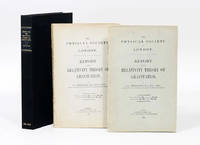
1918réf. 2839London: Fleetway Press 1918. FIRST EDITION. Original wrappers. Fine. THE FIRST INTRODUCTION OF EINSTEIN'S GENERAL RELATIVITY TO THE ENGLISH-SPEAKING WORLD. The groundbreaking first edition 1918 with the second edition 1920 containing the account of Eddington's 1919 expedition proving Einstein's theory both in original wrappers. "Einstein's discovery of the General Theory of Relativity was communicated to the Berlin Academy of Sciences in 1915. Because of the First World War direct communication with physicists in Germany was not possible but the papers were forwarded to Eddington who was then Secretary of the Royal Astronomical Society by Willem de Sitter a personal friend of Eddington's in neutral Holland. The theory is of considerable mathematical complexity but as Einstein stated in the last paragraph of his paper 'scarcely anyone who has fully understood this theory can escape from its magic'. Eddington was the ideal expositor of these ideas in English and within 2 years had written his Report on the Relativity Theory of Gravitation for the Physical Society of London" Malcolm Longair "Bending Space-time". The second edition is notable for containing a new preface that discusses the results of the "eclipse expedition" led by Eddington that verified General Relativity and catapulted Einstein into world-wide fame. This preface precedes Eddington's full report in the Philosophical Transactions. Provenance: Almost certainly Nobel Prize winning physicist's Charles Glover Barkla's copy of the 1918 report with an original 1918 receipt in Barkla's name laid in. Barkla won the 1917 Nobel Prize in Physics "for his discovery of the characteristic Röntgen radiation of the elements". London: Fleetway Press for The Physical Society of London 1918 and 1920. Octavo original wrappers; custom box. General light wear to wrappers. Beautiful copies. RARE. Fleetway Press unknown books
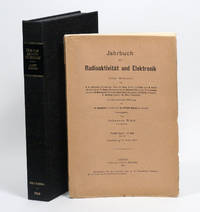
1908réf. 2507Leipzig: S. Hirzel 1908. First edition. original wrappers. Very Good. THE BIRTH OF GENERAL RELATIVITY: FIRST PRINTING IN RARE ORIGINAL WRAPPERS OF ONE ONE EINSTEIN'S MOST IMPORTANT PAPERS; containing the beginning of general relativity the derivations of the equivalence principle gravitational redshift and the gravitational bending of light. "Einstein's road to general relativity began in November 1907 when he was struggling against a deadline to finish an article for a science yearbook explaining his special theory of relativity. Two limitations of that theory still bothered him: it applied only to uniform constant-velocity motion. and it did not incorporate Newton's theory of gravity. "'I was sitting in a chair in the patent office at Bern when all of a sudden a thought occurred to me' he recalled. 'If a person falls freely he will not feel his own weight.' That realization which 'startled' him launched him on an arduous eight-year effort to generalize his special theory of relativity and 'impelled me toward a theory of gravitation.' Later he would call it 'the happiest though in my life.' "The tale of the falling man has become an iconic one and in some accounts it actually involves a painter who fell from the roof of an apartment building near the patent office. Einstein refined his thought experiment so that the falling man was in an enclosed chamber such as an elevator in free fall above the earth. In this falling chamber at least until it crashed the man would feel weightless. Any objects he emptied from his pocket and let loose would float alongside him. "Looking at it another way Einstein imagined a man in an enclosed chamber floating in deep space 'far removed from stars and other appreciable masses.' He would experience the same perceptions of weightlessness. 'Gravitation naturally does not exist for this observer. He must fasten himself with strings to the floor otherwise the slightest impact against the floor will cause him to rise slowly towards the ceiling.' "Then Einstein imagined that a rope was hooked onto the roof of the chamber and pulled up with a constant force. 'The chamber together with the observer then begin to move "upwards" with a uniformly accelerated motion.' The man inside will feel himself pressed to the floor. 'He is then standing in the chest in exactly the same way as anyone stands in a room of a house on our earth. The man in the chamber will come to the conclusion that he and the chest are in a gravitational field. Just then however he discovers the hook in the middle of the lid of the chest and the rope which is attached to it and he consequently comes to the conclusion that the chamber is suspended at rest in the gravitational field.' Einstein observed that inertial mass always equals gravitational mass and through his thought experiments concluded that "From this correspondence it follows that it is impossible to discover by experiment whether a given system of coordinates is accelerated or whether. the observed effects are due to a gravitational field." "Einstein called this 'the equivalence principle.' The local effects of gravity and of acceleration are equivalent. "In 1907 working against the deadline imposed by the Yearbook of Radioactivity and Electronics Einstein tacked on a fifth section to his article on relativity that sketched out his new ideas. He also came up with many predictions that could be tested including that light should be bent by gravity and that the wavelength of light emitted from a source with a large mass such as the sun should increase slightly in what has become known as the gravitational redshift. "It would take Einstein another eight years until November 1915 to work out the fundamentals of this theory and find the math to express it. Then it would take another four years before the most vivid of his predictions the extent to which gravity would bend light was verified by dramatic observations. But at least Einstein now had a vision one that started him on the road toward one of the most elegant and impressive achievements in the history of physics: the general theory of relativity" Isaacson Einstein 145-49. Weil in his bibliography also notes that "On p.443 are probably the first explicit statements both of the equivalence of inertial and gravitational mass and of the equation for mass in terms of energy now regarded as the theoretical basis for the release of atomic energy." Weil 21. Although Einstein submitted the paper on 4 December 1907 it wasn't published until the January 22 issue of the Jarbuch. Note: There was a very short "Correction" in a subsequent issue not included here. IN: Jahrbuch der Radioactivität under Electronik Vierter Band - 4. Heft No. 16 pp. 411-462. Leipzig: S. Hirzel 1908. Octavo original wrappers; handsome custom box. Light wear to wrappers and split to spine; text fine with Einstein paper largely unopened. AN EXTREMELY RARE COPY IN ORIGINAL WRAPPERS OF ONE OF EINSTEIN'S MOST IMPORTANT PAPERS. S. Hirzel unknown books