Bonola, RobertoAntiquariat.de
2557 resultados
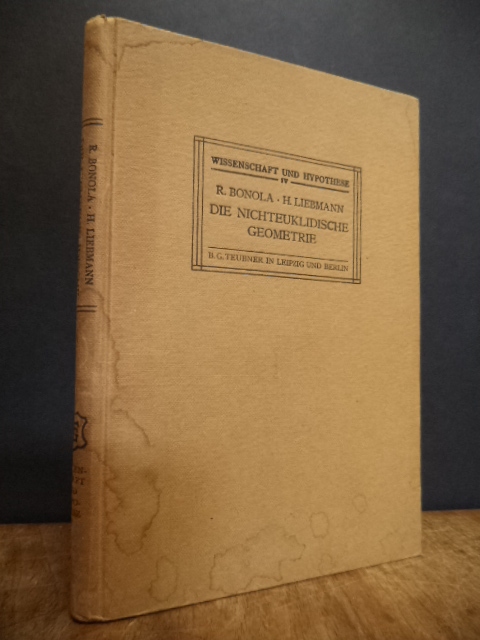
1919ref. 38447ABLeipzig [u.a.], B.G. Teubner (= Wissenschaft und Hypothese IV = 4), 1919. 8°, V, 207 S. mit 52 Figuren im Text, gelber original Pappband (Hardcover), 2. Auflage Rücken und Vorderdeckel im Randbereich fleckig, sonst ein gutes, sauberes Exemplar und die Mängel natürlich im Preis berücksichtigt
2002Mm 140x225 Brossura editoriale con bandelle di pp. 429, in ottimo stato. SPEDIZIONE IN 24 ORE DALLA CONFERMA DELL'ORDINE.
1998Mm 130x180 Collana " Universale scientifica Boringhieri ". Volume di 440 pp., firma di precedente proprietario. Pari al nuovo (as new). Spedizione in 24 ore dalla conferma dell'ordine.
1973ill., br. Uno dei massimi interpreti della fisica del Novecento, il premio Nobel Max Born non considerava disdicevole dedicare parte notevole delle sue energie al tentativo di comunicare, principalmente ai giovani studenti, i risultati della ricerca. Espressione del suo impegno come divulgatore è il presente volume, il più riuscito, forse, tra i molti scritti per introdurre un pubblico più vasto alle idee di Albert Einstein. Anziché enfatizzare, banalmente, l'elemento «rivoluzionario», di rottura, che esse presentano rispetto alle nozioni usuali di contemporaneità, massa, energia e così via, Born con un ampliamento di prospettiva ne ricerca le premesse nel generale processo evolutivo della fisica. Dei sette capitoli di cui si compone il libro, cinque sono così dedicati a un riepilogo delle teorie e dei concetti della fisica classica, di cui la relatività non è il capovolgimento, ma la naturale estensione. La lucida analisi di Born spazia dalle prime misure di spazio e tempo e dagli assiomi della geometria euclidea ai concetti fondamentali della dinamica newtoniana e alla teoria elettromagnetica di Maxwell. La relatività speciale e generale è trattata negli ultimi due capitoli. Grande rilievo vi assumono i fenomeni ottici, da sempre cruciale banco di prova di ogni tentativo di sistemazione razionale del mondo fisico.
1976In-16° gr. pp. 440, bross. edit. Ottimo stato.
1920ref. 200284Berlin, Springer, 1920. M. 1 Portr. u. 129 Abb. X, 242 S. Mod. marm. Hlwdbd. Besitzverm. verso Portrait. Unbeschnitten. (Naturwiss. Monogr. u. Lehrb. 3).
1922ref. 250413Berlin, Springer, 1922. M. 135 Abb. XI, 267 S. Bibl.-Hlwd. m. Rsign. Einbd. bestoßen, beschabt u. gebräunt. M. mehr. St. u. begriffen. (Naturwissenschaftliche Monographien und Lehrbücher 3).
1964ref. 177572Berlin, Springer, 1964. M. 143 Abb. XI, 328 S. OKart. Umschl. leicht bestoßen. (Heidelberger Taschenbücher; Bd. 1)
2003ref. 73375Berlin, Springer, 2003. (Kommentiert und erweitert von Jürgen Ehlers und Markus Pössel) XIV, 501 S. (24 cm) Pappband / gebundene Ausgabe
1969In-8°, pp. 440, bross. edit. Numerose vignette n.t.
1924ref. 78904London: Methuen & Company 1924. First edition of this classic account of Born's analysis and interpretation of Einstein's theory of relativity. Octavo original cloth frontispiece of Einstein. Signed by Max Born on the verso of the frontispiece. Translated by Henry L. Brose. Very good in a very good dust jacket. Housed in a custom half morocco clamshell box. First editions are uncommon signed examples rare. Einstein's Theory of Relativity is a book in which one great mind explains the work of another great mind in terms comprehensible to the layman is a significant achievement. This is such a book. Max Born was awarded the Nobel Prize in 1954 and was one of the world's great physicists: in this work he analyzes and interprets the theory of Einsteinian relativity. The result is undoubtedly the most lucid and insightful of all the books that have been written to explain the revolutionary theory that marked the end of the classical and the beginning of the modern era of physics. Born follows a quasi-historical method of presentation. The book begins with a review of the classical physics covering such topics as origins of space and time measurements geometric axioms Ptolemaic and Copernican astronomy concepts of equilibrium and force laws of motion inertia mass momentum and energy Newtonian world system absolute space and absolute time gravitation celestial mechanics centrifugal forces and absolute space laws of optics the corpuscular and undulatory theories speed of light wave theory Doppler effect convection of light by matter electrodynamics including magnetic induction electromagnetic theory of light electromagnetic ether electromagnetic laws of moving bodies electromagnetic mass and the contraction hypothesis. Born then takes up his exposition of Einstein's special and general theories of relativity discussing the concept of simultaneity kinematics Einstein's mechanics and dynamics relativity of arbitrary motions the principle of equivalence the geometry of curved surfaces and the space-time continuum among other topics. Born then points out some predictions of the theory of relativity and its implications for cosmology and indicates what is being sought in the unified field theory. This work steers a middle course between vague popularizations and complex scientific presentations. This is a careful discussion of principles stated in thoroughly acceptable scientific form yet in a manner that makes it possible for the reader who has no scientific training to understand it. Only high school algebra has been used in explaining the nature of classical physics and relativity and simple experiments and diagrams are used to illustrate each step. The layman and the beginning student in physics will find this an immensely valuable and usable introduction to relativity. Methuen & Company hardcover
1971ref. 046762New York: Walker & Company 1971. 1st Edition 1st Printing. Hardcover. Near Fine/Very Good. Xi 240 Pp. First Printing. Near Fine Book No Marks. Dj Priced $8.50 Light Wear Walker & Company hardcover
1967ref. 102850BBBerlin, Union Verlag, (1967). 8°. 72 S. mit 2 Portraits. Original-Engl.Broschur.
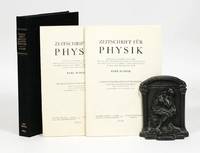
ref. 72537Braunschweig Friedrich Vierweg & Sohn; Berlin J. Springer 1924. 8vo 22.8 x 15.4 cm. 10 pp. Original printed wrappers. = First paper by the Indian physicist Satyendra Nath Bose 1894-1974 on thermal equilibrium in the radiation field in the presence of matter and second paper sent to Albert Einstein with the request to translate and publish it in a German physics journal. Einstein saw the importance of the paper but he disagreed with its contents and decided to add a lengthy comment. Subsequently Bose saw a way to circumvent Einstein's critique but never published this rebuttal. Nearly 50 years later Bose stated that he was disappointed by Einstein's remarks ".Bose had his own approach to quantum theory based on his views about the interconnectedness of spontaneous and induced emissions which formed the subject matter of his second and third papers. He did not agree with Einstein's proposal to treat them as independent physical processes. Stationary states in atoms have zero widths both in the old and the new quantum theories and therefore have infinite life-times whereas in reality they do decay and jump down to lower energy states with a finite life-time. What is the origin of these finite widths In Bose's view they are the consequence of the interaction between atom and environment as he attempted to show in his second and third papers. But Einstein did not agree and dismissed his views with the remark that in a world consisting of a single excited hydrogen atom and nothing else the atom would obviously emit a photon and come down to its ground-state! Einstein did not explain what would excite an atom in such a world. Bose was very disappointed by this simply because the world does have much more than a single hydrogen atom and inevitably every atom has an environment" Wali. Contained in: Zeitschrift für Physik volume 275-6. The complete issue in its original wrappers. Upper right corner somewhat bumped throughout. Rear wrapper slightly frayed at edges; minimal spotting at the fore and bottom edges. Volume number written on spine; otherwise a very good clean copy. Schilpp 188; Wali K. C. 2009. Satyendra Nath Bose: His Life and Times: Selected Works with Commentary p. xxvi. unknown
1924ref. 2905Berlin: Julius Springer 1924. First edition. original wrappers. Very Good. FIRST EDITION IN ORIGINAL WRAPPERS of the presentation of "Bose-Einstein statistics." “In 1924 Bose found a way to derive Planck’s equation for black body radiation using a statistical approach based entirely on the idea that light is made up of tiny particles photons. This echoed the statistical mechanics approach of Ludwig Boltzmann to the behaviour of gases but using a different statistical rule; it derives black body radiation entirely in quantum terms without using the idea of electromagnetic radiation at all. Bose wrote a paper about his discovery and sent it to Albert Einstein who immediately saw its significance translated it into German and arranged for its publication in the prestigious Zeitschrift für Physik. Einstein developed the idea to apply to other kinds of particle not just to a ‘gas’ of photons which is why this approach is usually referred to as ‘Bose-Einstein statistics’. Paul Dirac coined the name ‘bosons’ for particles which obey Bose-Einstein statistics" Gribbin Q is for Quantum. Particle Physics: One Hundred Years of Discoveries: “Discovery of new statistical counting rules for light quanta and a new derivation of Planck’s radiation law. Known as Bose-Einstein quantum statistics for particles with integer spins.” WITH a follow-up paper by Bose: "Wärmegleichgewicht im Strahlungsfeld bei Anwesenheit von Materie": "Bose's first paper in 'Zeitschrift für Physik' was followed by another that was also translated by Einstein and published during 1924. In it Bose provided a general statistical treatment of emission and absorption processes for electromagnetic radiation in equilibrium with matter. This paper was accompanied by a note by Einstein expressing serious doubts about the method. In January 1925 Bose wrote to Einstein from Paris that he was working on a paper he felt would remove these doubts. But it seems never to have been completed" DSB. Plancks Gesetz und Lichtquantenhypothese. IN: Zeitschrift für Physik Vol 26 No. 3 August 1924 pp. 178-81. Berlin: Julius Springer 1924. “Wärmegleichgewicht” Vol 27 No. 5/6 September 1924 pp. 384-93. Octavo original wrappers. “Planks Gesetz” with small closed tear at rear wrapper edge; otherwise fine condition; “Wärmegleichgewicht” with small chip to base of front wrapper. SCARCE in original wrappers. Julius Springer unknown
1924ref. 2905Berlin: Julius Springer 1924. First edition. original wrappers. Very Good. FIRST EDITION IN ORIGINAL WRAPPERS of the presentation of "Bose-Einstein statistics." “In 1924 Bose found a way to derive Planck’s equation for black body radiation using a statistical approach based entirely on the idea that light is made up of tiny particles photons. This echoed the statistical mechanics approach of Ludwig Boltzmann to the behaviour of gases but using a different statistical rule; it derives black body radiation entirely in quantum terms without using the idea of electromagnetic radiation at all. Bose wrote a paper about his discovery and sent it to Albert Einstein who immediately saw its significance translated it into German and arranged for its publication in the prestigious Zeitschrift für Physik. Einstein developed the idea to apply to other kinds of particle not just to a ‘gas’ of photons which is why this approach is usually referred to as ‘Bose-Einstein statistics’. Paul Dirac coined the name ‘bosons’ for particles which obey Bose-Einstein statistics" Gribbin Q is for Quantum. Particle Physics: One Hundred Years of Discoveries: “Discovery of new statistical counting rules for light quanta and a new derivation of Planck’s radiation law. Known as Bose-Einstein quantum statistics for particles with integer spins.” WITH a follow-up paper by Bose: "Wärmegleichgewicht im Strahlungsfeld bei Anwesenheit von Materie": "Bose's first paper in 'Zeitschrift für Physik' was followed by another that was also translated by Einstein and published during 1924. In it Bose provided a general statistical treatment of emission and absorption processes for electromagnetic radiation in equilibrium with matter. This paper was accompanied by a note by Einstein expressing serious doubts about the method. In January 1925 Bose wrote to Einstein from Paris that he was working on a paper he felt would remove these doubts. But it seems never to have been completed" DSB. Plancks Gesetz und Lichtquantenhypothese. IN: Zeitschrift für Physik Vol 26 No. 3 August 1924 pp. 178-81. Berlin: Julius Springer 1924. “Wärmegleichgewicht” Vol 27 No. 5/6 September 1924 pp. 384-93. Octavo original wrappers. “Planks Gesetz” with small closed tear at rear wrapper edge; otherwise fine condition; “Wärmegleichgewicht” with small chip to base of front wrapper. SCARCE in original wrappers. Julius Springer unknown books
1936ref. 200181New York, Stechert, 1936. VII, 152 S. OLwd.
1990ref. 233099München, Aether Verlag, 1990. 206 Seiten. 25 cm. Originalkarton.
2017ref. 31698Paris CNRS Édtions 2017 In-8 231 pp
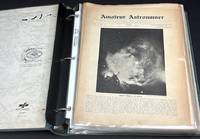
1936ref. H40351New York: Amateur Astronomers Association 1936. Very good. Old cloth 3-ring binder with acetate sheaths containing the issues. This started out as a 4 pp. periodical but expanded in later issues. In 1936 the journal merged with The Sky published by Hayden Planetarium which subsequently merged with The Telescope in 1941 to become Sky & Telescope which is still being published. Condition is mainly very good although the first three issues we have have some damage to fore-edges. The first issue has a supplementary sheet laid in "Professor Einstein Sends Greetings to the Amateur Astronomers Association" reprinting in facsimile the handwritten note with a printed translation and a facsimile of another note from Einstein. We have Vol. I nos. 1 & 2 April and May 1929; Vol. 2 nos. 1 September 1929 - 9 May-June 1930 -- the April 1930 issue has a cover story on the discovery of Pluto then considered the ninth planet. Pluto was first discovered on February 18 1930 by Clyde Tombaugh at the Lowell Observatory in Flagstaff Arizona.The discovery was announced on March 13 1930 in the Astronomical Journal.; Vol. III nos. 1 October-November 1930 - 7/8 May-June 1931; Vol. IV nos. 1 September-October 1931 - 8 Summer 1932; Vol. V nos. 1 September-October 1932 - 3 March 1933 -- these expanded to 6 pp. each; Vol. VI nos. 1 - 3 Winter & Spring 1933-1934 - Summer 1934 -- beginning with Vol. VI these are 16 pp. each; with the Spring issue cover story on Hayden Planetarium; Vol. VII nos. 1 Autumn 1934 - 3 Spring 1935; Vol. VIII nos. 1 Autumn 1935 - 3 Spring 1936. We don't know if we're missing any or not but it's a nice early run of this rare astronomical journal. Amateur Astronomers Association unknown
1996ref. x-0805815368Lawrence Erlbaum Assoc Inc 1996. Hardcover. New. 1st edition. 440 pages. 9.50x6.50x1.25 inches. Lawrence Erlbaum Assoc Inc hardcover
2016ref. x-1138984027Routledge 2016. Paperback. New. 438 pages. 9.02x5.98x0.99 inches. Routledge paperback
1995ref. Q-0805815368Psychology Press 1995-12-01. Hardcover. New. New. In shrink wrap. Looks like an interesting title! Psychology Press hardcover
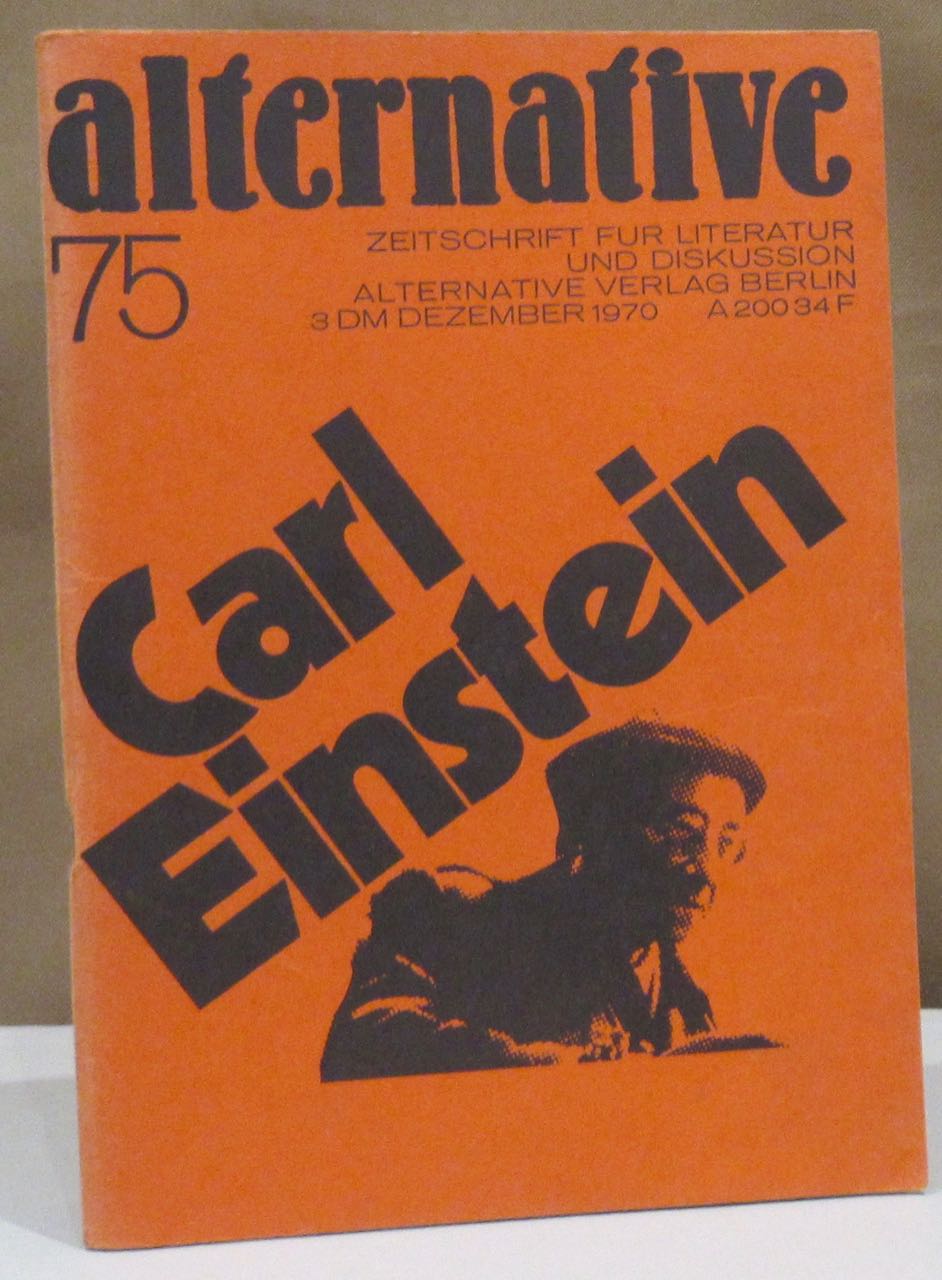
1970ref. 103865Berlin, Alternative 1970. 1970. S. 229- 275. Orig.-Karton.
2005ref. 98932Wiley-VCH Verlag 2005. 727 Seiten., 8°. OPappe mit illustriertem OSchutzumschlag (dieser mit Gebrauchsspuren).,