Einstein, Albert,Biblio.com
3003 risultati
rif. 932865like new. unknown
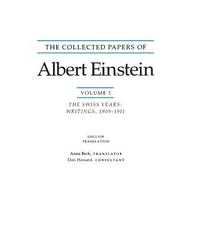
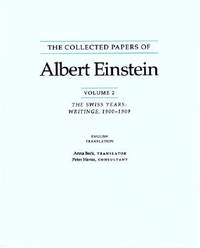
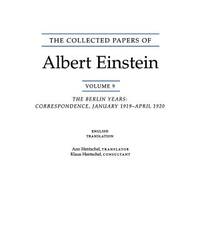
1992rif. 79402hUSA: Princeton University Press 1992. Book. Fine. Hardcover. 4to - over 9¾ - 12" tall. Hardcover in dust jacket Clean tight and unmarked. Very neat -- a sound and handsome copy. . Princeton University Press Hardcover
1998rif. __069104841XPrinceton Univ Pr 1998. Paperback. New. illustrated edition. 650 pages. 10.00x8.00x1.75 inches. Princeton Univ Pr paperback
1996rif. x-0691026106Princeton Univ Pr 1996. Paperback. New. 420 pages. 10.25x7.75x0.75 inches. Princeton Univ Pr paperback
1987rif. x-0691084750Princeton Univ Pr 1987. Paperback. New. 220 pages. 10.25x7.75x0.75 inches. Princeton Univ Pr paperback
2002rif. x-0691057184Princeton Univ Pr 2002. Paperback. New. 1st edition. 432 pages. 10.00x7.50x1.25 inches. Princeton Univ Pr paperback
1997rif. x-0691017344Princeton Univ Pr 1997. Paperback. New. 464 pages. 10.00x7.50x1.00 inches. Princeton Univ Pr paperback
1993rif. x-0691102503Princeton Univ Pr 1993. Paperback. New. 447 pages. 10.25x7.75x0.75 inches. Princeton Univ Pr paperback
1989rif. x-0691085498Princeton Univ Pr 1989. Paperback. New. illustrated edition. 413 pages. 10.00x7.75x1.00 inches. Princeton Univ Pr paperback
2004rif. x-0691121249Princeton Univ Pr 2004. Paperback. New. 1st edition. 472 pages. 9.75x7.25x0.80 inches. Princeton Univ Pr paperback
1976Clark Ronald W. Clark Ronald W. Einstein. La vita pubblica e privata del più grande scienziato del nostro tempo. Rizzoli 1976 - I.. Milano, Rizzoli 1976 - I italiano, in ottavo pp. 742 33913 Clark Ronald W. Einstein. La vita pubblica e privata del più grande scienziato del nostro tempo. Rizzoli 1976 - I. In-8. pp. 742. Cartonato con sovraccoperta. Perfetto.
rif. 0838823742New. paperback. New. Satisfaction Guaranteed or your money back. paperback
2000rif. Q-0838823750Educators Publishing Service Inc 2000-01-01. Paperback. New. New. In shrink wrap. Looks like an interesting title! Educators Publishing Service, Inc paperback
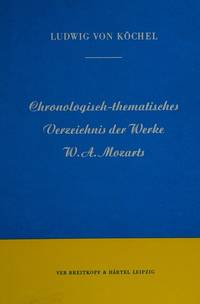
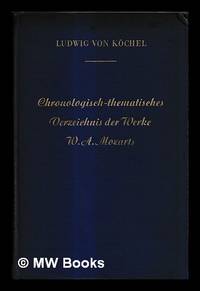
1989rif. BN586969VEB Breitkopf & Härtel 1989. 1989. Chronologisch-thematisches Verzeichnis sämtlicher Tonwerke Wolfgang Amadé Mozarts nebst Angabe der verlorengegangenen angefangenen übertragenen zweifelhaften und unterschobenen Kompositionen = Köchelverzeichnis Chronologisch-thematisches Verzeichnis sämtlicher Tonwerke Wolfgang Amadé Mozarts nebst Angabe der verlorengegangenen angefangenen übertragenen zweifelhaften und unterschobenen Kompositionen = Köchelverzeichnis Alfred Einstein ed. Ludwig Ritter von Köchel VEB Breitkopf & Härtel unknown
1961rif. 481943Leipzig : Breitkopf & Härtel 1961. Fifth Edition. Hardcover. Very good copy in the original gilt-blocked blue cloth boards slightly scuffed and edgeworn. Edges and prelims foxed the former somewhat dust-toned. Remains well-preserved overall; internally strong and clean. Physical description; xlix 984 pages : music ; 27 cm. Notes; ©1937. Subjects; Mozart Wolfgang Amadeus 1756-1791. Thematic catalogs Music. Leipzig : Breitkopf & Härtel hardcover
1975rif. 74662Leipzig: Veb Breitkopf & Hartel Musikverlag 1975. 4to. GERMAN TEXT. xlix 984 pp. Blue cloth with gilt lettering to spine and board in damaged jacket with crude repair. Clean boards and internally clean. This is a heavy item and may require additional postage if being shipped outside of Europe. . Very Good. Cloth. 1975. Veb Breitkopf & Hartel Musikverlag 1975 hardcover
1947rif. 13533MUSAnn Arbor MI: Verlag Von J. W. Edwards 1947. Chronological-Thematic Listing of All Clay/Tone Works Wolfgang Amadeus Mozart: Together With Indication of the Missing Begun Transferred Doubtful and Compositions/Dritte Auflage Bearbeitet von Alfred Einstein Third Edition Works of Alfred Einstein/Mit Einem Supplement Berichtigungen und Zusatze von Alfred Einstein With a Supplement Corrections and Additive of Alfred Einstein. 1052 pp. Original dark blue cloth covers w/ gilt title on spine. Binding lightly soiled; title darkened. Top corners bumped. Light toning to edges of endpapers. Text in German. Contents nice. Third Edition. Hard Cover. Very Good/No Dust Jacket. 4to - over 9¾" - 12" tall. Verlag Von J. W. Edwards Hardcover
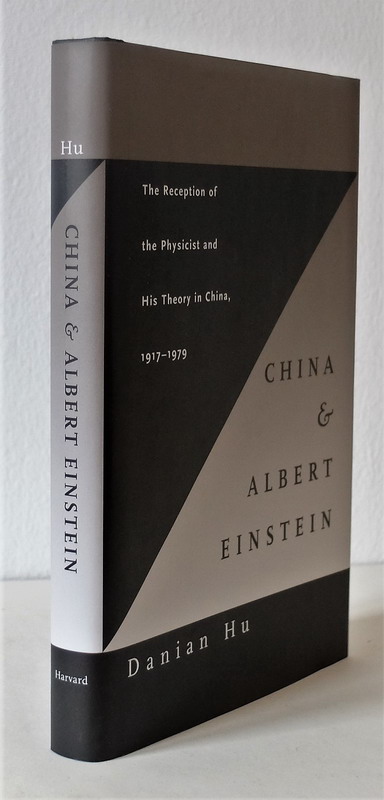
2005rif. 10441-0400Cambridge und London, Harvard University Press, 2005. Quart, Org.-Hardcover mit illustr. Org-SU, xiv, 257 (+ 1) S., wohlerhaltenes Exemplar. - ENGLISH: Quart, publisher's hardcover with publisher's D/J, xiv, 257 (+ 1) pp., a well preserved copy. ISBN 067401538X. - ENGLISH: Quart, publisher's hardcover with publisher's D/J, xiv, 257 (+ 1) pp., a well preserved copy
1990In-8°, pp. 295, qualche illustrazione in b/n nel testo, brossura editoriale. Qualche macchia prodotta dall'umidità ai tagli.
2013br. Nella nostra esperienza il presente è l'istante che separa ciò che non esiste più da ciò che non esiste ancora e il suo continuo movimento scandisce il passaggio irreversibile del tempo. Secondo Einstein e Gödel, tuttavia, le due teorie della relatività riducono il presente a un'illusione, e a parere di Boltzmann e molti altri fisici la differenza tra passato e futuro non può essere colta dalle leggi naturali. Come spiegare allora la nostra esperienza del tempo?
1992BOLLATI BORINGHIERI 1992. SEGNI DEL TEMPO, VOLUME PERFETTO.
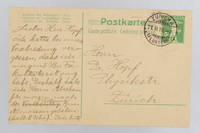
1910rif. 83637Zurich 21 juin 1910 | 9 x 14 cm | une carte postale
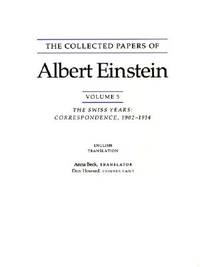
1910rif. 83637Zurich Zurich 1910. Fine. Einstein writes to a friend who introduced him to Carl Jung Zurich Zurich 21 juin 1910 9 x 14 cm une carte postale Autograph postcard signed by Albert Einstein to Ludwig Hopf. 18 lines written verso and recto address also in Einstein's handwriting. Postmarked June 21 1910. Published in The Collected Papers of Albert Einstein Volume 5: The Swiss Years: Correspondence 1902-1914 Princeton University Press 1993 n°218 p. 242. An exceptional and highly aesthetic card from Albert Einstein to ""the friend of the greatest geniuses of his time"" - according to Schrödinger - mathematician and physicist Ludwig Hopf who introduced Einstein to another 20th-century genius: Carl Jung. The master invites his pupil Hopf to a dinner party whose guests include scientist Max Abraham future great rival during Einstein's Zurich years and a fervent opponent of his theory of relativity. The recipient Ludwig Hopf joined Einstein in 1910 as an assistant and student at his physics and kinetic theory seminars at the University of Zürich. They signed two fundamental papers on the statistical aspects of radiation and gave their names to the ""Einstein-Hopf"" velocity-dependent drag force. Their letter exchanges retrace the complex path of Einstein's work on relativity and gravitation bearing witness to their great complicity and Hopf's invaluable contribution to the Master's research. A few months after writing the postcard Hopf even found an error in Einstein's calculations of the derivatives of certain velocity components which Einstein corrected in a paper the following year. They also formed a musical duo Hopf accompanied on the piano the Master's violin performing pieces by great musical geniuses like Bach and Mozart. With this card Einstein invited his pupil and friend Hopf to dinner with Max Abraham at the dawn of a major scientific controversy that would pit them against each other from 1911 onwards. Abraham's theory of special relativity failed to convince Einstein who criticized its lack of observational verification and its failure to predict the gravitational curvature of light. In 1912 their dispute became public through scientific articles. Abraham never acknowledged the validity of Einstein's theory. During their brilliant artistic and intellectual exchanges Hopf undoubtedly succeeded where Freud had failed as he declared to him in a letter: ""I shall break with you if you boast of having converted Einstein to psychoanalysis. A long conversation I had with him a few years ago showed me that analysis was as hermetic to him as the theory of relativity can be to me"" Vienna September 27 1931. As a fervent supporter of psychoanalysis Hopf is known to have introduced the famous psychoanalyst Carl Jung to Einstein. Hopf and his teacher both left for Prague's Karl-Ferdinand University in 1911 where they met writer Franz Kafka and his friend Max Brod in Madame Fanta's salon. With the rise of the Nazi regime the fates of the two theoreticians were plagued by persecution and exile. Einstein first took refuge in Belgium Hopf in Great Britain after his dismissal in 1934 from the University of Aachen because of his Jewish origins. They continued their prolific correspondence in the midst of the turmoil Einstein suggesting to Hopf the opening of a university abroad for exiled German students. Hopf died shortly after his appointment as chair of Mathematics studies at Trinity College Dublin in July 1939. A precious invitation from the great physicist to one of the final dinner gatherings of the ""old school"" of science embodied by Max Abraham on the eve of the publication of the theory of general relativity which would overturn classical conceptions of space and time and propel Science into the 20th century. unknown
1980rif. 1056931Medusa; Berlin, 1980. 518 S. : Illustrationen; 8°. Originalleinen mit Schutzumschlag.
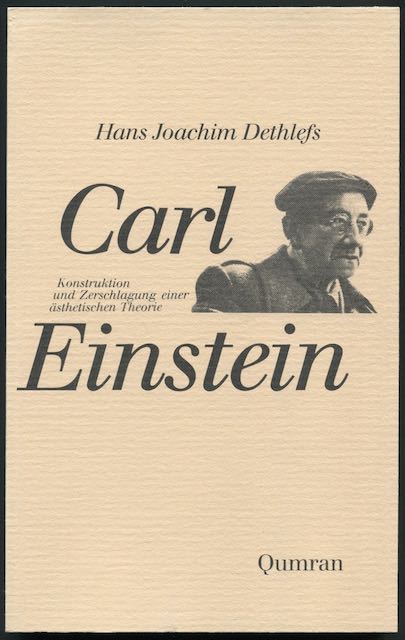
1985rif. 83168Ffm., New York: Edition Qumran im Campus Vlg. 1985. 140 Ss., 2 Bll. 8°. Illustr. Kt. mit Rücken- u. Deckeltitel, Zellophan-Umschl.