2.986 resultados
1975ref. 74662Leipzig: Veb Breitkopf & Hartel Musikverlag 1975. 4to. GERMAN TEXT. xlix 984 pp. Blue cloth with gilt lettering to spine and board in damaged jacket with crude repair. Clean boards and internally clean. This is a heavy item and may require additional postage if being shipped outside of Europe. . Very Good. Cloth. 1975. Veb Breitkopf & Hartel Musikverlag 1975 hardcover
1947ref. 13533MUSAnn Arbor MI: Verlag Von J. W. Edwards 1947. Chronological-Thematic Listing of All Clay/Tone Works Wolfgang Amadeus Mozart: Together With Indication of the Missing Begun Transferred Doubtful and Compositions/Dritte Auflage Bearbeitet von Alfred Einstein Third Edition Works of Alfred Einstein/Mit Einem Supplement Berichtigungen und Zusatze von Alfred Einstein With a Supplement Corrections and Additive of Alfred Einstein. 1052 pp. Original dark blue cloth covers w/ gilt title on spine. Binding lightly soiled; title darkened. Top corners bumped. Light toning to edges of endpapers. Text in German. Contents nice. Third Edition. Hard Cover. Very Good/No Dust Jacket. 4to - over 9¾" - 12" tall. Verlag Von J. W. Edwards Hardcover
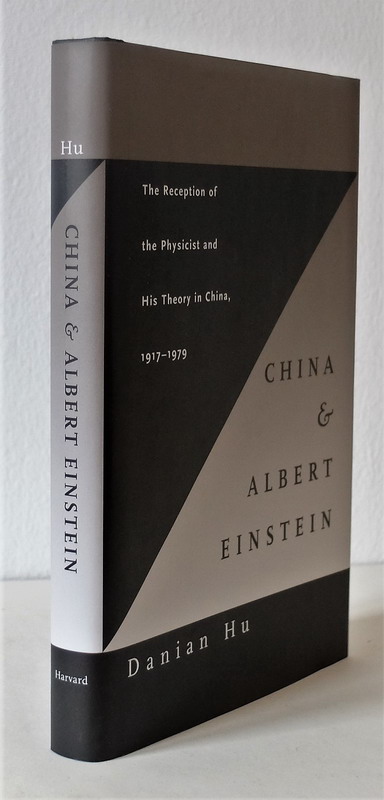
2005ref. 10441-0400Cambridge und London, Harvard University Press, 2005. Quart, Org.-Hardcover mit illustr. Org-SU, xiv, 257 (+ 1) S., wohlerhaltenes Exemplar. - ENGLISH: Quart, publisher's hardcover with publisher's D/J, xiv, 257 (+ 1) pp., a well preserved copy. ISBN 067401538X. - ENGLISH: Quart, publisher's hardcover with publisher's D/J, xiv, 257 (+ 1) pp., a well preserved copy
1990In-8°, pp. 295, qualche illustrazione in b/n nel testo, brossura editoriale. Qualche macchia prodotta dall'umidità ai tagli.
2013br. Nella nostra esperienza il presente è l'istante che separa ciò che non esiste più da ciò che non esiste ancora e il suo continuo movimento scandisce il passaggio irreversibile del tempo. Secondo Einstein e Gödel, tuttavia, le due teorie della relatività riducono il presente a un'illusione, e a parere di Boltzmann e molti altri fisici la differenza tra passato e futuro non può essere colta dalle leggi naturali. Come spiegare allora la nostra esperienza del tempo?
1992BOLLATI BORINGHIERI 1992. SEGNI DEL TEMPO, VOLUME PERFETTO.
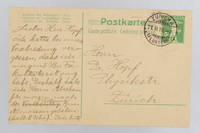
1910ref. 83637Zurich 21 juin 1910 | 9 x 14 cm | une carte postale
1910ref. 83637Zurich Zurich 1910. Fine. Einstein writes to a friend who introduced him to Carl Jung Zurich Zurich 21 juin 1910 9 x 14 cm une carte postale Autograph postcard signed by Albert Einstein to Ludwig Hopf. 18 lines written verso and recto address also in Einstein's handwriting. Postmarked June 21 1910. Published in The Collected Papers of Albert Einstein Volume 5: The Swiss Years: Correspondence 1902-1914 Princeton University Press 1993 n°218 p. 242. An exceptional and highly aesthetic card from Albert Einstein to ""the friend of the greatest geniuses of his time"" - according to Schrödinger - mathematician and physicist Ludwig Hopf who introduced Einstein to another 20th-century genius: Carl Jung. The master invites his pupil Hopf to a dinner party whose guests include scientist Max Abraham future great rival during Einstein's Zurich years and a fervent opponent of his theory of relativity. The recipient Ludwig Hopf joined Einstein in 1910 as an assistant and student at his physics and kinetic theory seminars at the University of Zürich. They signed two fundamental papers on the statistical aspects of radiation and gave their names to the ""Einstein-Hopf"" velocity-dependent drag force. Their letter exchanges retrace the complex path of Einstein's work on relativity and gravitation bearing witness to their great complicity and Hopf's invaluable contribution to the Master's research. A few months after writing the postcard Hopf even found an error in Einstein's calculations of the derivatives of certain velocity components which Einstein corrected in a paper the following year. They also formed a musical duo Hopf accompanied on the piano the Master's violin performing pieces by great musical geniuses like Bach and Mozart. With this card Einstein invited his pupil and friend Hopf to dinner with Max Abraham at the dawn of a major scientific controversy that would pit them against each other from 1911 onwards. Abraham's theory of special relativity failed to convince Einstein who criticized its lack of observational verification and its failure to predict the gravitational curvature of light. In 1912 their dispute became public through scientific articles. Abraham never acknowledged the validity of Einstein's theory. During their brilliant artistic and intellectual exchanges Hopf undoubtedly succeeded where Freud had failed as he declared to him in a letter: ""I shall break with you if you boast of having converted Einstein to psychoanalysis. A long conversation I had with him a few years ago showed me that analysis was as hermetic to him as the theory of relativity can be to me"" Vienna September 27 1931. As a fervent supporter of psychoanalysis Hopf is known to have introduced the famous psychoanalyst Carl Jung to Einstein. Hopf and his teacher both left for Prague's Karl-Ferdinand University in 1911 where they met writer Franz Kafka and his friend Max Brod in Madame Fanta's salon. With the rise of the Nazi regime the fates of the two theoreticians were plagued by persecution and exile. Einstein first took refuge in Belgium Hopf in Great Britain after his dismissal in 1934 from the University of Aachen because of his Jewish origins. They continued their prolific correspondence in the midst of the turmoil Einstein suggesting to Hopf the opening of a university abroad for exiled German students. Hopf died shortly after his appointment as chair of Mathematics studies at Trinity College Dublin in July 1939. A precious invitation from the great physicist to one of the final dinner gatherings of the ""old school"" of science embodied by Max Abraham on the eve of the publication of the theory of general relativity which would overturn classical conceptions of space and time and propel Science into the 20th century. unknown
1980ref. 1056931Medusa; Berlin, 1980. 518 S. : Illustrationen; 8°. Originalleinen mit Schutzumschlag.
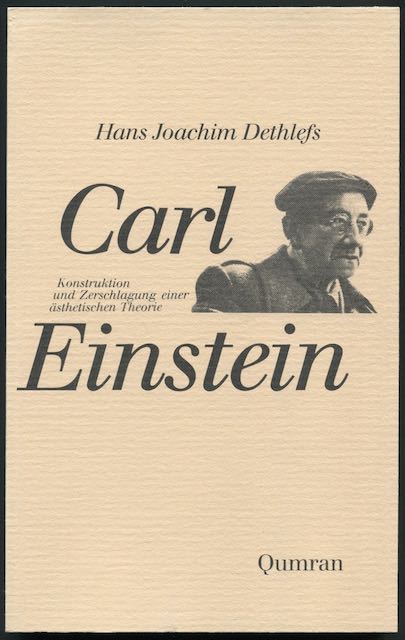
1985ref. 83168Ffm., New York: Edition Qumran im Campus Vlg. 1985. 140 Ss., 2 Bll. 8°. Illustr. Kt. mit Rücken- u. Deckeltitel, Zellophan-Umschl.
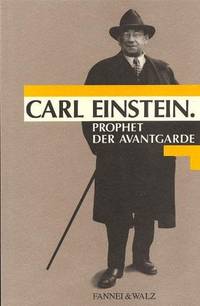
ref. L16650Presses de l'Université de Paris-Sorbonne, 2002. In-8 br. Coll. " Monde germanique ". Importante biographie de C. Einstein, considéré comme " découvreur de l'art africain ", théoricien de l'art moderne, co-fondateur de la revue DOCUMENTS avec Georges Bataille, ami de nombreux artistes et galeristes, etc. Témoignages de Kahnweiler, L. et M. Leiris, Maria Jolas. Bibliographie, illustrations. E.O.
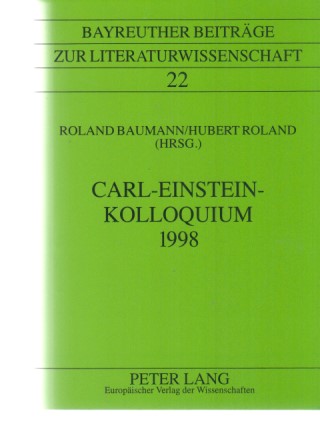
2001ref. 1199467Frankfurt am Main ; Berlin ; Bern ; Bruxelles ; New York ; Oxford ; Wien : Lang, 2001. 314 S. : Illustr. ; 21 cm; kart.
2007ref. 188899-1München, W. Fink ( 2007). Gr.8°. 282 S. Mit 27 Textabb. Original-Kartonband
ref. 3927574104.Gpaperback. Good. Access codes and supplements are not guaranteed with used items. May be an ex-library book. paperback
ref. 46563Berlin Akademie 2006. 4° 492 S. Abb. OLwd. m. OU Tadellos. EA. = Deutsches Forum für Kunstgeschichte. 010 Berlin, Akademie, 2006 unknown
2016Antonio Acin Capire Einstein: Dall'intuizione alle onde gravitazionali. , hacette 2016, libro complessivamente in ottime condizioni Buono (Good) . 137
2016Antonio Acin Capire Einstein - dall'intuizione alle onde gravitazionali. , Hachette 2016, Copertina rigida plastificata; pagine integre con immagini illustrative; il libro si presenta in buone condizioni Molto buono (Very Good) . Copertina rigida 143
2005ref. 55266Frankfurt am Main : Fischer / dtv, 2005. 2 Einführungswerke zur Relativitätstheorie im Konvolut 133 / 127 S. Taschenbücher
ref. 44077Traduction de l'allemand et postface de Sabine Wolf. Paris : Editions Les Presses du réel (Collection "L'écart absolu"), 2000. Un volume broché (11x17 cm), 138 pages. Précédé d'une lettre de Franz Blei à l'auteur et suivi d'une lettre de l'auteur à Daniel Henry Kahnweiler. Bon état.
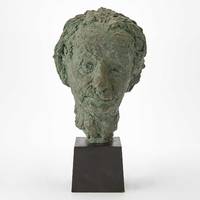
ref. 150644Plaster bust of theoretical physicist Albert Einstein mounted on a wood pedestal base with an incised signature within the plaster. The entire piece measures 15 inches by 8 inches. From the collection of actress LeGrand Mellon 1937-2005 an American performer whose career spans film television and theater. In addition to her acting career Mellon had been involved in creative and cultural work connected to Haiti launching micro-businesses and continuing the work of her late first husband William Larimer Mellon III with Hôpital Albert Schweitzer. In very good condition. Albert Einstein developed the general theory of relativity one of the two pillars of modern physics alongside quantum mechanics. Einstein's work is also known for its influence on the philosophy of science. Einstein is best known in popular culture for his mass–energy equivalence formula E = mc2 which has been dubbed "the world's most famous equation". He received the 1921 Nobel Prize in Physics for his "services to theoretical physics" in particular his discovery of the law of the photoelectric effect a pivotal step in the evolution of quantum theory David Bodanis. unknown
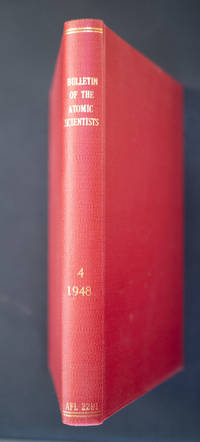
1948ref. 6625Chicago: The Atomic Scientists of Chicago 1948. Original edition. Ex-library. Very Good. 28 cm; 384 pages. Cloth-bound volume of 12 issues. Duplicate surplus stamp of Library of Congress on front free endpaper. Later owner's stamp on free endleaves blacked out. Lively forum of discussion of various scientific social and political implications of atomic energy as the post-war radioactive dust settled over the Pacific and wherever else open-air tests of atomic weaponry took place. Opens with Einstein's "Plea for International Understanding." Issue #2 features a written debate between Einstein and four Soviet scientists Semyonov Vavilov Frumkin and Ioffe. A scenario describes the potential effect of an atomic bomb on Washington DC. Justice William O. Douglas contributes "Democracy and Communism." Harry Truman presents a "Message to the Atomic Scientists." Other contributors include Cardinal Cushing Thomas E. Dewey Max von Laue and many other scientists and statesmen involved in the post-war debates The Atomic Scientists of Chicago hardcover books
1948ref. 6625Chicago: The Atomic Scientists of Chicago 1948. Original edition. Ex-library. Very Good. 28 cm; 384 pages. Cloth-bound volume of 12 issues. Duplicate surplus stamp of Library of Congress on front free endpaper. Later owner's stamp on free endleaves blacked out. Lively forum of discussion of various scientific social and political implications of atomic energy as the post-war radioactive dust settled over the Pacific and wherever else open-air tests of atomic weaponry took place. Opens with Einstein's "Plea for International Understanding." Issue #2 features a written debate between Einstein and four Soviet scientists Semyonov Vavilov Frumkin and Ioffe. A scenario describes the potential effect of an atomic bomb on Washington DC. Justice William O. Douglas contributes "Democracy and Communism." Harry Truman presents a "Message to the Atomic Scientists." Other contributors include Cardinal Cushing Thomas E. Dewey Max von Laue and many other scientists and statesmen involved in the post-war debates The Atomic Scientists of Chicago hardcover
ref. B9781258001582Hardback. New. hardcover
2011ref. Atlantic-9781258112943Literary Licensing 2011. Paperback. New. Literary Licensing paperback
2011ref. Atlantic-9781258112943Literary Licensing 2011. Paperback. New. Literary Licensing paperback