Albert EinsteinABAA

3003 resultados
ref. 2034512/12/30. We obtained this photograph directly from the Guard heirs and it has never before been offered for sale In December 1930 Albert Einstein visited America for the second time. It was originally intended as merely a two-month working visit as a research fellow at the California Institute of Technology but Einstein’s popularity made the trip headline news. After arriving in New York City Einstein was taken to various places and events including Chinatown a lunch with the editors of The New York Times and a performance of Carmen at the Metropolitan Opera on December 12 where Einstein an opera buff who revered Mozart Bach and other great composers was cheered by the audience on his arrival. William Guard was engaged by the Manhattan Opera Company as a press representative upon its organization in 1906. Upon the company's dissolution he took a similar position with the Metropolitan Opera remaining with the company until his death in 1932. Einstein met Guard at his office on his visit to the Met. <img class=""alignnone wp-image-26178 size-post-window"" src=""https://cdn.raabcollection.com/wp-content/uploads/20231204133729/Einstein-Opera-1-e1673307039907-1600x1193.jpg"" alt="""" width=""1600"" height=""1193"" /> Newspapers reported on December 14 1930: “Einstein Theory Defined in Sentence”. “At last Prof. Einstein has hit upon a one sentence definition of relativity which anyone can understand. He was chatting recently in the office of William Guard factotum of the Metropolitan Opera. ‘Professor’ said Guard ‘I have a definition of your relativity theory and I would like to know if it is correct.’ The Professor smiled. There are presumed to be only a handful of wise men in the entire world who are able to understand it. ‘My definition is this’ said Guard. ‘There is no hitching post in the universe—so far as we know.’ Einstein laughed and nodded assent vigorously.” A spectacular 8 by 10 inch photograph of Einstein inscribed and presented by the great scientist to Guard on his visit to the Met: ""Mr. William J. Guard / A. Einstein / 12. XII.30.” We obtained this photograph directly from the Guard heirs and it has never before been offered for sale. unknown books
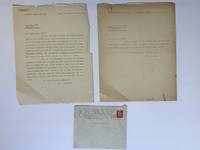
1931ref. 1403337Potsdam Germany 1931. Two letters by Albert Einstein. The first is a single-paged autograph letter signed by Albert Einstein with one horizontal fold and one vertical fold. In Very Good condition . Measuring 22.5 x 28.5 cm. Letter accompanied with mailing envelope both with matching paper-clip rust stain. Letter with some light wear along edges small staining to lower corner. Addressed to G. W. Meyer and dated 8 Oktober 31 in Potsdam the Letter reads in full: "Sehr geehrter Herr! Indem ich Ihnen für die Uebersendung des Buches von Henry George bestens danke sende ich Ihnen anliegend die gewünschte Meinungsäusserung mit der Bitte um Weiterleitung an Mrs. Evans. Mit ausgezeichneter Hochachtung" and signed in ink "A. Einstein". He thanks Meyer for serving as an intermediary in getting a book to him and for forwarding the enclosed letter. The second letter is a typed copy of Einstein's previously enclosed letter presumably made by Meyer before he passed the original on to Evans. Addressed to R. W. Evans and dated 8.10.1931 in Potsdam the letter discusses Henry George's economic theory of poverty and land nationalization compares it to Franz Oppenheimer's work and proposes questions to be asked. Presumably he was sent a copy of Henry George's Progress and Poverty. First published in 1879 it sparked the Progressive Era discussing the paradox of increasing inequality and poverty amid economic and technological progress as well as the economic value of land. Consignment. Shelved Case 3. The Letter reads in full: "Sehr geehrte Mrs. Evans! Ich habe das Buch von Henry George zum grössten Teil mit ausserordentlichem Interesse gelesen und glaube dass es in der Hauptsache einen unanfechtbaren Standpunkt vertritt insbesondere was die Ursache der Armut betrifft. Nie in diesem Buch vertretenen Ansichten stimmen soweit ich es beurteilen kann vollkommen mit den Resultaten des zeitgenössischen Professors Franz Oppenheimer überein der sie offenbar selbständig herausgefunden hat. Nicht einverstanden bin ich mit der Theorie des Zinses. Mit dem vorgeschlagenen Heilmittel der Verstaatlichung des Bodens und der Bodenschätzung scheint mir allerdings mehr ein Problem als eine Lösung gegeben zu sein. Soll z. Beispiel ein Boden Eigentum der Gemeinschaft das darauf hingestellte Haus aber Privateigentum sein Jedenfalls ist es schon von höchster Wichtigkeit dass das Wesen des Uebels klar aufgezeigt ist. Schon darum wäre es wichtig wenn das Buch die ihm gebührende Beachtung fände. Mit ausgezeichneter Hochachtung gez. A. Einstein." 1403337. Shelved Dupont Bookstore. unknown books
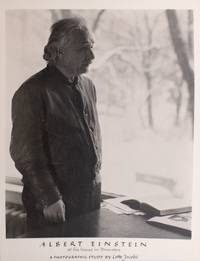
1940ref. 3293321940. Black and white photographic print. 6 1/2 x 4 7/8 in. Fine. Black and white photographic print. 6 1/2 x 4 7/8 in. unknown books
1981ref. 417274Frankfurt/M. Buchhändler-Vereinigung, (1981). M. mehr. Abb. 57 S. OBr. Sign. Widm. d. Verf. beiliegend.
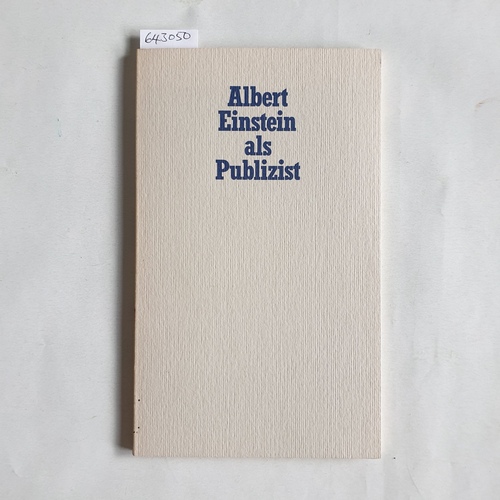
1981ref. 643050Frankfurt am Main: Buchhändler-Vereinigung. 1981. Ill. 57 S. 20 cm. Zustand: Sehr Gut gering gebräunt (Innen); Einband (Außen) hat min. Gebrauchsspuren; Buchrücken min. lichtrandig; Vorderdeckel u. Buchrücken sind min. fleckig; Broschiert
1976307 S. : Ill., graph. Darst. , 24 cm Leinen mit OUmschlg Zustand sehr gut. - The indicated shipping costs refer to books weighing up to one kilogram. - Bücher, die schwerer als ein Kilogramm oder größer als 35 x 25 cm sind, werden als Paket verschickt und kosten innerhalb Deutschlands bis zu zwei Kilogramm 6 Euro, darüber hinaus 7 Euro Porto. -
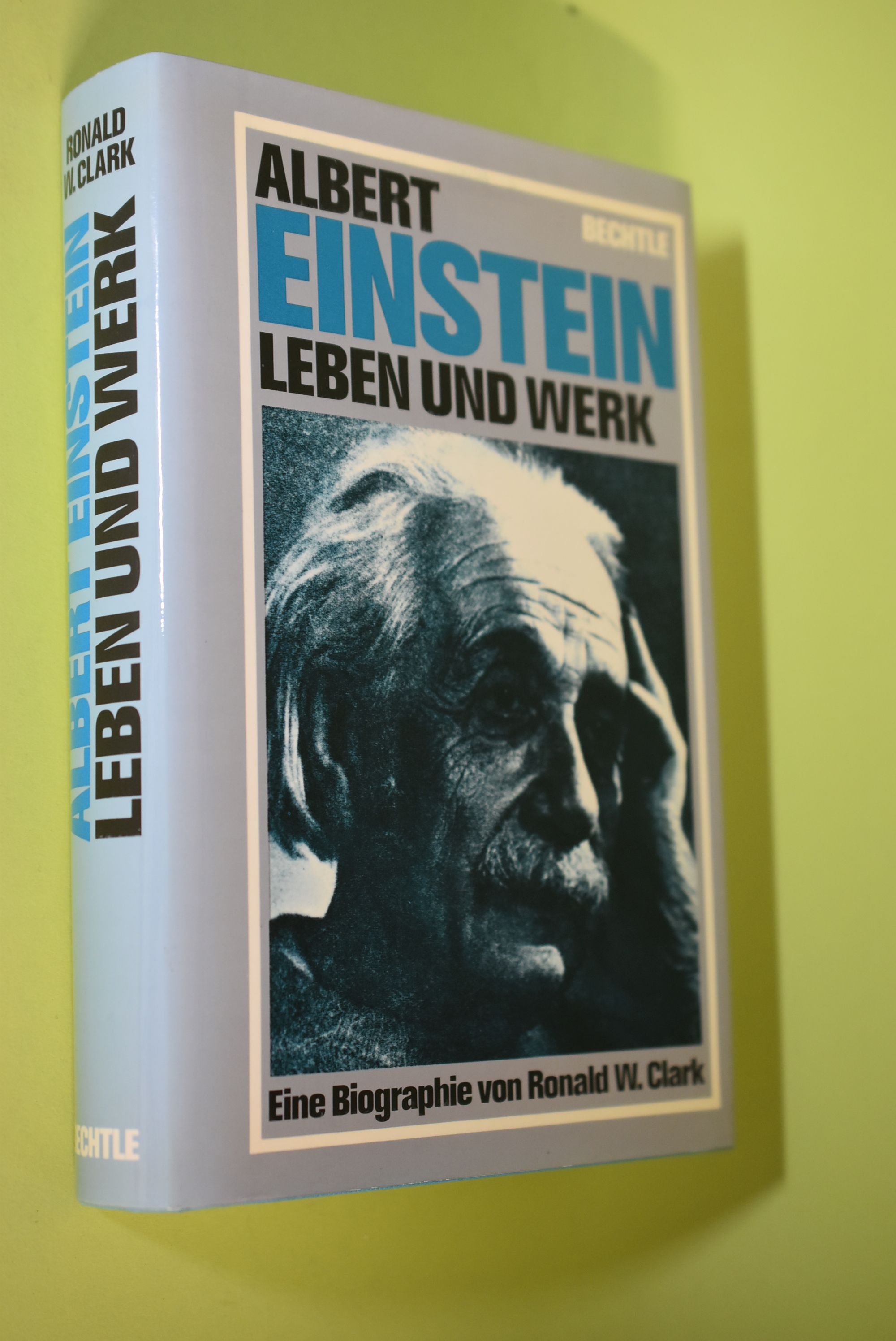
1974ref. 77374Esslingen : Bechtle 1974. XV, 507 S. : Ill.; ; 23 cm Leinen 0
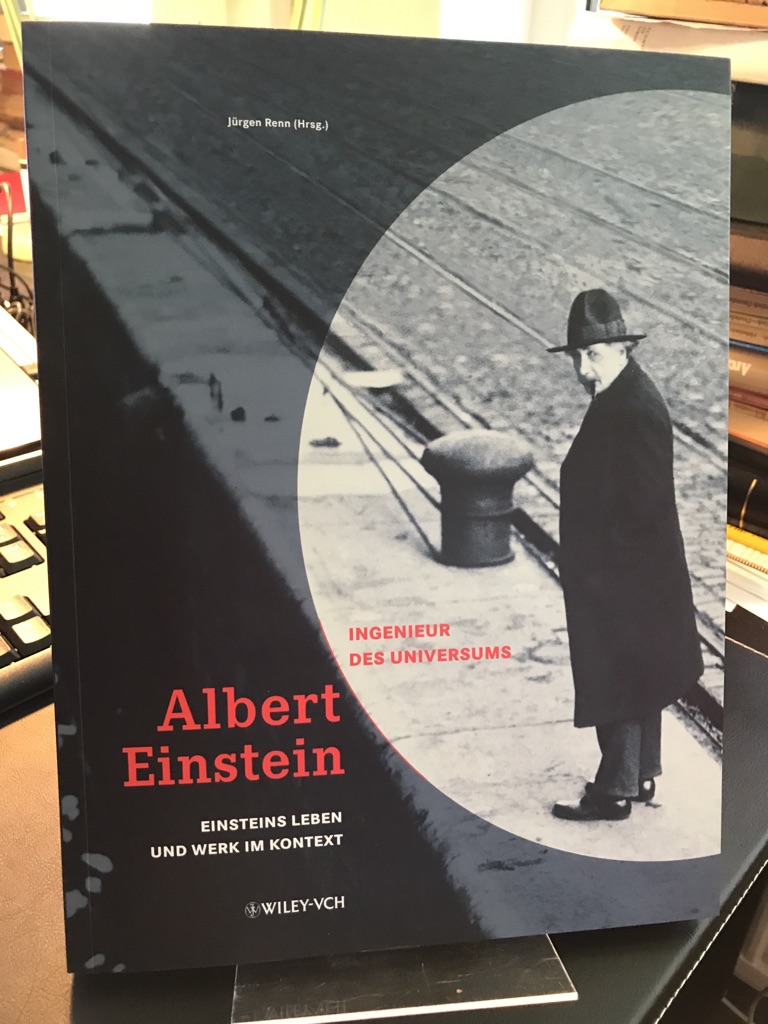
2005ref. 157295Weinheim : Wiley-VCH-Verl., 2005. 255 S., Ill. OPp., gebundene Ausgabe.
2005ref. 228665München : Bertelsmann, 2005. 542, [32] S. : Ill. 24 cm. OPp., gebundene Ausgabe, SU.
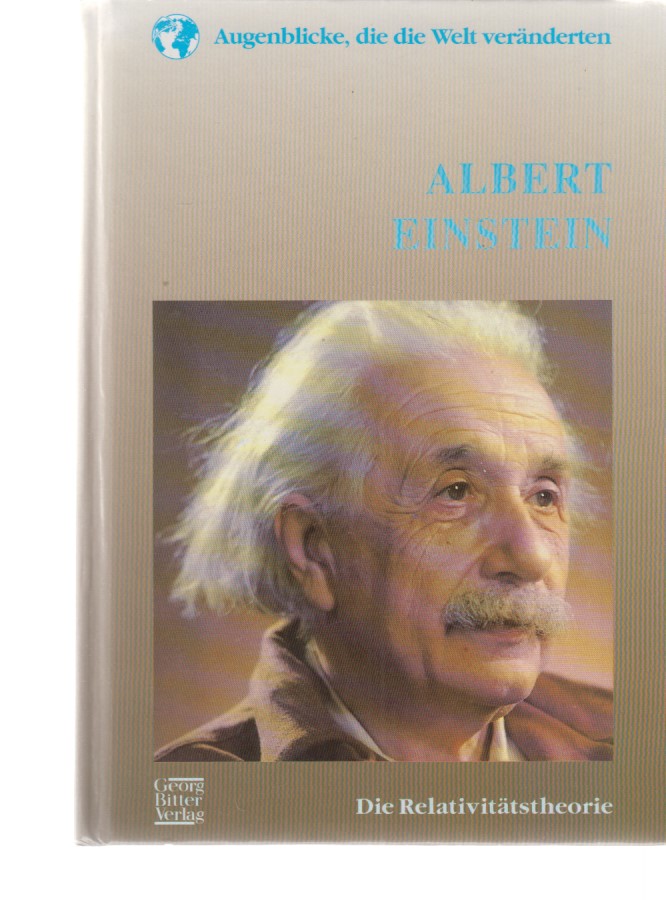
1992ref. 1206119Recklinghausen; Georg Bitter Verlag, 1992. 64 S. : zahlr. Illustr (auch farbig). ; 22 cm; fadengeh., illustr. Orig.-Pappband.
1992Gutes Ex.; innen sehr wenige Bleistift-Anstreichungen. - ... Heutzutage ist die Formel E=mc2 jedem Schulkind vertraut, und die physikalischen Gesetze, die Einstein formulierte, gehören zum Lehrstoff an allen Universitäten der Welt. Einstein war ein Genie, dessen Theorien die althergebrachten Vorstellungen von Raum und Zeit revolutionierten. Aber er war noch mehr. Er war ein tiefgründiger Denker von großer Menschlichkeit und eigenwilligem Charakter. Er hatte sich der Sache des Friedens, der Freiheit und der Gerechtigkeit verschrieben. Und er besaß den Mut, für das, woran er glaubte, auch in einer Zeit einzustehen, in der Meinungsäußerungen lebensgefährlich sein konnten. Er zeigte, daß es für Wissenschaftler nicht ausreicht, im "Elfenbeinturm" zu forschen, sondern daß sie auch Verantwortung für die praktischen Auswirkungen ihrer Entdeckungen übernehmen müssen. (Verlagstext) // INHALT / Kapitel: Einsteins Vorhersagen; Eine Theorie, die die Welt veränderte; Musik und Mathematik; Die Schulzeit; Gott und die Natur; Familie Einstein verläßt Deutschland; Neue freunde; Vor Einstein; Neue Probleme für die Wissenschaftler; Absoluter Raum und absolute Zeit; Bestimmung des Raumes; Bestimmung der Zeit; Bestimmung der Lichtgeschwindigkeit; Zeit ist nicht absolut; Eine neue Sichtweise der Welt; Milevas wissenschaftlicher Beitrag; Quantenmechanik; Die Kräfte der Natur vereinheitlichen / u.a.m. ISBN 9783790304657
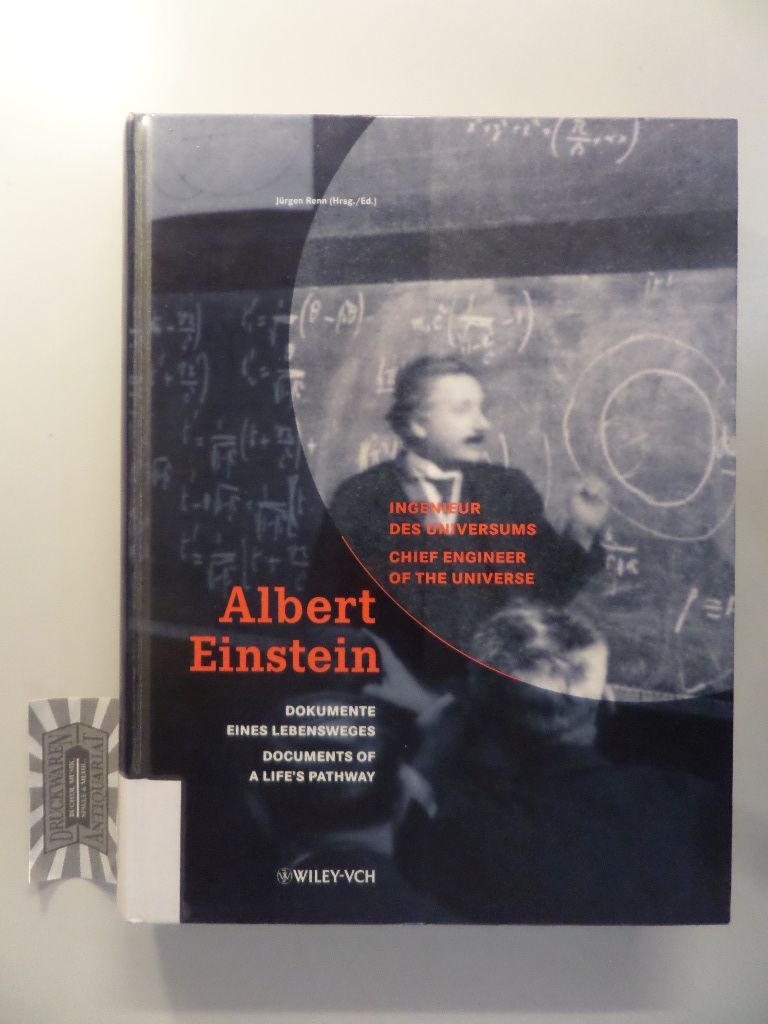
2005ref. 97161Weinheim : Wiley-VCH-Verlag, 2005. 253 S. mit zahlreichen Abbildungen; 29 cm; OKart.;
1951Mm 125x 185 Volume di pp. 172, cartonato rigido, sovraccoperta editoriale,"Biblioteca moderna Mondadori" n.187. Firma di appartenenza all'occhiello. SPEDIZIONE ENTRO 24 ORE.
'Biblioteca Moderna Mondadori : CLXXXVII'. Prima edizione nella collana. Traduzione di Laurana Palombi. 16mo (cm 18,5 x 11,5 ca); cartonato editoriale, p. 169 (5). Ordinario accenno di brunitura della carta; una trascurabile macchiolina sul margine bianco superiore di pp. 151/152. Buona copia. Biografia romanzata ad opera della scrittrice ebrea americana.
1974ref. 43240Leipzig, BSB B.G. Teubner Verlagsgesellschaft, 1974. 116 Seiten , 19 cm, kartoniert
1940ref. 3293321940. Black and white photographic print. 6 1/2 x 4 7/8 in. Fine. Black and white photographic print. 6 1/2 x 4 7/8 in. unknown
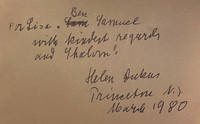
1979ref. 32820372FIRST EDITION. Presentation copy inscribed by Einstein's longtime assistant Helen Dukas: "For Lisa Ben Samuel with kindest regards and Shalom Helen Dukas Princeton N.J. March 1980." Helen Dukas became Einstein's secretary in 1928 and after his death in 1955 served as a trustee of his literary estate and archivist of his papers. This volume prints letters and documents selected by Dukas over the years to shed light on Einstein's character and personality. Original cloth and dust jacket. Some rubbing to jacket else very good. Princeton: University Press
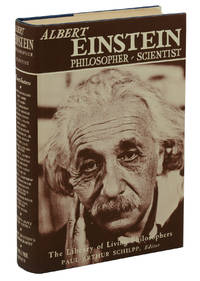
1949ref. 140941891Evanston IL: The Library of Living Philosophers Inc 1949. First Edition. Fine/Fine. First edition trade issue. xvi 781 pp. Bound in publisher's navy cloth with gilt spine lettering. Fine with offsetting to endpapers in a Fine dust jacket unfaded and unworn. A very sharp copy of a collectible volume all about the famous theoretical physicist. The Library of Living Philosophers, Inc unknown
1949ref. 140941039Evanston IL: The Library of Living Philosophers Inc 1949. First Edition. Near Fine/Very Good. First edition first printing. Bound in publisher's original dark blue cloth stamped in gilt. Near Fine with toning to pages offsetting to endsheets former owner name to front free endpaper and small sticker ghost to front paste down. In a Very Good dust jacket with fraying and chip at bottom spine end and short closed tear at head light edge wear toning and soiling to rear panel. The Library of Living Philosophers, Inc unknown
2000ref. 374007Shanghai Translation Publishing House; 1 January 2000-01-01. paperback. Used - Good. Ship out in 2 business day And Fast shipping Free Tracking number will be provided after the shipment.Paperback. Pages Number: 151 Language: Chinese. Publisher: Shanghai Translation Publishing House; 1 199 Satisfaction guaranteedor money back. Shanghai Translation Publishing House; 1 (January paperback
1979ref. N2216Braunschweig / Wiesbaden: Fiedr.Vieweg & Sohn 1979. Original Cloth with d/j. Near Fine. 8vo. XV22pp. A fine copy with fine DJ. Fiedr.Vieweg & Sohn hardcover
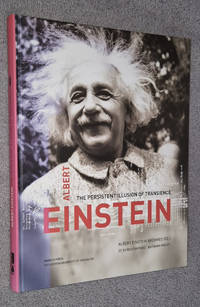
2007ref. 018809Particularly well-illustrated survey of Einstein's life and ideas through photographs and reproductions of his fascinating personal papers. 263 p. : ill. some col. ; 32 cm. Rev. and enlarged ed. Previous ed. published under the title: Albert through the looking-glass. 1998. Illustrated boards slight shelf wear to edges some fading around the spine no inscriptions tight and square binding. Photographs available on request. All books dispatched same or next working day in robust packaging. Albert Einstein Archives : Magnes Press, the Hebrew University of Jerusalem hardcover
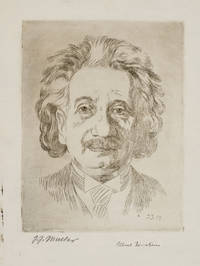
1933ref. H-217A stunning portrait etching of one of the greatest human minds signed by both the artist J J Muller and Albert Einstein. The sketch is signed in ink by Einstein and by the artist J. J. Muller in pencil n.p. 1933. Plate 195 x 150mm; sheet 253 x 200mm. A true collector's copy of a beautiful signed portrait.
ref. Juanpebooks038106WE ship worldwide. Brand new 100%guarentee unknown
1949ref. 343971949. On scientists and military work: “The majority of really good scientists in this country have withdrawn from military work…The young ones who cannot lean upon a standing of their own have generally given in to the almost irresistible pressure. One cannot expect it to be any different."" Einstein and other scientists faced the harsh reality of the product of their work after the war and the bombing of Japan; Here Einstein in a way grapples with his own role On the timeless nature of fighting for what you believe: “The truth appears foolish to the insane.Lost people are content to find themselves in agreement with the masses."" <img class=""alignnone wp-image-34606 size-post-window"" src=""https://cdn.raabcollection.com/wp-content/uploads/20251001204256/Einstein_Letter_11-1-1600x897.jpg"" alt="""" width=""1600"" height=""897"" /> Although Albert Einstein’s participation in the production of the atomic bomb was limited the public perceived his role as crucial and he was in fact the face of the project to many. The reasons were that although he did not work on the Manhattan Project the US effort to build the bomb his famous equation E=mc2 provided the theoretical basis for understanding the immense energy released in nuclear fission which is the process that powers the bomb. And his 1939 letter to President Roosevelt co-signed by Leo Szilárd alerted the US government to the potential of nuclear weapons and prompted the start of research that eventually led to the Manhattan Project. Feeding the public perceptions of his responsibility were publications like The Smyth Report a history of the development of the bomb published the day after the bombing of Nagasaki which ascribed great historical weight to Einstein’s 1939 letter to President Franklin D. Roosevelt in catalyzing the development of the bomb. In 1946 Time magazine published the famous cover featuring Einstein’s portrait backgrounded by an enormous mushroom cloud emblazoned with “E=mc2” and the accompanying article by Whittaker Chambers referred to him as “the father of the bomb” a title which resonated in the popular imagination. A March 1947 Newsweek cover featured Einstein above the headline “Godfather of the Atomic Bomb”. Einstein was hounded by the association throughout the rest of his life culminating in his November 1954 admission to Linus Pauling “I made one great mistake in my life when I signed the letter to President Roosevelt recommending that atom bombs be made….” Albert Einstein was known for his dedication to morality which he said was “of the highest importance” as well as beliefs that stemmed from morality like pacifism anti-militarism and loyalty to the facts taught by science. He viewed morality as fundamentally human and believed that ethical behavior should form a basis for both individual well-being and the collective good of humanity. Thus for Einstein the pursuit of morality was the most vital human endeavor essential for bringing beauty and dignity to life and ensuring the survival and thriving of the human race. He shared these beliefs with Dr. Herbert Jehle. Dr. Jehle was a pioneering theoretical physicist whose work spanned quantum field theory biophysics and astrophysics. He was a student and friend of Einstein in the 1920s in Germany; and a disciple and friend of Dietrich Bonhoeffer. At Princeton in 1947 he provided Richard Feynman with the spark which would lead to his path integral formulation. Einstein had left for the United States in 1933 the same year that Jehle received his doctorate from the Technische Hochschule Berlin. In the same year Dietrich Bonhoeffer Jehle's friend and mentor stepped down from his professorship at Berlin in protest of the Nazi ascent to power. In 1940 Jehle refused to assist in the German armament and atomic project and was interned in concentration camps. Escaping in 1941 with the help of Quaker and Christian relief organizations Jehle made his way to the United States where he took a position at Harvard University until leaving for Princeton in 1947. At Princeton Jehle's pacifist beliefs coincided with Einstein's own and they reconnected bonding over shared views of social responsibility and ethics in science and playing music together regularly Einstein on violin Jehle on the piano. Jehle was also the editor of the Society for Social Responsibility in Science newsletter of which Einstein was a member. Jehle additionally submitted articles to other science publications. During the 1950s Jehle collaborated with Linus Pauling on DNA research as well as advocating with Pauling for peace. In the early 1960s Jehle worked as a consultant to Marshall Nirenberg at the NIH on DNA-coding for which Nirenberg also won a Nobel Prize for in 1968. Jehle's 1949 article ""For a Universal Morality"" asserted that ""participation in war preparations posed a challenge to man's conscience under any circumstances. and urged that scientists refuse to participate in war work under any government democratic or totalitarian"" see Nathan & Norden Einstein on Peace p 514. The editor of the Bulletin Eugene Rabinowitch rejected the article in a letter to Einstein to which Einstein replied advocating Jehle's position praising Jehle for not being “deterred by taboos” and then sent this letter to Jehle. It is interesting to think how time and war had affected Einstein's thinking. Where his letter did much to advance the nuclear militarization and as a scientist he felt a need to intervene here is advocating the opposite. Autograph letter signed on paper watermarked ""Whiting Mutual Bond Rag Content""Princeton 1949 to Herbert Jehle endorsing the article by Jehle that had been submitted to the Bulletin of Atomic Scientists on the topics of science and morality and cautioning Jehle on the complications of his position in the post-war world. “I have read your article several times and find that it agrees exactly with my thinking. In accordance with your wishes I am sending your paper with my recommendation to the Bulletin of Atomic Scientists in the hope that they will publish it. “I doubt however that the effect will correspond with the good intentions of the article. The truth appears foolish to the insane. He suspects disloyal intent and revolts against the thought that the 'foreigner' considers himself a better judge of what Americans should do. There are after all few who think and feel in a supra-national manner. Lost people are content to find themselves in agreement with the masses. “The majority of really good scientists in this country have withdrawn from military work more so than it was ever the case in Germany. The young ones who cannot lean upon a standing of their own have generally given in to the almost irresistible pressure. One cannot expect it to be any different since few are born to be martyrs - if no mass movement drives them in that direction. I see the real justification of your approach in the attempt to help generate such a mass movement. “The predicament in which we are is in a certain sense timeless. The public institutions necessarily represent a rather low moral level as do the men who stand behind these institutions. The individual is at the mercy of these institutions the standards of which he must recognize to be low if he is conscientious and not completely without ideas. He is thus forced into some compromise since he sees that that kind of necessarily imperfect institution cannot be dispensed with. “If those who see the light do not stand honestly and courageously for the good the world will get deeper and deeper into the morass. In expressing my joy that you have acted in this way and continue to do so I remain with friendly greetings. Yours A. Einstein.” With: Autograph statement as a PS from Einstein in German with Jehle's autograph English translation beneath and annotations above transcribing his recommendation for Jehle which Einstein sent to the editor of the Bulletin. “I am sending you this book article. It comes from a younger physicist who is courageous enough to simply say what is evident without being deterred by taboos. I hope that his note can be published in the Bulletin.” An important letter reflecting Einstein's post-war advocacy for morality and peace and assessments of the place of scientists in the moral sphere as well as realistic observations on and understanding of world politics. We obtained this letter directly from the Jehle family. <img class=""alignnone wp-image-25018 size-post-window"" src=""https://cdn.raabcollection.com/wp-content/uploads/20231204144051/Folder-site-11-1600x1327.jpg"" alt="""" width=""1600"" height=""1327"" /> unknown