1 928 résultats
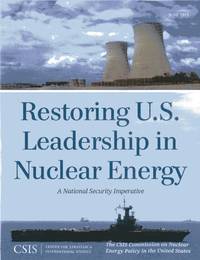
1964réf. 87717Livermore CA: U.S. Army Engineer Nuclear Cratering Group 1964. Presumed First Edition First printing. Wraps. Good. The format is approximately 8 inches by 10.5 inches. Various paginations approximately 120 pages. Illustrations figures tables tabular data. Ex-library copy with the usual library markings some blacked out. This is part of Plowshare--civil industrial and scientific used for nuclear explosives. The US Army Corps of Engineers Nuclear Cratering Group NCG program activities include: 1 cratering calibration of various geologic media and development of techniques designed to provide a desired crater geometry with chemical high-explosive detonations; 2 joint planning of and technical participation in AEC nuclear-excavation experiments; 3 development of data on the engineering properties of nuclear craters; 4 development of civil works nuclear construction technology; 5 accomplishment of engineering studies of nuclear construction feasibility; and 6execution of joint CE/AEC civil works nuclear-construction experiments. Four conceptual nuclear-construction applications have been identified as having a significant potential for accomplishment: 1 nuclear quarrying to produce rock fill or aggregate; 2 nuclear ejecta dam construction; 3 nuclear harbor construction; and 4 nuclear canal excavation. This inclosure described the design of the nuclear explosions required to excavate the channel for an Isthmian sea-level canal. The Columbian nuclear cue would use 262 devices with a total yield of 2709 megatons fired in 21 separate detonations. Project Plowshare was the overall United States program for the development of techniques to use nuclear explosives for peaceful construction purposes. The program was organized in June 1957 as part of the worldwide Atoms for Peace efforts. As part of the program 35 nuclear warheads were detonated in 27 separate tests. A similar program was carried out in the Soviet Union under the name Nuclear Explosions for the National Economy. Successful demonstrations of non-combat uses for nuclear explosives include rock blasting stimulation of tight gas chemical element manufacture unlocking some of the mysteries of the R-process of stellar nucleosynthesis and probing the composition of the Earth's deep crust creating reflection seismology vibroseis data which has helped geologists and follow-on mining company prospecting. The project's uncharacteristically large and atmospherically vented Sedan nuclear test also led geologists to determine that Barringer crater was formed as a result of a meteor impact and not from a volcanic eruption as had earlier been assumed. This became the first crater on Earth definitely proven to be from an impact event. Negative impacts from Project Plowshare's tests generated significant public opposition which eventually led to the program's termination in 1977. These consequences included tritiated water projected to increase by CER Geonuclear Corporation to a level of 2% of the then-maximum level for drinking water and the deposition of fallout from radioactive material being injected into the atmosphere before underground testing was mandated by treaty. Peaceful nuclear explosions PNEs are nuclear explosions conducted for non-military purposes. Proposed uses include excavation for the building of canals and harbors electrical generation the use of nuclear explosions to drive spacecraft and as a form of wide-area fracking. PNEs were an area of some research from the late 1950s into the 1980s primarily in the United States and Soviet Union. In the U.S. a series of tests were carried out under Project Plowshare. Some of the ideas considered included blasting a new Panama Canal constructing the proposed Nicaragua Canal the use of underground explosions to create electricity Project PACER and a variety of mining geological and radionuclide studies. The largest of the excavation tests was carried out in the Sedan nuclear test in 1962 which released large amounts of radioactive gas into the air. By the late 1960s public opposition to Plowshare was increasing and a 1970s study of the economics of the concepts suggested they had no practical use. Plowshare saw decreasing interest from the 1960s and was officially canceled in 1977. The Soviet program started a few years after the U.S. efforts and explored many of the same concepts under their Nuclear Explosions for the National Economy program. The program was more extensive eventually conducting 239 nuclear explosions. Some of these tests also released radioactivity including a significant release of plutonium into the groundwater and the polluting of an area near the Volga River. A major part of the program in the 1970s and 80s was the use of very small bombs to produce shock waves as a seismic measuring tool and as part of these experiments two bombs were successfully used to seal blown-out oil wells. The program officially ended in 1988. U.S. Army Engineer Nuclear Cratering Group paperback
réf. DADAX0471961450New unknown
réf. DADAX0801437768New unknown
réf. 9810246692-9-1World Scientific Publishing Company. 1st. New. The item is brand new never used or read. It's in perfect condition and may include supplements and/or access codes or come shrink-wrapped. World Scientific Publishing Company unknown
réf. CA01AA-00208International Atomic Energy Agency. Collectible - Acceptable. Vienna: International Atomic Energy Agency 1990. 5 volumes. Sm 4to. Good book. Ex-library. Library labels on spine tail and stamps inside. Text clean. nuclear physics neutron cross sections bibliography indexes Inquire if you need further information. NOT AVAILABLE FOR SHIPMENT OUTSIDE OF THE UNITED STATES. International Atomic Energy Agency unknown
réf. DADAX3319863010New unknown
réf. Bloomsbury-9781442225114Center for Strategic & International Studies. Paperback. New. 86 pages Center for Strategic & International Studies paperback
1947Book is in very good condition with moderate signs of age-toning of paper, bumped corners to the covers, minor exterior wear. Binding is solid and square, text/interior is clean and free of marking of any kind. About 520 pages (paginated to 500) with a great many mechanical illustrations, charts, tables, graphs, large fold-out page at back. Contents, with each chapter by a different author as listed above, including: Fudamentals of nuclear physics, The fission process, Neutron diffusion, Nuclear chain reactions, Elementary pile theory, The application and experimental basis of pile theory, Chemistry of the fission process, Control and operation of a pile, construction of nuclear reactors, Heat transfer, Heavy elements and nuclear fuels; with three appendices: Table of precise masses, Lossof energy in elastic collisions, Neutron cross sections of the elements.
réf. DADAX0470091436New unknown
réf. DADAX1842774743New unknown
réf. DADAX0367230801New unknown
réf. DADAX0367231344New unknown
réf. DADAX0367230879New unknown
réf. DADAX036753245XNew unknown
réf. DADAX0367231662New unknown
réf. DADAX0367523256New unknown
réf. DADAX9811098549New unknown
2000réf. STM-9780727729583United Kingdom: Thomas Telford 2000. Paperback. Brand New. Book Condition:- Brand New. Secured Packaging. Fast DeliveryBookseller Inventory # 9780727729583 Thomas Telford paperback
1962Con 213 illustrazioni di cui 37 a colori. Con i Manifesti Nucleari e il Dizionario Nucleare. Testi in italiano, inglese e francese . 4to. pp. 244. . Ottimo (Fine). . . . I nucleari hanno costituito in Italia, in questo dopoguerra, l'unico movimento che abbia saputo inserirsi in una linea ideale di continuità nel quadro delle direzioni indicate dal surrealismo e dadaismo, tornando a esprimere, con originalità di accenti, le loro istanze fondamentali, partendo dalla tabula rasa proposta da Dada.
réf. DADAX0199841276New unknown
réf. DADAX0471223638New unknown
réf. DADAX0128159448New unknown
réf. DADAX0415421055New unknown
réf. DADAX0128150696New unknown