Livre Rare Book

Librairie Le Carrérès · Paris, Frankreich400,00 €
2.114 Ergebnisse
Best.-Nr. DADAX0080437877New unknown
Best.-Nr. DADAX0748406883New unknown
1930Best.-Nr. 28185nantes 1930 Une Gouache Originale en couleurs, Format : 43,5 centimètres de haut par 28,5 centimètres de large, sur papier, signé en bas à gauche, sans date (1930),
Il gesto 2. Rassegna internazionale delle forme libere. A cura del Movimento Arte Nucleare. Redattori del numero: Enrico Baj e Sergio Dangelo. Testi in italiano e francese di Pierre Restany (''Moralite du geste''), Philippe d'Arschot (''Peinture ou peinture-jeu'') e Edouard Jaguer (''Così come vi furono un tempo dei poeti maledetti...''). Con 17 illustrazioni in bianco e nero di opere di Serge Vandercam, Sonderborg, Jean Dubuffet, Arnaldo Pomodoro, Enrico Baj, Roel D'Haese, Reinhout D'Haese, Lucio Fontana, Gianni Bertini, Gio Pomodoro, Dangelo, Brauner e E. L. T. Mesens ed altri . 4to. pp. 16. . Ottimo (Fine). . . .
Best.-Nr. DADAX0824726162New unknown
Best.-Nr. SONG0894484583Used: Good unknown
Best.-Nr. DADAX0081016115New unknown
1989Best.-Nr. 1561037407GE 1989. 14th Edition. Softcover. New . New Condition minimal wear from storage. Looks great. Multiple copies available this title. Quantity Available: 4. Shipped Weight: Under 1 kilo. Category: Education; Pictures of this item not already displayed here available upon request. Inventory No: 1561037407. . GE paperback
Best.-Nr. SONG0801844886Used: Good unknown
Best.-Nr. DADAX0444502467New unknown
Best.-Nr. 20301648like new. unknown
Best.-Nr. DADAX1583940057New unknown
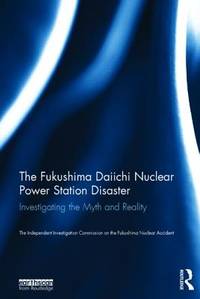
Best.-Nr. SONG0415713935Routledge 2014-02-26. 1. hardcover. Used: Good. 6.50x1.00x9.50. Buy with confidence. Excellent Customer Service & Return policy. Routledge hardcover
Best.-Nr. SONG0415698553Used: Good unknown
1976Best.-Nr. 64131Portland OR: Shannon & Wilson Inc. Northwest Geological Services Inc. February 1976. 4to. 11.25 x 12 in. Approx. 250 leaves sections variously numbered. w/ several maps many large folding hand-coloured folding charts graphs diagram 7 mounted colour photos folding maps inserted into rear pocket. Original green vinyl 19-ring binder silver lettering stamped on front cover & spine occasional interior age toning shelfwear rubbing still a VG copy from the library of Dr. Clive F. “Rick” Kienle 1942-2025 geologist and specialist in aerial photo mapping w/ business card mounted on front inner cover. First edition of this exceedingly rare slope stability report for a Pacific Power & Light Co.’s proposed nuclear power plant to have been constructed at West Roosevelt Washington along the edge of Lake Umatilla in the Columbia River Gorge as part of a group of similar nuclear power plants with the proposed Trojan Nuclear Power plant licensed to run beginning in 1976 at 1100 Megawatts. PP&L together with PG&E had previously examined 2 sites near Arlington OR but then shifted to this site near the Columbia River down from the Hanford Sites later developed for the WPPSS projects. This report focuses on the stability of the slopes to the north of the proposed site and estimate the effect of the design earthquake on slope stability and plant safety. This required nine additional borings geologic mapping of the area identification of basalt outrcops by chemical petrographic and remnant magnetism analyses lab studies liquefaction analyses along with construction of a 3-D model of the site. Several nuclear power plants had been proposed and received geotechnical studies in the Pacific Northwest following up the Trojan Nuclear Power Plant constructed upon the site of the former Trojan Powder Co. plant site as well as adjacent properties beginning in 1967. Pitched to PGE as a means to solve the exploding power usage demand in the fast-growing Portland OR area in the Mid-20th-Century by Admiral Lewis Strauss of the Atomic Energy Commission PGE and 13 other utilities began planning in 1967 and construction began July 30 1968. PGE chose to build a pressurized water reactor plant and the enormous plant and huge construction cost were projected at the time to be cheaper than coal-fired power plants to supplement the massive hydropower presence in the PNW. Oregon Governor Tom McCall established the first Nuclear Siting Task Force of the Nuclear Development Coordinating Committee in 1969 in order to approve location of nuclear power plants consistent with Oregon’s environmental protections as well as comply with the forthcoming Clean Air Act passed in 1970. No copies in Worldcat or other collections; See: Timeline of Oregon’s Energy History Oregon Department of Energy 2026. Shannon & Wilson, Inc., Northwest Geological Services, Inc., unknown
Best.-Nr. SONG1409443396Used: Good unknown
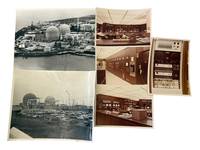
1970Best.-Nr. 237601970. Salem Nuclear Power Plant photo archive 1970s documenting the construction and interior control infrastructure of Public Service Electric and Gas Company's nuclear generating complex at Lower Alloways Creek New Jersey on the Delaware River. Contemporary press material dated July 23 1979 describes construction proceeding on a facility planned as the largest nuclear power plant east of the Mississippi River with two generating units nearing completion and a third in the planning stages. The photographs move between the enormous physical plant required to generate nuclear power and the enclosed control environment from which technicians monitored and operated its systems recording nuclear generation as an engineered network of reactor buildings instrumentation communications equipment operators and centralized oversight. Photo archive of six silver gelatin and color photographs ranging from approximately 5 x 7 to 8 x 10 inches Lower Alloways Creek New Jersey 1970s. Black and white exterior views show the Salem complex under construction along the Delaware River with massive domed reactor containment buildings rising amid cranes scaffolding temporary structures service buildings construction equipment utility poles and extensive surrounding works. The photographs record the scale of the site from elevated viewpoints placing the containment structures within the larger industrial landscape necessary to support them. The color photographs move inside the facility to a control room dominated by long banks of panels containing gauges indicator lights switches displays annunciators telephones and other monitoring and communications equipment. Operators sit at desks and consoles facing walls of instrumentation while another view looks along a control room wall equipped with additional panels and communications devices. A close photograph records a dedicated equipment cabinet containing dual reel to reel tape mechanisms speakers meters switches and related electronic controls showing another component of the communications and recording apparatus integrated into the room. One exterior press photograph retains a typed Associated Press caption identifying the site as the "Salem nuclear plant" at Lower Alloways Creek and stating that two generating units were nearing completion while a third remained planned. The archive records two sides of nuclear power construction that were normally separated in public views of generating stations with the monumental concrete and steel structures visible from outside and the dense instrumentation through which the completed plant would be supervised from within. The July 23 1979 press text explicitly frames Salem through scale describing three planned generating units and identifying the complex as the projected largest nuclear power plant east of the Mississippi River while the photographs establish the machinery of control behind that claim. Rows of gauges warning indicators communications equipment recording apparatus and operator stations show the process by which information from a sprawling generating complex was concentrated into a room where personnel could monitor plant conditions and respond through centralized controls. The exterior photographs establish the corresponding physical system with containment buildings surrounded by construction infrastructure and subsidiary facilities along the Delaware River. Light surface and handling wear occasional edge and corner creasing minor toning and scattered marks; press caption and editorial markings remain present on one verso. Overall good condition. A focused photographic record of the Salem Nuclear Power Plant as both a major 1970s construction project and a centralized technological system linking reactor infrastructure to the instruments and personnel charged with its operation. unknown
1970Best.-Nr. 237601970. Salem Nuclear Power Plant photo archive 1970s documenting the construction and interior control infrastructure of Public Service Electric and Gas Company's nuclear generating complex at Lower Alloways Creek New Jersey on the Delaware River. Contemporary press material dated July 23 1979 describes construction proceeding on a facility planned as the largest nuclear power plant east of the Mississippi River with two generating units nearing completion and a third in the planning stages. The photographs move between the enormous physical plant required to generate nuclear power and the enclosed control environment from which technicians monitored and operated its systems recording nuclear generation as an engineered network of reactor buildings instrumentation communications equipment operators and centralized oversight. Photo archive of six silver gelatin and color photographs ranging from approximately 5 x 7 to 8 x 10 inches Lower Alloways Creek New Jersey 1970s. Black and white exterior views show the Salem complex under construction along the Delaware River with massive domed reactor containment buildings rising amid cranes scaffolding temporary structures service buildings construction equipment utility poles and extensive surrounding works. The photographs record the scale of the site from elevated viewpoints placing the containment structures within the larger industrial landscape necessary to support them. The color photographs move inside the facility to a control room dominated by long banks of panels containing gauges indicator lights switches displays annunciators telephones and other monitoring and communications equipment. Operators sit at desks and consoles facing walls of instrumentation while another view looks along a control room wall equipped with additional panels and communications devices. A close photograph records a dedicated equipment cabinet containing dual reel to reel tape mechanisms speakers meters switches and related electronic controls showing another component of the communications and recording apparatus integrated into the room. One exterior press photograph retains a typed Associated Press caption identifying the site as the "Salem nuclear plant" at Lower Alloways Creek and stating that two generating units were nearing completion while a third remained planned. The archive records two sides of nuclear power construction that were normally separated in public views of generating stations with the monumental concrete and steel structures visible from outside and the dense instrumentation through which the completed plant would be supervised from within. The July 23 1979 press text explicitly frames Salem through scale describing three planned generating units and identifying the complex as the projected largest nuclear power plant east of the Mississippi River while the photographs establish the machinery of control behind that claim. Rows of gauges warning indicators communications equipment recording apparatus and operator stations show the process by which information from a sprawling generating complex was concentrated into a room where personnel could monitor plant conditions and respond through centralized controls. The exterior photographs establish the corresponding physical system with containment buildings surrounded by construction infrastructure and subsidiary facilities along the Delaware River. Light surface and handling wear occasional edge and corner creasing minor toning and scattered marks; press caption and editorial markings remain present on one verso. Overall good condition. A focused photographic record of the Salem Nuclear Power Plant as both a major 1970s construction project and a centralized technological system linking reactor infrastructure to the instruments and personnel charged with its operation. unknown books
Best.-Nr. DADAX0415398754New unknown
Best.-Nr. DADAX0415870399New unknown
1958Best.-Nr. 76552Cape Canaveral: N.p. 1958-1973. This was the personal archive of missile installation foreman Joseph H. Lendle and the majority of it relates to Operation Hardtack I Project 9.31a. Project 9.3a was a series of U.S. nuclear tests conducted in 1958. Specifically Project 9.3a was responsible for the preparation and launch of two Redstone missiles carrying nuclear warheads for high-altitude detonations known as Shots Teak and Orange. These tests were part of Operation Newsreel a subset of Hardtack I focusing on high-altitude nuclear explosions and EMPs.The primary goal of Project 9.3a was to study the effects of nuclear detonations at high altitudes including their impact on communications electromagnetic pulse EMP generation and atmospheric phenomena. The Redstone missiles were modified to carry nuclear devices to altitudes of approximately 76.8 kilometers 47.7 miles. Each missile was also equipped with instrumented pods designed to collect data on pressures thermal and gamma radiation neutron flux and EMP effects. Both missiles were launched from the Johnston Atoll in the Pacific. Shot Teak was a failure and exploded directly over the Johnston Atoll but Shot Orange was an unqualified success. Despite Shot Teak's high-altitude detonation at 252000 feet the explosion was visible from Hawaii with observers reporting an aurora-like effect and a red shell that appeared to pass overhead. The EMP caused a temporary blackouts in Australia and Hawaii.The archive consists of includes 2 black and white snapshots of operations crew and the missile both 5 x 7” 3 certificates honoring the participation of Joseph Frank Lendle 1921-2017 lead foreman of Operation Hardtack 2 typed letters signed to Lendle both signed by Kurt H. Debus Director Missile Firing Lab a birthday card from the Launch Operations Directorate a 2 pp. press release for The Florida Times-Union 3 printed memos 5 printed letters with facsimile signatures congratulating Operation Hardtack personnel for their excellent work including one from Dr. Werner van Braun. Sheets generally toned and with staple holes at upper left corners but generally quite nice. One "Certificate of Participation" has a two inch tear and three holes at the upper blank margin where pushpins once held to to a wall. Also included is a later plaque 1975 honoring Lendle’s contribution to the NASA rocket programs listing the launches that he participated in. He participated in 129 launches including those of Redstone Juniper "C' Jupiter Redstone-Mercury Juno Saturn Apollo and Skylab. Lendle worked in the space program for nearly 28 years after his military service in WWII. N.p. unknown
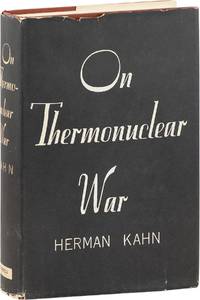
1960Best.-Nr. 85542Princeton New Jersey: Princeton University Press 1960. First Edition. Octavo. 24cm. Publisher's terracotta cloth titled and ruled in black and gilt to spine. Dustjacket. xx; 651pp. Very light wear and bumping to spine ends and extremities strong and bright; internally clean and fresh; in a grey dustjacket with some minor edgewear and shallow chipping to the spine ends and edges a hint of toning to the spine panel and some light soiling and wear to the white rear panel. A very good handsome copy indeed. Kahn's deeply influential analysis of the spectre of thermonuclear war partly intended as a counterpoint to von Neumann's apocalyptic concept of MAD or Mutually Assured Destruction. Kahn posits the strategic possibility of a 'winnable' nuclear conflict questions the solidity of a peace structure based on thermonuclear threat and makes the highly controversial for the time suggestion that the spectre of thermonuclear conflict itself isn't actually that terrifying and that the spectre of it is really what most people get worked up about. Kahn is an analytical strategist his conclusions are based in a zone in which emotion only plays the smallest part and upon publication the book elicited some powerful reactions from readers uncomfortable with the potential at the time inevitable deaths of millions being presented in the form of graphs and calm inexorable strategic detachment. Hubert Humphrey's contemporary review of the work stated "New thoughts particularly those which contradict current assumptions are always painful for the human mind to contemplate. On Thermonuclear War is filled with such thoughts." Perhaps as inevitable antidote to the grimly sardonic nature of his analysis Kahn's work earned him a place in the eternal halls of pop culture being the impromptu scriptwriter for the character of General Buck Turgidson in "Dr. Strangelove" and with popular understanding of his theories featuring prominently in fiction from Tom Clancy to "Wargames." Kahn is also credited with the coining of the phrases "Megadeath" as a unit of fatality and "Wargasm" describing the focus of the military personnel he worked with both of which have seeped into common usage. Kahn's borderline crude delivery combining horrifying statistics with jokes about how women will come to love their two-headed babies was deliberately jarring and intended to be equally disruptive to those locked in fearful uninformed paralysis and those working towards the wargasm. The reception of his book was one of the catalyzing elements that led Kahn to be a co-founder of The Hudson Institute after his work at RAND reached its inevitable close. Regardless of how divisive Kahn was both in theory and delivery "On Thermonuclear War" ranks as one of the most important 20th century works of strategic analysis right down to the title being an updated and expanded nod to von Clausewitz's "On War. Princeton University Press unknown
1960Best.-Nr. 85542Princeton New Jersey: Princeton University Press 1960. First Edition. Octavo. 24cm. Publisher's terracotta cloth titled and ruled in black and gilt to spine. Dustjacket. xx; 651pp. Very light wear and bumping to spine ends and extremities strong and bright; internally clean and fresh; in a grey dustjacket with some minor edgewear and shallow chipping to the spine ends and edges a hint of toning to the spine panel and some light soiling and wear to the white rear panel. A very good handsome copy indeed. Kahn's deeply influential analysis of the spectre of thermonuclear war partly intended as a counterpoint to von Neumann's apocalyptic concept of MAD or Mutually Assured Destruction. Kahn posits the strategic possibility of a 'winnable' nuclear conflict questions the solidity of a peace structure based on thermonuclear threat and makes the highly controversial for the time suggestion that the spectre of thermonuclear conflict itself isn't actually that terrifying and that the spectre of it is really what most people get worked up about. Kahn is an analytical strategist his conclusions are based in a zone in which emotion only plays the smallest part and upon publication the book elicited some powerful reactions from readers uncomfortable with the potential at the time inevitable deaths of millions being presented in the form of graphs and calm inexorable strategic detachment. Hubert Humphrey's contemporary review of the work stated "New thoughts particularly those which contradict current assumptions are always painful for the human mind to contemplate. On Thermonuclear War is filled with such thoughts." Perhaps as inevitable antidote to the grimly sardonic nature of his analysis Kahn's work earned him a place in the eternal halls of pop culture being the impromptu scriptwriter for the character of General Buck Turgidson in "Dr. Strangelove" and with popular understanding of his theories featuring prominently in fiction from Tom Clancy to "Wargames." Kahn is also credited with the coining of the phrases "Megadeath" as a unit of fatality and "Wargasm" describing the focus of the military personnel he worked with both of which have seeped into common usage. Kahn's borderline crude delivery combining horrifying statistics with jokes about how women will come to love their two-headed babies was deliberately jarring and intended to be equally disruptive to those locked in fearful uninformed paralysis and those working towards the wargasm. The reception of his book was one of the catalyzing elements that led Kahn to be a co-founder of The Hudson Institute after his work at RAND reached its inevitable close. Regardless of how divisive Kahn was both in theory and delivery "On Thermonuclear War" ranks as one of the most important 20th century works of strategic analysis right down to the title being an updated and expanded nod to von Clausewitz's "On War. Princeton University Press unknown books
Best.-Nr. DADAX0792351126New unknown