1371 resultados
1964ref. 11228Livermore CA: Lawrence Radiation Laboratory c. 1964. Presumed first iteration thus. Photograph. good. 1 photo color photo approx. 20" x 16" mounted on board 24" x 20" some soiling to board and some wear along edges. Peaceful nuclear explosions PNEs are nuclear explosions conducted for non-military purposes such as activities related to economic development including the creation of canals. During the 1960s and 1970s both the United States and the Soviet Union conducted a number of PNEs. Six of the explosions by the Soviet Union are considered to have been of an applied nature not just tests. Subsequently the United States and the Soviet Union halted their programs. Definitions and limits are covered in the Peaceful Nuclear Explosions Treaty of 1976. In the PNE Treaty the signatories agreed: not to carry out any individual nuclear explosions having a yield exceeding 150 kilotons; not to carry out any group explosion consisting of a number of individual explosions having an aggregate yield exceeding 1500 kilotons; and not to carry out any group explosion having an aggregate yield exceeding 150 kilotons unless the individual explosions in the group could be identified and measured by agreed verification procedures. The parties also reaffirmed their obligations to comply fully with the Limited Test Ban Treaty of 1963. The parties reserve the right to carry out nuclear explosions for peaceful purposes in the territory of another country if requested to do so but only in full compliance with the yield limitations and other provisions of the PNE Treaty and in accord with the Non-Proliferation Treaty. The Comprehensive Nuclear-Test-Ban Treaty of 1996 prohibits all nuclear explosions regardless of whether they are for peaceful purposes or not. Project Gasbuggy was an underground nuclear detonation carried out by the United States Atomic Energy Commission on December 10 1967 in rural northern New Mexico. It was part of Operation Plowshare a program designed to find peaceful uses for nuclear explosions. Gasbuggy was carried out by the Lawrence Radiation Laboratory and the El Paso Natural Gas Company with funding from the Atomic Energy Commission. Its purpose was to determine if nuclear explosions could be useful in fracturing rock formations for natural gas extraction. The site lying in the Carson National Forest is approximately 34 km 21 mi southwest of Dulce New Mexico and 87 km 54 mi east of Farmington and was chosen because natural gas deposits were known to be held in sandstone beneath Leandro Canyon. A 29 kt 120 TJ device was placed at a depth of 1288 m 4227 ft underground then the well was backfilled before the device was detonated; a crowd had gathered to watch the detonation from atop a nearby butte. The detonation took place after a couple of delays the last one caused by a breakdown of the explosive refrigeration system. The detonation produced a rubble chimney that was 24 m 80 ft wide and 102 m 335 ft high above the blast center. After an initial surface cleanup effort the site sat idle for over a decade. A later surface cleanup effort primarily tackled leftover toxic materials. In 1978 a marker monument was installed at the Surface Ground Zero SGZ point that provided basic explanation of the historic test. Below the main plaque lies another which indicates that no drilling or digging is allowed without government permission. The site is publicly accessible via the Carson National Forest F.S. 357 dirt road/Indian J10 that leads into the Carson National Forest. Following the Project Gasbuggy test two subsequent nuclear explosion fracturing experiments were conducted in western Colorado in an effort to refine the technique. They were Project Rulison in 1969 and Project Rio Blanco in 1973. In both cases the gas radioactivity was still seen as too high and in the last case the triple-blast rubble chimney structures disappointed the design engineers. Soon after that test the ~ 15-year Project Plowshare program funding dried up. These early fracturing tests were later superseded by hydraulic fracturing fracking technologies. Lawrence Radiation Laboratory unknown
1996ref. 59760Washington DC: Research Reactor Spent Nuclear Fuel Task Team 1996. Wraps. Very good. No dust jacket. 92 p. Includes: illustrations diagrams. Volume I ONLY. Prepared for The Department of Energy Office of Spent Fuel Management. During the six-month period from November 1995 through April 1996 the Task Team examined the wide-ranging technical issues attendant to achieving safe and cost-effective dispost of the aluminium-based spent nuclear fuel under DOE's jurisdiction. This fuel is from research and test reactors. This report offers a path forward. Volume I provides a technical synopsis of the fuel in question and the issues involved and summarized the Team's evaluations findings and recommendations to DOE. Volume II is a compendium of supporting technical information. Research Reactor Spent Nuclear Fuel Task Team paperback
2005ref. 68273Washington DC: United States Department of Energy 2005. Presumed first edition/first printing. Wraps. Very good. No dust jacket. Cover has slight wear and soiling. 91 1 p. Includes diagrams. Tables. Abbreviations and Acronyms. Recommendations. Appendices. The joint review of the Los Alamos National Laboratory cleanup program was conducted in early 2005. The team was staffed by members of the Office of Environmental Management and the National Nuclear Security Administration. The purpose of the review was to conduct a comprehensive analysis of the scope of work for the LANL environmental cleanup program against the requirements of the New Mexico Environment Department NMED Consent Order the US Environment Protection Agency Federal Facility Compliance Act and other requirements. In particular the review evaluated the then currently planned scope as well as potential new scope to ensure it was well understood; that associated cost estimates and schedules were based on reasonable assumptions and approaches to work planning and execution and that the projects were being developed and managed in accordance with the requirements of DOE Order 413 for project management. United States Department of Energy paperback
2008ref. 73622Washington DC: United States. Department of Defense 2008. 2008 Edition. Trade paperback. Very good. x 258 2 pages. Includes: illustrations index. Some illustrations in color. Glossary. Acronym List. Reference List. CD is NOT PRESENT. Nuclear weapons life extension and countering nuclear threats will continue to be a central concern for the United States and the Department of Defense. The Department has identified the dual missions of sustaining a safe secure and effective nuclear deterrent and countering the threat from nuclear terrorism and nuclear proliferation as among the most important for U.S. national security priorities. Nuclear Matters serves as the focal point for these missions within the Department of Defense. Since the early 1990s the U.S. Nuclear Weapons Program has evolved significantly as a result of unilateral and bilateral arms reductions and the end of underground nuclear testing in the United States; successive editions of this work have been revised and restructured to reflect these changes. This book is intended to be an unofficial reference that explains the history and development of the U.S. Nuclear Weapons Program as well as the current activities associated with sustaining the U.S. nuclear deterrent. It is designed to be useful but it is neither authoritative nor directive. Please refer to the applicable statute regulation Department of Defense Direction/Instruction or Department of Energy Order for definitive guidance in all areas related to the U.S. Nuclear Weapons Program. The content of Nuclear Matters: A Practical Guide is the sole responsibility of the Office of the Deputy Assistant to the Secretary of Defense for Nuclear Matters. This guide to Nuclear Matters can be read cover-to-cover for those who seek to understand the Program in its entirety and can also be used as a reference source to look up useful facts and information concerning specific areas. This guide is unofficial although every effort had been mad eto ensure that it is accurate and comprehensive. United States. Department of Defense paperback
1996ref. 68604Washington DC: United States Department of Defense 1996. Presumed first edition/first printing thus. Wraps. Very good. No dust jacket. Has slight wear and soiling. Tape bound. Various paginations approximately 125 pages. Figures. Acronyms. Chronology. The purpose of this Stockpile Management Information Handbook was to provide an overview of the Department of Defense DoD0 Acquisition Management System AMS; key organizations in that process; the joint nuclear weapons life cycle process between the DoD and the Department of Energy DOE; DOER organizations and production facilities; the documents used in the US nuclear weapons stockpile management process; and important events in the history of nuclear weapons. This handbook was intended to be both a training tool for persons without previous experience in the development acquisition and stockpile management of nuclear weapons as well as a reference book for persons on the job. This handbook was not intended to be a comprehensive reference source for program managers. United States Department of Defense paperback
1999ref. 70684Washington DC: United States. Department of Defense 1999. First Edition stated. Presumed First Printing. Trade paperback. Very good. xviii 62 pages. Includes: Illustrations Diagrams. Acronyms and Abbreviations. Cover has slight wear and soiling. Nuclear weapons life extension and countering nuclear threats will continue to be a central concern for the United States and the Department of Defense. The Department has identified the dual missions of sustaining a safe secure and effective nuclear deterrent and countering the threat from nuclear terrorism and nuclear proliferation as among the most important for U.S. national security priorities. Nuclear Matters serves as the focal point for these missions within the Department of Defense. "To deter nuclear war and serve as last resort weapons of self-defense. In this sense U.S. nuclear weapons are fundamental to our nation's security and have historically provided a deterrent against aggression and security assurance to U.S. allies. A robust flexible and survivable U.S. nuclear arsenal underpins the U.S. ability to deploy conventional forces worldwide; provides the Commander-in-Chief with credible response options to strengthen deterrence; and supports U.S. nonproliferation goals by extending deterrence to allies thereby dissuading them from developing their own nuclear weapons." Secretary of Defense Mattis at his confirmation hearing January 2017 This was intended to be a basic reference on the nuclear hardening of military systems. This Guidebook was not intended to be a definitive document on the effects of nuclear weapons or a "how to" guide for Project Managers but rather it provides information to staff officers who require a basic understanding of nuclear hardening as it relates to the acquisition of nuclear survivable systems. The information is this Guidebook was current as of September 1999. Nuclear weapon system survivability is concerned with the ability of U.S. nuclear deterrent forces to survive against the entire threat spectrum that includes but is not limited to nuclear weapon effects. The vast range of potential threats include: · conventional and electronic weaponry; · nuclear biological and chemical weapons; · advanced technology weapons such as high-power microwaves and radio frequency weapons; · terrorism or sabotage; and · the initial effects of a nuclear detonation. Put simply nuclear weapon effects survivability refers to the ability of any and all personnel equipment and systems including but not limited to nuclear systems to survive nuclear weapon effects. Nuclear weapon system survivability refers to nuclear weapon systems being survivable against any threat including but not limited to the nuclear threat. Nuclear hardness describes the ability of a system to withstand the effects of a nuclear detonation and to avoid internal malfunction or performance degradation. Hardness measures the ability of a system's hardware to withstand physical effects such as overpressure peak velocities energy absorbed and electrical stress. This reduction in hardware vulnerability can be achieved through a variety of well-established design specifications or through the selection of well-built and well-engineered components. This appendix does not address residual nuclear weapon effects such as fallout nor does it discuss nuclear contamination survivability. United States. Department of Defense paperback
1987ref. 77065Fort Leavenworth KS: US Army Combined Arms Combat Developments Activity Nuclear and Chemical Directorate 1987. Coordinating Draft. Wraps. Good. Various paginations approximately 140 pages. Illustrations. Appendix A-F including acronyms. References. Glossary. Two lines of highlighting on distribution list. The Official Use Only distribution restriction is understood to have expired on 1 July 1990. This field manual was intended to provide a consolidated summary of procedural guidance training methods technical information and responsibilities of the initial response force IRF in preparing for a wartime or peacetime nuclear weapon accident or incident. It concentrated on IRF procedures and techniques for limiting radiation hazards to the public and response force personnel. FM 3-15 was intended to supplement DNA 5100.e Nuclear Weapon Accident Response Procedures NARP manual for peacetime NAIRA and expand on FM 100-50 for wartime NAIRA. FM 3-15 will also cover procedures for survey and monitoring decontamination casualty treatment fire suppression public affairs and security as it relates to the IRF and as outlined in AR 50-5. This field manual is a coordinating draft for the revision of Field Manual 3-15 Nuclear Accident Contamination Control Nov 1975 and is published in accordance with TRADOC Regulation 11-7 and TRADOC Pamphlet 310-6. FM 3-15 is intended for use by CONUS and OCONUS commanders staff and soldiers at corps level or below and by Army Depot personnel who respond to a nuclear accident or incident. It provides doctrine and training guidance for Nuclear Accident and Incident Response and Assistance NAIRA which will be applicable in wartime and peacetime. This FM will outline NAIRA processes necessary for the Initial Response Force IRF to prepare for and provide immediate safety security rescue and control at the accident scene to save lives and reduce exposure hazards. The IRF will be composed of available assets as determined by the commander of the army installation nearest to the accident site. US Army Combined Arms Combat Developments Activity, Nuclear and Chemical Directorate paperback
1999ref. 46443Washington DC: U.S. Nuclear Regulatory Comm 1999. First Edition. First Printing. good. Approx. 100 wraps abbreviations chronology of correspondence glossary label with previous owner's name partially removed from fr cover. Covers somewhat worn and soiled distribution letter laid in. NUREG-1672. Project No. 697. U.S. Nuclear Regulatory Comm paperback
2002ref. 2-0735400938Amer Inst of Physics 2002. Hardcover. New. 1st edition. 282 pages. 9.25x6.25x1.00 inches. Amer Inst of Physics hardcover
1985ref. mon0003599644Univ of Tokyo Pr 1985-09-01. Hardcover. Good. . Univ of Tokyo Pr hardcover
1993ref. 45110Prag, J.M. Marci Spectroscopie Society and University of Agriculture, 1993. 202 Seiten , 30 cm , kartoniert
1987Contents: Can advanced technology save the U.S. steel industry?; Molecules of visual excitation; The Rings of Uranus - data from Voyager 2; Beaches and Barrier Islands - attempting storm protection with manmade structures; Lyme Disease; Cold Nuclear Fusion - muons can catalyze the fusion of deuterium and tritium at room temperature; Aerodynamics of wind pollination; Arches and vaults in the ancient near east. Average wear. Unmarked. A sound copy. Book
1997230 pages including index and bibliography. "Relates how Canada's electricity giants - Ontario Hydro, Hydro-Quebec, B.C. Hydro and others - have juggled personal power with the public interest." - from dust jacket. Moderate wear. Usual library markings. Nice solid copy. Book
1968ref. 0160521968 In-8 En feuilles
1926ref. NATW1729Bln., Siemens 1926. gr.-8°, 159 S., OKart., Gebrauchsspuren, Name auf Innentit.
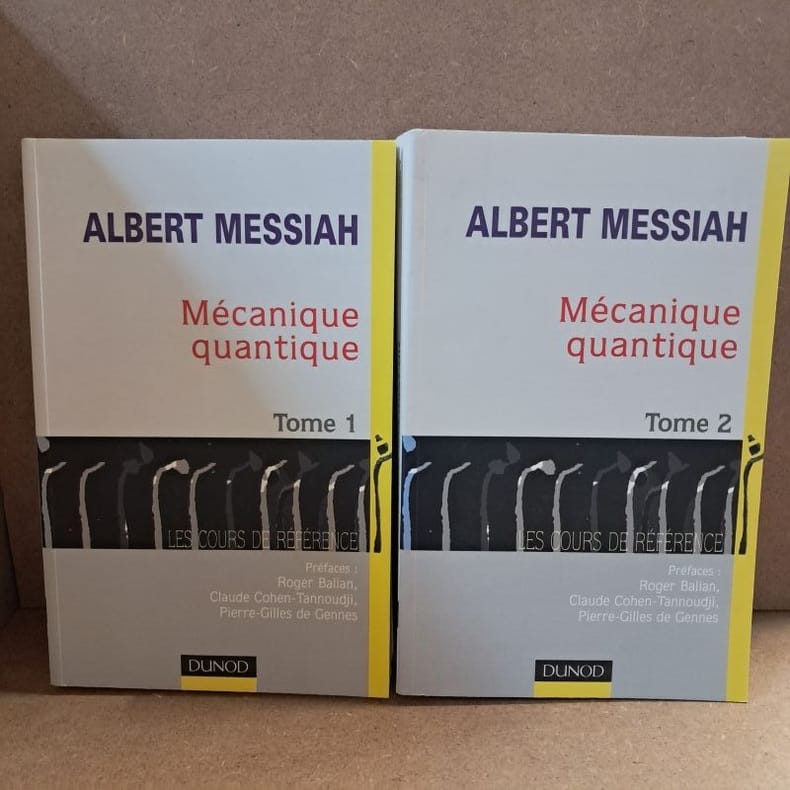
2003ref. 2232003 - broché - Editions Dunod - Ouvrage publié avec le concours du Centre National des Lettres - 2003 - 2 volumes in-8 (24 x 15,5 cm) brochés - 974 pages (pagination continue) + XXIII et XIII pages de tables et de préfaces - ISBN : 9782100073610 et 9782100046959 - Préfaces de Roger BALIAN, Claude COHEN-TANNOUDJI et Pierre-Gilles DE GENNES
ref. a1033451953 first edition. US Atmospheric Nuclear Weapons Tests. DNA 6015F. 98p. Some photo illus. 4to wraps. LIght non-circulating depository library stamps on cover no pocket no spine numbers no bookplate Text clean; VG. . paperback
19466 issues. Double column. XLib. Small 4to. Original printed wraps, slightly foxed at top edges. Nice copies of this early periodical on Atomic energy. Very scarce. SPACE/9
1999numerous figures and tables, text clean and tight Used
ref. 19410WS Singapure 1983. LEINEN 327 Seiten dies ist dies ist ein regulär ausgesondertes Bibliotheksexemplar aus einer wissenschaftlichen Bibliothek keine Markierungen/Anmerkungen das Buch ist sehr gut erhalten --- Lib. Ex. no marks LINEN 327 pages the book is in a very good condition WS Singapure 1983 unknown
ref. 0811707695.Ghardcover. Good. Access codes and supplements are not guaranteed with used items. May be an ex-library book. hardcover
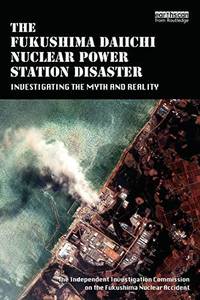
ref. ria9780415713962_inpPaperback. New. New Book; Fast Shipping from UK; Not signed; Not First Edition; Following the disaster at the the public is showing increased interest in nuclear safety. This important book is based on an independent report on the Fukushima Daiichi nuclear power plant disater in Japan in March 2011. The over paperback
ref. DADAX0894485571Brand: Amer Nuclear Society 0000-00-00. hardcover. New. 6.50x0.75x9.50. Buy with confidence. Excellent Customer Service & Return policy. Brand: Amer Nuclear Society hardcover
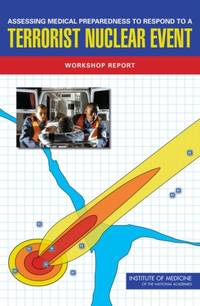
ref. ria9780309130882_inpPaperback / softback. New. New Book; Fast Shipping from UK; Not signed; Not First Edition; N/A paperback
ref. j153Fort Sam Houston 1990. Subcourse Med447. 4to. about 200pp. tables large foldout chart at rear original stapled wraps. A few date and one ink number and Depository Library stamp on front. Staple removed from right margin leaving some residue on front and rear wrappers. VG light wear. . paperback