1424 resultados
2011ref. R150193994ALBIN MICHEL. 2011. In-8. Broché. Bon état, Couv. convenable, Dos satisfaisant, Intérieur frais. 229 pages- nombreux soulignements et annotations au stylo bleu dans le texte sans réelles conséquences sur la lecture. . . . Classification Dewey : 539-Physique nucléaire
2013ref. RO30135548DUNOD. 2013. In-8. Broché. Bon état, Couv. convenable, Dos satisfaisant, Intérieur frais. 272 pages. . . . Classification Dewey : 539-Physique nucléaire
1947ref. R300296594Librairie Polytechnique Ch. Béranger. 1947. In-8. Broché. Etat d'usage, Couv. légèrement passée, Dos satisfaisant, Papier jauni. VIII + 201 pages - nombreux schémas, photos et illustrations en noir et blanc dans et hors texte. Le dos se décolle légèrement des cahiers.. . . . Classification Dewey : 539-Physique nucléaire
BERGER-LEVRAULT. 1960. In-8 Carré. Broché. Bon état. Couv. légèrement passée. Dos satisfaisant. Intérieur frais. 95 pages augmentées de nombreuses figures en noir et blanc dans le texte -
1960ref. R320093689BERGER-LEVRAULT. 1960. In-8. Broché. Bon état, Couv. légèrement passée, Dos satisfaisant, Intérieur frais. 95 pages augmentées de nombreuses figures en noir et blanc dans le texte -. . . . Classification Dewey : 539-Physique nucléaire
FAYARD. 1948. In-12 Carré. Broché. Bon état. Couv. convenable. Dos satisfaisant. Non coupé. 357 pages- 1 petite déchirure en tranche en tête du 1er plat, sans manque L'atome au seuil de la science. Trois Français découvrent la radioactivité. Rutheford. Einstein
1948ref. R150209906FAYARD. 1948. In-12. Broché. Bon état, Couv. convenable, Dos satisfaisant, Non coupé. 357 pages- 1 petite déchirure en tranche en tête du 1er plat, sans manque. . . . Classification Dewey : 539-Physique nucléaire
CHEZ L AUTEUR.. 1979. In-8 Carré. Broché. Bon état. Couv. fraîche. Dos satisfaisant. Intérieur frais. 63 pages. Nombreuses illustrations en noir et blanc dans le texte et hors texte.
1979ref. R150141958CHEZ L AUTEUR.. 1979. In-8. Broché. Bon état, Couv. fraîche, Dos satisfaisant, Intérieur frais. 63 pages. Nombreuses illustrations en noir et blanc dans le texte et hors texte.. . . . Classification Dewey : 539-Physique nucléaire
1959ref. R160219061France-Sélection. 1959. In-4. Broché. Bon état, Couv. convenable, Dos satisfaisant, Intérieur frais. 397 pages - nombreuses figures, schémas, graphiques en noir et blanc dans et hors texte.. . . . Classification Dewey : 539-Physique nucléaire
1979ref. 48074Vienna, International Atomic Energy Agency, 1979. 846 Seiten , 24 cm, kartoniert
ref. 053545Paris Librairie Armand Colin 1971 petit in 4 (23,5x17) 1 volume reliure cartonnée de l'éditeur, 414 pages [1]. Collection U. Bel exemplaire ( Photographies sur demande / We can send pictures of this book on simple request )
1992ref. 44590ABDordrecht, Boston, London, Kluwer Academic Publishers, 1992. Groß-8°. 24,5 cm. 237 Seiten, 1 Blatt. Original-Pappband. (= Theory and Decision Library. Series A: Philosophy an Methodology of the Social Sciences. Volume 16).
2010ref. 1248552010 Editions Soleil, collection "Anticipation" - 2010 - In-4(Grand format), cartonnage illustré en couleurs - 96 Planches en couleurs - Première édition
1986No dust jacket. Embossed stamp from previous owner on FEP. binding is very well preserved. Pages are clean and crisp and printing is tight clean and bright throughout. Used
1988Good condition hardcover. Ex University Library book, label on the spine, inside front cover and front end page, otherwise contents clean, tight and bright like new.tm Ex Library, Usual Stamps Etc
1967Book is in excellent condition in grey cloth HB covers with sparkles, silver print at spine. Binding is solid and square, covers have sharp corners, exterior shows no blemishes, text/interior is clean and free of marking of any kind. Dust jacket shows the slightest signs of shelf wear only, no tears, now wrapped in protective clear cover. Contents includes: Journey from Sharpeville to Selma,
ref. 23784aaf1967, brochure originale.
ref. 61723aafUnited States, Departement of Commerce, 1950-51 in-4to, 56 p/ 63 p. printed on one side only, original wrappers.
ref. A9781497307469Paperback / softback. New. paperback
1983ref. 1681Good Softback Volume of the Fifth Edition of this well-established and widely-used textbook. 712pp with index ISBN 0412156709 ~ 36.95 ~ Rutherford Curie Nuclear Atom Radiation X-Rays ~ Physics Chapman & Hall paperback
1957ref. 106646Large 8vo softcover illustrated 579 pp. Lower spine and bottom front cover chipped and missing a small portion paper fragile some aging; otherwise fair to good condition. Published by the government and edited by Samuel Glasstone this work tells the reader everything they need to know about nuclear weapons. Illustrated with photographs and charts to make sure you get the picture. United States Atomic Energy Commission.
1957ref. 106646Large 8vo softcover illustrated 579 pp. Lower spine and bottom front cover chipped and missing a small portion paper fragile some aging; otherwise fair to good condition. Published by the government and edited by Samuel Glasstone this work tells the reader everything they need to know about nuclear weapons. Illustrated with photographs and charts to make sure you get the picture. United States Atomic Energy Commission. books
ref. 15-8636Berkeley CA: Californians For Nuclear Safeguards 1976. 8.5" x 14" Poster Two Tone Printing Very Good with minor loss some creasing scotch tape on corners. Berkeley, CA: Californians For Nuclear Safeguards, [1976?]. unknown
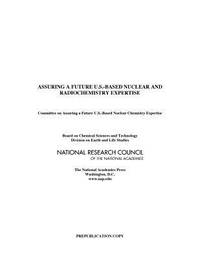
2012ref. 67790Washington DC: The National Academies Press 2012. PResumed first edition/first printing. Trade paperback. Very good. xx 200 p. Illustrations. References. Title continues: Nuclear and Radiation Studies Board DIvision of Earth and Life Studies Board on Higher Education and Workforce Division on Policy and Global Affairs National Research Council of the National Academies. This material is based upon work supported by the U.S. Department of Energy National Nuclear Security Administration and other agencies. The growing use of nuclear medicine the potential expansion of nuclear power generation and the urgent needs to protect the nation against external nuclear threats to maintain our nuclear weapons stockpile and to manage the nuclear wastes generated in past decades require a substantial highly trained and exceptionally talented workforce. Assuring a Future U.S. -Based Nuclear and Radiochemistry Expertise examines supply and demand for expertise in nuclear chemistry nuclear science and radiochemistry in the United States and presents possible approaches for ensuring adequate availability of these skills including necessary science and technology training platforms. Considering a range of reasonable scenarios looking to the future none of these areas are likely to experience a decrease in demand for expertise. However many in the current workforce are approaching retirement age and the number of students opting for careers in nuclear and radiochemistry has decreased dramatically over the past few decades. In order to avoid a gap in these critical areas increases in student interest in these careers in the research and educational capacity of universities and colleges and sector specific on-the-job training will be needed. Concise recommendations are given for actions to avoid a shortage of nuclear chemistry nuclear scientists and radiochemists in the future. From Wikipedia: "The National Research Council NRC is the working arm of the United States National Academies which produces reports that shape policies inform public opinion and advance the pursuit of science engineering and medicine. The National Academies include: National Academy of Sciences NAS National Academy of Engineering NAE Institute of Medicine IOM Unlike the other three organizations of the National Academies the National Research Council is not a membership organization. The National Research Council was organized in 1916 in response to the increased need for scientific and technical services caused by World War I. On June 1 1917 the council convened a meeting of scientific representatives of the UK and France with interested parties from the US on the subject of submarine detection. The results obtained and the problems in the work were discussed. A further meeting with the British and French was held in Paris in October 1918 at which more details of their work was disclosed. As a result of this the council recommended that US scientists be brought together to work on the problems. A New York Group worked on "supersonics" as did a San Pedro Group. A New London Group worked on binaural receivers while Chicago and Wisconsin Groups were assigned various problems in support of the other groups. Due to the success of Council-directed research in producing a sound-based method of detecting submarines as well as other military innovations the NRC was retained at the end of the war though it was gradually decoupled from the military. The Research Council is currently administered jointly by the National Academy of Sciences the National Academy of Engineering and the Institute of Medicine and its work is overseen by a Governing Board and an Executive Committee." The National Academies Press paperback