1.928 resultados
2003ref. 81280Washington DC: Presumed First Edition First issuance thus expanded and revised version of 1991 predecessor document 2003. Presumed First Edition First issuance thus expanded and revised version of 1991 predecessor document. CD. Very good. Compact Disk in plastic container. xxix 1 210 pages. Illustrations. Acronyms. General Terms and Definitions. List of relevant documents. Marked For Official Use Only but this marking no longer applies per a letter from DOD Nuclear Matters dated December 13 2017. See DoD Directives 5400.7-R and 5200.1-R. For Official Use Only FOUO And Similar Designations. For Official Use Only FOUO is a document designation not a classification. There is no national policy governing use of the For Official Use Only designation. DoD Directive 5400.7 defines For Official Use Only information as unclassified information that may be exempt from mandatory release to the public under the Freedom of Information Act FOIA. It is believed this older publication has in effect been voluntarily released. Similar documents have subsequently been issued by the Defense Department with no control markings. The Nuclear Weapons Council was established in law see 10 U.S. Code § 179 . The Nuclear Weapons Council is operated as a joint activity of the Department of Defense and the Department of Energy. The membership of the Council is comprised of the following officers of those departments: 1 The Under Secretary of Defense for Acquisition Technology and Logistics. 2 The Vice Chairman of the Joint Chiefs of Staff. 3 The Under Secretary for Nuclear Security of the Department of Energy. 4 The Under Secretary of Defense for Policy. 5 The Commander of the United States Strategic Command. CD version better suited to extracting information electronically for reuse in other materials. This Handbook is intended to be an unofficial reference that explains the meaning of stockpile management identifies the organizations individuals and facilities involved in the management of the stockpile and describes the activities and processes by which this task is accomplished. It was designed to be useful but it is neither authoritative nor directive. The content of the Nuclear Weapons Stockpile Management Handbook is the sole responsibility of the Office of the Deputy Assistant to the Secretary of Defense for Nuclear Matters. Presumed First Edition, First issuance thus (expanded and revised version of 1991 predecessor document) unknown
2003ref. 81282Washington DC: Department of Defense Office of the Secretary of Defense Office of the Assistant to the Secretary of Defense for Nuclear Matters 2003. Presumed First Edition First issuance thus expanded and revised version of 1991 predecessor document. CD. Very good. Compact Disk in rectangular format approx. 3.5. by 2.5 inches in plastic pouch. xxix 1 210 pages. Illustrations. Acronyms. General Terms and Definitions. List of relevant documents. Marked For Official Use Only but this marking no longer applies per a letter from DOD Nuclear Matters dated December 13 2017. See DoD Directives 5400.7-R and 5200.1-R. For Official Use Only FOUO And Similar Designations. For Official Use Only FOUO is a document designation not a classification. There is no national policy governing use of the For Official Use Only designation. DoD Directive 5400.7 defines For Official Use Only information as unclassified information that may be exempt from mandatory release to the public under the Freedom of Information Act FOIA. It is believed this older publication has in effect been voluntarily released. Similar documents have subsequently been issued by the Defense Department with no control markings. The Nuclear Weapons Council was established in law see 10 U.S. Code § 179 . The Nuclear Weapons Council is operated as a joint activity of the Department of Defense and the Department of Energy. The membership of the Council is comprised of the following officers of those departments: 1 The Under Secretary of Defense for Acquisition Technology and Logistics. 2 The Vice Chairman of the Joint Chiefs of Staff. 3 The Under Secretary for Nuclear Security of the Department of Energy. 4 The Under Secretary of Defense for Policy. 5 The Commander of the United States Strategic Command. CD better suited to extracting information for reuse in other materials. This Handbook is intended to be an unofficial reference that explains the meaning of stockpile management identifies the organizations individuals and facilities involved in the management of the stockpile and describes the activities and processes by which this task is accomplished. It was designed to be useful but it is neither authoritative nor directive. The content of the Nuclear Weapons Stockpile Management Handbook is the sole responsibility of the Office of the Deputy Assistant to the Secretary of Defense for Nuclear Matters. Department of Defense, Office of the Secretary of Defense, Office of the Assistant to the Secretary of Defense for Nuclear Matte unknown
2003ref. 81281Washington DC: United States. Department of Defense. Office of the Assistant to the Secretary of Defense for Nuclear Matters 2003. Presumed First Edition First issuance thus. CD. Very good. CD is rectangular approximately 3.5 inches by 2.5 inches in a plastic pouch. Terminology. Acronyms. Name in ink on first page i. Marked For Official Use Only but it is believed that this marking is now obsolete having been superseded by the marking Official Use Only and also due to the passage of time and publication of subsequent editions/versions. See DoD Directives 5400.7-R and 5200.1-R. For Official Use Only FOUO And Similar Designations. For Official Use Only FOUO is a document designation not a classification. There is no national policy governing use of the For Official Use Only designation. DoD Directive 5400.7 defines For Official Use Only information as unclassified information that may be exempt from mandatory release to the public under the Freedom of Information Act FOIA. It is believed this older publication has in effect been voluntarily released. Similar documents have been issued by the Defense Department with no control markings. The Nuclear Weapons Council was established in law see 10 U.S. Code § 179 . The Nuclear Weapons Council is operated as a joint activity of the Department of Defense and the Department of Energy. The membership of the Council is comprised of the following officers of those departments: 1 The Under Secretary of Defense for Acquisition Technology and Logistics. 2 The Vice Chairman of the Joint Chiefs of Staff. 3 The Under Secretary for Nuclear Security of the Department of Energy. 4 The Under Secretary of Defense for Policy. 5 The Commander of the United States Strategic Command. This Handbook is intended to be an unofficial reference for matters related to the Nuclear Weapons Council and its associated organizations. It is designed to be useful but it is neither authoritative nor directive. This Handbook has been produced for use primarily by newly assigned Action Officers or other interested individuals who need to understand the mission and responsibilities of the Council and to become familiar with the rules and procedures associated with its functions. The content of the Nuclear Weapons Council Handbook is the sole responsibility of the Office of the Deputy Assistant to the Secretary of Defense for Nuclear Matters. The Council shall be responsible for the following matters: 1 Preparing the annual Nuclear Weapons Stockpile Memorandum. 2 Developing nuclear weapons stockpiles options and the costs of such options and alternatives. 3 Coordinating and approving programming and budget matters pertaining to nuclear weapons programs between the Department of Defense and the Department of Energy. 4 Identifying various options for cost-effective schedules for nuclear weapons production. 5 Considering safety security and control issues for existing weapons and for proposed new weapon program starts. 6 Ensuring that adequate consideration is given to design performance and cost tradeoffs for all proposed new nuclear weapons programs. 7 Providing specific guidance regarding priorities for research on nuclear weapons and priorities among activities including production surveillance research construction and any other programs within the National Nuclear Security Administration. 8 Coordinating and approving activities conducted by the Department of Energy for the study development production and retirement of nuclear warheads including concept definition studies feasibility studies engineering development hardware component fabrication warhead production and warhead retirement. 9 Preparing comments on annual proposals for budget levels for research on nuclear weapons and transmitting those comments to the Secretary of Defense and the Secretary of Energy before the preparation of the annual budget requests by the Secretaries of those departments. 10 Coordinating and approving the annual budget proposals of the National Nuclear Security Administration. 11 Providing- A broad guidance regarding priorities for research on improved conventional weapons and B comments on annual proposals for budget levels for research on improved conventional weapons and transmitting such guidance and comments to the Secretary of Defense before the preparation of the annual budget request of the Department of Defense. United States. Department of Defense. Office of the Assistant to the Secretary of Defense for Nuclear Matters unknown
1999ref. 79904Albuquerque NM: Defense Threat Reduction Agency Defense Nuclear Weapons School 1999. Presumed First Edition First printing thus. Folder with inserts. Good. This appears to be a packet that would be provided to an incoming student. This type of material is typically quite ephemeral frequently discarded by the students after completion of their course or courses. The folder is approximately 9 inches by 12 inches with two interior pockets into which are the following inserts. Left side has a color hardcopy vugraph with information on how to receive incoming messages a color hardcopy vugraph of the Defense Nuclear Weapons School layout highlighting the student's meeting room telephones and rest rooms and a booklet on the Defense Threat Reduction Agency DTRA 16 pages counting covers. This booklet discusses the DTRA Mission the Threat Environment and the Future. The right side has a single sheet with information on both sides on The Defense Nuclear Weapons School addressing In-Residence Courses Mobile Training MTT Courses and DTRA Sponsored training. The FY 00 Course Schedule as of 10 September 1999 is on the reverse side with key points of contact at the bottom. In addition the FY00 Course Catalogue is included. This is a ii 34 page document plus covers and includes information on registration and other logistics but the main content consists of short descriptions of key courses offered such as Nuclear Weapons Orientation Course Joint Nuclear Explosive Ordnance Disposal Joint Nuclear Operations and Targeting Course and Nuclear Weapons Effects Course. The Defense Nuclear Weapons School DNWS is housed on Kirtland Air Force Base in Albuquerque New Mexico and is administered by the Combat Support Directorate of the Defense Threat Reduction Agency. The school teaches courses on Consequence Assessment Hazard Prediction Ordnance Disposal and other WMD-related coursework. Mission DNWS is tasked with the mission of providing nuclear weapons core competencies and chemical biological radiological nuclear and high explosive CBRNE response training to DoD other Federal and State Agencies and National Laboratory personnel. Vision The vision of the Defense Nuclear Weapons School is to be a premiere DoD military multi-Service/Joint CBRNE training facility. Training Objectives The primary objective of the Defense Nuclear Weapons School is to create develop and implement professional training through alternative and innovative training technologies ensuring the United States maintains safe reliable and credible nuclear deterrence. The DNWS provides the warfighter with topical information relating to United States nuclear core competency training radiological/nuclear response training and CBRNE/homeland defense training. Defense Threat Reduction Agency, Defense Nuclear Weapons School unknown
2014ref. 79030The Nuclear Threat Initiative 2014. Second Edition stated. Presumed first printing. Trade paperback. Good. 2 142 pages. Illustrations some in color. Some cover wear noted. Contains Acknowledgments Foreword Executive Summary Maps and Results Tables Index Observations Recommendations and Looking Ahead. Also contains Appendices: Economist Intelligence Unit Methodology About the International Panel of Experts About NTI and the EIU Selected Country Summaries Resources for Countries and Glossary. Recommendations include building an effective global nuclear security system becoming parties to relevant nuclear security treaties strengthening voluntary mechanisms securing military and other non-civilian materials to the same or higher standards as civilian materials and improving individual state stewardship of nuclear materials. Foreword by Sam Nunn NTI Co-Chairman Executive Summary Recommendations Maps and Results Tables. . The second edition of the NTI Index assesses progress that states have made in improving nuclear materials security conditions. As a result there are a number of changes to the NTI Index framework for the 2014 edition including adding new indicators and sub indicators in several categories. All states--even those without weapons-usable nuclear materials-must be alert to and must guard against the possibility that their territories could b used as a safe haven staging ground or transit point for terrorist operations. Remaining Challenges include the lack of an effective global system for securing weapons-usable nuclear materials; and the lack of global standards information sharing or accountability mechanisms in nuclear security. NTI produces a biennial "Nuclear Security Index" in partnership with the Economist Intelligence Unit.citation needed The "NTI Index" benchmarks nuclear security conditions across 176 countries and holds governments accountable for properly securing dangerous nuclear materials. According to NTI The NTI Index is the premier resource for political leaders government officials experts academics and the news media worldwide on nuclear materials security The Nuclear Threat Initiative NTI is a nonpartisan nonprofit organization founded in 2001 by former U.S. Senator Sam Nunn and philanthropist Ted Turner in the United States which works to prevent catastrophic attacks and accidents with weapons of mass destruction and disruption - nuclear biological radiological chemical and cybersecurity. NTI has been engaged in developing shaping and implementing nuclear security projects.citation needed In addition to building global awareness NTI engages in model programs to inspire private and governmental efforts toward nuclear biological and chemical threat reduction.citation needed The Nuclear Threat Initiative serves as the Secretariat for the "Nuclear Security Project" in cooperation with the Hoover Institution.citation needed Former Secretary of State George P. Shultz former Secretary of Defense William J. Perry former Secretary of State Henry A. Kissinger and former Senator Sam Nunn guide the project-an effort to galvanize global action to reduce urgent nuclear dangers and build support for reducing reliance on nuclear weapons ultimately ending them as a threat to the world. The Nuclear Threat Initiative paperback
2001ref. 78119Washington DC: Panel to Assess the Reliability Safety and Security of the United States Nuclear Stockpile 2001. Presumed First Edition First printing. Wraps. Very good. 2 iii 1 ES-ii 31 1 4 pages. Footnotes. Boxes. The Panel consisted of John S. Foster Jr. Chairman and Harold M. Agnew Sydell P. Gold Stephen J. Guidice and James R. Schlesinger. From the Executive Summary: Congress established this Panel in 1999 to examine whether the United States can expect to sustain confidence in its nuclear deterrent while complying with the Comprehensive Test Ban Treaty. This year we reviewed the national capability to perform the high priority day-to-day work of stockpile stewardship - surveillance assessments refurbishment annual certification and production. We find a disturbing gap between the nation's declaratory policy that maintenance of a safe and reliable nuclear stockpile is a supreme national interest and the actions taken to support this policy. We the Panel are particularly concerned about the Department of Energy's nuclear weapons production complex. cont. Internal and independent reviews including ours find that after more than a decade of under-investment in the weapons complex it is at unacceptably high risk to perform currently agreed upon weapon refurbishments and it remains unready to fix nuclear component problems that may arise in years ahead. Throughout the broader complex the trends point downward because of the aging of facilities and the workforce. Morale is low especially in the laboratories. Parts of the weapon complex infrastructure are defective; the production capabilities that remain are fragile. The Panel sees a growing need for a coherent vision comprehensive plan and programmatic commitment to reverse this situation. The panel issued recommendations on the production complex; design production and certification; surveillance; assessment tools and methods; annual certification process; DoD's roles; and test readiness. Panel to Assess the Reliability, Safety, and Security of the United States Nuclear Stockpile paperback
1999ref. 77511Washington DC: U. S. Nuclear Regulatory Commission Office of Nuclear Reactor Regulation 1999. Presumed First Edition First printing. Wraps. Very good. Various paginations approximately 100 pages. Abbreviations. Appendix A: Tritium-Producing Burnable Absorber Rod TPBAR Tritium Production Core TPC Failure Modes and Effects Analysis VMEA Appendix B: Chronology of Correspondence. Appendix C: References. Cover has slight wear and soiling. Tritium-producing burnable absorber rods TPBARs used in the U.S. Department of Energy's Tritium Readiness Program are designed to produce tritium when placed in a Westinghouse or Framatome 17x17 fuel assembly and irradiated in a pressurized water reactor PWR. Under the terms of the Joint DOE/NRC Memorandum of Understanding of May 22 1996 NRC provided review and consultation services to assist DOE in assessing and resolving technical and licensing issues associated with the production of tritium in a commercial light-water reactor. The staff's review of the DOE topical report on the tritium production core and the staff's conclusions regarding the acceptability of irradiating up to approximately 3300 TPBARS in a core reload are documented in this safety evaluation. The staff identified a number of interface items that needed to be addressed by a licensee referencing the "Tritium Production Core Topical Report" in its plant-specific application for authorization to produced tritium for DOE. These are listed in Section 5 of this report. U. S. Nuclear Regulatory Commission, Office of Nuclear Reactor Regulation paperback
1998ref. 77509Oak Ridge TN: Lockheed Martin Energy Systems inc 1998. Presumed First Edition First printing. Spiral bound. Very good. 2 X 64 pages plus covers. Figures. Footnotes. Acronyms and Abbreviations. Appendix A: Tasking Letter. Appendix B: Nuclear Weapons Information Holdings. Appendix C: Interface with Other Activities. Appendix D: Records Management. Appendix E. References. Nov. 6 1998 distribution memorandum to multiple addressees laid in. This was compiled by the Oak Ridge Y-12 Plant. It is marked OUO and it is stated that it 'may' be exempt from public release under FOIA. Given the passage of time and the effect of the Supreme Court ruling in Milner v. Department of Navy it is believed that this limitation no longer applies. In February 1998 Dr. Charles Stuart Director of the Advanced Design and Production Technologies ADAPT Initiative was directed to take a comprehensive look at archiving activities across the nuclear weapons complex and provide an assessment of current activities and future needs. This report documents that assessment. A key recommendation was to place the following language in coordination with the National Archives and Records Administration as an addition to Department of Energy Records Schedule 3 Nuclear Weapons Records: "DOE Defense Programs may from time to time suspend the disposal of DOE records whole series or parts there of covered by one or mores items of N1-434-96.5 DOE Records Schedule 3 Nuclear Weapons Records which contain information necessary to ensure the safety security and reliability of the nuclear weapons stockpile in support of the Stockpile Stewardship Program. Authorization to resume disposal actions will be issued when the information has been captured and included in an appropriate information system." This addition allows Defense Programs to legally hold documents past their scheduled destruction periods and to legally destroy documents that are no longer needed without continuing to hold all documents in a DOE Records Schedule category. This wording allows evaluations and assessments of records as the Stockpile Stewards Program matured and technology gains were realized. Lockheed Martin Energy Systems, inc unknown
1997ref. 77644Washington DC: U. S. Nuclear Regulatory Commission. Office of Nuclear Reactor Regulation 1997. Presumed First Edition First printing. Wraps. Very good. Various paginations approximately 76 pages. Abbreviations. Appendix A-Chronology of Correspondence. Some cover wear. Under the terms of the Joint DOE/NRC Memorandum of Understanding of May 22 1996 NRC was providing consultation services to assist DOE in assessing and resolving technical and licensing issues associated with DOE's proposal for the production of tritium in a commercial light-water reactor. DOE had submitted a revised report containing sufficient information for the staff to determine whether the use of a CLWR to irradiate a limited number of tritium-producing burnable absorber rods in lead test assemblies LTAs raised issues involving an unreviewed safety question. The NRC reviewed the DOE report and prepared this safety analysis to address the acceptabiity of the proposed irradiation and whether a licensee could irradiate of these LTAs without NRC licensing action. As summarized in Section 10 of this safety evaluation the staff identified issued that required further NRC review. The staff also identified a number of areas in which an individual licensee undertaking irradiation of TPBAR LTAs would have to supplement the information in the DOE report before the staff could determine whether the proposed irradiation was acceptable at a particular facility. Therefore the staff concluded that a licensee undertaking irradiation of TPBAR LTAs in a CLWR would have to submit an application for amendment of its facility operating license before inserting the LTAs into the reactor. U. S. Nuclear Regulatory Commission. Office of Nuclear Reactor Regulation paperback
2018ref. 75549Oak Ridge TN: Consolidated Nuclear Security LLC 2018. Presumed First Edition First printing. Spiral bound. Very good. Various paginations approximately 320 pages. Illustrations in color. Compilation of briefing slides. Each briefing title slide has statement that the content is UNCLASSIFIED. The Y-12 National Security Complex is a United States Department of Energy National Nuclear Security Administration facility located in Oak Ridge Tennessee near the Oak Ridge National Laboratory. It was built as part of the Manhattan Project for the purpose of enriching uranium for the first atomic bombs. It is considered the birthplace of the atomic bomb. In the years after World War II it has been operated as a manufacturing facility for nuclear weapons components and related defense purposes. Y-12 is managed and operated under contract by Consolidated Nuclear Security LLC CNS which is composed of member companies Bechtel National Inc. Leidos Inc. Orbital ATK Inc and SOC LLC with Booz Allen Hamilton Inc. as a teaming subcontractor. CNS also operates Pantex Plant in Texas. The briefings included are: Aging Asset Management Program Bill Tindal 6 p. Y-12 National Security Complex Site-Wide Overview Steve Laggis 20 p. Depleted Uranium and Fabrication Susan Baker 32 p Lithium & Special Materials Blake Scott 32 p Global Security and Strategic Partnerships Morris Hassler 17 p Safeguards & Security Program Tom Hayden and Melissa Blair 19 p. Excess Facility Disposition Diane McDaniel 21 p. Manufacturing Technical Support Johnafred Thomas 20 p. Development Randy Dziendziel 16 p. Assembly/Disassembly Operations Abe Mathews 19 p. Balance of Plant Scott Underwood 7 p. laid in Balance of Plant Emergency Services Robert Gee 16 p Material Acquisition and Control Ken Felker 9 p. Balance of Plant Administrative Facilities Durand Carmany 16 p. Balance of Plant Waste Management Tim Tharp 12 p. Balance of Plant Utilities Tim Hutson 16 p. Leases Transfers and Space Utilization Michelle Fine 10 p. Sustainability Michelle Fine 6 p. and Y-12 National Security Complex Program Review Steve Laggis 25 p. Consolidated Nuclear Security, LLC unknown
1995ref. 74849La Grange Park IL 1995. Wraps. Very good. vii 1 86 pages. Footnotes. Institution stamp on title page with date in ink. Among the members of the Special Panel were: Glen Seaborg Harold Bengelsdorf Harold Agnew Alexander Haig Bertrand Goldschmidt and Rudolph Rometsch. Laid in is a related item 11 pages and business card of the key conclusions and recommendations and other information. The American Nuclear Society ANS established an independent and prestigious panel to publish a report regarding the protection and management of civil and excess weapons plutonium. In terms of approach ANS focused on several short- and long-term issues. The short-term focus was on the disposition of excess weapons plutonium while the longer-range issue concerned the disposition of the plutonium being produced in the civil nuclear fuel cycle. The report contains recommendations that the members believed to be vital to US plutonium management policy it also was intended to serve as a tool for further use. The panel has concluded that immediate emphasis should be placed on the assurance that all unconverted materials are protected as securely as when they were part of the active weapon stockpiles. More importantly the panel also recommended prompt implementation of the so-called reactor option for disposing of surplus US and Russian weapons plutonium. The longer-term issues covered by the panel were those posed by the growing stocks of both separated plutonium and spent fuel generated in the world`s civil nuclear power programs. These issues included what fuel cycle policies should be prudently pursued in light of proliferation risks and likely future energy needs what steps should be taken in regard to the increase in the demand for power in the future and how plutonium in its various forms should be protected and managed to minimize proliferation. Overall the panel concluded that plutonium is an energy resource that should be used and not a waste material to be disposed of. paperback
1997ref. 74858Washington DC: Nuclear Energy Institute 1997. Xerox-type of agenda and presentation vugraphs. Binderclipped loose pages. Fair. Unpaginated approximately 150 pages. Very scarce surviving meeting materials. Some pages of inferior copy quality but are quite readable. This meeting was held near the Nuclear Regulatory Commission and was foundational to the U.S. MOX decisions. This package of materials includes a copy of the agenda and copies of each presentation listed on the agenda. These are: Site Infrastructure & Building Feasibility Review for a MOX Fabrication Facility by Damian Peko Office of Fissile Materials Disposition U. S. Department of Energy; BNFL MOX Fabrication and Licensing Experience by Bryen Martin BNFL; Belgonucleaire MOX Fabrication and Licensing Experience by Michel Debauche Manager MOX Plant Engineering Belgonucleaire; COGEMA Inc. MOX Fabrication and Licensing Experience by Gerard Lebastard Director International Business COGEMA and Siemens Power Corp. MOX Fabrication and Licensing Experience by Carl A. Duckwitz Consultant. Marvin Fertel Vice President Suppliers International and Fuels Nuclear Energy Institute welcomed the attendees at the start and summarized the discussion at the end no vugraphs associated with his remarks. The U.S. Department of Energy DOE signed a contract with Duke COGEMA Stone & Webster DCS now called Shaw AREVA MOX Services MOX Services or the applicant to design build and operate a Mixed Oxide MOX Fuel Fabrication Facility MFFF. On February 28 2001 the applicant submitted a request to the U.S. Nuclear Regulatory Commission NRC to construct a MFFF on the DOE's Savannah River Site SRS near Aiken South Carolina. On March 30 2005 the Commission issued the construction authorization CA. Two years after the CA was issued the construction started. In 2006 MOX Services submitted a license application to possess and use byproduct and special nuclear material SNM at the MFFF. When the facility is authorized to use and possess SNM it will take surplus weapon-grade plutonium remove impurities and mix it with uranium oxide to form MOX fuel pellets for reactor fuel assemblies. These assemblies will be irradiated in commercial nuclear power reactors. Following irradiation the resulting spent fuel would contain plutonium in a form less usable for nuclear weapons. Nuclear Energy Institute unknown
2003ref. 74367Washington DC: Office of the Deputy Assistant to the Secretary of Defense Nuclear Matters 2003. Expanded and revised version. Wraps. Very good. xxix 1 210 pages. Illustrations. Acronyms. General Terms and Definitions. List of relevant documents. Marked For Official Use Only but this marking no longer applies per a letter from DOD Nuclear Matters dated December 13 2017. Similar documents have subsequently been issued by the Defense Department with no control markings. The Nuclear Weapons Council was established in law see 10 U.S. Code § 179 . The Nuclear Weapons Council is operated as a joint activity of the Department of Defense and the Department of Energy. The membership of the Council is comprised of the following officers of those departments: 1 The Under Secretary of Defense for Acquisition Technology and Logistics. 2 The Vice Chairman of the Joint Chiefs of Staff. 3 The Under Secretary for Nuclear Security of the Department of Energy. 4 The Under Secretary of Defense for Policy. 5 The Commander of the United States Strategic Command. This Handbook is intended to be an unofficial reference that explains the meaning of stockpile management identifies the organizations individuals and facilities involved in the management of the stockpile and describes the activities and processes by which this task is accomplished. It was designed to be useful but it is neither authoritative nor directive. The content of the Nuclear Weapons Stockpile Management Handbook is the sole responsibility of the Office of the Deputy Assistant to the Secretary of Defense for Nuclear Matters. Office of the Deputy Assistant to the Secretary of Defense (Nuclear Matters paperback
2003ref. 74366Washington DC: Office of the Deputy Assistant to the Secretary of Defense Nuclear Matters 2003. Third Edition Stated. Spiral bound. Very good. xiii 1 172 6 pages. Illustrations. Terminology. Acronyms. Marked For Official Use Only but this marking is now obsolete Per letter from DOD Nuclear Matters dated Dec. 13 2017 . The Nuclear Weapons Council was established in law. The Nuclear Weapons Council is operated as a joint activity of the Department of Defense and the Department of Energy. The membership of the Council is comprised of the following officers of those departments: 1 The Under Secretary of Defense for Acquisition Technology and Logistics. 2 The Vice Chairman of the Joint Chiefs of Staff. 3 The Under Secretary for Nuclear Security of the Department of Energy. 4 The Under Secretary of Defense for Policy. 5 The Commander of the United States Strategic Command. This Handbook is intended to be an unofficial reference for matters related to the Nuclear Weapons Council and its associated organizations. This Handbook has been produced for use primarily by newly assigned Action Officers or other interested individuals who need to understand the mission and responsibilities of the Council and to become familiar with the rules and procedures associated with its functions. The content of the Nuclear Weapons Council Handbook is the sole responsibility of the Office of the Deputy Assistant to the Secretary of Defense for Nuclear Matters. The Council shall be responsible for the following matters: 1 Preparing the annual Nuclear Weapons Stockpile Memorandum. 2 Developing nuclear weapons stockpiles options and the costs of such options and alternatives. 3 Coordinating and approving programming and budget matters pertaining to nuclear weapons programs between the Department of Defense and the Department of Energy. 4 Identifying various options for cost-effective schedules for nuclear weapons production. 5 Considering safety security and control issues for existing weapons and for proposed new weapon program starts. 6 Ensuring that adequate consideration is given to design performance and cost tradeoffs for all proposed new nuclear weapons programs and several additional enumerated functions. Office of the Deputy Assistant to the Secretary of Defense (Nuclear Matters unknown
1970ref. 743921970. Presumed First Edition First printing. Hardcover. Good. 2 volumes. Volume 1 x 858 2 pages and Volume 2 vi 859-1785 5 pages. Illustrations. Footnotes. Formulae. References. Binding added proceeding soft covers present. Cover has some wear and soiling. Sponsored by the American Nuclear Society in cooperation with the Atomic Energy Commission. Related to the Plowshare program. In structuring the technical presentations contributions of the broadest interest were placed at the beginning thus forming a common base of current information and applied science understanding developed in support of Plowshare technology. Sessions of specialty or pertaining to specific areas of application and engineering follow logically in the program. Name of previous owner Jerry R. Kline present on fep of each volume. This is believed to be the Jerry Kline who served at the Puerto Rico Nuclear Center 1965-68 Argonne National Laboratories 1968-1973 and with the Atomic Energy Commission and as an Administrative Judge on the Atomic Safety and Licensing Board. Edward Teller was a presenter! This proceedings includes 112 papers presented at 15 technical sessions covered all technical aspects of the Plowshare Program. The conference summary reviewed the principal themes areas of significant advance and subjects requiring further attention that emerged during the technical conference. This proceeding is the record of this symposium. At this symposium there were 620 registrations peak attendance in technical sessions was 800 and 28 members of the press attended. There were 16 foreign countries represented and 24 universities. In terms of industrial firms 117 were from the United States and 18 were foreign. The International Atomic Energy Agency participated as did representatives from 5 foreign governments. hardcover
2003ref. 73511Washington DC: Office of the Deputy Assistant to the Secretary of Defense Nuclear Matters 2003. Third Edition Stated. Wraps. Very good. xiii 1 172 6 pages with CD-ROM in pocket inside rear cover. Illustrations. Terminology. Acronyms. Bottom corner of front creased. Marked For Official Use Only but it is believed that this marking is now obsolete having been superseded by the marking Official Use Only and also due to the passage of time and publication of subsequent editions/versions. See DoD Directives 5400.7-R and 5200.1-R. For Official Use Only FOUO And Similar Designations. For Official Use Only FOUO is a document designation not a classification. There is no national policy governing use of the For Official Use Only designation. DoD Directive 5400.7 defines For Official Use Only information as unclassified information that may be exempt from mandatory release to the public under the Freedom of Information Act FOIA. It is believed this older publication has in effect been voluntarily released. Similar documents have been issued by the Defense Department with no control markings. The Nuclear Weapons Council was established in law see 10 U.S. Code § 179 . The Nuclear Weapons Council is operated as a joint activity of the Department of Defense and the Department of Energy. The membership of the Council is comprised of the following officers of those departments: 1 The Under Secretary of Defense for Acquisition Technology and Logistics. 2 The Vice Chairman of the Joint Chiefs of Staff. 3 The Under Secretary for Nuclear Security of the Department of Energy. 4 The Under Secretary of Defense for Policy. 5 The Commander of the United States Strategic Command. This Handbook is intended to be an unofficial reference for matters related to the Nuclear Weapons Council and its associated organizations. It is designed to be useful but it is neither authoritative nor directive. This Handbook has been produced for use primarily by newly assigned Action Officers or other interested individuals who need to understand the mission and responsibilities of the Council and to become familiar with the rules and procedures associated with its functions. The content of the Nuclear Weapons Council Handbook is the sole responsibility of the Office of the Deputy Assistant to the Secretary of Defense for Nuclear Matters. The Council shall be responsible for the following matters: 1 Preparing the annual Nuclear Weapons Stockpile Memorandum. 2 Developing nuclear weapons stockpiles options and the costs of such options and alternatives. 3 Coordinating and approving programming and budget matters pertaining to nuclear weapons programs between the Department of Defense and the Department of Energy. 4 Identifying various options for cost-effective schedules for nuclear weapons production. 5 Considering safety security and control issues for existing weapons and for proposed new weapon program starts. 6 Ensuring that adequate consideration is given to design performance and cost tradeoffs for all proposed new nuclear weapons programs. 7 Providing specific guidance regarding priorities for research on nuclear weapons and priorities among activities including production surveillance research construction and any other programs within the National Nuclear Security Administration. 8 Coordinating and approving activities conducted by the Department of Energy for the study development production and retirement of nuclear warheads including concept definition studies feasibility studies engineering development hardware component fabrication warhead production and warhead retirement. 9 Preparing comments on annual proposals for budget levels for research on nuclear weapons and transmitting those comments to the Secretary of Defense and the Secretary of Energy before the preparation of the annual budget requests by the Secretaries of those departments. 10 Coordinating and approving the annual budget proposals of the National Nuclear Security Administration. 11 Providing— A broad guidance regarding priorities for research on improved conventional weapons and B comments on annual proposals for budget levels for research on improved conventional weapons and transmitting such guidance and comments to the Secretary of Defense before the preparation of the annual budget request of the Department of Defense. Office of the Deputy Assistant to the Secretary of Defense (Nuclear Matters paperback
2008ref. 73622Washington DC: United States. Department of Defense 2008. 2008 Edition. Trade paperback. Very good. x 258 2 pages. Includes: illustrations index. Some illustrations in color. Glossary. Acronym List. Reference List. CD is NOT PRESENT. Nuclear weapons life extension and countering nuclear threats will continue to be a central concern for the United States and the Department of Defense. The Department has identified the dual missions of sustaining a safe secure and effective nuclear deterrent and countering the threat from nuclear terrorism and nuclear proliferation as among the most important for U.S. national security priorities. Nuclear Matters serves as the focal point for these missions within the Department of Defense. Since the early 1990s the U.S. Nuclear Weapons Program has evolved significantly as a result of unilateral and bilateral arms reductions and the end of underground nuclear testing in the United States; successive editions of this work have been revised and restructured to reflect these changes. This book is intended to be an unofficial reference that explains the history and development of the U.S. Nuclear Weapons Program as well as the current activities associated with sustaining the U.S. nuclear deterrent. It is designed to be useful but it is neither authoritative nor directive. Please refer to the applicable statute regulation Department of Defense Direction/Instruction or Department of Energy Order for definitive guidance in all areas related to the U.S. Nuclear Weapons Program. The content of Nuclear Matters: A Practical Guide is the sole responsibility of the Office of the Deputy Assistant to the Secretary of Defense for Nuclear Matters. This guide to Nuclear Matters can be read cover-to-cover for those who seek to understand the Program in its entirety and can also be used as a reference source to look up useful facts and information concerning specific areas. This guide is unofficial although every effort had been mad eto ensure that it is accurate and comprehensive. United States. Department of Defense paperback
2012ref. 73678Washington DC: Blue Ribbon Commission on America's Nuclear Future 2012. Presumed First Edition First printing. Wraps. Good. xxi1 158 pages. Illustrations color. Maps. Endnotes. Cover creased and has slight wear and soiling. Members of the commission included: Lee Hamilton Brent Scowcroft Albert Carnesdale Pete Domenici Susan Eisenhower Chuck Hagel and Ernest Moniz. A Blue Ribbon Commission on America's Nuclear Future was appointed by President Obama to look into future options for existing and future nuclear waste following the ending of work on the incomplete Yucca Mountain Repository. At present there are 70 nuclear power plant sites where 65000 tons of spent fuel is stored in the USA. Each year more than 2000 tons are added to this total. Nine states have "explicit moratoria on new nuclear power until a storage solution emerges". A deep geological repository seems to be the favored approach to storing nuclear waste. On January 26 2012 the Commission submitted its final report to Energy Secretary Steven Chu. The Commission put forth seven recommendations for developing a comprehensive strategy to pursue. A major recommendation was that "the United States should undertake an integrated nuclear waste management program that leads to the timely development of one or more permanent deep geological facilities for the safe disposal of spent fuel and high-level nuclear waste". On January 26 2012 the Commission submitted its final report to Energy Secretary Steven Chu. In their final report the Commission put forth several recommendations for developing a comprehensive strategy to pursue. A major recommendation was that "the United States should undertake an integrated nuclear waste management program that leads to the timely development of one or more permanent deep geological facilities for the safe disposal of spent fuel and high-level nuclear waste". There is an "international consensus on the advisability of storing nuclear waste in deep underground repositories" but no country in the world has yet opened such a site. In their final report the Commission put forth seven recommendations for developing a comprehensive strategy to pursue: Recommendation #1--The United States should undertake an integrated nuclear waste management program that leads to the timely development of one or more permanent deep geological facilities for the safe disposal of spent fuel and high-level nuclear waste. Recommendation #2--A new single-purpose organization is needed to develop and implement a focused integrated program for the transportation storage and disposal of nuclear waste in the United States. Recommendation #3--Assured access to the balance in the Nuclear Waste Fund NWF and to the revenues generated by nuclear waste fee payments from utility ratepayers is absolutely essential and must be provided to the new nuclear waste management organization. Recommendation #4--A new approach is needed to site and develop nuclear waste facilities in the United States in the future. We believe that these processes are most likely to succeed if they are: · Adaptive-in the sense that process itself is flexible and produces decisions that are responsive to new information and new technical social or political developments. · Staged-in the sense that key decisions are revisited and modified as necessary along the way rather than being pre-determined in advance. · Consent-based-in the sense that affected communities have an opportunity to decide whether to accept facility siting decisions and retain significant local control. · Transparent-in the sense that all stakeholders have an opportunity to understand key decisions and engage in the process in a meaningful way. · Standards- and science-based-in the sense that the public can have confidence that all facilities meet rigorous objective and consistently-applied standards of safety and environmental protection. · Governed by partnership arrangements or legally-enforceable agreements with host states tribes and local communities. Recommendation #5--The current division of regulatory responsibilities for long-term repository performance between the NRC and the EPA is appropriate and should continue. The two agencies should develop new site-independent safety standards in a formally coordinated joint process that actively engages and solicits input from all the relevant constituencies. Recommendation #6--The roles responsibilities and authorities of local state and tribal governments with respect to facility siting and other aspects of nuclear waste disposal must be an element of the negotiation between the federal government and the other affected units of government in establishing a disposal facility. In addition to legally-binding agreements as discussed in Recommendation #4 all affected levels of government local state tribal etc. must have at a minimum a meaningful consultative role in all other important decisions. Additionally states and tribes should retain-or where appropriate be delegated-direct authority over aspects of regulation permitting and operations where oversight below the federal level can be exercised effectively and in a way that is helpful in protecting the interests and gaining the confidence of affected communities and citizens. Recommendation #7--The Nuclear Waste Technical Review Board NWTRB should be retained as a valuable source of independent technical advice and review. Blue Ribbon Commission on America's Nuclear Future paperback
ref. 73683Washington DC: Nuclear Threat Initiative 201. Third Edition. Trade paperback. Very good. 2 134 pages. Map. Illustrations.some with color Appendices. Selected Country Summaries. This is the third rendition of a biennial assessment of nuclear security conditions around the world. This edition notes that progress has slowed in key areas of nuclear security cooperation. Nuclear Threat Initiative paperback
2003ref. 73816Washington DC: Office of the Deputy Assistant to the Secretary of Defense Nuclear Matters 2003. Expanded and revised version. Wraps. Very good. xxix 1 210 pages with CD-ROM in pocket inside rear cover. Illustrations. Acronyms. General Terms and Definitions. List of relevant documents. Marked For Official Use Only but it is believed that this marking is now obsolete having been superseded by the marking Official Use Only and also due to the passage of time and publication of subsequent editions/versions. See DoD Directives 5400.7-R and 5200.1-R. For Official Use Only FOUO And Similar Designations. For Official Use Only FOUO is a document designation not a classification. There is no national policy governing use of the For Official Use Only designation. DoD Directive 5400.7 defines For Official Use Only information as unclassified information that may be exempt from mandatory release to the public under the Freedom of Information Act FOIA. It is believed this older publication has in effect been voluntarily released. Similar documents have been issued by the Defense Department with no control markings. The Nuclear Weapons Council was established in law see 10 U.S. Code § 179 . The Nuclear Weapons Council is operated as a joint activity of the Department of Defense and the Department of Energy. The membership of the Council is comprised of the following officers of those departments: 1 The Under Secretary of Defense for Acquisition Technology and Logistics. 2 The Vice Chairman of the Joint Chiefs of Staff. 3 The Under Secretary for Nuclear Security of the Department of Energy. 4 The Under Secretary of Defense for Policy. 5 The Commander of the United States Strategic Command. This Handbook is intended to be an unofficial reference that explains the meaning of stockpile management identifies the organizations individuals and facilities involved in the management of the stockpile and describes the activities and processes by which this task is accomplished. It was designed to be useful but it is neither authoritative nor directive. The content of the Nuclear Weapons Stockpile Management Handbook is the sole responsibility of the Office of the Deputy Assistant to the Secretary of Defense for Nuclear Matters. Office of the Deputy Assistant to the Secretary of Defense (Nuclear Matters paperback
2007ref. 73920Washington DC: U.S. Department of Energy Office of Nuclear Energy 2007. Presumed First Edition First printing. Wraps. Very good. iv 296 pages. Illustrations many with color. Project Summaries and Abstracts. Index of NERI Projects. The Nuclear Energy Research Initiative is at the core of a federal effort to develop advanced nuclear energy concepts and technologies. The Department of Energy's DOE Office of Nuclear Energy NE issued annual reports for its Nuclear Energy Research Initiative NERI describing accomplishments achieved in the reported period. The NERI and program has furthered DOE goals for the past decade conducting research into many of the key technical issues that impact the expanded use of advanced nuclear energy systems. Researchers have fostered innovative ideas in advanced nuclear energy systems and nuclear hydrogen production nuclear fuels and advanced materials non-proliferation and waste treatment. Since its inception in 1999 NERI has helped to maintain and improve the nuclear research infrastructure in the United Sates by encouraging preserving and advancing nuclear science and technology research and development. U.S. Department of Energy, Office of Nuclear Energy paperback
1977ref. 73429Cambridge MA: Ballinger Publishing Company 1977. Presumed First Edition First printing. Trade paperback. Good. xvii 3 418 8 pages. Footnotes. Tables. Figures. Appendix. Glossary. Abbreviations and Acronyms. List of Study Group Members. Cover has some wear and soiling. Black marks on the three edges. This work was sponsored by the Ford Foundation. The project was administered by the MITRE Corporation. This work was reviewed in Foreign Affairs by Reviewed by Andrew J. Pierre. In part he assessed this work as an impressive book a commendable example of clarity depth and timeliness. He judged that this work appeared to have had considerable impact on the nuclear policy of the Carter Administration. The 21-member group of experts examined the whole range of issues surrounding nuclear energy. Its recommendations were: 1 the international and social risks associated with the reprocessing and recycle of plutonium far outweigh the economic benefits and there is no compelling reason for the U.S. to depend upon plutonium in this century; 2 the breeder reactor program should be deemphasized and the date for commercialization postponed beyond the year 2000; 3 nuclear waste management should be expanded and improved using stable geological formations; 4 U.S. uranium enrichment capacity should be enlarged so as to assure other countries adequate nuclear fuel supplies thereby reducing pressures to seek indigenous facilities that would provide a capability leading to weapons; and 5 the U.S. should through its nuclear export policy seek a consensus among supplier and consumer nations against the spread of national plutonium separation and uranium enrichment facilities. The reviewer considered this to be a landmark study. Among the Study Group Members were Spurgeon Keeney Harold Brown Albert Carnesale Abram Chayes Paul Doty Richard Garwin Joseph Nye Wolfgang Panofsky George Rathjens and Thomas Schelling. Ballinger Publishing Company paperback
1999ref. 59756Washington DC: Commission on Maintaining United States Nuclear Weapons Expertise 1999. Wraps. Very good. Includes illustrations. Various paginations approximately 120 pages. List of Documents. The Commission on Maintaining United States Nuclear Weapons Expertise hereafter referred to as the Commission was prescribed by the National Defense Authorization Act of FY 1997. The Congress identified the need for the Commission because of the substantial changes in the environment affecting nuclear weapons design production and testing since the end of the Cold War. In view of these changes the Commission was tasked with reviewing ongoing efforts of Department of Energy DOE to attract scientific engineering and technical personnel recommending improvements and identifying actions where needed and developing a plan for recruitment and retention within the DOE nuclear weapons complex.1 We have arrived at 12 recommendations in four areas: national commitment program management personnel policies and oversight. What the Commission proposed was not a classic plan in the narrow sense but a series of recommendations to assure that critical well-qualified personnel are available to execute the Stockpile Stewardship Program SSP and to assure the safety and reliability of the U.S. nuclear weapons stockpile today and in future years. The Commission was directed to "Develop a plan for recruiting and retaining within the Department of Energy DOE nuclear weapons complex such scientified engineering and technical personnel as the Commission determines appropriate in order to permit the Department to maintain over the long term a safe and reliable nuclear weapons stockpile without engaging in underground nuclear testing. " Commission on Maintaining United States Nuclear Weapons Expertise paperback
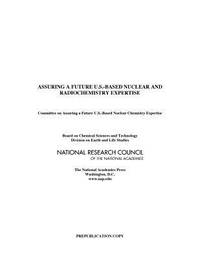
2012ref. 67790Washington DC: The National Academies Press 2012. PResumed first edition/first printing. Trade paperback. Very good. xx 200 p. Illustrations. References. Title continues: Nuclear and Radiation Studies Board DIvision of Earth and Life Studies Board on Higher Education and Workforce Division on Policy and Global Affairs National Research Council of the National Academies. This material is based upon work supported by the U.S. Department of Energy National Nuclear Security Administration and other agencies. The growing use of nuclear medicine the potential expansion of nuclear power generation and the urgent needs to protect the nation against external nuclear threats to maintain our nuclear weapons stockpile and to manage the nuclear wastes generated in past decades require a substantial highly trained and exceptionally talented workforce. Assuring a Future U.S. -Based Nuclear and Radiochemistry Expertise examines supply and demand for expertise in nuclear chemistry nuclear science and radiochemistry in the United States and presents possible approaches for ensuring adequate availability of these skills including necessary science and technology training platforms. Considering a range of reasonable scenarios looking to the future none of these areas are likely to experience a decrease in demand for expertise. However many in the current workforce are approaching retirement age and the number of students opting for careers in nuclear and radiochemistry has decreased dramatically over the past few decades. In order to avoid a gap in these critical areas increases in student interest in these careers in the research and educational capacity of universities and colleges and sector specific on-the-job training will be needed. Concise recommendations are given for actions to avoid a shortage of nuclear chemistry nuclear scientists and radiochemists in the future. From Wikipedia: "The National Research Council NRC is the working arm of the United States National Academies which produces reports that shape policies inform public opinion and advance the pursuit of science engineering and medicine. The National Academies include: National Academy of Sciences NAS National Academy of Engineering NAE Institute of Medicine IOM Unlike the other three organizations of the National Academies the National Research Council is not a membership organization. The National Research Council was organized in 1916 in response to the increased need for scientific and technical services caused by World War I. On June 1 1917 the council convened a meeting of scientific representatives of the UK and France with interested parties from the US on the subject of submarine detection. The results obtained and the problems in the work were discussed. A further meeting with the British and French was held in Paris in October 1918 at which more details of their work was disclosed. As a result of this the council recommended that US scientists be brought together to work on the problems. A New York Group worked on "supersonics" as did a San Pedro Group. A New London Group worked on binaural receivers while Chicago and Wisconsin Groups were assigned various problems in support of the other groups. Due to the success of Council-directed research in producing a sound-based method of detecting submarines as well as other military innovations the NRC was retained at the end of the war though it was gradually decoupled from the military. The Research Council is currently administered jointly by the National Academy of Sciences the National Academy of Engineering and the Institute of Medicine and its work is overseen by a Governing Board and an Executive Committee." The National Academies Press paperback
1985ref. 62509Washington DC: United States 1985. Presumed first edition/first printing. Wraps. Good. No dust jacket as issued. Paperclip mark on front and first page noted. Cover has some wear and soiling. 3 x 15 p. The appendices were in separate volumes at least two were classified and are not present. William Clark was the Chairman of the Blue Ribbon Task Group. This report was submitted in compliance with Section 1632 of the Department of Defense Authorization Act 1985 Public Law 98-525 and Executive Order 12499 of January 18 1985. The Task Group addressed procedures used by the Departments of Defense and Energy in establishing requirements and providing resources for the research development testing production surveillance and retirement of nuclear weapons. Members of the Task Group included James Schlesinger Former Secretary of Energy and Defense Former Chairman of the Atomic Energy Commission Harold Agnew former Director of the Los Alamos National Laboratory Jeane Kirkpatrick Former Ambassador to the United Nations and William Perry Former Under Secretary of Defense for Research and Engineering. United States paperback