2.225 resultados
ref. DADAX0198280122New unknown
ref. DADAX0295982551New unknown
ref. SONG3319847686Used: Good unknown
ref. SONG3319518798Used: Good unknown
ref. 0841238375New. hardcover. New. Satisfaction Guaranteed or your money back. hardcover
ref. DADAX0262071460New unknown
ref. DADAX0679754326New unknown
1992ref. 87382La Grange Park IL: American Nuclear Society 1992. Presumed First Edition First printing. Hardcover. Very good. xii 193 3 pages. Footnotes. Illustrations a few with color. Tabular data. Bibliography. Illustrated front cover. No dust jacket present. It's been 50 years since the Chicago Pile experiment and the first controlled chain reaction. Anonymous volunteer contributors from the ANS have put together this history which ends with a celebration of the future of nuclear power but does not talk of what to do with radioactive waste. This book was prepared by a volunteer effort of a large number of people over several months. The authors take responsibility for the choice of material on the many possible issued covered. It was the belief of the authors that the beneficial impacts of nuclear energy while already enormous represent only a small fraction of the benefits yet to be gained and that this brief history of the first 50 years of the controlled nuclear chain reaction represents only the first phase of the nuclear era. The contents include Introduction Chicago Pile No. 1: The First Controlled Nuclear Chain Reaction; Development of Nuclear Power Plants in the United States; Development of Nuclear Power Plants in Canada and Europe; Status of Nuclear Power Development; Other Peaceful Applications of Nuclear Energy; Nuclear Fuel Technology; Nuclear Safety; and Working Toward a Nuclear Future. Chicago Pile-1 CP-1 was the world's first artificial nuclear reactor. On 2 December 1942 the first human-made self-sustaining nuclear chain reaction was initiated in CP-1 during an experiment led by Enrico Fermi. The secret development of the reactor was the first major technical achievement for the Manhattan Project the Allied effort to create nuclear weapons during World War II. Developed by the Metallurgical Laboratory at the University of Chicago CP-1 was built under the west viewing stands of the original Stagg Field. Although the project's civilian and military leaders had misgivings about the possibility of a disastrous runaway reaction they trusted Fermi's safety calculations and decided they could carry out the experiment in a densely populated area. Fermi described the reactor as "a crude pile of black bricks and wooden timbers." After a series of attempts the successful reactor was assembled in November 1942 by a team of about 30 that in addition to Fermi included scientists Leo Szilard Leona Woods Herbert L. Anderson Walter Zinn Martin D. Whitaker and George Weil. The reactor used natural uranium. This required a very large amount of material in order to reach criticality along with graphite used as a neutron moderator. The reactor contained 45000 ultra-pure graphite blocks weighing 360 short tons and was fueled by 5.4 short tons of uranium metal and 45 short tons of uranium oxide. Unlike most subsequent nuclear reactors it had no radiation shielding or cooling system as it operated at very low power - about one-half watt. The success of Chicago Pile-1 provided the first vivid demonstration of the feasibility of the military use of nuclear energy by the Allies as well as the reality of the danger that Nazi Germany could succeed in producing nuclear weapons. Previously estimates of critical masses had been crude calculations leading to order-of-magnitude uncertainties about the size of a hypothetical bomb. The successful use of graphite as a moderator paved the way for progress in the Allied effort. The Germans had failed to account for the importance of boron and cadmium impurities in the graphite samples on which they ran their test of its usability as a moderator while Leo Szilard and Enrico Fermi had asked suppliers about the most common contaminations of graphite after a first failed test. They consequently ensured that the next test would be run with graphite entirely devoid of them. In 1943 CP-1 was moved to Red Gate Woods and reconfigured to become Chicago Pile-2 CP-2. There it was operated for research until 1954 when it was dismantled and buried. The stands at Stagg Field were demolished in August 1957; the site is now a National Historic Landmark and a Chicago Landmark. American Nuclear Society hardcover
1992ref. Q-0894485571Amer Nuclear Society 1992-12-01. Hardcover. New. In shrink wrap. Looks like an interesting title! Amer Nuclear Society hardcover
ref. DADAX0894485571Brand: Amer Nuclear Society 0000-00-00. hardcover. New. 6.50x0.75x9.50. Buy with confidence. Excellent Customer Service & Return policy. Brand: Amer Nuclear Society hardcover
1986ref. CCJD0441American Nuclear Society 1986. Spiral Hardcover. Like New. Prompt shipment with tracking. we ship in CLEAN SECURE NEW boxes Like New American Nuclear Society hardcover
ref. Z1-E-014-01535Amer Nuclear Society. Used - Good. Ships from UK in 48 hours or less usually same day. Your purchase helps support Sri Lankan Children's Charity 'The Rainbow Centre'. Ex-library so some stamps and wear and may have sticker on cover but in good overall condition. 100% money back guarantee. We are a world class secondhand bookstore based in Hertfordshire United Kingdom and specialize in high quality textbooks across an enormous variety of subjects. We aim to provide a vast range of textbooks rare and collectible books at a great price. Our donations to The Rainbow Centre have helped provide an education and a safe haven to hundreds of children who live in appalling conditions. We provide a 100% money back guarantee and are dedicated to providing our customers with the highest standards of service in the bookselling industry. Amer Nuclear Society unknown
1966ref. 730807PN. New. 1966. Soft Cover. Date is original print. This is a reprint edition. . PN paperback
1995ref. 74849La Grange Park IL 1995. Wraps. Very good. vii 1 86 pages. Footnotes. Institution stamp on title page with date in ink. Among the members of the Special Panel were: Glen Seaborg Harold Bengelsdorf Harold Agnew Alexander Haig Bertrand Goldschmidt and Rudolph Rometsch. Laid in is a related item 11 pages and business card of the key conclusions and recommendations and other information. The American Nuclear Society ANS established an independent and prestigious panel to publish a report regarding the protection and management of civil and excess weapons plutonium. In terms of approach ANS focused on several short- and long-term issues. The short-term focus was on the disposition of excess weapons plutonium while the longer-range issue concerned the disposition of the plutonium being produced in the civil nuclear fuel cycle. The report contains recommendations that the members believed to be vital to US plutonium management policy it also was intended to serve as a tool for further use. The panel has concluded that immediate emphasis should be placed on the assurance that all unconverted materials are protected as securely as when they were part of the active weapon stockpiles. More importantly the panel also recommended prompt implementation of the so-called reactor option for disposing of surplus US and Russian weapons plutonium. The longer-term issues covered by the panel were those posed by the growing stocks of both separated plutonium and spent fuel generated in the world`s civil nuclear power programs. These issues included what fuel cycle policies should be prudently pursued in light of proliferation risks and likely future energy needs what steps should be taken in regard to the increase in the demand for power in the future and how plutonium in its various forms should be protected and managed to minimize proliferation. Overall the panel concluded that plutonium is an energy resource that should be used and not a waste material to be disposed of. paperback
1970ref. mon0003244871American Nuclear Society 1970. Hardcover. Good. . No jacket. Book has shelf wear. Pages are tanning. American Nuclear Society hardcover
1970ref. 83909Washington DC: American Nuclear Society and United States Atomic Energy Commission 1970. Presumed First Edition First printing. Wraps. Fair. 4 106 pages. Front cover missing. Contents include: Plenary Session Nuclear Excavation Nuclear Excavation Effects Underground Nuclear Effects Radioactivity Oil and Gas Mineral Recovery Nuclear Operations Seismic Effects Water Resources Development Scientific Applications Underground Engineering Applications Closing Plenary Session and Index to Authors. This symposium on 'Engineering with Nuclear Explosives' reports to the Plowshare community both national and international the progress achieved since April 1964 the date of the Third Plowshare Symposium. In structuring the technical presentations contributions of broadest interest were placed at the beginning thus forming a common base of current information and applied science understanding developed in support of Plowshare technology. Sessions of specialty or pertaining to specific areas of application and engineering follow logically in the program. The Plenary Session reviewed the current status of the Plowshare Program from the technical government and industrial points of view. The 112 papers presented at 15 technical sessions covered all technical aspects of the Plowshare Program. The conference summary reviewed principal themes areas of significant advance and subjects requiring further attention that emerged during the technical conference. The full proceedings were issued in two volumes the fuller volume was reportedly approximately 850 pages. This volume consists of presentation summaries. Peaceful nuclear explosions PNEs are nuclear explosions conducted for non-military purposes. Proposed uses include excavation for the building of canals and harbors electrical generation the use of nuclear explosions to drive spacecraft and as a form of wide-area fracking. PNEs were an area of some research from the late 1950s into the 1980s primarily in the United States and Soviet Union. In the U.S. a series of tests were carried out under Project Plowshare. Some of the ideas considered included blasting a new Panama Canal constructing the proposed Nicaragua Canal the use of underground explosions to create electricity project PACER and a variety of mining geological and radionuclide studies. The largest of the excavation tests was carried out in the Sedan nuclear test in 1962 which released large amounts of radioactive gas into the air. By the late 1960s public opposition to Plowshare was increasing and a 1970s study of the economics of the concepts suggested they had no practical use. Plowshare saw decreasing interest from the 1960s and was officially canceled in 1977. The Soviet program started a few years after the U.S. efforts and explored many of the same concepts under their Nuclear Explosions for the National Economy program. The program was more extensive eventually conducting 239 nuclear explosions. Some of these tests also released radioactivity including a significant release of plutonium into the groundwater and the polluting of an area near the Volga River. A major part of the program in the 1970s and 80s was the use of very small bombs to produce shock waves as a seismic measuring tool and as part of these experiments two bombs were successfully used to seal blown-out oil wells. The program officially ended in 1988. As part of ongoing arms control efforts both programs came to be controlled by a variety of agreements. Most notable among these is the 1976 Treaty on Underground Nuclear Explosions for Peaceful Purposes PNE Treaty. The Comprehensive Nuclear-Test-Ban Treaty of 1996 prohibits all nuclear explosions regardless of whether they are for peaceful purposes or not. Since that time the topic has been raised several times often as a method of asteroid impact avoidance. American Nuclear Society, and United States Atomic Energy Commission paperback
1970ref. 739753PN. New. 1970. Soft Cover. Date is original print. This is a reprint edition. . PN paperback
1970ref. 743921970. Presumed First Edition First printing. Hardcover. Good. 2 volumes. Volume 1 x 858 2 pages and Volume 2 vi 859-1785 5 pages. Illustrations. Footnotes. Formulae. References. Binding added proceeding soft covers present. Cover has some wear and soiling. Sponsored by the American Nuclear Society in cooperation with the Atomic Energy Commission. Related to the Plowshare program. In structuring the technical presentations contributions of the broadest interest were placed at the beginning thus forming a common base of current information and applied science understanding developed in support of Plowshare technology. Sessions of specialty or pertaining to specific areas of application and engineering follow logically in the program. Name of previous owner Jerry R. Kline present on fep of each volume. This is believed to be the Jerry Kline who served at the Puerto Rico Nuclear Center 1965-68 Argonne National Laboratories 1968-1973 and with the Atomic Energy Commission and as an Administrative Judge on the Atomic Safety and Licensing Board. Edward Teller was a presenter! This proceedings includes 112 papers presented at 15 technical sessions covered all technical aspects of the Plowshare Program. The conference summary reviewed the principal themes areas of significant advance and subjects requiring further attention that emerged during the technical conference. This proceeding is the record of this symposium. At this symposium there were 620 registrations peak attendance in technical sessions was 800 and 28 members of the press attended. There were 16 foreign countries represented and 24 universities. In terms of industrial firms 117 were from the United States and 18 were foreign. The International Atomic Energy Agency participated as did representatives from 5 foreign governments. hardcover
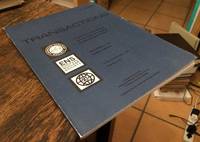
1989ref. 004998La Grange Park Illinois: American Nuclear Society Inc. 1989. Paper Back. Very Good/No Jacket. 4to - over 9¾" - 12" tall. 109pp.index; SC dark blue w/black; clean tight pgs. "Transactions" Volume 58. Record of papers presented at ANS national meetings. 8.5x11 American Nuclear Society, Inc. unknown
1975ref. 40583Hinsdale IL: American Nuclear Society 1975. First Edition. First Printing. good. 836 wraps illus. index coves somewhat worn and soiled. Volume 22 of the Transactions of the American Nuclear Society. American Nuclear Society paperback
ref. DADAX0275928500New unknown
1980ref. G087262238XI3N00American Society of Civil Engineers 1980. Hardcover. Good. Disclaimer:A copy that has been read but remains in clean condition. All pages are intact and the cover is intact. The spine may show signs of wear. Pages can include limited notes and highlighting and the copy can include previous owner inscriptions. At ThriftBooks our motto is: Read More Spend Less.Dust jacket quality is not guaranteed. American Society of Civil Engineers hardcover
ref. 0791815447.Ghardcover. Good. Access codes and supplements are not guaranteed with used items. May be an ex-library book. hardcover
1977No marks or inscriptions. Minor creasing to some corners, none to spine. A very clean very tight copy with bright unmarked boards, traces of storage, tanned pages and no bumping to corners. 231pp. A coherent approach to a non-nuclear energy policy, why it makes sense and how to implement it. A key study in the environment movement in the 1970s.
ref. DADAX0333529871New unknown