U S Nuclear Regulatory CommissionBiblio.com
2,114 results
ref. B9781497307681Paperback / softback. New. paperback
ref. B9781500615598Paperback / softback. New. paperback
1999ref. 77511Washington DC: U. S. Nuclear Regulatory Commission Office of Nuclear Reactor Regulation 1999. Presumed First Edition First printing. Wraps. Very good. Various paginations approximately 100 pages. Abbreviations. Appendix A: Tritium-Producing Burnable Absorber Rod TPBAR Tritium Production Core TPC Failure Modes and Effects Analysis VMEA Appendix B: Chronology of Correspondence. Appendix C: References. Cover has slight wear and soiling. Tritium-producing burnable absorber rods TPBARs used in the U.S. Department of Energy's Tritium Readiness Program are designed to produce tritium when placed in a Westinghouse or Framatome 17x17 fuel assembly and irradiated in a pressurized water reactor PWR. Under the terms of the Joint DOE/NRC Memorandum of Understanding of May 22 1996 NRC provided review and consultation services to assist DOE in assessing and resolving technical and licensing issues associated with the production of tritium in a commercial light-water reactor. The staff's review of the DOE topical report on the tritium production core and the staff's conclusions regarding the acceptability of irradiating up to approximately 3300 TPBARS in a core reload are documented in this safety evaluation. The staff identified a number of interface items that needed to be addressed by a licensee referencing the "Tritium Production Core Topical Report" in its plant-specific application for authorization to produced tritium for DOE. These are listed in Section 5 of this report. U. S. Nuclear Regulatory Commission, Office of Nuclear Reactor Regulation paperback
1997ref. 77644Washington DC: U. S. Nuclear Regulatory Commission. Office of Nuclear Reactor Regulation 1997. Presumed First Edition First printing. Wraps. Very good. Various paginations approximately 76 pages. Abbreviations. Appendix A-Chronology of Correspondence. Some cover wear. Under the terms of the Joint DOE/NRC Memorandum of Understanding of May 22 1996 NRC was providing consultation services to assist DOE in assessing and resolving technical and licensing issues associated with DOE's proposal for the production of tritium in a commercial light-water reactor. DOE had submitted a revised report containing sufficient information for the staff to determine whether the use of a CLWR to irradiate a limited number of tritium-producing burnable absorber rods in lead test assemblies LTAs raised issues involving an unreviewed safety question. The NRC reviewed the DOE report and prepared this safety analysis to address the acceptabiity of the proposed irradiation and whether a licensee could irradiate of these LTAs without NRC licensing action. As summarized in Section 10 of this safety evaluation the staff identified issued that required further NRC review. The staff also identified a number of areas in which an individual licensee undertaking irradiation of TPBAR LTAs would have to supplement the information in the DOE report before the staff could determine whether the proposed irradiation was acceptable at a particular facility. Therefore the staff concluded that a licensee undertaking irradiation of TPBAR LTAs in a CLWR would have to submit an application for amendment of its facility operating license before inserting the LTAs into the reactor. U. S. Nuclear Regulatory Commission. Office of Nuclear Reactor Regulation paperback
ref. 1497307686.Gpaperback. Good. Access codes and supplements are not guaranteed with used items. May be an ex-library book. paperback
1999ref. 46443Washington DC: U.S. Nuclear Regulatory Comm 1999. First Edition. First Printing. good. Approx. 100 wraps abbreviations chronology of correspondence glossary label with previous owner's name partially removed from fr cover. Covers somewhat worn and soiled distribution letter laid in. NUREG-1672. Project No. 697. U.S. Nuclear Regulatory Comm paperback
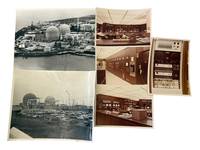
1970ref. 237601970. Salem Nuclear Power Plant photo archive 1970s documenting the construction and interior control infrastructure of Public Service Electric and Gas Company's nuclear generating complex at Lower Alloways Creek New Jersey on the Delaware River. Contemporary press material dated July 23 1979 describes construction proceeding on a facility planned as the largest nuclear power plant east of the Mississippi River with two generating units nearing completion and a third in the planning stages. The photographs move between the enormous physical plant required to generate nuclear power and the enclosed control environment from which technicians monitored and operated its systems recording nuclear generation as an engineered network of reactor buildings instrumentation communications equipment operators and centralized oversight. Photo archive of six silver gelatin and color photographs ranging from approximately 5 x 7 to 8 x 10 inches Lower Alloways Creek New Jersey 1970s. Black and white exterior views show the Salem complex under construction along the Delaware River with massive domed reactor containment buildings rising amid cranes scaffolding temporary structures service buildings construction equipment utility poles and extensive surrounding works. The photographs record the scale of the site from elevated viewpoints placing the containment structures within the larger industrial landscape necessary to support them. The color photographs move inside the facility to a control room dominated by long banks of panels containing gauges indicator lights switches displays annunciators telephones and other monitoring and communications equipment. Operators sit at desks and consoles facing walls of instrumentation while another view looks along a control room wall equipped with additional panels and communications devices. A close photograph records a dedicated equipment cabinet containing dual reel to reel tape mechanisms speakers meters switches and related electronic controls showing another component of the communications and recording apparatus integrated into the room. One exterior press photograph retains a typed Associated Press caption identifying the site as the "Salem nuclear plant" at Lower Alloways Creek and stating that two generating units were nearing completion while a third remained planned. The archive records two sides of nuclear power construction that were normally separated in public views of generating stations with the monumental concrete and steel structures visible from outside and the dense instrumentation through which the completed plant would be supervised from within. The July 23 1979 press text explicitly frames Salem through scale describing three planned generating units and identifying the complex as the projected largest nuclear power plant east of the Mississippi River while the photographs establish the machinery of control behind that claim. Rows of gauges warning indicators communications equipment recording apparatus and operator stations show the process by which information from a sprawling generating complex was concentrated into a room where personnel could monitor plant conditions and respond through centralized controls. The exterior photographs establish the corresponding physical system with containment buildings surrounded by construction infrastructure and subsidiary facilities along the Delaware River. Light surface and handling wear occasional edge and corner creasing minor toning and scattered marks; press caption and editorial markings remain present on one verso. Overall good condition. A focused photographic record of the Salem Nuclear Power Plant as both a major 1970s construction project and a centralized technological system linking reactor infrastructure to the instruments and personnel charged with its operation. unknown
1970ref. 237601970. Salem Nuclear Power Plant photo archive 1970s documenting the construction and interior control infrastructure of Public Service Electric and Gas Company's nuclear generating complex at Lower Alloways Creek New Jersey on the Delaware River. Contemporary press material dated July 23 1979 describes construction proceeding on a facility planned as the largest nuclear power plant east of the Mississippi River with two generating units nearing completion and a third in the planning stages. The photographs move between the enormous physical plant required to generate nuclear power and the enclosed control environment from which technicians monitored and operated its systems recording nuclear generation as an engineered network of reactor buildings instrumentation communications equipment operators and centralized oversight. Photo archive of six silver gelatin and color photographs ranging from approximately 5 x 7 to 8 x 10 inches Lower Alloways Creek New Jersey 1970s. Black and white exterior views show the Salem complex under construction along the Delaware River with massive domed reactor containment buildings rising amid cranes scaffolding temporary structures service buildings construction equipment utility poles and extensive surrounding works. The photographs record the scale of the site from elevated viewpoints placing the containment structures within the larger industrial landscape necessary to support them. The color photographs move inside the facility to a control room dominated by long banks of panels containing gauges indicator lights switches displays annunciators telephones and other monitoring and communications equipment. Operators sit at desks and consoles facing walls of instrumentation while another view looks along a control room wall equipped with additional panels and communications devices. A close photograph records a dedicated equipment cabinet containing dual reel to reel tape mechanisms speakers meters switches and related electronic controls showing another component of the communications and recording apparatus integrated into the room. One exterior press photograph retains a typed Associated Press caption identifying the site as the "Salem nuclear plant" at Lower Alloways Creek and stating that two generating units were nearing completion while a third remained planned. The archive records two sides of nuclear power construction that were normally separated in public views of generating stations with the monumental concrete and steel structures visible from outside and the dense instrumentation through which the completed plant would be supervised from within. The July 23 1979 press text explicitly frames Salem through scale describing three planned generating units and identifying the complex as the projected largest nuclear power plant east of the Mississippi River while the photographs establish the machinery of control behind that claim. Rows of gauges warning indicators communications equipment recording apparatus and operator stations show the process by which information from a sprawling generating complex was concentrated into a room where personnel could monitor plant conditions and respond through centralized controls. The exterior photographs establish the corresponding physical system with containment buildings surrounded by construction infrastructure and subsidiary facilities along the Delaware River. Light surface and handling wear occasional edge and corner creasing minor toning and scattered marks; press caption and editorial markings remain present on one verso. Overall good condition. A focused photographic record of the Salem Nuclear Power Plant as both a major 1970s construction project and a centralized technological system linking reactor infrastructure to the instruments and personnel charged with its operation. unknown books
1978ref. 49270Washington DC: GPO 1978. very good. 65 wraps figures appendix. H.A.S.C. No. 95-95. Topics covered include conclusions of the Panel SALT II status unresolved SALT II issues United States-Soviet Strategic Trends U.S. strategic requirements unilateral arms restraint and SALT II: no cause of euphoria. GPO paperback
ref. 5054la pleine lune 1988 In8 Broché 673 pages
1956240p. + full page drawings. Text drawings. Top edge yellow. 8vo. Original full cloth binding. Original dust jacket. Hardbound. Book club edition. SPACE/5/1 x 2
1957pp. vii, 159 + Frontis and photographs. Text drawings. 8vo. Original full cloth binding. Original dust jacket, torn top of spine and price clipped. Hardbound. First Printing. SPACE/6 / 3
1958128p. + Color photographs. Paper browned at edges. Stamped ownership of Louis C. Kauffman, Red Lion, PA. Small 8vo. Signet Key paperback. Color pictorial wraps painted by Chesley Bonestell. Third printing. SPACE/7
ref. 926416071X.Gpaperback. Good. Access codes and supplements are not guaranteed with used items. May be an ex-library book. paperback
1993ref. NATW2205Darmst., Wissenschaftliche Buchges. 1993. 184 S., OKart. in Folienverschweiss., diese etw. beschäd., wie neu.
2014ref. LFA-126742570Une revue de 146 pages, format 185 x 240 mm, illustrée, brochée couverture couleurs, bon état
2014ref. LFA-126742571Une revue de 146 pages, format 185 x 240 mm, illustrée, brochée couverture couleurs, bon état
1966ref. RO20023889Jules Tallandier et Nelson Doubleday. 1966. In-12. Relié. Bon état, Couv. convenable, Dos satisfaisant, Intérieur frais. 64 pages. Ilustrations et photos en noir et blanc.. . . . Classification Dewey : 539-Physique nucléaire
1945ref. RO40207967Science et Vie. 1945. In-8. Broché. Etat d'usage, Tâchée, Manque en coiffe de tête, Intérieur acceptable. 112 pages. Illustré de nombreux schémas et photos en noir et blanc dans le texte. Texte sur 2 colonnes.. . . . Classification Dewey : 539-Physique nucléaire
1990ref. R320178494Les éditions de physique. 1990. In-8. Broché. Etat d'usage, Couv. convenable, Dos satisfaisant, Intérieur acceptable. 52 pages - quelques photos en noir et blanc dans et hors texte - quelques phrases soulignées au craoyn à papier à l'intérieur du livre sans conséquence sur la lecture.. . . . Classification Dewey : 539-Physique nucléaire
1975ref. 63225Couverture souple. Revue complète.
1957ref. 99611Couverture souple. Revue complète.
1957ref. 99612Couverture souple. Revue complète.
1957ref. 99613Couverture souple. Revue complète.
1945ref. 107574Couverture souple. Revue complète.