US Nuclear Regulatory Commission U SBiblio.com
1376 resultados
ref. 1497373239.Gpaperback. Good. Access codes and supplements are not guaranteed with used items. May be an ex-library book. paperback
2001ref. RO80147811DU ROCHER. Juin 2001. In-12. Broché. Bon état, Couv. convenable, Dos satisfaisant, Intérieur frais. 371 pages. Quelques planches illustrées de cartes en couleurs et en noir et blanc.. . . . Classification Dewey : 539-Physique nucléaire
ref. 7800Paris, Éditions Gérard Lebovici, 1987. In-8, broché.
1987ref. R200072600OCDE. 1987. In-8. Broché. Bon état, Couv. convenable, Dos satisfaisant, Intérieur frais. 105 pages. Quelques graphiques en couleurs ou noir et blanc.. . . . Classification Dewey : 539-Physique nucléaire
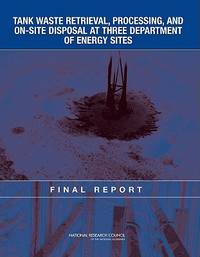
2006ref. __0309101700National Academies Press 2006. Paperback. New. 214 pages. 11.00x8.60x0.60 inches. National Academies Press paperback
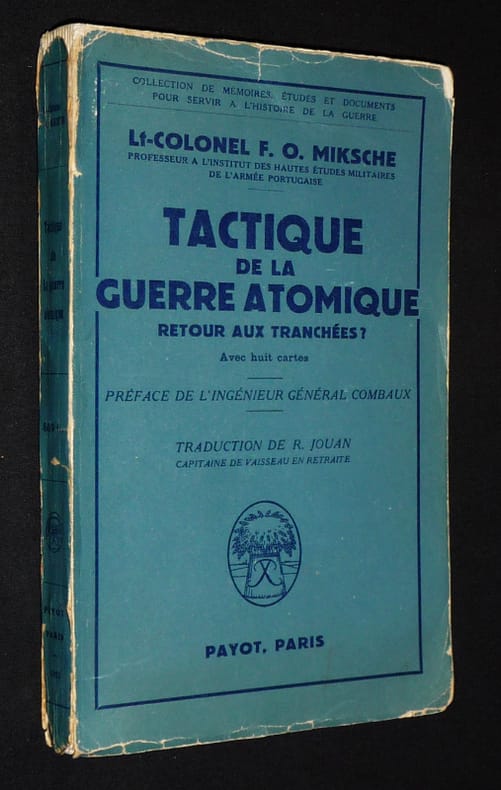
1955ref. fy1170Payot De Mémoires, Etudes et Documents pour Servir à l'Histoire de la Guerre Broché 1955 In-8 (14,2 x 22,8 cm), broché, 216 pages, avec 8 cartes ; pliures au dos et sur les bords des plats, mors usés réparés à la colle, passages soulignés au stylo, en l'état. Livraison a domicile (La Poste) ou en Mondial Relay sur simple demande.
1957ref. 705492PN. New. 1957. Soft Cover. Date is original print. This is a reprint edition. . PN paperback
1961ref. 59628Oak Ridge TN: Union Carbide Nuclear Company 1961. Presumed First Edition First printing thus. Wraps. Good. No dust jacket. vi 80 pages. Highlighting/underlining. Name of previous owner present. Ink notation on front cover. Cover has some wear and soiling. Underlining noted at one line of text. Report Number KOA-888. Marked UNCLASSIFIED. Prepared for the Atomic Energy Commission under U. S. Government Contract W7405 eng 26. There are mathematical formulae and a large number of numerical values presented. There is only a limited amount of text. K-25 was the codename given by the Manhattan Project during World War II for the project to produce enriched uranium for atomic bombs using the gaseous diffusion method. Over time it came to refer to the production facility located at the Clinton Engineer Works in Oak Ridge Tennessee the main gaseous diffusion building and ultimately the site. When it was built in 1944 the four-story K-25 gaseous diffusion plant was the world's largest building with over 1640000 square feet of floor space and a volume of 97500000 cubic feet . The highly corrosive uranium hexafluoride UF6 was the only known compound of uranium sufficiently volatile to be used in this process. Slightly enriched product from the S-50 thermal diffusion plant was fed into the K-25 gaseous diffusion plant. The enriched uranium was used in the Little Boy atomic bomb used in the atomic bombing of Hiroshima. In 1946 the K-25 gaseous diffusion plant became capable of producing highly enriched product. After the war four more gaseous diffusion plants were added to the site named K-27 K-29 K-31 and K-33. The K-25 site was renamed the Oak Ridge Gaseous Diffusion Plant in 1955. Production of enriched uranium ended in 1964. Union Carbide Nuclear Company paperback
1999ref. 70684Washington DC: United States. Department of Defense 1999. First Edition stated. Presumed First Printing. Trade paperback. Very good. xviii 62 pages. Includes: Illustrations Diagrams. Acronyms and Abbreviations. Cover has slight wear and soiling. Nuclear weapons life extension and countering nuclear threats will continue to be a central concern for the United States and the Department of Defense. The Department has identified the dual missions of sustaining a safe secure and effective nuclear deterrent and countering the threat from nuclear terrorism and nuclear proliferation as among the most important for U.S. national security priorities. Nuclear Matters serves as the focal point for these missions within the Department of Defense. "To deter nuclear war and serve as last resort weapons of self-defense. In this sense U.S. nuclear weapons are fundamental to our nation's security and have historically provided a deterrent against aggression and security assurance to U.S. allies. A robust flexible and survivable U.S. nuclear arsenal underpins the U.S. ability to deploy conventional forces worldwide; provides the Commander-in-Chief with credible response options to strengthen deterrence; and supports U.S. nonproliferation goals by extending deterrence to allies thereby dissuading them from developing their own nuclear weapons." Secretary of Defense Mattis at his confirmation hearing January 2017 This was intended to be a basic reference on the nuclear hardening of military systems. This Guidebook was not intended to be a definitive document on the effects of nuclear weapons or a "how to" guide for Project Managers but rather it provides information to staff officers who require a basic understanding of nuclear hardening as it relates to the acquisition of nuclear survivable systems. The information is this Guidebook was current as of September 1999. Nuclear weapon system survivability is concerned with the ability of U.S. nuclear deterrent forces to survive against the entire threat spectrum that includes but is not limited to nuclear weapon effects. The vast range of potential threats include: · conventional and electronic weaponry; · nuclear biological and chemical weapons; · advanced technology weapons such as high-power microwaves and radio frequency weapons; · terrorism or sabotage; and · the initial effects of a nuclear detonation. Put simply nuclear weapon effects survivability refers to the ability of any and all personnel equipment and systems including but not limited to nuclear systems to survive nuclear weapon effects. Nuclear weapon system survivability refers to nuclear weapon systems being survivable against any threat including but not limited to the nuclear threat. Nuclear hardness describes the ability of a system to withstand the effects of a nuclear detonation and to avoid internal malfunction or performance degradation. Hardness measures the ability of a system's hardware to withstand physical effects such as overpressure peak velocities energy absorbed and electrical stress. This reduction in hardware vulnerability can be achieved through a variety of well-established design specifications or through the selection of well-built and well-engineered components. This appendix does not address residual nuclear weapon effects such as fallout nor does it discuss nuclear contamination survivability. United States. Department of Defense paperback
ISBN : 2020054035. Le Seuil. 1980. In-12 Carré. Broché. Bon état. Couv. convenable. Dos satisfaisant. Intérieur frais. 532 pages. Illustré de nombreux schémas, graphiques et photos en noir et blanc, dans et hors texte. Annotations dans le texte. 'Points', S4, Sciences. Nouvelle édition.
1980ref. RO40209098Le Seuil. 1980. In-12. Broché. Bon état, Couv. convenable, Dos satisfaisant, Intérieur frais. 532 pages. Illustré de nombreux schémas, graphiques et photos en noir et blanc, dans et hors texte. Annotations dans le texte.. . . . Classification Dewey : 539-Physique nucléaire
1970ref. 83909Washington DC: American Nuclear Society and United States Atomic Energy Commission 1970. Presumed First Edition First printing. Wraps. Fair. 4 106 pages. Front cover missing. Contents include: Plenary Session Nuclear Excavation Nuclear Excavation Effects Underground Nuclear Effects Radioactivity Oil and Gas Mineral Recovery Nuclear Operations Seismic Effects Water Resources Development Scientific Applications Underground Engineering Applications Closing Plenary Session and Index to Authors. This symposium on 'Engineering with Nuclear Explosives' reports to the Plowshare community both national and international the progress achieved since April 1964 the date of the Third Plowshare Symposium. In structuring the technical presentations contributions of broadest interest were placed at the beginning thus forming a common base of current information and applied science understanding developed in support of Plowshare technology. Sessions of specialty or pertaining to specific areas of application and engineering follow logically in the program. The Plenary Session reviewed the current status of the Plowshare Program from the technical government and industrial points of view. The 112 papers presented at 15 technical sessions covered all technical aspects of the Plowshare Program. The conference summary reviewed principal themes areas of significant advance and subjects requiring further attention that emerged during the technical conference. The full proceedings were issued in two volumes the fuller volume was reportedly approximately 850 pages. This volume consists of presentation summaries. Peaceful nuclear explosions PNEs are nuclear explosions conducted for non-military purposes. Proposed uses include excavation for the building of canals and harbors electrical generation the use of nuclear explosions to drive spacecraft and as a form of wide-area fracking. PNEs were an area of some research from the late 1950s into the 1980s primarily in the United States and Soviet Union. In the U.S. a series of tests were carried out under Project Plowshare. Some of the ideas considered included blasting a new Panama Canal constructing the proposed Nicaragua Canal the use of underground explosions to create electricity project PACER and a variety of mining geological and radionuclide studies. The largest of the excavation tests was carried out in the Sedan nuclear test in 1962 which released large amounts of radioactive gas into the air. By the late 1960s public opposition to Plowshare was increasing and a 1970s study of the economics of the concepts suggested they had no practical use. Plowshare saw decreasing interest from the 1960s and was officially canceled in 1977. The Soviet program started a few years after the U.S. efforts and explored many of the same concepts under their Nuclear Explosions for the National Economy program. The program was more extensive eventually conducting 239 nuclear explosions. Some of these tests also released radioactivity including a significant release of plutonium into the groundwater and the polluting of an area near the Volga River. A major part of the program in the 1970s and 80s was the use of very small bombs to produce shock waves as a seismic measuring tool and as part of these experiments two bombs were successfully used to seal blown-out oil wells. The program officially ended in 1988. As part of ongoing arms control efforts both programs came to be controlled by a variety of agreements. Most notable among these is the 1976 Treaty on Underground Nuclear Explosions for Peaceful Purposes PNE Treaty. The Comprehensive Nuclear-Test-Ban Treaty of 1996 prohibits all nuclear explosions regardless of whether they are for peaceful purposes or not. Since that time the topic has been raised several times often as a method of asteroid impact avoidance. American Nuclear Society, and United States Atomic Energy Commission paperback
1970ref. 739753PN. New. 1970. Soft Cover. Date is original print. This is a reprint edition. . PN paperback
1970ref. 743921970. Presumed First Edition First printing. Hardcover. Good. 2 volumes. Volume 1 x 858 2 pages and Volume 2 vi 859-1785 5 pages. Illustrations. Footnotes. Formulae. References. Binding added proceeding soft covers present. Cover has some wear and soiling. Sponsored by the American Nuclear Society in cooperation with the Atomic Energy Commission. Related to the Plowshare program. In structuring the technical presentations contributions of the broadest interest were placed at the beginning thus forming a common base of current information and applied science understanding developed in support of Plowshare technology. Sessions of specialty or pertaining to specific areas of application and engineering follow logically in the program. Name of previous owner Jerry R. Kline present on fep of each volume. This is believed to be the Jerry Kline who served at the Puerto Rico Nuclear Center 1965-68 Argonne National Laboratories 1968-1973 and with the Atomic Energy Commission and as an Administrative Judge on the Atomic Safety and Licensing Board. Edward Teller was a presenter! This proceedings includes 112 papers presented at 15 technical sessions covered all technical aspects of the Plowshare Program. The conference summary reviewed the principal themes areas of significant advance and subjects requiring further attention that emerged during the technical conference. This proceeding is the record of this symposium. At this symposium there were 620 registrations peak attendance in technical sessions was 800 and 28 members of the press attended. There were 16 foreign countries represented and 24 universities. In terms of industrial firms 117 were from the United States and 18 were foreign. The International Atomic Energy Agency participated as did representatives from 5 foreign governments. hardcover
1983ref. SBBIH-5R7ESMV4XP7FPlenum Pub Corp 1983. hardcover. Good. Our good condition books are generally good for reading but not for gifting or collecting. They could have imperfections such as creasing fanning inscriptions margin notes yellowing staining on edge or cover or pages bumps scuffs etc etc sometimes multiple of these. It's a wide category that encompasses anything that isn't almost-new down to anything that is slightly better than poor. We would NOT recommend gifting Good books - these should be considered reading copies. Our books are dispatched from a Yorkshire former cotton mill. We list via barcode/ISBN so please note that the images are stock images and may not be the exact copy you receive furthermore the details about edition and year might not be accurate as many publishers reuse the same ISBN for multiple editions and as we simply scan a barcode or enter an ISBN we do not check the validity of the edition data when listing. If you're looking for an exact edition please don't order at least not without checking with us first although we don't always have time to check. We aim to dispatch prompty the service used will depend on order value and book size. We can ship to most countries see our shipping policies. Payment is via Abe only. Plenum Pub Corp hardcover
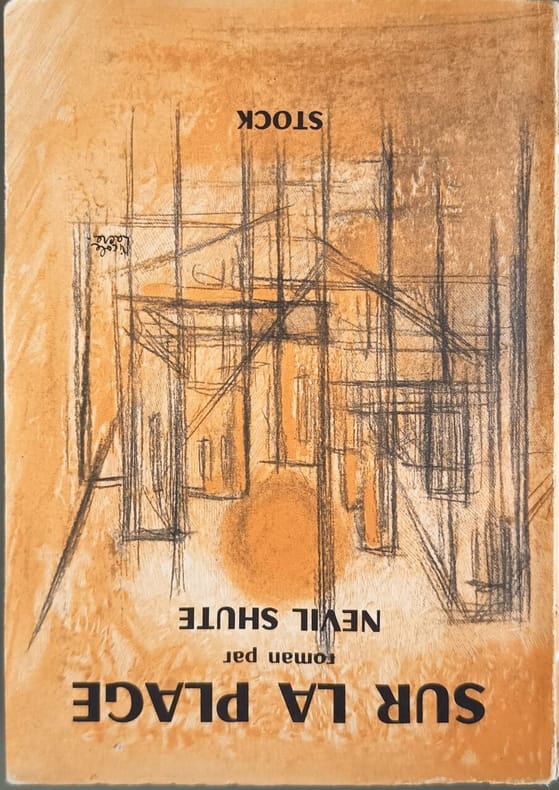
1959ref. 14491Stock 1959 299 pages in8. 1959. broché. 299 pages. Le roman 'Sur la plage' (titre original 'On the Beach') de Nevil Shute paru en 1957 se déroule après une guerre nucléaire qui a anéanti l'hémisphère nord. L'histoire suit un petit groupe de survivants en Australie notamment le commandant Dwight Towers et le lieutenant Peter Holmes avec sa famille alors qu'ils attendent l'arrivée inéluctable des nuages radioactifs. Le récit explore leurs réactions face à la fin imminente de l'humanité
1977ref. 755651PN. New. 1977. Soft Cover. Date is original print. This is a reprint edition. . PN paperback
1953pp. xviii, 454. Mimeograph errata sheet insert. Numerous charts and graphs. XLib. 8vo. Original full red cloth binding, slightly worn. Hardbound. This self-published first edition is rather scarce. SPACE/5
1989ref. 797807PN. New. 1989. Soft Cover. Date is original print. This is a reprint edition. . PN paperback
1944ref. NATW1722Toronto and New York, Thomas Nelson and Son Ltd. (1944). kl.- 8°, 272 S., OLn. m. gldgepr. Vign. in OU., nur an diesem geringe Gebrauchsspuren.
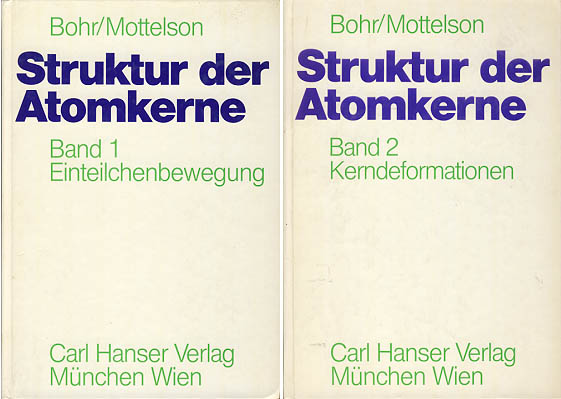
1979ref. 39773ABMünchen, Wien, Carl Hanser Verlag, 1979. Groß-8°. 24,5 x 17.5 cm. VII, 498, VII, 653 Seiten. Original-Pappbände.
ref. 053545Paris Librairie Armand Colin 1971 petit in 4 (23,5x17) 1 volume reliure cartonnée de l'éditeur, 414 pages [1]. Collection U. Bel exemplaire ( Photographies sur demande / We can send pictures of this book on simple request )
1987SOFTCOVER. Sticker to spine and inside cover, stamp to page block. Text is clean, tight and bright Ex - Library
1980ref. G087262238XI3N00American Society of Civil Engineers 1980. Hardcover. Good. Disclaimer:A copy that has been read but remains in clean condition. All pages are intact and the cover is intact. The spine may show signs of wear. Pages can include limited notes and highlighting and the copy can include previous owner inscriptions. At ThriftBooks our motto is: Read More Spend Less.Dust jacket quality is not guaranteed. American Society of Civil Engineers hardcover
CALMANN LEVY. 1960. In-12 Carré. Broché. Bon état. Couv. convenable. Dos satisfaisant. Intérieur frais. 238 pages Préface de R Aron