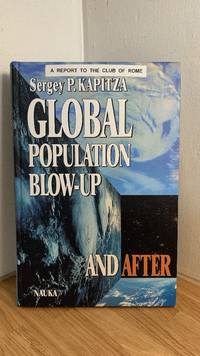
Kapitza PyotrABAA

30 Ergebnisse
1970Best.-Nr. 316266Lancaster Pa 1970. 36 pp. 4to. Grey printed wrappers. Fine. 36 pp. 4to. INSCRIBED. Soviet physicist and Nobel laureate in 1978 best known for his work in low-temperature physics. Inscribed to László Magyar on the cover on 3/11/72 by the author and with the hand addressed envelope by Kapitsa tipped in at back. unknown books
1938Best.-Nr. 43836New York, Macmillian and Co, 1938. Lex8vo. Entire volume 141 of Nature offered. Bound in a brown contemporary full cloth with gilt lettering to spine. Ex-library copy, paper label pasted on to top and bottom of spine. Library stamp to pasted down front free end-paper and title page. Paper labels pasted on the back free end-paper and pasted down back free end-paper. Internally fine and clean. P. 74" 75. [Entire volume: Pp. lxiv, 1156, v-xii, v-vii, v-iv, v-xii].
1938Best.-Nr. 46897New York, Macmillian and Co, 1938. Royal8vo. In publisher's pictorial cloth with the original wrappers [in the back]. Gilt lettering and Nature's logo to spine and front board. Entire issue of ""Nature"", January - June, 1938, Vol. 141. ""Emmanuel College"" in gilt lettering to spine and two library stamps to title-page and first index page. Two small white paper labels pasted on to spine and a small tear to top of spine. Very slight wear to extremities, otherwise a very fine and clean copy. Rare in the publisher's binding. P. 74"" P. 75. [Entire volume: LXIV, 1156 + VIII, IV, VIII, VIII, XVI, VIII, VIII, XVI, VIII, XII, VIII, XII, XII, IV, IV, VIII, XII, VIII, VIII, VIII, VIII, XII, VIII, IV, XVI, CCLX (Advertisements).
1938Best.-Nr. 59910London, Macmillian and Co, 1938. Royal8vo. In contemporary half cloth with white paper title-label pasted on to spine. In: ""Nature"", January - June, 1939, Vol. 141, entire volume offered. Stamp to front free end-paper and title-page, otherwise fine and clean copy. P. 74"" P. 75. [Entire volume: LXIV, 1156 pp.].
1943Best.-Nr. ZB1178330USSR Academy of Sciences 1943. Volumes 7 through 10 1943-1946 rebound in buckram hardcovers with rear covers retained ex library else texts clean and bindings tight. - If you are reading this this item is actually physically in our stock and ready for shipment once ordered. We are not bookjackers. Buyer is responsible for any additional duties taxes or fees required by recipient's country. Photos available upon request. USSR Academy of Sciences hardcover
2010Best.-Nr. x-3642136443Springer 2010. Paperback. New. 242 pages. 9.25x6.25x0.75 inches. Springer paperback
2012Best.-Nr. x-364250261XSpringer Verlag 2012. Paperback. New. reprint edition. 167 pages. German language. 9.25x7.50x0.50 inches. Springer Verlag paperback
1970Best.-Nr. 316266Lancaster Pa 1970. 36 pp. 4to. Grey printed wrappers. Fine. 36 pp. 4to. Soviet physicist and Nobel laureate in 1978 best known for his work in low-temperature physics. Inscribed to László Magyar on the cover on 3/11/72 by the author and with the hand addressed envelope by Kapitsa tipped in at back. unknown
2004Best.-Nr. GR54261011008Moscow: Nauka 2004. Hardcover. Very Good. 0x0x0. Appears to have hardly been read. Nauka hardcover
2016Best.-Nr. BN258927München : Sieveking Verlag 2016. 2016. Fremdenzimmer : 16 junge Männer aus Syrien und ihre Geschichten. Wilhelm Christoph Warning ; mit Fotos von Enno Kapitza Fremdenzimmer : 16 junge Männer aus Syrien und ihre Geschichten. Wilhelm Christoph Warning ; mit Fotos von Enno Kapitza Warning Wilhelm und Enno Kapitza München : Sieveking Verlag unknown
1981Best.-Nr. BN420952Fink 1981. 1981. Ein bürgerlicher Krieg in der gelehrten Welt : zur Geschichte d. Querelle des anciens et des modernes in Deutschland Ein bürgerlicher Krieg in der gelehrten Welt : zur Geschichte d. Querelle des anciens et des modernes in Deutschland Kapitza Peter Verfasser Fink unknown
Best.-Nr. BN534683American Institute of Physics. Sakharov Remembered / A Tribute by Friends and Colleagues Sakharov Remembered / A Tribute by Friends and Colleagues Drell Sidney D. / Sergei P. Kapitza American Institute of Physics unknown
Best.-Nr. 40406097like new. unknown
Best.-Nr. 40406097-nnew. unknown
Best.-Nr. 2718808-nnew. unknown
Best.-Nr. 2718808like new. unknown
1938Best.-Nr. 46897New York Macmillian and Co 1938. Royal8vo. In publisher's pictorial cloth with the original wrappers in the back. Gilt lettering and Nature's logo to spine and front board. Entire issue of "Nature" January - June 1938 Vol. 141. "Emmanuel College" in gilt lettering to spine and two library stamps to title-page and first index page. Two small white paper labels pasted on to spine and a small tear to top of spine. Very slight wear to extremities otherwise a very fine and clean copy. Rare in the publisher's binding. P. 74; P. 75. Entire volume: LXIV 1156 VIII IV VIII VIII XVI VIII VIII XVI VIII XII VIII XII XII IV IV VIII XII VIII VIII VIII VIII XII VIII IV XVI CCLX Advertisements. First publication of these two seminal papers which constitutes one of the most significant discovery in 20th century physics. It ushered a golden period of low-temperature physics and created a new research field within physics which was later to be called quantum liquids. Both paper described a hitherto unknown state of matter: superfluidity of matter. The two discoveries were made independently Kapitza's paper superseding Allen and Misener's by two weeks. Both studies reported that liquid helium flowed with almost no measurable viscosity below the transition temperature of 2.18 K."Although the discovery of superfluidity stands as one of the most significant in physics in the 20th century it was to be 40 years before the Royal Swedish Academy of Sciences honoured this seminal discovery with a Nobel prize - an exceptionally long interval. In 1978 Kapitza by then 84 was given half of that year's Nobel Prize for Physics with a somewhat vague citation reading "for his basic inventions and discoveries in the area of low-temperature physics". The other half did not go to Allen and Misener. Today science popularizers generally give sole credit for the discovery of superfluidity to Kapitza." Physics world University of Toronto. "Kapitza observed that He II flowed between two closely spaced parallel plates extremely rapidly compared to He I for the same pressure difference. This result published in Nature on 8 January 1938 showed unambiguously that here was a new and mysterious kind of liquid - one with almost no viscosity. On the page facing Kapitza's one-page paper was another by the young Canadian physicists Jack Allen and Donald Misener with essentially equivalent results on helium flow on long capillary tubes. It was submitted two weeks after Kapitza's but both papers are the standard reference for the discovery of superfluidity". Griffin A Century of Nature 2003 p. 52.While investigating the thermal conductivity of liquid helium Kapitsa measured the flow as the fluid flows through a gap between two discs into a surrounding bath. Above the lambda point there was little flow but below the lambda temperature the liquid flowed with such great ease that Kapitsa drew an analogy with superconductors. It was a liquid of zero viscosity. He discovered the phenomenon in 1937 and published a paper about it in Nature in January 1938. He wrote: "The helium below the lambda point enters a special state that might be called a ‘superfluid.’" DSB.Today the theory behind superfluidity is widely used within a broad variety of different subject such as spectroscopic and in high-precision devices as gyroscopes which allow the measurement of some theoretically predicted gravitational effects. In 1999 a type of superfluid was used to trap light and greatly reduce its speed. Light was passed through a Bose-Einstein condensed gas of sodium superfluid and found to be slowed to 17 m/s from its normal speed of 299792458 metres per second.Brandt The Harvest of a Century Pp. 254-7. hardcover
1938Best.-Nr. 43836New York Macmillian and Co 1938. Lex8vo. Entire volume 141 of Nature offered. Bound in a brown contemporary full cloth with gilt lettering to spine. Ex-library copy paper label pasted on to top and bottom of spine. Library stamp to pasted down front free end-paper and title page. Paper labels pasted on the back free end-paper and pasted down back free end-paper. Internally fine and clean. P. 74; 75. Entire volume: Pp. lxiv 1156 v-xii v-vii v-iv v-xii. First publication of these two seminal papers which constitutes one of the most significant discovery in 20th century physics. It ushered a golden period of low-temperature physics and created a new research field within physics which was later to be called quantum liquids. Both paper described a hitherto unknown state of matter: superfluidity of matter. The two discoveries were made independently Kapitza's paper superseding Allen and Misener's by two weeks. Both studies reported that liquid helium flowed with almost no measurable viscosity below the transition temperature of 2.18 K."Although the discovery of superfluidity stands as one of the most significant in physics in the 20th century it was to be 40 years before the Royal Swedish Academy of Sciences honoured this seminal discovery with a Nobel prize - an exceptionally long interval. In 1978 Kapitza by then 84 was given half of that year's Nobel Prize for Physics with a somewhat vague citation reading "for his basic inventions and discoveries in the area of low-temperature physics". The other half did not go to Allen and Misener. Today science popularizers generally give sole credit for the discovery of superfluidity to Kapitza." Physics world University of Toronto. "Kapitza observed that He II flowed between two closely spaced parallel plates extremely rapidly compared to He I for the same pressure difference. This result published in Nature on 8 January 1938 showed unambiguously that here was a new and mysterious kind of liquid - one with almost no viscosity. On the page facing Kapitza's one-page paper was another by the young Canadian physicists Jack Allen and Donald Misener with essentially equivalent results on helium flow on long capillary tubes. It was submitted two weeks after Kapitza's but both papers are the standard reference for the discovery of superfluidity". Griffin A Century of Nature 2003 p. 52.Today the theory behind superfluidity is widely used within a broad variety of different subject such as spectroscopic and in high-precision devices as gyroscopes which allow the measurement of some theoretically predicted gravitational effects. In 1999 a type of superfluid was used to trap light and greatly reduce its speed. Light was passed through a Bose-Einstein condensed gas of sodium superfluid and found to be slowed to 17 m/s from its normal speed of 299792458 metres per second.Brandt The Harvest of a Century Pp. 254-7. hardcover
2020Best.-Nr. __3766724223Callwey GmbH 2020. Hardcover. New. German language. 11.18x10.16x1.42 inches. Callwey GmbH hardcover
Best.-Nr. 63093290Springer . Papeback. New. pp. 464 Springer unknown
Best.-Nr. 63093287Springer . Hardback. New. pp. 464 Springer hardcover
Best.-Nr. ria9789027710628_inpPaperback. New. New Book; Fast Shipping from UK; Not signed; Not First Edition; In tbis splendid collection of the articles and addresses of P. L. Kapitza the author remarks on the insight of the 18th century Ukrainian philosopher Skovoroda who wrote: "We must be grateful to God that He created the world in such a paperback
Best.-Nr. ria9789027710611_inpHardcover. New. New Book; Fast Shipping from UK; Not signed; Not First Edition; In tbis splendid collection of the articles and addresses of P. L. Kapitza the author remarks on the insight of the 18th century Ukrainian philosopher Skovoroda who wrote: "We must be grateful to God that He created the world in such a hardcover
Best.-Nr. 9027710627.Gpaperback. Good. Access codes and supplements are not guaranteed with used items. May be an ex-library book. paperback
Best.-Nr. 3640873157.Gpaperback. Good. Access codes and supplements are not guaranteed with used items. May be an ex-library book. paperback