Gentili VeronicaMareMagnum

2 128 résultats
2021ill., br. La maggior parte delle piccole e medie imprese ha capito che i Social Network in generale e Facebook in particolare sono diventati ambienti impossibili da non presidiare, il problema sta nel fatto che difficilmente riescono a farne una reale risorsa di business. Spesso si limitano ad aprire una Pagina, infilarci dentro qualche post, salvo poi lamentarsi poco dopo che "non li considera nessuno" e quindi "Facebook non serve a niente". In questa terza edizione del libro ti racconto come funziona davvero Facebook per le aziende, come ottimizzare la tua Pagina e i tuoi post, come creare un Facebook Marketing Plan di successo che ti aiuti a raggiungere risultati concreti e come funziona veramente per il business il social network più amato al mondo. Se sei un professionista della comunicazione, un marketing manager, un digital o social media marketer e se vuoi fare del marketing su Facebook la tua professione, questo è il libro giusto per te.
2016brossura Nei due anni trascorsi dalla pubblicazione della prima edizione di "Strategia digitale" sono successe molte cose. L'agenda del mondo è cambiata, si sono imposte nuove abitudini di consumo, i social hanno modificato i loro modelli di business. Su tutto questo è importante fare un punto. Perché sono sempre più lontani i giorni in cui potevamo dire, semplicemente: "Apriamo una pagina Facebook" o "Chiamiamo l'esperto di SEO". Questa seconda edizione è arricchita e aggiornata, alla luce appunto di un nuovo quadro di riferimento. La definizione "digitale" è sempre più superflua, perché la comunicazione e il marketing devono muoversi in un universo multicanale, ma è ancora necessario fornire gli strumenti per la costruzione della presenza del brand che sappiano essere un'efficace "messa a terra" di tutte le teorie: ed ecco che ritorniamo alla necessità di un approccio organico e competente sul digitale. In virtù di questo nuovo angolo di visione, sono stati aggiornati anche gli esempi, le risorse consigliate e i casi analizzati. Il manuale illustra come creare una strategia digitale sia dal punto di vista dell'azienda sia da quello dell'agenzia, attraverso casi di successo e simulazioni, esempi, idee, check list. I meno esperti troveranno una guida che spiega, attraverso una metodologia facile da comprendere e da seguire, come progettare e realizzare le attività di comunicazione digitale pianificandole strategicamente.
2013réf. 500106077Le Livre de Poche 2013 2015 pages 11 2x4 2x17 8cm. 2013. pocket_book. 2015 pages.
1992réf. 38029Düsseldorf : VDI-Verl., 1992. 213 S. : Ill. u. graph. Darst. 8°. OBroschur. (VDI-Berichte / Verein Deutscher Ingenieure ; 951)
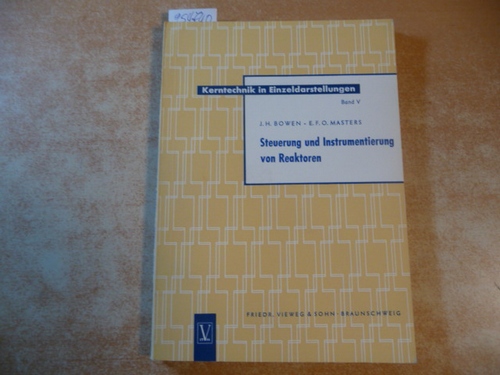
1961réf. 954740Braunschweig: Vieweg. 1961. VIII.; 104. 21cm. Zustand: Gut bis Sehr Gut gering gebräunt (Innen); Einband (Außen) hat geringe bis leichte Gebrauchsspuren; Broschiert
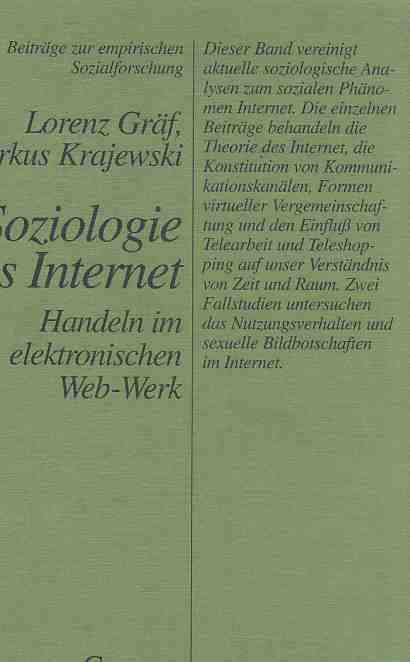
2003réf. 27021Bonn : mitp 2003. 400 S. : Ill., graph. Darst. ; 21 cm Top Zustand, kart., Softcover/Paperback, Neupreis in Euro: 28,--
2003réf. 14588München dpunkt.verlag, 2003. 289 S. Gr. 8° Groß-Oktav Brosch.
2013br. In questa cultura di rete, non si può identificare una sola causa per cui le persone diffondono materiali. Ciascuno compie una serie di decisioni, socialmente contestualizzate, quando sceglie di diffondere un testo mediale: si tratta di contenuto a cui val la pena dedicare del tempo? Val la pena condividerlo con altri? Comunica qualcosa su di me o sulla mia relazione con queste persone? Qual è la piattaforma migliore per diffonderlo? Lo devo mettere in circolazione allegandogli un messaggio particolare? Anche se non ha allegato alcun commento ulteriore, comunque, il solo ricevere una notizia o un video da qualcun altro arricchisce quel testo di una serie di nuovi significati potenziali. Quando si ascolta, si legge o si guarda un contenuto condiviso, si pensa non solo (e spesso neanche in primo luogo) a quello che chi l'ha prodotto poteva voler significare, ma a quello che la persona che l'ha condiviso cercava di comunicare. La diffondibilità - la spreadability diventa un attributo del panorama dei media contemporanei che ha la potenzialità di ridefinire drasticamente il funzionamento delle istituzioni culturali e politiche centrali. "Spreadable media" mette in crisi l'idea diffusa che il contenuto digitale diventi magicamente "virale". Descrive invece brillantemente le dinamiche sottostanti il coinvolgimento delle persone nei social media, in modi che sono, al contempo, ricchi dal punto di vista teorico e significativi da quello pubblico.
1984réf. 7421Haar bei München : Markt-und-Technik-Verlag, 1984. 318 S. : Ill., graph. Darst. Gr. 8°. Ill. OPpbd. mit flexiblem Einbd. (PC-Magazin) (Computer persönlich)
1989réf. 16156Köln : DuMont, 1989. 286 S. : Ill. 8°. Erstveröff. Bibl.- Einbd. (broschiert). (Studio DuMont)
1997réf. 1147700Frankfurt/Main ; New York : Campus-Verl., 1997. 259 S. : graph. Darst. ; 21 cm kart.
2000319 p.; 22,5 cm. Brossura editoriale. Come nuovo
2015réf. 40447ABFrankfurt am Main [u.a.], Campus Verlag, 2015. 8°, 234 S., illustr. original Kartonage (Paperback), sehr schönes, sauberes Exemplar
1960réf. 89850Moscow: Foreign Languages Publishing House 1960. Presumed First Edition First printing. Hardcover. Good/Good in a clear plastic sleeve--with some wear tears and soiling. A few text pages--English portion is at pages 7 and 8. Illustrations one fold-outs some in color--reported as 149 Numbered Plates. Publication date derived from Internet research. This work is published in Russian English French German and Spanish. Major inscription on the fep--The inscription is in Russian and translates as "To Colonel Griffith in memory of meeting with Soviet Veterans of War in Moscow June 1 1963 Moscow." The signatures are believed to be. Vasilevsky Marshal first head of the Committee. Sukhoi or Serov; Sergey Smirnov WWII writer and Aleksey Maresyev Executive of Soviet Committee of Veterans WWII--he was a fighter Act and and his legs amputated. Between the end of mass demobilization in 1948 and the foundation of the Soviet Committee of War Veterans in 1956 former soldiers were integrated neither as a generation nor as a status group with formal privileges and their own organization as would be the case in later years. What held them together was instead a shared sense of entitlement based on wartime sacrifice. During the first postwar decade therefore Soviet veterans are best understood as an “entitlement group.” Only in the 1960s and 1970s was this entitlement group transformed into a status group that became one of the major pillars of the late Soviet order. This album contains examples of all the basic forms of photographic art works by Soviet photographers of various generations from the veterans who started taking pictures as long ago as the end of the last century to young photography only just setting out on their artistic careers. Aleksandr Mikhaylovich Vasilevsky 30 September O.S. 10 September 1895 – 5 December 1977 was a Soviet general who served as a top commander during World War II and achieved the rank of Marshal of the Soviet Union. During World War II he served as the chief of the General Staff and deputy Minister of Defense and later served as Minister of Defense from 1949 to 1953. Aleksey Petrovich Maresyev 20 May 1916 – 18 May 2001 was a Soviet and Russian military pilot who became a Soviet fighter ace during World War II despite becoming a double amputee. On 5 April 1942 his Yakovlev Yak-1 was shot down near Staraya Russa. Despite being badly injured he managed to return to the Soviet-controlled territory. His injuries deteriorated so badly that both of his legs had to be amputated above the knee. Desperate to return to his fighter pilot service he subjected himself to nearly a year of exercise to master the control of his prosthetic devices and succeeded at that returning to flying in June 1943. During a dog fight in August 1943 he shot down three German Focke-Wulf Fw 190 fighters. In total he completed over 80 combat sorties and shot down an estimated 7 German aircraft. He was awarded the title Hero of the Soviet Union on 24 August 1943. In 1944 he joined the Communist Party and in 1946 he retired from the military. In 1952 Maresyev graduated from the Higher Party School. In 1956 he obtained a Ph.D. in history and started working in the Soviet War Veterans Committee. Sergey Sergeyevich Smirnov 1915–1976 was a Soviet writer a historian a radio- and TV-presenter a public figure a Lenin Prize winner 1965. Member of the RCP since 1946. Smirnov entered the Maxim Gorky Literature Institute. In 1941 he went to the front. After the war he worked as an editor in Voenizdat. Sergey was the deputy editor-in-chief of Novy Mir November 1953 – October 1954 the editor-in-chief of Literaturnaya Gazeta in 1959—1960. The Secretary of the Union of Soviet Writers 1975—1976. Smirnov was famous for his books about heroes of the Great Patriotic War. He did a lot to immortalize heroic deeds of unknown soldiers and to find soldiers missing in action. Signature is possibly of General Ivan Aleksandrovich Serov August 13 1905 – July 1 1990 was a prominent leader of Soviet security and intelligence agencies head of the KGB between March 1954 and December 1958 as well as head of the GRU between 1958 and 1963. He was Deputy Commissar of the NKVD under Lavrentiy Beria and was to play a major role in the political intrigues after Joseph Stalin's death. Serov helped establish a variety of secret police forces in Central and Eastern Europe after the rise of the Iron Curtain and played an important role in crushing the Hungarian Revolution of 1956. Serov headed both the political intelligence agency KGB and the military intelligence agency GRU making him unique in Soviet/Russian history. Foreign Languages Publishing House hardcover
réf. VLE-564P., Charpentier, 1857-1864, 2 volumes in-12, XII + 400 + 368 pages, quelques rousseurs, plus fortes en ddébut de second volume brochés, couvertures fanées
réf. VLE-636P., Plon, 1884, in-8, VII+448pp broché
réf. VLE-787P., Vermot, 1856, in-8, 459pp. illustrées de 8 gravures par Etienne David. Exemplaire décoratif malgré quelques rousseurs relié demi-chagrin violine, avec faux nerfs au dos décoré d'un semi de pates d'hermine encadré d'un double filet à chaque caisson, tranches dorées
réf. VLE-623P., Lévy, 1861-1865, 4 volumes in-8, 429pp.+525pp.+490pp.+XXVII de supplément+447pp., traces d'humidité par endroits et quelques rousseurs brochés, dos cassé au tome 3
réf. VLE-764P., Emile-Paul, 1933, petit in-8, XXXI+468pp., illustrées d'un frontispice broché, couverture légèrement fanée
réf. VLE-199P., Plon, 1909 (2e édition), 2 volumes in-8, IV+417+426 pages illustrées d'un portrait en héliogravure en frontispice brochés
réf. VLE-374P., Calmann-Lévy, 1903, in-8, XXVIII+334 pp. illustrées d'un portrait en frontispice. Edition originale relié demi-percaline à la bradel, dos lisse uniformément passé, couverture conservée
réf. VLE-300P., Plon-Nourrit, 1908, in-8, XIX + 558 pp. illustrées d'un portrait en frontispice. Envoi de Arthur Chuquet. On joint à notre exemplaire deux lettres autographes signées du Baron de Frénilly : l'une, d'une page in-12 avec adresse au dos, est adressée du Château de Bourneville, à proximité de La Ferté-Milon, le 9 août 1829, au bibliographe-èditeur Quérard à propos de la publication de la "France Littéraire" dans laquelle une notice concerne le Baron. L'autre, de trois pages, est adressée également du Château de Bourneville, le 14 décembre 1827, à l'Amiral Halgan, membre de la Chambre des Députés broché (couverture légèrement fanée, rousseurs à la page de titre et au portrait)
réf. VLE-679P., Ollendorff, sd(4e édition), in-12, XXXVII + 302 pages illustrées de 5 planches hors-texte dont un portrait en frontispice broché
réf. VLE-419P., Lahure, 1895, in-4, XXIV + 350 pages illustrées d'un portrait en frontispice, rousseurs. Edition originale broché, dos cassé, manque angulaire au second plat
réf. VLE-62P., Plon, 1932-1934, 3 volumes in-8, XV+367pp+464pp+495pp+XXXVI pages illustrées de 10, 9 et 11 hors texte dont un portrait en frontispice pour le tome troisième. brochés, quelques petits manques sans gravité