717 resultados
ref. 51457Dentu.1867.In-8 demi-relié.395 p.Dessins.Couvs.conservées.Demi-chagrin brun.Dos à 5 nerfs avec fleurons dorés.Bel état avec rares piqûres.
ref. 842771243X.Gpaperback. Good. Access codes and supplements are not guaranteed with used items. May be an ex-library book. paperback
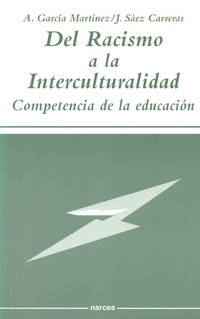
ref. 40880Bruxelles, Labor, 1990. 15 x 21, 232 pp., broché, bon état (annotations au crayon).
ref. 48816Bruxelles, Labor, 1990. 15 x 21, 232 pp., broché, très bon état.
ref. 1396786171.Ghardcover. Good. Access codes and supplements are not guaranteed with used items. May be an ex-library book. hardcover
ref. 0483790745.Ghardcover. Good. Access codes and supplements are not guaranteed with used items. May be an ex-library book. hardcover
ref. 0483790702.Gpaperback. Good. Access codes and supplements are not guaranteed with used items. May be an ex-library book. paperback
ref. A9781168265555New. unknown
ref. B9781168265555New. unknown
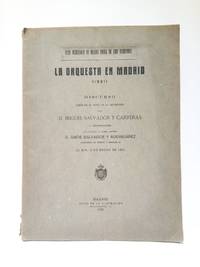
1922ref. 18894Madrid: Artes de la Ilustración 1922.- 78 p.; 4º mayor 255 x 19 cm.; Rústica Ed. Con una dedicatoria autógrafa del autor. Libro en excelente estado. MADRID Libro en español Artes de la Ilustración paperback
ref. Juanpebooks053128WE ship worldwide. Brand new 100%guarentee unknown
ref. Juanpebooks053334WE ship worldwide. Brand new 100%guarentee unknown
1936ref. 8220Paris, Payot (Bibliothèque scientifique), 1936 ; in-8, broché ; 284, (2) pp. de catalogue de l’éditeur, (2) pp. , 4 tableaux in-texte, 102 figures in-texte et 50 planches, couverture beige illustrée.
1910ref. PHIL1975Stuttgart, Frommann 1910. gr.-8°, XLI, 1 Bl., 544 S., 12 nn. S. Vlgskat., OKart., gebräunt, abgegriff., angestaubt, Eckknicke, am Rückenschwanz etw. rissig, Schnitt staubdunkel.
1994ref. V21362München (Kindler) 1994 (= Erste Ausgabe). 8°, Originalkarton mit illustriertem Originalumschlag (Hardcover), 327 s., Abbildungen, ISBN 3-463-40222-X 1
1961679 p., illus. Hardcover Good condition The author, son of polar explorer Robert F. Scott, founded the Wildfowl and Wetlands Trust, and help found the WorldWide Fund for Nature. He was also a sportsman and won the DSC during WW2
1986ref. 17811The Secwepemc Cultural Education Society, 1986. (Shuswap Cultural Series, Book 6) 6 S. (28 cm) Großformat, Heft
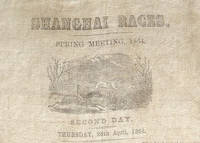
1864ref. 55608SHANGHAI PEOPLES' PARK & PEOPLES' SQUARE STILL SHAPED BY THE RACE TRACK - SILK-PRINTED RACE CARD OF GREAT RARITY racecard printed on silk 67.5 x 22.5 cms. woodcut vignette of horse jumping fences at head below first 2 lines of title followed by the details of seven races taking place that day text enclosed in a decorative printed border includes details of imprint at foot the silk racecard is tacked around its edges to plain undyed linen which is in turn stretched over a card former 78.5 x 34 cms. some light dust darkening and a few light stains else generally very good. Rare. Not located by OCLC WorldCat or KVK. OCLC locates only 12 examples of de Carvalho's printing between 1858 and 1870. Understandably only a very few such ephemeral items as these Shanghai race cards have survived. Details are given of seven races each open to different kinds of horses or ponies: The Maloo Plate for China ponies only 41 runners; Arab Challenge Cup for all Arabs 7 runners; Chaa-See Cup for all China and Japan ponies 43 runners; Challenge Cup for all horses Arabs stud-bred colonial &c. 10 runners; Tsatlee Cup for all Arabs with some exclusions 7 runners; Colonial Sweepstakes a handicap for all colonial horses 7 runners; and Imperial Cup for all ponies Indian excluded and with manila and Straits ponies handicapped 37 runners. Given are the names of the horse owners the horse's names together with such as their height weight or age and the racing colours for each. The prize money for the races varied from 500 guineas for the Challenge Cup and £250 for the Arab Challenge cup to Tls. 50 for the Maloo Plate. The Shanghai Race Club was a horse racing club located in Shanghai China. The Shanghai Race Club had its origins in the late 1840s in the International Recreation Club also called the Shanghai Recreation Fund. After profiting from the sale of two short-lived racecourses the Shanghai Race Club purchased substantial grounds somewhat further to the west of those and in 1862 constructed the third and last Shanghai Racecourse. Between 1863 and 1919 there were two meetings each year: the Spring race days occurred in late April and early May and the Autumn race days were in late October and early November. The two race meetings were described as "The Grand Festivals of Shanghai". "In the 1860s the most notable trophy was the Champions Stakes a forced entry race for all winners during the two-day race meeting" Wikipedia. At first membership of the Race Club was restricted to foreign non-Chinese residents over the age of 21. A membership committee of 9 to 11 people would vote on each application. A unanimous approval is required for the application to succeed. If there is one disapproval vote the application is held over until the next meeting. If there are two disapproval votes the candidate is required to reapply after a certain time period. If there are three disapproval votes then the application fails and the candidate is not permitted to reapply. It was not until 1908 that select Chinese nationals were permitted to join as honorary members associate members or social members. By 1908 the Race Club had 320 full members and 500 other members. Monthly fees were 10 Imperial yuan for all membership types but membership privileges differed significantly. Non-full members could only participate in race meets on festival days. Chinese race-goers were permitted to enter the grounds from 1909. The land enclosed by the race track was later used as a sports grounds. The still-surviving Race Club building built in 1934 on the western side of the race track was with its 10-storey tall tower long a landmark of central Shanghai. These grounds now in central Shanghai later became the People's Park and the adjacent People's Square and taken together are even today still in the shape of the original track. After the land was gifted to the government in 1951 it was reconstructed as a park and in 1954 the club's buildings too became government property. "The club house became first the Shanghai Museum and later the Shanghai Library. A number of other buildings were subsequently built and rebuilt on the site of the race course and club buildings. In 1997 Shanghai Library moved out to Huaihai Road and the Shanghai Art Museum moved into the former club house. The Shanghai Art Museum moved out in 2012 to become the China Art Museum in 2012 and the former clubhouse building became the home of the Shanghai History Museum in 2018. . was always a feature of the Shanghai Racecourse" Wikipedia. The de Carvalho company of printers and stationers was established in 1857 and apparently went out of business in the late 1890s. A. H. de Carvalho, Printer and Stationer
1951221p. Hardcover Good condition, covers darkened
1904pp. xii, 361 + Plus frontis and full page photographs. Top edge gold. Uncut. XLib. Original full navy blue cloth binding, gold lettered and decorated. Though XLib, still a nice copy. RUSSIA; HISTORY; RUSSIAN EMPIRE; MOSCOW; KREMLIN; SIBERIA; RACES; RELIGION; CULTURE; CUSTOMS; ART; LITERATURE; STATISTICS; PHOTOGRAPHS; 1904 RUSSIA/1
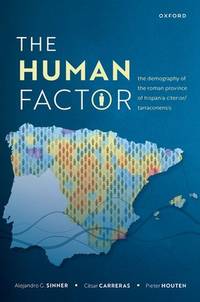
2000ref. mon0003935456Oxford University Press 9/24/2024 12:00:01 A. hardcover. Good. 1.3386 9.4488 6.4567. Cover and edges may have some wear. Oxford University Press hardcover
2000ref. mon0003735150Oxford University Press 9/24/2024 12:00:01 A. hardcover. Very Good. 1.3386 9.4488 6.4567. Oxford University Press hardcover
2000ref. mon0003736492Oxford University Press 9/24/2024 12:00:01 A. hardcover. Very Good. 1.3386 9.4488 6.4567. Oxford University Press hardcover
ref. 47095011-nnew. unknown
ref. 47095011like new. unknown