2,158 results
1975ref. ZB394025National Fire Protection Association 1975. volumes 11-17; 20-23; 26-33. 1975-1997. partly bound library markings textually clean & tight PRICE IS FOR THE LOT. - If you are reading this this item is actually physically in our stock and ready for shipment once ordered. We are not bookjackers. Buyer is responsible for any additional duties taxes or fees required by recipient's country. Photos available upon request. National Fire Protection Association unknown
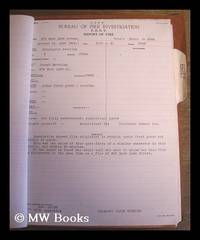
1937ref. 219744New York : FDNY 1937. First Edition. Paperback. The documents are bound by metal clasp in a brown portfolio folder. The contents are in a very good to near fine condition with just some minor edge nicks and dust-toning as with age. Remains particulalry well-preserved overall. Further scans images etc. and additional bibliographical material available on request.; 8vo 8"" - 9"" tall; 0 pages; A unique collector's item. New York Fire Department's 1937 case files in typescript regarding the case of George S. Preston who set a large number of fires around the Bronx area of New York between 1935 & 1937. A number of fires were also set while he was employed by the New Haven Railroad. Contents: File and case reports some on headed Bureau of Fire Investigation paper statements from the accused and witnesses employment records police statements interview transcripts and an original b/w portrait photo of the accused. Also includes 'George S. Preston's Confession' in a sealed Fire Department envelope. New York : FDNY paperback
1842ref. 123046Paris: L. Curmer 1842. First edition of this collection which Carteret considers to be one of the most important illustrated books of the 19th century. Octavo elaborately bound in full red morocco with elaborate gilt titles and tooling to the spine in six compartments within raised gilt bands elaborate gilt ruling and stamping to the front and rear panels gilt turn-ins and inner dentelles elaborately decorated green morocco doublures hand-stitched patterned endpapers all edges gilt with intricate botanical carvings illustrated with eleven frontispiece titles by Trimolet Charles Jacque Penguilly etc. and numerous vignettes throughout the text. In fine condition. Rare and desirable. This collection of ten short narratives mostly Gothic or exotic from the literatures of several countries is one of the most charming books of the Romantic period" Ray. L. Curmer unknown
1985ref. 748DG1985. Zwei Entwürfe und 48 Bleistiftzeichnungen auf Pergaminpapier. Blattformat: 42 x 29,5 cm. + Wichtig: Für unsere Kunden in der EU erfolgt der Versand alle 14 Tage verzollt ab Deutschland / Postbank-Konto in Deutschland vorhanden +, A|B [2 Warenabbildungen]
1985ref. 748DG1985. Zwei Entwürfe und 48 Bleistiftzeichnungen auf Pergaminpapier. Blattformat: 42 x 29,5 cm.
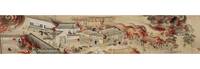
ref. 11026Scroll 190 x 3980 mm. outer front endpaper covered with blue silk inner endpaper of gold & silver paper manuscript title label on outside “Meiwa kasai zu” 明和ç«ç½å›³ “Meiwa Fire illustrated”. Japan: late Edo. Japanese cities have always been plagued by terrible fires. Regarding Edo “the wooden construction of all of the city and the narrow lanes of commoner quarters made fire a devastating experience and it came sufficiently frequently to be called ‘the flowers of Edo.’ Fires were no respecters of status and rank and when driven by winter winds in the dry season they roared through the city.…In the 268 years of Tokugawa rule the Tosa ‘upper’ yashiki at ‘Blacksmith Bridge’ suffered eighteen fires and the Shiba middle residence burned twelve times. Four of these were citywide conflagrations. Merchant areas burned thirty-one times in two centuries and even the shogun’s castle suffered major damage seven times.”–Jansen The Making of Modern Japan Harvard: 2000 p. 151. This wonderfully detailed scroll is a record of the Great Meiwa Fire of 1772 in Edo one of the three most severe fires of the Edo era destroying a 30-square-mile section of the city including an estimated 178 temples and shrines 127 daimyo residences 878 non-official residences 8705 houses of bannermen and 628 blocks of merchant dwellings. Almost 15000 people died and another 4000 went missing. The fire was deliberately set by a Buddhist priest of the Daien-ji temple on the eastern side of the Meguro River. Because of the regularity of such fires the city of Edo organized 48 brigades of trained firefighters with each group having a specific name after the old i ro ha alphabet. Our scroll begins with introductory text dated and signed “Meiwa Mizunoe tatsu aki / Guyū bÅ shi / Tanaka Totsugen hitsu” 明和壬辰秋 / æ„šå‹æŸèªŒ / 訥言 筆 “1772 Autumn / text by anonymous friend / painted by Totsugen”. Tanaka Totsugen 1767-1823 was a prominent artist and we believe that our scroll is a copy of Totsugen’s original creation. The text gives details of the origins of the fire its path and a summary of the incredible devastation. This remarkable scroll consists of four long panoramic scenes. The first depicts the origins of the fire at the temple. We seeing a priest running from the burning temple carrying a precious scroll. Adjacent modest thatch roofed homes are on fire with residents fleeing carrying their valuables. Next to them is a grand mansion in danger. We see servants removing precious objects burying some of them in the ground. A kura warehouse is being replastered to protect it. Workers are on the roofs pouring water fanning the wind away from the house and brushing off embers. A fireman is rushing by on horseback while residents seek relief in ponds. The next scene shows the fire making its way through the city. In the desperate attempts to flee the fire two palanquins carrying noble people have collided on a bridge completely blocking the way for others. A samurai is in the water swimming away and on land we see people on fire collapsing onto the ground. The following two scenes depict the inferno of the fire in vivid oranges and reds. Desperate residents are crossing the river and all the vegetation is aflame. A samurai is seen committing seppuku in despair a fireman is carrying a person away from the fire and all the houses right up to the waterside are burning. In fine condition preserved in a wooden box. unknown
ref. 11026Scroll 190 x 3980 mm. outer front endpaper covered with blue silk inner endpaper of gold & silver paper manuscript title label on outside “Meiwa kasai zu” 明和ç«ç½å›³ “Meiwa Fire illustrated”. Japan: late Edo. Japanese cities have always been plagued by terrible fires. Regarding Edo “the wooden construction of all of the city and the narrow lanes of commoner quarters made fire a devastating experience and it came sufficiently frequently to be called ‘the flowers of Edo.’ Fires were no respecters of status and rank and when driven by winter winds in the dry season they roared through the city.…In the 268 years of Tokugawa rule the Tosa ‘upper’ yashiki at ‘Blacksmith Bridge’ suffered eighteen fires and the Shiba middle residence burned twelve times. Four of these were citywide conflagrations. Merchant areas burned thirty-one times in two centuries and even the shogun’s castle suffered major damage seven times.”–Jansen The Making of Modern Japan Harvard: 2000 p. 151. This wonderfully detailed scroll is a record of the Great Meiwa Fire of 1772 in Edo one of the three most severe fires of the Edo era destroying a 30-square-mile section of the city including an estimated 178 temples and shrines 127 daimyo residences 878 non-official residences 8705 houses of bannermen and 628 blocks of merchant dwellings. Almost 15000 people died and another 4000 went missing. The fire was deliberately set by a Buddhist priest of the Daien-ji temple on the eastern side of the Meguro River. Because of the regularity of such fires the city of Edo organized 48 brigades of trained firefighters with each group having a specific name after the old i ro ha alphabet. Our scroll begins with introductory text dated and signed “Meiwa Mizunoe tatsu aki / Guyū bÅ shi / Tanaka Totsugen hitsu” 明和壬辰秋 / æ„šå‹æŸèªŒ / 訥言 筆 “1772 Autumn / text by anonymous friend / painted by Totsugen”. Tanaka Totsugen 1767-1823 was a prominent artist and we believe that our scroll is a copy of Totsugen’s original creation. The text gives details of the origins of the fire its path and a summary of the incredible devastation. This remarkable scroll consists of four long panoramic scenes. The first depicts the origins of the fire at the temple. We seeing a priest running from the burning temple carrying a precious scroll. Adjacent modest thatch roofed homes are on fire with residents fleeing carrying their valuables. Next to them is a grand mansion in danger. We see servants removing precious objects burying some of them in the ground. A kura warehouse is being replastered to protect it. Workers are on the roofs pouring water fanning the wind away from the house and brushing off embers. A fireman is rushing by on horseback while residents seek relief in ponds. The next scene shows the fire making its way through the city. In the desperate attempts to flee the fire two palanquins carrying noble people have collided on a bridge completely blocking the way for others. A samurai is in the water swimming away and on land we see people on fire collapsing onto the ground. The following two scenes depict the inferno of the fire in vivid oranges and reds. Desperate residents are crossing the river and all the vegetation is aflame. A samurai is seen committing seppuku in despair a fireman is carrying a person away from the fire and all the houses right up to the waterside are burning. In fine condition preserved in a wooden box. unknown books
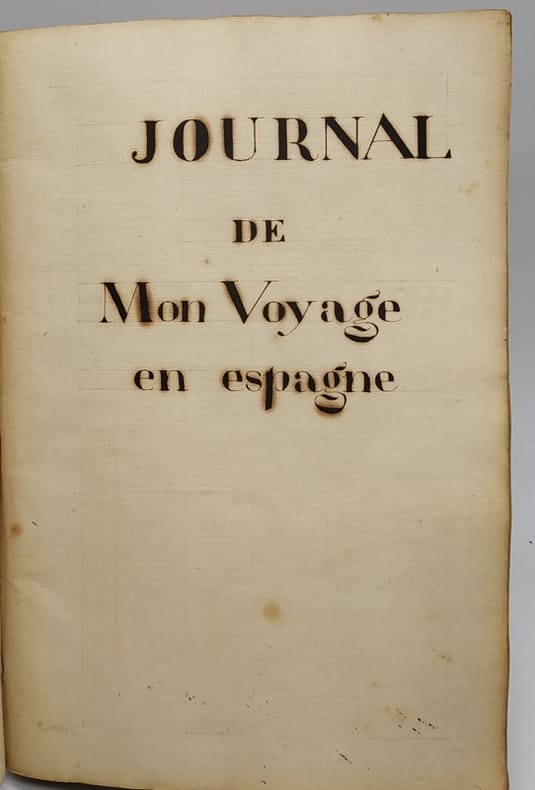
ref. 231001S.l., s.d. (1826-28) in-folio, en feuilles ou broché sous couverture d'attente de cartonnage souple orange moucheté, le tout dans double emboîtage de carton vert moderne.