Fire Department NyBiblio.com
Livre Rare Book

Librairie Le Carrérès · Paris, France900,00 €
2 511 résultats
réf. 73850E-413. Hardcover. 4to. Covers the period from 12/1/1879-3/20/1880. First endpaper has the roll of the officers for the engine company. 481 pgs. All pages beautifully hand written. Bound in brown and 3/4 leather boards leather corners with black titles present present to the spine. Boards have wear present to the extremities and shelfwear present to the board extremities labels attached to the front board spine is partially missing spine is chipped and worn spine ends are chipped and worn. Text has marks and notes present in the text it is a handwritten journal! . Binding tight and solid. ; 8vo 8" - 9" tall . hardcover
réf. 73848E-413. Good. Hardcover. 4to. Covers the period from 5/30/1919-8/26/1919. First endpaper has a list of phone numbers regarding borough utilities and senior officers. Second endpaper has the roll of the officers for the engine company. 501 pgs. All pages beautifully hand written. Indexed at the end. Bound in brown and 1/4 leather boards leather corners with black titles present present to the spine. Boards have wear present to the extremities and shelfwear present to the board extremities. Hinges reinforced with tape. Text has marks and notes present in the text it is a handwritten journal! . Binding tight and solid. ; 8vo 8" - 9" tall . hardcover
1999réf. x-1566767997Technomic Pub Co 1999. Hardcover. New. 1st edition. 163 pages. 10.75x8.50x0.25 inches. Technomic Pub Co hardcover
1828réf. CLL-762Paris, Ladvocat, 1828 2 volumes in-8 de (2) ff., 447 pp. - (2) ff., 400 pp., demi-veau violine, dos à nerfs plats ornés de filets et palette dorées et de roulettes et fleurons à froid, tranches mouchetées (reliures de l'époque).
réf. 225391Paris,, Tresse,, 1840 in-8,, [2] ff. n. ch.,444 pp., maroquin cerise, dos à nerfs cloisonné et fleuronné, encadrement de triple filet doré sur les plats, double filet doré sur les coupes, tranches dorées, large encadrement de pointillés, filets et guirlandes dorés sur les contreplats (Capé).
1756réf. 60002Stuttgart: Cotta 1756. 19 pp. 1 vols. Small folio. Later drab wrappers. Some inoffensive dampstaining still about Fine. 19 pp. 1 vols. Small folio. Cotta unknown books
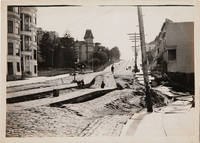
1906réf. List821San Francisco 1906. Thirty-one silver gelatin prints measuring 4 x 3 inches with four accompanying sheets measuring 8 x 5 ½ inches identifying the images. Also included is the original envelope to an illegible recipient or possibly crediting the images. Fading to images else about fine very good minus overall. Many photographers amateur and professional alike took to the streets of San Francisco to document devastation caused by the earthquake and subsequent fire of 1906. Collected here are thirty-one images taken by one such photographer - likely an amateur based on the image quality and perspectives. What is unusual about the collection here is that the photographer took meticulous notes on each image and the images as found in a rather illegible envelope included several sheets explaining the location of each image. The photographer travelled through most of downtown with varied locations represented. The title is likely misleading as the fire raged for several days and the pictures were likely taken several days after the 18th of April. The envelope has the name "Mrs H. Thof illegible" which suggests that perhaps the photographer was a woman or possibly that these were given to the same as a gift by another photographer. Overall a scarce survival of images of which we find no other copies. unknown
1756réf. 60002Stuttgart: Cotta 1756. 19 pp. 1 vols. Small folio. Later drab wrappers. Dampstaining along top edge. Very good. 19 pp. 1 vols. Small folio. Cotta unknown
1906réf. 60850San Francisco & Los Angeles CA: Clinton Johnson 1906. Ten albumen mounted stereoview photos sized 6.4 x 3.25 in. mounted on 7 x 3.5 in. flat gray studio board mimeographed typescript title labels mounted on all versos most images w/ photographer’s imprint w/in the negative at lower fore-edge all w/ rounded corners very minor edgewear still a NF grouping. This outstanding group of very scarce albumen Woodbury-type stereograph photos vividly capture the widespread damage from the April 18 1906 earthquake and subsequent fires which destroyed over 80% of the city of San Francisco which at the time was the largest city on the West Coast. Nearly three-fourths of the population were left homeless and makeshift refugee camps in Golden Gate Park the Presidio the Panhandle and the beaches between Ingleside and North Beach operated for years after the disaster as the city rebuilt. Reconstruction and commercial activities began almost immediately with a couple of these images showing the roadways largely cleared of debris with piles of rubble and devastation spreading into the distance. Many of the images show gutted buildings advertising signs faintly visible in the ruined brick facades and immense piles of masonry and smoking ruins. One of the images capture groups of men hunkering down reading papers smoking and largely shell-shocked waiting in the refugee line for aid. The historic James Lick Baths are depicted in ruins ine one of the images and were rebuilt following the disaster utilizing as much of the original structure as possible in order to remain in operation and the facade was simplified from the original Richardson Romanesque Revival to Renaissance Revival and would operate as one of five public baths from 1906 to 1920. The structure was later converted to the People’s Laundry in operation until 1973. Another of the stereoviews depicts the remnants of the McCormick Hotel before it would later be destroyed along with all of the surrounding ruins by the US Army Corps of Engineers. In fact one sergeant of the battalion narrowly escaped death as the building collapsed while he was placing the charge in the basement. Johnson 1875-1948 appears in street directories in Los Angeles as photographer from 1896-1906 but appears on no census or business trade listings for the period and also managed to eschew registering for the draft. His stereograph series for the 1906 San Francisco Earthquake & Fire appears to be relatively uncommon and the only major institutional holdings are in the Bancroft library with 39 BANC PIC 1905.02074-.02118--STER however nearly all of the images in this collection are not represented. In addition these images correspond mostly closely in format to the Bancroft’s version which were issued with decorative printed boards and captions rubber stamped below while these do not bear the printed boards and captions are mounted on versos. Clinton Johnson, hardcover
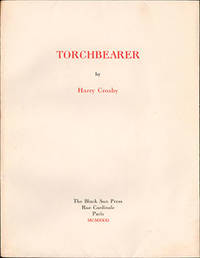
réf. 51-6516Paris: Black Sun Press MCMXXXI. 4to. 18 x 23cm. Original wraps. One of 50 numbered copies on Holland paper. Volume IV of "The Collected Poems of Harry Crosby.".Caresse published this work 2 years after Harry killed his lover Josephine Rotch and himself. Crosby revered Rimbaud and with Rimbaud’s self-deregulation in mind believed in his own idealizations of suicide. To his wife Caresse Crosby he had proposed suicide pacts on several occasions since early in their relationship.He wrote about such pacts in his poems and in his diaries and he talked about them most consequentially with the most significant of his many mistresses Josephine Rotch Bigelow with whom he was found dead in bed—a bullet hole to her left temple a bullet hole to his right temple his right hand holding a .25 caliber pistol his free hand joined in Josephine’s—in a New York hotel room on December 11th 1929. The couple was fully clothed and there was no suicide note. They had consumed immense quantities of gin and opium pills not unusual for Harry or his “fire-princess” as he called Josephine who like himself was thoroughly a product of Back Bay Boston. Had Josephine been the first to call Harry’s bluff and insist that he carry through in action the belief he expressed to her that the greatest expression and fulfillment of love was for two lovers to die together in suicide"Minkoff A-42. OCLC Number / Unique Identifier:471859Provenance… Collection of Dr. Gregory R. Bonomo Paris: Black Sun Press, MCMXXXI paperback
1912réf. AQ32120Calcutta: Printed at the Criterion Printing Works 1912. 4 222pp. Original publisher's red cloth-backed printed buff paper boards. Heavily rubbed marked and discoloured upper joint starting. Upper hinge partially exposed occasional marginal staining/dust-soiling very occasional early manuscript annotations to text. Together with: Rules of the fire offices' committee foreign for automatic sprinkler installations. s.i. s.n. 1909. Second edition. 8vo. 30 3pp 1. Stapled as issued in original publisher's printed powder blue wrappers. A trifle dust-soiled contemporary manuscript note and inked ownership inscription of W. Crawford to upper wrapper staples rusted. Internally clean and crisp. And: Rules of the fire offices' committee foreign for automatic sprinkler installations. s.i. s.n. 1912. Third edition. 8vo. 2 31pp 1. Stapled as issued in original publisher's printed powder blue wrappers. A trifle dust- soiled contemporary inked ownership inscription of W. Crawford to upper wrapper coloured pencil annotation to lower wrapper staples rusted. Internally clean and crisp. And: The Calcutta Fire Insurance Agents' Association. Wiring rules for electrical installations. Adopted 22nd May 1908. Calcutta. Printed at the Industrial Printing Works 1908. 12mo. 2 41pp 1. With a folding chart. Original publisher's red cloth-backed printed red wrappers. Clean and crisp. And: Calcutta Fire Insurance Agents' Association. Fire Extinguishing Appliances. Specification of requirements necessary to obtain special reductions in Insurance Rates. Calcutta. Printed at the Industrial Printing Works 1909. 12mo. 4 59pp. Original publisher's red cloth-backed printed red wrappers. Extremities a trifle marked. A clutch of five apparently unrecorded publications relating to and issued for private circulation by the Calcutta Fire Insurance Agents' Association. . Quarto. Printed at the Criterion Printing Works hardcover
1852réf. 000273Avignon Seguin Aîné 1852
1839réf. 114561839 en ff. 64ff. et 117 ff. (certains sont ecrits recto verso.) 225 x 180mm.
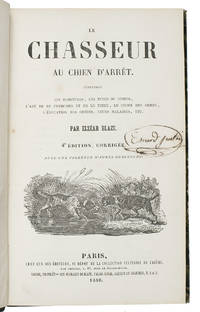
1846réf. 234711846. XXVII 420; 6 440; 6 448 pp. Ad. 1: Fourth edition of this elaborate treatise on hunting by Elzéar Jean Louis Joseph Blaze 1786-1848 forming together with his Le Chasseur au chien courant ad. 2 a complete course on hunting "à tir et à cour". Ad 2. Re-issue of the first edition of 1838 of this elaborate treatise on hunting by Elzéar Jean Louis Joseph Blaze1786-1848. This treatise contains information on the habits and tricks of animals the method for watching judging and divert them the method for attacking shoot and emprison them and information on the education of the tracker dogs foxhounds and on their diseases. In the title is emphasised that this work forms together with Le Chasseur au chien d' arrêt a treatise on pointer dogs by the same author a complete course on hunting 'à tir et à courre'.Ad.1: Owners's inscription on the title-page "Eduard Justing". Ad. 2: Waterstain in first 130 pp. of vol. 1 and smaller stain in first and last part of vol. 2l Souhart col. 58; Thiébaud col. 98-100; Sotheby's Bibliothèque Marcel Jeanson 73 3rd ed.; Schwerdt Hunting hawking shooting p. 71 first ed.; ABE CAT Falconry & Hunting HORSES HUNTING SPORTS & GAMES Falconry Fishing & Hunting France ZZ 003 TITELS GEBRUIKT VOOR 2022 ZZ NATURAL HISTORY / Oud unknown
1906réf. List821San Francisco 1906. Thirty-one silver gelatin prints measuring 4 x 3 inches with four accompanying sheets measuring 8 x 5 ½ inches identifying the images. Also included is the original envelope to an illegible recipient or possibly crediting the images. Fading to images else about fine very good minus overall. Many photographers amateur and professional alike took to the streets of San Francisco to document devastation caused by the earthquake and subsequent fire of 1906. Collected here are thirty-one images taken by one such photographer - likely an amateur based on the image quality and perspectives. What is unusual about the collection here is that the photographer took meticulous notes on each image and the images as found in a rather illegible envelope included several sheets explaining the location of each image. The photographer travelled through most of downtown with varied locations represented. The title is likely misleading as the fire raged for several days and the pictures were likely taken several days after the 18th of April. The envelope has the name "Mrs H. Thof illegible" which suggests that perhaps the photographer was a woman or possibly that these were given to the same as a gift by another photographer. Overall a scarce survival of images of which we find no other copies. books
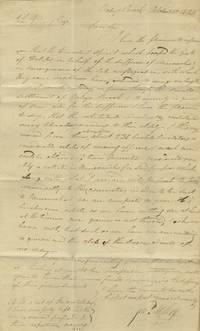
1825réf. BK0033Bailey's Brook Nova Scotia 1825. Autograph letter signed "Geo. McLeod" to John Young Esq. Halifax. Stampless folded letter with manuscript "7 / Paid" rate "Post Paid" notation and a clear "POST OFFICE PICTOU / PAID" handstamp. Light filing folds; very good. A contemporary account of rural relief organized for survivors of the Great Miramichi Fire written only eighteen days after the disaster. George McLeod reports traveling personally through Bailey's Brook and the surrounding settlements to solicit provisions and clothing gathering approximately 230 bushels of potatoes together with "considerable articles of wearing apparel" for immediate shipment through Pictou: "I went yesterday in person through the small settlement of Bailey's Brook & its vicinity in quest of some aide for the sufferers & have the pleasure to say that the inhabitants individually contributed very liberally according to their ability. I this day received from them into my store about 230 bushels buntatoes sic & considerable articles of wearing apparel & much more could be obtained if time permitted." The letter is particularly revealing about the material circumstances of disaster relief in a cash-poor agricultural community. The residents had little money available and "nothing else at hand" as their grain had not yet been threshed and the lateness of the season required them to contribute whatever could be gathered and transported without delay-nonetheless they were "willing to give." McLeod notes that additional supplies had been collected at Merigomish and would be combined with those from Bailey's Brook sent to the committee at Pictou and forwarded onward to Miramichi. He also records keeping a list of the individual contributors and the articles supplied under each name. We find no other examples of documents or primary source materials relating to the disaster in commerce or in auction records. A focused primary document of one of the largest fires in early Canadian history with a detailed description of the mechanics of relief. . unknown
Second edition, with addition of 'many new and beautiful Fire-Works', 8vo (206 x 116 mm), xxvi, 262, [2]pp., with the final errata leaf and list of subscribers, turn-ins slightly offset onto title, 8 folding engraved plates, cont. calf, red morocco spine label lettered in gilt, a very nice clean copy. A reissue, with a cancel title page, of the original edition of 1765 which was "remarkable as it is the first book dealing exlusively with recreational fireworks in English since Babington's classic work of 1655." This reissue has pages 253-255 have been excised from the original with the additional 11 pages from 253 to 262 describing the set-pieces depicted on the extra 3 plates. Provenance: Early armorial bookplate of Philip Earl Stanhope; From the library Military Library of Thomas Francis Fremantle (3rd Lord Cottesloe). Philip, A Bibliography of Firework Books, J020.2.
1919réf. 61612Utica NY: O.J. Childs Co. Fire Apparatus 138 Liberty ca. 1919-1922. 4to. 36 leaves unnumbered. linen-backed silver gelatin photos some hinged most negative numbers w/in negative at lower fore-edge all w/ typed captions & identifying text on versos a few w/ caption on recto below the image. Contemporary black-simulated calf vinyl 3-ring loose-leaf binder rounded corners yapp fore-edges minor edgewear & fraying to some of the linen backing on images minor occasional creasing indications of use wear & bumping to covers still a VG exemplar. This uncommon salesman sample photo album includes excellent original photographs of many significant O.J. Childs Co. fire engines and firefighting equipment manufactured in Utica NY following World War I. These factory images encompass Type “B” Triple Combination on REO chassis; Triple Combination Pump Chemical & Hose Car on Federal 1 1/2 ton chassis; Straight Chemical Equipment o 1921 Brookway 1 1/2 ton chassis; and many other variations thereof. O.J. Childs built their own engines like American-La France because commercial truck engines not only lacked the torque but also the endurance to drive a fire pump for hours without overheating or damaging pistons connecting rods and valves. The images include fire engines supplied to the Morristown NJ Basking Ridge NJ Winsted CT Orenda Hose Co. Griffith IN East Greenwich NJ Mt. Carmel PA Loch Sheldrake NY and many others. Also used by the Childs’ Co. customers were such manufacturers as Dodge-Graham Ford pleasure chassis Packard Model EX White 20-45 Chassis a Ward-La France and many more. Orlando J. Childs organized the O.J. Childs Co. Fire Apparatus in 1899 to take over the business of the Utica Fire Extinguisher Co. who were best known for their chemical fire extinguishers designed and patented originally in 1896-97 by William Pomfret and Thomas Keating. They quickly began actively selling fire extinguishers to businesses individuals and even specialized on fire extinguishers for early automobile enthusiasts during the Brass Era who suffered frequent engine fires. After producing their first Triple Combination Pump Wagon about 1910 they quick espanced into ready-made chemical tank truck fire-engines for rural fire departments. Wallace Childs acquired the Foamite Firefoam Co. in New York in 1922 and in 1926 the entire company was acquired and became a subsidiary of American-La France Fire Engine Co. No similar albums images or catalogues located in Worldcat; See: Mark Theobald O.J. Childs & Co. Foamite-Childs Corp American-LaFrance Corp. Coachbuilt 2004. O.J. Childs Co., Fire Apparatus, 138 Liberty, unknown
réf. 93110Depot De Lbrairie. As New. Paperback. FREE UPGRADE to Courier/Priority Shipping Upon Request - IN STOCK AND IMMEDIATELY AVAILABLE FOR SHIPMENT - AS NEW THE TEXT BLOCK IS PRISTINE CLEAN UNMARKED AND IN EXCELLENT CONDITION - - Text in French. No date Circa 1853 . Vignette de titre gravée d'après Daubigny. -- with a bonus offer-- . N.D. Depot De Lbrairie paperback
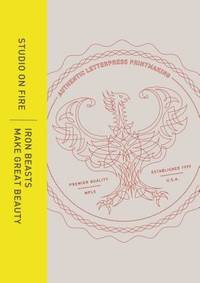
2011réf. 94163Gestalten. New. Hardcover. FREE UPGRADE to Courier/Priority Shipping Upon Request - IN STOCK AND IMMEDIATELY AVAILABLE FOR SHIPMENT - Flawless copy brand new pristine never opened -- 144 pages. Description: "Studio On Fire is at the forefront of the current letterpress movement—the rediscovery of old printing machines and techniques by young designers. The phenomenal detail and haptic sensuousness of their work have made this Minnesota-based company a seminal reference for how to effectively blend current and classical graphic design styles with production methods. " -- with a bonus offer--; Studio On Fire is at the forefront of the current rediscovery of old printing machines and techniques by young designers. Young designers and typographers are currently rediscovering traditional printing methods and using them to give their work a special handcrafted quality. Studio On Fire is a design studio workshop and printer all rolled into one. Founded and managed by Ben Levitz the Minnesota-based company not only belongs to the trailblazers of this movement but has also become a seminal representative of how to effectively blend current and classical graphic design styles and techniques. Studio On Fire is the logical consequence of Levitz's life-long passion for everything related to design printing and paper. Since his youth he has collected old printing presses and over the years learned to master the challenging design processes associated with labor-intensive techniques including letterpress screen printing hot foil stamping and blind embossing. Studio On Fire's designs and products are distinguished by a phenomenal richness and attention to detail. Today an impressive list of clients appreciates the haptic sensuousness of their work. This book is a collection of Studio On Fire's own work as well as projects commissioned by designers artists agencies private clients and brands. The designs are done in a wide range of formats such as placards posters books flyers folders business cards and wallpaper. From unique wedding invitations to printed art the examples included here show the inspiring results of seamlessly melding traditional techniques and handicraft with contemporary design. . 2011. 3899553810 . Gestalten hardcover
2005réf. mon0000076893Jones and Bartlett Publishers I 2005-09-27. DVD Audio. New. 1.7766 in x 32.2335 in x 28.1726 in. Jones and Bartlett Publishers, I unknown
1906réf. 61981San Francisco. 1906. Photographs of the Great Earthquake and Fire of 1906 A remarkable collection of photographs taken immediately after the San Francisco earthquake and fires of April 1906 showing the scope of the damage to the city as well as providing a stark reminder of the human toll taken by what is considered one of the worst natural disasters in American history. Many of these images are apparently unpublished having been produced by an Army engineer and used to accompany a report on earthquake relief efforts made for the United States Senate. Although there was a quick and immediate response from San Francisco's large military population the earthquake and fires killed an estimated 3000 people and left over 200000 San Francisco residents homeless. Fifteen of the twenty-nine images in this collection are signed in the negative "Hughes Fort Mason" or simply "Hughes" and were almost certainly taken by Private William H. Hughes a member of the First Battalion Corps of Engineers stationed at Fort Mason located on the bay at the northern edge of San Francisco. The other fourteen are not signed by a photographer but some of them may have also been taken by Hughes. Troops from Fort Mason were the first military units to respond following the earthquake of April 18 1906. There was no photography studio at Fort Mason in 1906 but Private Hughes was acknowledged as being "a very efficient photographer" for John Steven Sewell's report on the 1906 disaster "The Effects of the Earthquake and Fire on Buildings Engineering Structures and Structural Materials" for the United States Geologic Survey. Many of Hughes' photographs from the present series accompany the Army's report to the U.S. Senate on earthquake and fire relief efforts now housed with the records of the United States Senate in the National Archives. Since many of the images in this series were taken for the relief effort report to the Senate there is a focus on the human aspect of the disaster. As far as we know Hughes' photographs were not published except in conjunction with the Army report to the Senate. The photographs in the present collection include an image of members of San Francisco's business community dressed in suits bowler hats and patent leather shoes helping to haul a fire hose close to an active fire; a small group of people viewing the devastation following the quake and during the fire; San Francisco residents cooking in the street and queuing for food and bedding; and a panoramic view of the of a San Francisco refugee camp near Fort Mason showing some refugees just starting to set up their tents. There are also two images showing the tragic loss of life during this disaster – one deceased man pinned upside down in a pile of rubble and another within a panoramic view of city-wide devastation pinned by a massive beam in the basement of what was likely his home. This collection of original photographs shows the devastation and the very human tragedy left in the wake of the San Francisco earthquake and fire with four of the photographs showing the fire in progress and two showing the loss of men killed by the rubble in which they were trapped. Fifteen of the photographs carry the imprint "Hughes" or "Hughes Fort Mason" in the negative those that do not are numbers 3 4 5 9 13 14 22 23 24 25 26 27 28 and 29 below. The photographs included in this collection are captioned as follows captions in the negatives are given within quotes; those without captions have our descriptive caption provided: 1 "52 Union St." remaining caption is indecipherable. Image of severe ground upheaval on Union Street with cable car tracks lifted above ground level the brick street sinking and concrete sidewalks shattered. Pedestrians walk in the street and children sit on the cable-car tracks dangling their feet in the deep crevices alongside. 2 "53 Birds-eye view of camp around Fort Mason." A hilltop view of the tent city in the open areas that surround Fort mason on the left. 3 "54" A long line of men women and children along a fence in a residential neighborhood are lined up to receive canned goods from the military. 4 "55" A group of men near a crumbling building receive tents and mattresses. 5 "56" Twenty men in suits patent leather shoes and bowler hats shoulder a fire hose and walk toward burning Victorian row houses in the distance. 6 "62" Men in bowler hats and suits picking through the rubble in the foreground with the hulking remains of shattered buildings rising through smoke in the background. A uniformed soldier stands in the corner right. An almost identical picture signed by Hughes Fort Mason is in the National Archives collection captioned by the Archives as "No. 63. Souvenir hunters." 7 "67" Sailors disembark and march off the marina boardwalk in front of the ferry "Garden City" packed with passengers. 8 "68" Women and men crowd together at the top of a hill viewing the ruins of their devastated city shrouded in billowing smoke before them. The identical picture signed by Hughes is in the National Archives collection captioned by the archives as "Fire partially under control - 3rd day." 9 "69" Shows the front of two Victorian row houses on Howard Street sinking into the ground as a result of liquefaction of alluvial soil. 10 "70 Cooking in Street after Earthquake." Families on either side of a woman cooking on a cast iron stove on a residential street lined with Victorian row houses. The identical picture signed by Hughes Fort Mason is in the National Archives collection captioned by the archives as "Chimneys were destroyed and cooking in houses was prohibited." 11 "71" Two members of the military stand on a corner next to the remains of a blasted church. 12 "72" A view of the remains of a residential neighborhood from the top of a hill showing ground rupture and surface faulting as well as an active fire. 13 "84" Shows a large group of families waiting near a large garage for distribution of emergency supplies. 14 "85" Near the end of a long line of families waiting for distribution of emergency food including canned roast beef and corned beef. 15 "F5 75 St. Dominic's church." A view of the ruins of the St. Dominic church towers as seen looking North on Steiner Street near Bush Street. 16 "F8 Wrecked by earthquake." Shows a multi-story furniture dealer's warehouse with much of the facade having crumbled away. 17 "F15 View from Turk St between Jones and Hyde." A view looking up the southern slope of Nob Hill showing the ruins of what was then informally called the "Tenderloin District." 18 "F17 Ruins of Hall of Justice." A view of the ruins of San Francisco's Hall of Justice from Kearney Street. The Hall of Justice housed the city jail as well as the Coroner's office and San Francisco's criminal and civil courts. Red Cross tents are set up at the base of the building with saddles and tack for the city's mounted police on a saddle stand in the foreground. 19 Unnumbered. "Refugees in the vicinity of Fort Mason." A tent city that sprung up in the open land surrounding Fort Mason to shelter all those who lost their homes during the earthquake and fire. Within the picture there are various vignettes: a mother and father leaning down to speak to their children seated on the ground near their tent; a father holding a baby up to its mother while another man works on building their tent; a large family working together to assemble their tent while the mother father and a young girl wearing a white pinafore and hat talk to each other over some provisions. Entire iron double beds and rockers are sitting alongside tents and there are a number of family horses picketed beside tents. 20 Unnumbered. On Broadway looking up Battery toward the fires on Telegraph Hill and the headquarters of the American Biscuit Company at 855 Battery Street. 21 Unnumbered. "North Beach – after the Fire." Looking from the water across towards the smoking ruins of North Beach. 22 Unnumbered. A view looking south on Steiner Street past the French Bakery toward the ruins of St. Dominic's Church. Steiner Street is filled with horse-drawn vehicles an early motor car and pedestrians. 23 Unnumbered. The ruins of San Francisco City Hall viewed from Larkin and Grove streets. City officials and members of the military stand on a crumbled wall in the foreground. Having been built over twenty-five years on sandy wet ground and according to a later investigation "without any of the principles of the steel frame construction having been used" this iteration of San Francisco's City Hall with the exception of the dome fell to the ground in the forty-five to sixty seconds that the earthquake lasted. 24 Unnumbered. A military supply depot likely at Fort Mason fronted by sand bags with a member of the military leaning against boxes of supplies. Piles of furniture and statuary are near the right-most door with another member of the military seated at his leisure before them. A group of civilians gather around some furniture on the ground at the far right. 25 Unnumbered. The image of a deceased man in a suit under a pile of rubble. The man appears upside down in the top left of the photograph with his body having been draped and/or pinned by rubble above him. His left hand is draped down below his face caught between a stone and the metal plate at the end of a support rod. The skin of his forehead is pushed into a series of concentric folds and the iris of his right eye is pushed beyond the edge of the outer canthus. 26 Unnumbered. The image of a deceased man buried within the rubble of what looks to have been a residential building. Initially one would assume this photograph is simply of the wide swath of devastation left by the earthquake in the foreground and in the distance but a careful view of the tangle of metalwork in the foreground along the remains of a steel beam shows a man standing but slumped to his left pinned by metal supports. Part of his head and right shoulder are in view with his face looking outward through the tangle of rubble before him. In the distance a group of three men stand on top of the rubble. 27 Unnumbered. A member of the military looking pensive while seated on fallen and twisted decorative metalwork atop a pile of brick rubble near building ruins. 28 Unnumbered. The ruins of residential buildings with piles of brick and metalwork in the foreground and the standing remains of buildings beyond. 29 Unnumbered. The ruins of Victorian row houses with shattered windows; the sidewalk and street before them show ground rupture and surface faulting. A very informative and evocative group of original photographs showing the utter devastation and human misery in San Francisco in the aftermath of the 1906 earthquake and fires. Some light wrinkling from handling. Faint toning to the edges and a stain on the verso of one print not affecting the image. Very good. Housed in a modern binder. John Stephen Sewell "The Effects of the Earthquake and Fire on Buildings Engineering Structures and Structural Materials" in Grove Karl Gilbert et al. The San Francisco Earthquake and Fire of April 18 1906 and Their Effects on Structures and Structural Materials Washington 1907 p.63. National Archives. San Francisco Earthquake 1906. Center for Legislative Archives September 30 2020. "Historical Vignette 101 - The Army Engineers Were Key Responders to the San Francisco Earthquake and Fire" U.S. Army Corps of Engineers Headquarters website April 2006. hardcover
1854réf. 2111902160201214Izumiya Hanbei version 1854. Soft Cover. Fine. Volume: 1 Izumiya Hanbei version paperback
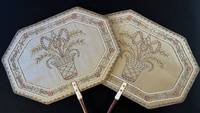
1830réf. 4479France 1830. Two matching embroidered pole fire screens oblong octagonals 202 x 290 mm. sides of silk over thin boards or scaleboards the decorated side of beige satin silk with a large central flowerpot containing sprigs and a large pink bow within ornate floral border between two white braided thread borders outermost gilt ribbon border with tiny loops; the designs composed of metallic thread pink flat sequins molded white or silvery sequins and couched gilt leaves: embossed leaves on the plant and flat leaves in the border; the reverse sides covered in plain dark rose silk contemporary bone and wood handles with small screws on back. One screen lacking a tiny embossed leaf the other screen lacking four of the same and with one leaf almost detached. A handsome pair of embroidered hand-held fire screens probably from the first decades of the 19th century in fine condition. "A beautiful addition to any room decorative pole screens served an important function in the 18th century: The tall thin screens shielded people's faces from the direct heat of the fire. In the 17th and 18th centuries both men and women wore makeup to hide blemishes. It was said that before he turned fifty the Prince Regent's face had turned waxen and copper colored from make up. The cosmetic preparation worn to hide small pox was thick and made up of wax and white lead. The lead was toxic especially when warmed and the heat from a fire could be life threatening. A pole screen protected the face from intense heat and prevented the wax from melting and the cosmetics from interacting with the skin. The earliest panels were made of wicker but these were replaced with beautiful needlework or embroidered panels that came in many shapes and sizes - oval heart-shaped rectangular etc. By the late 18th century skin disfiguration caused by plagues was no longer as prevalent as before and smaller polescreens became more fashionable."- Jane Austen's World website viewed 4-6-26. unknown