2.679 Ergebnisse
1839Best.-Nr. RO20062299BARBA. 3ème édition. 1839. In-12. Relié toilé. Bon état, Couv. convenable, Dos satisfaisant, Rousseurs. 462 pages. 1er plat de la couverture brochée, conservé. Titre et filets dorés sur une pièce de titre noire. Dos toilé rouge. Plats marbrés rouges. Petite tache sur le 1er plat.. . . . Classification Dewey : 799.2-Chasse
Best.-Nr. BN66249Karten des Feuers. 50 farbige Karten und Handbuch. Das Weisheitsorakel der Sioux unknown
1836Best.-Nr. 026245Paris LIBRAIRIE MOUTARDIER 1836 un volume in-8°, XXIX 422 pp. un feuillet de table mal chiffré 123-124. Reliure en demi-veau vieux rose, dos à nerfs, soulignés de filets dorés, orné du titre, de l'auteur et de guirlandes dorés, petits fers estampés à froid, tranches jaunes mouchetées de rouge, gardes cailloutées, signet. (reliure de l'époque). (rousseurs éparses). Un titre-frontispice gravé par Guyot. Édition originale peu commune. Avec un lexique du vocabulaire du chasseur au chien d'arrêt. RARE.
1982Best.-Nr. 2110502150901892Japan Firefighting Association 1982. Soft Cover. Fine. Number of books: 4 Japan Firefighting Association paperback
1999Best.-Nr. 2081502111900055Chinese archives 1999. Soft Cover. Fine. Size: B5 hardcover book Chinese archives paperback
1906Best.-Nr. 85196Hamburg, Koppmann & Cie. 1906. 24 Original-Fotografien von G Koppmann, auf braunem Trägerkarton montiert. (Photogröße ca. 22 x 18 cm, Kartongröße ca. 32 x 25 cm), lose in Folio-OLn.-Mappe.
1998Best.-Nr. 1696London: Macmillan & Sons 1998. 1st Edition. FIRST EDITION IN ORIGINAL WRAPS OF THE LANDMARK DISCOVERY OF RNA INTERFERENCE RNAi A FUNDAMENTAL MECHANISM OF GENE REGULATION. RNAi became both a major research tool and a new class of therapeutics. In terms of impact on biology medicine and biotechnology this paper is considered a foundational discovery not just an incremental advance. Fire and Mello won the Nobel Prize in Physiology or Medicine IN 2006 just eight years after publication unusually fast recognition for how transformative it was. Prior to Fire and Mello's paper researchers knew that injecting antisense RNA into C. elegans could sometimes silence genes but the effect was often weak inconsistent and poorly understood. Fire and Mello showed that the actual trigger was double-stranded RNA dsRNA not single-stranded antisense RNA as had been assumed. They found that dsRNA was far more potent than either sense or antisense strands alone effective at just a few molecules per cell that it could silence genes with striking specificity that the effect could spread between cells and even to offspring and that it worked catalytically rather than stoichiometrically - implying an amplification mechanism. The discovery that RNAi is a natural evolutionarily conserved gene-regulation and antiviral defense mechanism found across plants animals and fungi. The rapid development of RNAi as a laboratory tool for knocking down specific genes to study their function - now a standard technique in virtually every molecular biology lab. CONDITION & DETAILS: London: Macmillan & Co. Nature Volume 391 No. 6669. Original Wraps. 10 x 7 inches; 250 x 175mm. Original paper wraps. Bearing the mail sticker of Robert R. Rofen the American ichthyologist. Bright and clean inside and out. Fine condition in every way. Macmillan & Sons paperback
1989Best.-Nr. DADAX0671696653Brand: Pocket 1989-12-01. Media Tie In Reprint. paperback. New. 0.00x0.00x0.00. Buy with confidence. Excellent Customer Service & Return policy. Brand: Pocket paperback
2022Best.-Nr. SKU0639333National Fire Protection Association 2022-12-07. hardcover. New. 0x0x0. New Textbook Ships with Tracking National Fire Protection Association hardcover
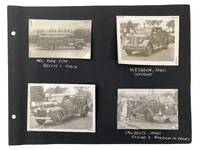
1910Best.-Nr. 233921910. TechnologyRescue Operations American fire engine modernization archive documenting the transition from horse drawn steam engines to motorized trucks and rescue wagons in Massachusetts and across the Northeast between the 1910s and 1940s. Fire departments across the U.S. began to transition from horses and steam pumpers to gasoline powered apparatus to account for urban growth taller buildings electrical wiring and automobile traffic changing the speed and scale of emergency response. The archive records identified departments and apparatus makers including Mack GMC Ford Seagrave Studebaker American LaFrance and Maxim mostly showing departments across Massachusetts departments and with additional images from New York Pennsylvania New Jersey Rhode Island and Vermont. Photo archive of 33 silver gelatin photographs many with captions ranging from 2 x 3 to 4 x 6 inches chiefly Massachusetts with additional material from Vermont Pennsylvania New York New Jersey and Rhode Island 1910s to 1940s. Fire engines and firefighters appear in station fronts street parades apparatus portraits airport grounds and active fire scenes. Captions identify New York City Rescue 1 Mack; Syracuse Rescue 1 GMC; Highland Park Pennsylvania Rescue 2 Mack; Plainfield New Jersey Rescue GMC; Chelmsford Massachusetts Emergency No. 7 Studebaker; Camp Edwards Massachusetts Mack Engine 4; Needham Massachusetts Mack Engine 3; Lawrence Massachusetts Engine 3 American LaFrance; Boston Ladder 8 Ladder 9 and Ladder 21; Cambridge Engine 3; Canton Massachusetts Mack engine; Shrewsbury Massachusetts Engine 3 and Ladder 3; Barrington Vermont; Stoneham Massachusetts Bell Block; River Street Boston; First Scientist Church Somerville; and Fort House Somerville. Horse drawn apparatus appears outside Hope No. 1 in Pittsburgh and in a parade scene while motorized ladder trucks carry long wooden extension ladders hose reels searchlights bells sirens polished pumps and side mounted tools. The images provide a side by side record of old and new fire protection: horse teams exposed steam machinery open cab ladder trucks and later motorized emergency vehicles. Chas. E. Beckwith's Fire Dept. Photographer stamp connects at least part of the group to a specialist working for Massachusetts fire departments. Photographs stapled to eight disbound black album pages; scattered fading handling wear with legible captions. Some with additional handwritten captions on versos. Overall in good condition. unknown
1910Best.-Nr. 233921910. TechnologyRescue Operations American fire engine modernization archive documenting the transition from horse drawn steam engines to motorized trucks and rescue wagons in Massachusetts and across the Northeast between the 1910s and 1940s. Fire departments across the U.S. began to transition from horses and steam pumpers to gasoline powered apparatus to account for urban growth taller buildings electrical wiring and automobile traffic changing the speed and scale of emergency response. The archive records identified departments and apparatus makers including Mack GMC Ford Seagrave Studebaker American LaFrance and Maxim mostly showing departments across Massachusetts departments and with additional images from New York Pennsylvania New Jersey Rhode Island and Vermont. Photo archive of 33 silver gelatin photographs many with captions ranging from 2 x 3 to 4 x 6 inches chiefly Massachusetts with additional material from Vermont Pennsylvania New York New Jersey and Rhode Island 1910s to 1940s. Fire engines and firefighters appear in station fronts street parades apparatus portraits airport grounds and active fire scenes. Captions identify New York City Rescue 1 Mack; Syracuse Rescue 1 GMC; Highland Park Pennsylvania Rescue 2 Mack; Plainfield New Jersey Rescue GMC; Chelmsford Massachusetts Emergency No. 7 Studebaker; Camp Edwards Massachusetts Mack Engine 4; Needham Massachusetts Mack Engine 3; Lawrence Massachusetts Engine 3 American LaFrance; Boston Ladder 8 Ladder 9 and Ladder 21; Cambridge Engine 3; Canton Massachusetts Mack engine; Shrewsbury Massachusetts Engine 3 and Ladder 3; Barrington Vermont; Stoneham Massachusetts Bell Block; River Street Boston; First Scientist Church Somerville; and Fort House Somerville. Horse drawn apparatus appears outside Hope No. 1 in Pittsburgh and in a parade scene while motorized ladder trucks carry long wooden extension ladders hose reels searchlights bells sirens polished pumps and side mounted tools. The images provide a side by side record of old and new fire protection: horse teams exposed steam machinery open cab ladder trucks and later motorized emergency vehicles. Chas. E. Beckwith's Fire Dept. Photographer stamp connects at least part of the group to a specialist working for Massachusetts fire departments. Photographs stapled to eight disbound black album pages; scattered fading handling wear with legible captions. Some with additional handwritten captions on versos. Overall in good condition. unknown books
Best.-Nr. SONG0471493821Wiley 2004-03-19. 1. hardcover. Used: Good. 7.03x0.81x9.90. Buy with confidence. Excellent Customer Service & Return policy. Wiley hardcover
Best.-Nr. 22583Paris Visaphone, 1961-1963 1961 in 4 (27x21) 8 volumes reliures de daim marron de l'éditeur, têtes dorées, dos lisses titrés en lettres dorées, rhodoïds illustrés. Illustrations hors-texte en couleurs. Collection " Les classiques de la chasse ". Tirage limité à 2000 exemplaires numérotés imprimés sur grand vélin de Lana. 1°/ BLAZE, Eléazar : Le chasseur au chien d'arrêt, avec des illustrations hors-texte en couleurs de Beuville. 2°/ FOA, Edouard : La chasse aux grands fauves, avec des illustrations hors-texte en couleurs de R. Reboussin. 3°/ DIGUET, Charles : La chasse au marais. La chasse au gabion, avec des illustrations hors-texte en couleurs de P. Thorain. 4°/ BLAZE, Eléazar : Le chasseur au chien courant, avec des illustrations hors-texte en couleurs de Beuville. 5°/ HOUDETOT, Adolphe d' : Braconnage et contre-braconnage, avec des illustrations hors-texte en couleurs de P. Noël. 6°/ BELLECROIX, Ernest : La chasse pratique, avec des illustrations hors-texte en couleurs de P. Thorain. 7°/ FOA, Edouard : Mes grandes chasses dans l'Afrique centrale, avec des illustrations hors-texte en couleurs de Reboussin. 8°/ CLAMART, J.-A. : Soixante années de chasse, avec des illustrations hors-texte en couleurs de Jean de Cony. Collection complète rassemblant les grands textes du XIXème. Ensemble complet et en très bel état ( Photographies sur demande / We can send pictures of this book on simple request )
Best.-Nr. 223818Paris, Ladvocat, 1828 2 vol. in-8, 447 pp. et 400 pp., demi-veau vert, dos à nerfs orné de guirlandes dorées et de fleurons à froid (reliure de l'époque). Manques aux coiffes,, dos frottés, épidermures, manque aux pièces de titre, mors et coins usés. Fortes rousseurs. Cachet ex-libris de Cayrol, ex-libris de Bonnault et Jacques Jourquin.
Best.-Nr. 221601Paris, Moutardier, 1836 in-8, XXXI pp. (dont un titre-frontispice gravé par Guyot), 422 pp., un f. de table mal chiffré 123-124, demi-veau blond, dos lisse orné de guirlandes et fleurons dorés (reliure de l'époque).
1994Best.-Nr. 67133Milano: Scheiwiller Libri d'Artista 1994. Quartini sciolti in camicia e custodia in tela loose as issued in original cloth chemise and slip-case. Perfetto Mint. In memory of my feelings. Ten poems and ten Corbacciò etchings. 10 acqueforti acquetinte originali in nero firmate di Corbacciò cm 19x135. Poesie di Frank O'Hara. Titoli delle poesie in linoleografia tirati dall'Artista. 4to cm 30x24. pp. 44. Perfetto Mint. Edizione di 60 X es. numerati e firmati. Corbacciò pseudonimo di Aliano Viola Milano 1938 Scheiwiller, Libri d'Artista hardcover
Best.-Nr. DADAX0879392436Brand: Fire Protection Publications 0000-00-00. paperback. New. 0.00x0.00x0.00. Buy with confidence. Excellent Customer Service & Return policy. Brand: Fire Protection Publications paperback
2008Best.-Nr. SKU0638908Natl Fire Protection Assn 2008-03-15. hardcover. New. 9x5x11. New Textbook Ships with Tracking Natl Fire Protection Assn hardcover
Best.-Nr. 2240Max Parrish, London, 1953
Best.-Nr. DADAX0763753424Brand: Jones n Bartlett Publishers 2008-02-19. 2. paperback. New. 8.50x1.50x10.50. Buy with confidence. Excellent Customer Service & Return policy. Brand: Jones n Bartlett Publishers paperback
Best.-Nr. SONG1401250858Used: Good unknown
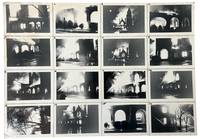
1968Best.-Nr. 233001968. Fire destruction of Trinity United Methodist Church on South 2nd Street in Clearfield Pennsylvania photographed during the active overnight blaze of December 21 1968 in a dramatic sequential record of one of the borough's largest twentieth century urban fires. The archive captures the church while fully engulfed preserving flames erupting through the roofline smoke pouring from the arcaded façade hose streams striking the structure from darkened streets and the silhouette of the church tower rising above the fire. The photographs record not only the destruction of a major downtown religious landmark led at the time by Rev. Oliver H. R. Krapf but also the operational reality of late 1960s volunteer firefighting systems in small town Pennsylvania where borough police volunteer companies ladder apparatus hydrant pressure and regional mutual aid networks were rapidly assembled in an effort to contain a spreading structural fire. The blaze was first spotted around 2:10 a.m. by taxi driver Billy Knepp after which Fire Chief William Swisher summoned neighboring companies to prevent the fire from spreading beyond the church into the surrounding civic center. Photo archive of 16 silver gelatin photographs mounted to a large cardstock sheet measuring approximately 20" x 14" each image roughly 3.5" x 5" Clearfield Pennsylvania December 1968. Each photograph is numbered by hand from 1 to 16 and together they function almost cinematically moving through different stages and vantage points of the firefight. The images center the church's cut stone arcades and bell tower as bright interior firelight blows outward through the large arched openings and flames tear across the roof structure above. Several photographs show powerful hose streams cutting diagonally across the frame toward the burning façade while others pull back into wider nighttime street scenes where bare winter trees utility poles parked cars wet pavement and gathered onlookers remain visible beneath smoke and reflected firelight. One frame includes a firefighter seen from behind at street level facing the inferno while another captures a bicyclist or passerby entering the foreground as the church burns behind him. Multiple views emphasize the repetition of the long arcade row transforming the church exterior into a glowing sequence of arches illuminated by active fire inside the structure. The resulting series preserves not only the destruction itself but the visual atmosphere of the emergency response: steam smoke glare darkness reflective pavement and shifting vantage points from the surrounding streets as firefighters attempted to control the blaze. The archive is especially significant as documentation of pre modernized municipal fire response during a period when Pennsylvania boroughs depended heavily on intercompany volunteer assistance for major structural fires. The identified responding companies from Lawrence Township Hyde Curwensville Philipsburg and Chester Hill gives the group great specificity within the history of regional mutual aid firefighting networks. At the same time the photographs preserve the loss of an architecturally prominent early twentieth century Methodist church before widespread sprinkler retrofitting and later fire protection standards transformed many American religious and civic structures in the decades that followed. Mount toning with expected contrast loss and glare in several high intensity night exposures. Overall good condition. unknown
1968Best.-Nr. 233001968. Fire destruction of Trinity United Methodist Church on South 2nd Street in Clearfield Pennsylvania photographed during the active overnight blaze of December 21 1968 in a dramatic sequential record of one of the borough's largest twentieth century urban fires. The archive captures the church while fully engulfed preserving flames erupting through the roofline smoke pouring from the arcaded façade hose streams striking the structure from darkened streets and the silhouette of the church tower rising above the fire. The photographs record not only the destruction of a major downtown religious landmark led at the time by Rev. Oliver H. R. Krapf but also the operational reality of late 1960s volunteer firefighting systems in small town Pennsylvania where borough police volunteer companies ladder apparatus hydrant pressure and regional mutual aid networks were rapidly assembled in an effort to contain a spreading structural fire. The blaze was first spotted around 2:10 a.m. by taxi driver Billy Knepp after which Fire Chief William Swisher summoned neighboring companies to prevent the fire from spreading beyond the church into the surrounding civic center. Photo archive of 16 silver gelatin photographs mounted to a large cardstock sheet measuring approximately 20" x 14" each image roughly 3.5" x 5" Clearfield Pennsylvania December 1968. Each photograph is numbered by hand from 1 to 16 and together they function almost cinematically moving through different stages and vantage points of the firefight. The images center the church's cut stone arcades and bell tower as bright interior firelight blows outward through the large arched openings and flames tear across the roof structure above. Several photographs show powerful hose streams cutting diagonally across the frame toward the burning façade while others pull back into wider nighttime street scenes where bare winter trees utility poles parked cars wet pavement and gathered onlookers remain visible beneath smoke and reflected firelight. One frame includes a firefighter seen from behind at street level facing the inferno while another captures a bicyclist or passerby entering the foreground as the church burns behind him. Multiple views emphasize the repetition of the long arcade row transforming the church exterior into a glowing sequence of arches illuminated by active fire inside the structure. The resulting series preserves not only the destruction itself but the visual atmosphere of the emergency response: steam smoke glare darkness reflective pavement and shifting vantage points from the surrounding streets as firefighters attempted to control the blaze. The archive is especially significant as documentation of pre modernized municipal fire response during a period when Pennsylvania boroughs depended heavily on intercompany volunteer assistance for major structural fires. The identified responding companies from Lawrence Township Hyde Curwensville Philipsburg and Chester Hill gives the group great specificity within the history of regional mutual aid firefighting networks. At the same time the photographs preserve the loss of an architecturally prominent early twentieth century Methodist church before widespread sprinkler retrofitting and later fire protection standards transformed many American religious and civic structures in the decades that followed. Mount toning with expected contrast loss and glare in several high intensity night exposures. Overall good condition. unknown books
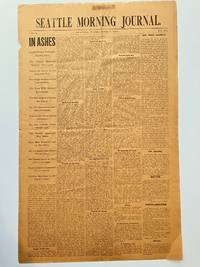
1889Best.-Nr. 11467Seattle: Journal Publishing Co 1889. First Edition. Single leaf. Good. 11 x 18 in. P. 1 printed recto only. Age toned single mellowed horizontal crease five-inch vertical closed tear from the top edge with aged cello tape repair verso small edge chips. Single-page issue of the short-lived Seattle Morning Journal published the day after the fire leading with the headline: "IN ASHES Seattle Sorely Visited by Fearful Fire." With their headquarters destroyed the Journal staff had temporarily moved into the printing office of Benjamin Baker Dearborn. While the competing but long-established Post-Intelligencer on the same day incorrectly attributed the origin of the fire to an overturned glue pot in McGaugh's sign shop the Journal reports here "It is learned that the fire started in the carpenter shop under the sign works. A workman was melting glue with a gasoline lamp and the lamp exploded." This report has withstood historical scrutiny but has gone unrecognized. Seattle's commercial Daily Trade Journal was started in 1888 but within a year had changed owners dropped "Trade" from its name and expanded focus to include daily local events. The Seattle Directory for 1889 lists the editor as E. W. S. Tingle. While the self-described Democratic-leaning paper survived the Great Fire the paper was only printed into the mid-1890s.Meany Newspapers of Washington Territory 48-49. A very scarce item of Seattleana. Now housed in a clear archival sleeve with acid-free backing. Journal Publishing Co unknown
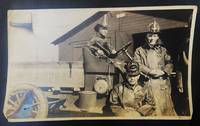
1912Best.-Nr. 177181912. Fire department photo album ca 1912 a visual record of early motorized firefighting that documents the transition from horse drawn apparatus to mechanized emergency response in California. The album centers on a small town department identified by the uniform insignia "CCFD" capturing a moment when motor vehicles were beginning to replace traditional equipment even as many larger cities still relied on horse drawn engines. The presence of specialized vehicles and organized crews reflects the modernization of municipal and volunteer fire services in the early twentieth century as departments adopted new technologies to improve response speed and operational capacity. Photo album containing 42 silver gelatin photographs housed in original string bound black leather covers. Images depict firefighters posed with motorized apparatus including vehicles associated with Kissel an early automobile manufacturer known for producing service and utility vehicles. Several photographs show crews at fire scenes alongside the charred remains of structures while others document equipment group portraits and operational contexts. One loose photograph bears the caption "This Rig is used for carrying back dirty hose. The other three are useless" providing a candid comment on equipment function and intra crew perspective. Additional imagery includes a woman seated on a Kissel automobile indicating the broader presence of early motor vehicles within the community. The album documents a transitional phase in firefighting history when mechanization reshaped emergency services reducing reliance on animal power and enabling more complex logistical coordination. Departments adopting motorized equipment during this period often represented early adopters of automotive technology within their communities and their visual documentation provides insight into both technological change and local organization of public safety. The combination of posed and candid images captures both formal representation and everyday practice within a fire brigade adapting to new tools and methods. Covers show light wear with secure string binding; photographs remain clear and well preserved. Overall very good condition. unknown