3340 resultados
ref. 221601Paris, Moutardier, 1836 in-8, XXXI pp. (dont un titre-frontispice gravé par Guyot), 422 pp., un f. de table mal chiffré 123-124, demi-veau blond, dos lisse orné de guirlandes et fleurons dorés (reliure de l'époque).
1994ref. 67133Milano: Scheiwiller Libri d'Artista 1994. Quartini sciolti in camicia e custodia in tela loose as issued in original cloth chemise and slip-case. Perfetto Mint. In memory of my feelings. Ten poems and ten Corbacciò etchings. 10 acqueforti acquetinte originali in nero firmate di Corbacciò cm 19x135. Poesie di Frank O'Hara. Titoli delle poesie in linoleografia tirati dall'Artista. 4to cm 30x24. pp. 44. Perfetto Mint. Edizione di 60 X es. numerati e firmati. Corbacciò pseudonimo di Aliano Viola Milano 1938 Scheiwiller, Libri d'Artista hardcover
ref. DADAX1550745697New unknown
ref. SONG1559586133Used: Good unknown
ref. DADAX0879392436Brand: Fire Protection Publications 0000-00-00. paperback. New. 0.00x0.00x0.00. Buy with confidence. Excellent Customer Service & Return policy. Brand: Fire Protection Publications paperback
2008ref. SKU0638908Natl Fire Protection Assn 2008-03-15. hardcover. New. 9x5x11. New Textbook Ships with Tracking Natl Fire Protection Assn hardcover
ref. 2240Max Parrish, London, 1953
ref. DADAX0763753424New unknown
ref. SONG1401250858Used: Good unknown
ref. DADAX1555602231New unknown
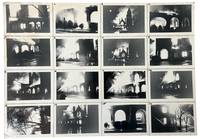
1968ref. 233001968. Fire destruction of Trinity United Methodist Church on South 2nd Street in Clearfield Pennsylvania photographed during the active overnight blaze of December 21 1968 in a dramatic sequential record of one of the borough's largest twentieth century urban fires. The archive captures the church while fully engulfed preserving flames erupting through the roofline smoke pouring from the arcaded façade hose streams striking the structure from darkened streets and the silhouette of the church tower rising above the fire. The photographs record not only the destruction of a major downtown religious landmark led at the time by Rev. Oliver H. R. Krapf but also the operational reality of late 1960s volunteer firefighting systems in small town Pennsylvania where borough police volunteer companies ladder apparatus hydrant pressure and regional mutual aid networks were rapidly assembled in an effort to contain a spreading structural fire. The blaze was first spotted around 2:10 a.m. by taxi driver Billy Knepp after which Fire Chief William Swisher summoned neighboring companies to prevent the fire from spreading beyond the church into the surrounding civic center. Photo archive of 16 silver gelatin photographs mounted to a large cardstock sheet measuring approximately 20" x 14" each image roughly 3.5" x 5" Clearfield Pennsylvania December 1968. Each photograph is numbered by hand from 1 to 16 and together they function almost cinematically moving through different stages and vantage points of the firefight. The images center the church's cut stone arcades and bell tower as bright interior firelight blows outward through the large arched openings and flames tear across the roof structure above. Several photographs show powerful hose streams cutting diagonally across the frame toward the burning façade while others pull back into wider nighttime street scenes where bare winter trees utility poles parked cars wet pavement and gathered onlookers remain visible beneath smoke and reflected firelight. One frame includes a firefighter seen from behind at street level facing the inferno while another captures a bicyclist or passerby entering the foreground as the church burns behind him. Multiple views emphasize the repetition of the long arcade row transforming the church exterior into a glowing sequence of arches illuminated by active fire inside the structure. The resulting series preserves not only the destruction itself but the visual atmosphere of the emergency response: steam smoke glare darkness reflective pavement and shifting vantage points from the surrounding streets as firefighters attempted to control the blaze. The archive is especially significant as documentation of pre modernized municipal fire response during a period when Pennsylvania boroughs depended heavily on intercompany volunteer assistance for major structural fires. The identified responding companies from Lawrence Township Hyde Curwensville Philipsburg and Chester Hill gives the group great specificity within the history of regional mutual aid firefighting networks. At the same time the photographs preserve the loss of an architecturally prominent early twentieth century Methodist church before widespread sprinkler retrofitting and later fire protection standards transformed many American religious and civic structures in the decades that followed. Mount toning with expected contrast loss and glare in several high intensity night exposures. Overall good condition. unknown
1968ref. 233001968. Fire destruction of Trinity United Methodist Church on South 2nd Street in Clearfield Pennsylvania photographed during the active overnight blaze of December 21 1968 in a dramatic sequential record of one of the borough's largest twentieth century urban fires. The archive captures the church while fully engulfed preserving flames erupting through the roofline smoke pouring from the arcaded façade hose streams striking the structure from darkened streets and the silhouette of the church tower rising above the fire. The photographs record not only the destruction of a major downtown religious landmark led at the time by Rev. Oliver H. R. Krapf but also the operational reality of late 1960s volunteer firefighting systems in small town Pennsylvania where borough police volunteer companies ladder apparatus hydrant pressure and regional mutual aid networks were rapidly assembled in an effort to contain a spreading structural fire. The blaze was first spotted around 2:10 a.m. by taxi driver Billy Knepp after which Fire Chief William Swisher summoned neighboring companies to prevent the fire from spreading beyond the church into the surrounding civic center. Photo archive of 16 silver gelatin photographs mounted to a large cardstock sheet measuring approximately 20" x 14" each image roughly 3.5" x 5" Clearfield Pennsylvania December 1968. Each photograph is numbered by hand from 1 to 16 and together they function almost cinematically moving through different stages and vantage points of the firefight. The images center the church's cut stone arcades and bell tower as bright interior firelight blows outward through the large arched openings and flames tear across the roof structure above. Several photographs show powerful hose streams cutting diagonally across the frame toward the burning façade while others pull back into wider nighttime street scenes where bare winter trees utility poles parked cars wet pavement and gathered onlookers remain visible beneath smoke and reflected firelight. One frame includes a firefighter seen from behind at street level facing the inferno while another captures a bicyclist or passerby entering the foreground as the church burns behind him. Multiple views emphasize the repetition of the long arcade row transforming the church exterior into a glowing sequence of arches illuminated by active fire inside the structure. The resulting series preserves not only the destruction itself but the visual atmosphere of the emergency response: steam smoke glare darkness reflective pavement and shifting vantage points from the surrounding streets as firefighters attempted to control the blaze. The archive is especially significant as documentation of pre modernized municipal fire response during a period when Pennsylvania boroughs depended heavily on intercompany volunteer assistance for major structural fires. The identified responding companies from Lawrence Township Hyde Curwensville Philipsburg and Chester Hill gives the group great specificity within the history of regional mutual aid firefighting networks. At the same time the photographs preserve the loss of an architecturally prominent early twentieth century Methodist church before widespread sprinkler retrofitting and later fire protection standards transformed many American religious and civic structures in the decades that followed. Mount toning with expected contrast loss and glare in several high intensity night exposures. Overall good condition. unknown books
ref. DADAX0827378831New unknown
ref. DADAX0962147001New unknown
ref. DADAX0440422647New unknown
ref. SONG0792388046Used: Good unknown
ref. DADAX1859950841New unknown
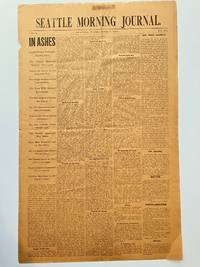
1889ref. 11467Seattle: Journal Publishing Co 1889. First Edition. Single leaf. Good. 11 x 18 in. P. 1 printed recto only. Age toned single mellowed horizontal crease five-inch vertical closed tear from the top edge with aged cello tape repair verso small edge chips. Single-page issue of the short-lived Seattle Morning Journal published the day after the fire leading with the headline: "IN ASHES Seattle Sorely Visited by Fearful Fire." With their headquarters destroyed the Journal staff had temporarily moved into the printing office of Benjamin Baker Dearborn. While the competing but long-established Post-Intelligencer on the same day incorrectly attributed the origin of the fire to an overturned glue pot in McGaugh's sign shop the Journal reports here "It is learned that the fire started in the carpenter shop under the sign works. A workman was melting glue with a gasoline lamp and the lamp exploded." This report has withstood historical scrutiny but has gone unrecognized. Seattle's commercial Daily Trade Journal was started in 1888 but within a year had changed owners dropped "Trade" from its name and expanded focus to include daily local events. The Seattle Directory for 1889 lists the editor as E. W. S. Tingle. While the self-described Democratic-leaning paper survived the Great Fire the paper was only printed into the mid-1890s.Meany Newspapers of Washington Territory 48-49. A very scarce item of Seattleana. Now housed in a clear archival sleeve with acid-free backing. Journal Publishing Co unknown
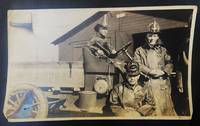
1912ref. 177181912. Fire department photo album ca 1912 a visual record of early motorized firefighting that documents the transition from horse drawn apparatus to mechanized emergency response in California. The album centers on a small town department identified by the uniform insignia "CCFD" capturing a moment when motor vehicles were beginning to replace traditional equipment even as many larger cities still relied on horse drawn engines. The presence of specialized vehicles and organized crews reflects the modernization of municipal and volunteer fire services in the early twentieth century as departments adopted new technologies to improve response speed and operational capacity. Photo album containing 42 silver gelatin photographs housed in original string bound black leather covers. Images depict firefighters posed with motorized apparatus including vehicles associated with Kissel an early automobile manufacturer known for producing service and utility vehicles. Several photographs show crews at fire scenes alongside the charred remains of structures while others document equipment group portraits and operational contexts. One loose photograph bears the caption "This Rig is used for carrying back dirty hose. The other three are useless" providing a candid comment on equipment function and intra crew perspective. Additional imagery includes a woman seated on a Kissel automobile indicating the broader presence of early motor vehicles within the community. The album documents a transitional phase in firefighting history when mechanization reshaped emergency services reducing reliance on animal power and enabling more complex logistical coordination. Departments adopting motorized equipment during this period often represented early adopters of automotive technology within their communities and their visual documentation provides insight into both technological change and local organization of public safety. The combination of posed and candid images captures both formal representation and everyday practice within a fire brigade adapting to new tools and methods. Covers show light wear with secure string binding; photographs remain clear and well preserved. Overall very good condition. unknown
1912ref. 177181912. Fire department photo album ca 1912 a visual record of early motorized firefighting that documents the transition from horse drawn apparatus to mechanized emergency response in California. The album centers on a small town department identified by the uniform insignia "CCFD" capturing a moment when motor vehicles were beginning to replace traditional equipment even as many larger cities still relied on horse drawn engines. The presence of specialized vehicles and organized crews reflects the modernization of municipal and volunteer fire services in the early twentieth century as departments adopted new technologies to improve response speed and operational capacity. Photo album containing 42 silver gelatin photographs housed in original string bound black leather covers. Images depict firefighters posed with motorized apparatus including vehicles associated with Kissel an early automobile manufacturer known for producing service and utility vehicles. Several photographs show crews at fire scenes alongside the charred remains of structures while others document equipment group portraits and operational contexts. One loose photograph bears the caption "This Rig is used for carrying back dirty hose. The other three are useless" providing a candid comment on equipment function and intra crew perspective. Additional imagery includes a woman seated on a Kissel automobile indicating the broader presence of early motor vehicles within the community. The album documents a transitional phase in firefighting history when mechanization reshaped emergency services reducing reliance on animal power and enabling more complex logistical coordination. Departments adopting motorized equipment during this period often represented early adopters of automotive technology within their communities and their visual documentation provides insight into both technological change and local organization of public safety. The combination of posed and candid images captures both formal representation and everyday practice within a fire brigade adapting to new tools and methods. Covers show light wear with secure string binding; photographs remain clear and well preserved. Overall very good condition. unknown books
ref. DADAX0936861061New unknown
1851ref. 66927London and Bremen: Colburn and Co. publishers 13 Great Marlborough Street; Germany: Franz Schlodtmann Bremen 1851. First edition 3 volumes 8vo pp. vi 320; 4 319 1; 2 313 1; original drab paper-covered boards purple cloth shelfbacks printed paper labels on spines; spines a bit sunned else near fine. Marie Blaze de Bury or Baroness Rose Blaze de Bury or Marie Pauline Rose Blaze de Bury 1813-1894 published a number of works 5 novels 6 works of non-fiction and a book of poetry under the pseudonyms Hamilton Murray and Arthur Dudley. She was a Scottish-born political writer educated in France and was notably opposed to the rule of Napoleon and there were reports that she was an agent for Austria or England. In 1844 she married the writer Henri Blaze de Bury who she had met in 1840 and they resided for most of their lives in Paris. Not in Sadleir or Wolff. And apparently uncommon: Huntington Berkeley UCLA Cambridge National Library of Scotland and University of Bremen only in OCLC. Colburn and Co., publishers, 13, Great Marlborough Street; Germany: Franz Schlodtmann, Bremen unknown
1851ref. 66927London and Bremen: Colburn and Co. publishers 13 Great Marlborough Street; Germany: Franz Schlodtmann Bremen 1851. First edition 3 volumes 8vo pp. vi 320; 4 319 1; 2 313 1; original drab paper-covered boards purple cloth shelfbacks printed paper labels on spines; spines a bit sunned else near fine. Marie Blaze de Bury or Baroness Rose Blaze de Bury or Marie Pauline Rose Blaze de Bury 1813-1894 published a number of works 5 novels 6 works of non-fiction and a book of poetry under the pseudonyms Hamilton Murray and Arthur Dudley. She was a Scottish-born political writer educated in France and was notably opposed to the rule of Napoleon and there were reports that she was an agent for Austria or England. In 1844 she married the writer Henri Blaze de Bury who she had met in 1840 and they resided for most of their lives in Paris. Not in Sadleir or Wolff. And apparently uncommon: Huntington Berkeley UCLA Cambridge National Library of Scotland and University of Bremen only in OCLC. Colburn and Co., publishers, 13, Great Marlborough Street; Germany: Franz Schlodtmann, Bremen unknown books
ref. DADAX0942802047New unknown
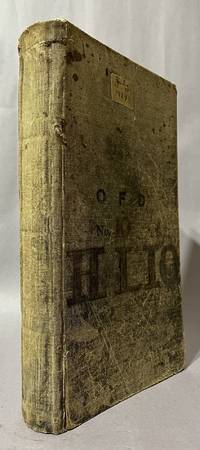
1924ref. 005993Cleveland Ohio 1924. Cloth. Good. Folio. Cloth bound ledger 13.75 x 8.75 inches 500 pages. Original manuscript hand-written in black and red ink log book for the Cleveland Ohio Fire Department Engine 10 East 101st Street in the heart of University Circle and the Cleveland Clinic. Entries cover the period between July 1 1924 and December 31 1924. Entries contain records of the daily operations of the station names and roll calls payrolls inspections standard procedures including firefighter deaths calls incident reports statistics monthly report summaries equipment lists supplies and more. The log is Indexed for reference. These logs were kept just before all the Cleveland fire stations were provided with motorized engines in 1925 during a period of rapid fire station expansion in the city. An original and unique item of Cleveland and firefighting history. Covers show expected heavy wear and soiling contents are clean and well preserved binding remains tight hardcover