Dewitz, Bodo vonAntiquariat.de

8 206 résultats
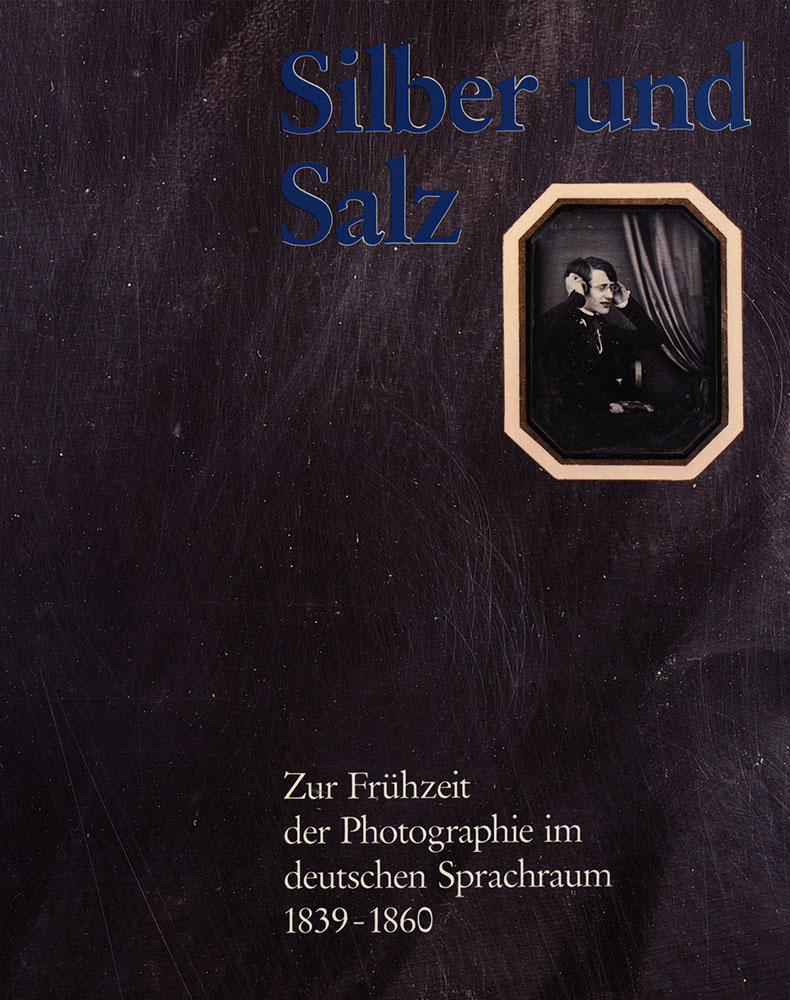
1989réf. 63366Köln ; Heidelberg : Ed. Braus 1989. 696 S. : 384 farb. u. 248 schw.-w. Abb. ; 27 cm, mit Schutzumschlag gebundene Ausgabe, Hardcover/Pappeinband, Exemplar in gutem Erhaltungszustand
1989réf. 9037EBKöln und Heidelberg, Edition Braus, 1989. 4°. 27 x 21,5 cm. 696 Seiten. Original-Karton.
2019ill. Come fare arte? Che cos'è l'arte? Che senso ha fare arte? Dalla scultura alle flowforms e quindi all'ambiente, che diventa landart, qui il mondo dei pianeti si intreccia con quello delle piante in un gioco magico, è una scoperta continua...
2019ill. Come fare arte? Che cos'è l'arte? Che senso ha fare arte? Dalla scultura alle flowforms e quindi all'ambiente, che diventa landart, qui il mondo dei pianeti si intreccia con quello delle piante in un gioco magico, è una scoperta continua...
1989réf. 100122404Les Eperonniers 1989 180 pages in8. 1989. Broché. 180 pages.
2018br. Scrittrice, filosofa esistenzialista, donna libera e ribelle, Simone de Beauvoir è ancora oggi un faro indiscusso per i movimenti di emancipazione femminile. Figura in grado di raccogliere l'eredità di chi l'aveva preceduta e di orientare il dibattito e la lotta di chi la circondava, ha contribuito con la sua vita e con le sue opere al realizzarsi di una grande rivoluzione antropologica che non smette di produrre effetti imprevedibili sul destino personale di ognuno di noi e sul futuro politico del pianeta. Il suo esempio anticonformista e il coraggio delle sue idee continuano a far riflettere, mostrando quanto lontano risulti ancora il traguardo della parità tra i sessi. E a raccogliere la sfida e il testimone, in questo libro, è Julia Kristeva, un'altra scrittrice e filosofa, un'altra donna in lotta, erede spirituale di quella tradizione che vede nella Beauvoir la propria iniziatrice. Continuando la riflessione inaugurata con la trilogia dedicata al Genio femminile (Colette, Hannah Arendt, Melanie Klein), Julia Kristeva fa qui i conti con la capostipite del femminismo, sottolineando la necessità di considerare la Beauvoir come una presenza e una guida per il nostro tempo, senza negare le contraddizioni e le complessità che hanno caratterizzato questa figura. La Kristeva ci accompagna tra le pagine di Simone de Beauvoir attraverso una lettura critica e acuta, mai scontata e mai agiografica, che mette in luce gli aspetti più significativi dell'eredità della grande intellettuale francese, che ha condotto una spietata inchiesta sulla condizione delle donne attraverso la storia, facendo dell'emancipazione del «secondo sesso» la sua battaglia più grande, dopo millenni di dominazione patriarcale e maschile. Prima di lei, nota la Kristeva, la storia veniva scritta senza le donne, anzi sulla loro pelle. Dopo di lei, non esiste più una storia senza le donne, le quali cominciano a rivendicare a gran voce la necessità di essere protagoniste della sfera pubblica e della politica. La riflessione della Kristeva sulla Beauvoir ci aiuta così a vedere la strada che è stata fatta, e quella che resta da fare.
2009br. Una nuova interpretazione della scrittrice francese i cui scritti hanno avuto in Italia tanta fortuna. La riscoperta del legame essenziale tra religione e politica nel pensiero di Simone Weil. Indice: Rivolta e rivoluzione: il rousseauismo di Simone Weil; Il tradizionalismo rivoluzionario; Sulla nozione weiliana di divisione del lavoro; Ebraismo e cristianesimo: il tentativo di una nuova cristologia; Dizionario weiliano.
1997réf. 64161Oberboihingen : GFP 1997. 160 S. ; 21 cm kart., Softcover/Paperback ++ 1 Anstreichung in der Einführung ++ sonst Exemplar in gutem Erhaltungszustand
1958réf. 18042BKassel usw., Bärenreiter, 1958. Gr.-8°, 64 Seiten, 1 gefaltete Taf. Farb. illustr. OKt
1994Tiny black dot to front wrap else fine. ; One of the special charms of the Odyssey, according to Charles Segal, is the way it transports readers to fascinating places. Yet despite the appeal of its narrative, the Odyssey is fully understood only when its style, design, and mythical patterns are taken into account as well. Bringing a new richness to interpretation of this epic, Segal looks closely at key forms of social and personal organization which Odysseus encounters in his voyages. Segal also considers such topics as the relationship between bard and audience, the implications of the Odyssey's self-consciousness about its own poetics, and Homer's treatment of the nature of poetry. ; Myth and Poetics; 0.88 x 9.35 x 6.28 Inches; 244 pages
1935241 S. + 41 S. Notenbeilage. 8°. OPp.
1946(Codice MT/2042) Cartella in 4° (30x21,5 cm), qualche traccia d'uso. Contiene 34 lezioni, alcune in più pagine, con molte figure. Carta bellica grigia, in ottimo stato. ~~~ SPEDIZIONE IN ITALIA SEMPRE TRACCIATA
1952(Codice MT/2033) In 8° 70 pp. Ex libris. Sottolineature e note a matita. Brossura editoriale con firma, tracce di scotch. ~~~ SPEDIZIONE IN ITALIA SEMPRE TRACCIATA
1877(Codice MT/0792) In 4° (cm 32) (XXX)-620(42) pp. Testo calligrafico litografato. Premesso indice manoscritto. In fine aggiunte 42 pp. manoscritte di note e precisazioni, tracciate da mani diverse. Buona leggibilità. Vecchi timbri, lievi ingialliture. Legatura originale mezza tela usata, cerniere fessurate, ma volume solido e completo. Raro cimelio. ~~~ SPEDIZIONE IN ITALIA SEMPRE TRACCIATA
1915(Codice MT/2183) In 4° (31x21 cm) 32 pp. Brossura editoriale, data e firma in copertina. Ottimo stato. ~~~ SPEDIZIONE IN ITALIA SEMPRE TRACCIATA
1994ill.
196123.5x17cm. 238 pages. Gilt hardcover. Cover and spine edges slightly rubbed and slightly bumped. Pen writing on page 3. Ex-library copy with usual marks. Pages slightly wrinkled and slightly yellowing. Else in good condition.
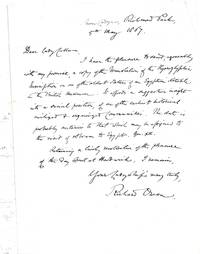
réf. 22391Owen's letter to Lady Cullum dated from Sheen Lodge Richmond Park 5 May 1867. Transcription of Birch's letter to Owen dated from British Museum London 9 July 1860. An interesting item in the field of Victorian Egyptology. The subject is what Owen describes here as 'one of the oldest Statues of an Egyptian Notable in the British Museum'. Its current Museum Number is EA103 and it has been in the Museum since 1835 but the details of its acquisition are unclear. In his translation Birch calls the sitter 'the Royal Scribe Amenhelp' but the current BM description begins: 'Scribal statue of Amenhotep son of Hapu: of black grano-diorite. Hieroglyphic texts are inscribed on the papyrus unrolled on his lap and on the statue plinth. His right hand now broken held a pen as if writing while his left hand holds the papyrus roll. .' At the time of writing Owen and Birch were colleagues at the British Museum Owen as Superintendent of the Natural History Department and Birch as head the Egyptian and Assyrian branch see the entries on both men in the Oxford DNB. The recipient of Owen's covering letter to Birch's translation is Lady Ann Cullum 1807-1875 widow of Sir Thomas Gery Cullum 1777-1855 of Hardwick House. As a palaeontologist Owen opposed Darwin's theory of evolution with a biblical view of creation and his interest in Ancient Egypt bound up with his Christian beliefs is apparent in the letter in an elegant assessment of the significance of the statue and in his annotation of Birch's translation. The letter and translation are on four 4to pages of the same paper. In good condition with light signs of age and wear. The letter is on the recto of the first leaf of a bifolium and the first page of the translation on the recto of the second leaf but they have now been inverted by folding with the two leaves carrying the other two pages of the translation tipped-in at the front resulting in the material being presented in reverse order. ONE: Covering Autograph Letter Signed from Owen to Lady Cullum with good firm signature addressed from 'Sheen Lodge Richmond Park 5th May 1867.' 1p 4to. The letter reads: 'Dear Lady Cullum I have the pleasure to send agreeably with my promise a copy of the Translation of the hyeroglyphic sic Inscription on one of the oldest Statues of an Egyptian Notable in the British Museum. It affords a suggestive insight into a social position of one of the earliest historical civilized & organized Communities. The date is probably anterior to that which may be assigned to the visit of Abram to Egypt. Gen. XII. Retaining a lively recollection of the pleasure of the day spent at Hardwick I remain Your Ladyship's very truly Richard Owen.' TWO: Manuscript translation described in Owen's letter. 3pp 4to. Written out in an unknown hand with the first of the five sections titled: 'Translation of the Inscription on the Garment and Papyrus which he is unrolling.' The other four sections of the translation are: 'Inscription In Front of the base' 'Running to the left of the figure' 'right Side' and 'Left side'. At the head of the first page in Owen's autograph: 'Hyeroglyphics sic on the Statue of the Seated Royal Scribe “Amenhelp” in the British Museum.' On the third page at the end of the translation and in the same unknown hand is written out a 'Copy of letter from Samuel Birch Esqre: F.S.A. &c. Keeper of Antiquities in the British Museum enclosing the above Translation to Professor Owen: -'. Birch's letter is dated from the British Museum 9 July 1860. It reads: 'My dear Professor Enclosed is the Translation of the Inscriptions on the Granite Statue of the Seated Scribe. It Consists of the Dedication of the Statue to the Royal Scribe Amenhelp and of his prayers to the God Amen-Ra – the Theban Jupiter. Believe me Yours very truly signed Samuel Birch'. The translation carries tem marginal annotations in Owen's autograph indicating an interest in and knowledge of the subject. The two of Owen's annotations read: 'His territorial Title: Baron Shamer like all the Nobility of Egypt was a priest: the condition is now parallel'd at the Court of Rome.' and 'the Upper & Lower Provinces of Egypt paralleling the Heavens & the Earth.' See Image of Owen's letter. Owen's letter to Lady Cullum dated from Sheen Lodge, Richmond Park, 5 May 1867. Transcription of Birch's letter to Owen dated fr unknown
2018br. "Questa edizione italiana di "Fondamenti di sistemi di basi di dati" dell'opera "Fundamentals of database systems" di Ramez Elmasri e Shamkant Navahe [...] è un'edizione rivista e riorganizzata del precedente volume, che si adegua alla settima edizione dell'opera americana." (dalla Prefazione)
2001(Codice MU/0927) In 4° (cm 29) 229 pp. Illustrato con 16 tavole a colori. Ampio apparato storico-critico e numerose riproduzioni di stampe d'epoca. Brossura editoriale. Ottimo. ~~~ SPEDIZIONE IN ITALIA SEMPRE TRACCIATA
2012brossura L'uomo contemporaneo è un meteorite spirituale nell'eternità del cosmo. Attraverso un percorso di grandi voci filosofiche, questo libro ricerca la via di un'anima per coloro che sono erranti nell'immensità tutta uguale del villaggio globale. Una trama poetica e morale che fa emergere le risonanze erranti fatte non di concetti e idee, ma di occhiate appena gettate, di luccichii e di onde magnetiche che non consentono di misurare lo smisurato, ma lasciano almeno scorgere i segni e le premonizioni del cosmo che attraversano. L'accostamento dei nomi propri di questo libro assume la forma di un'educazione ascetica nell'era della globalizzazione.
2012br. Lo smart power è la combinazione dell'hard power della coercizione con il soft power della persuasione e dell'attrazione: il dittatore nordcoreano Kim Jong-II guardava i film hollywoodiani, ma questo non ha avuto effetti di rilievo sul programma nucleare della Corea del Nord. E il soft power dell'attrazione non è riuscito certo a dissuadere il governo talebano dal sostenere al-Qaeda negli anni Novanta. È stato necessario impiegare l'hard power militare nel 2001 per porre fine a quella situazione, anche se il modo migliore di promuovere la democrazia e i diritti umani non è certo imbracciando il fucile. Nessuno ha ancora detto l'ultima parola sul controverso concetto di potere, ma dal momento che non possiamo evitare di parlarne è necessario pensare a una prospettiva più ampia nelle visioni strategiche, che tenga conto di profonde trasformazioni in atto. Come il fatto che il contesto globale sia investito dalla nuova rivoluzione informatica, che sta cambiando la natura stessa del potere favorendone la diffusione. Gli Stati resteranno sempre gli attori dominanti sulla scena mondiale, ma troveranno questo ciberspazio sempre più affollato e difficile da controllare. Anche questo è smart power.
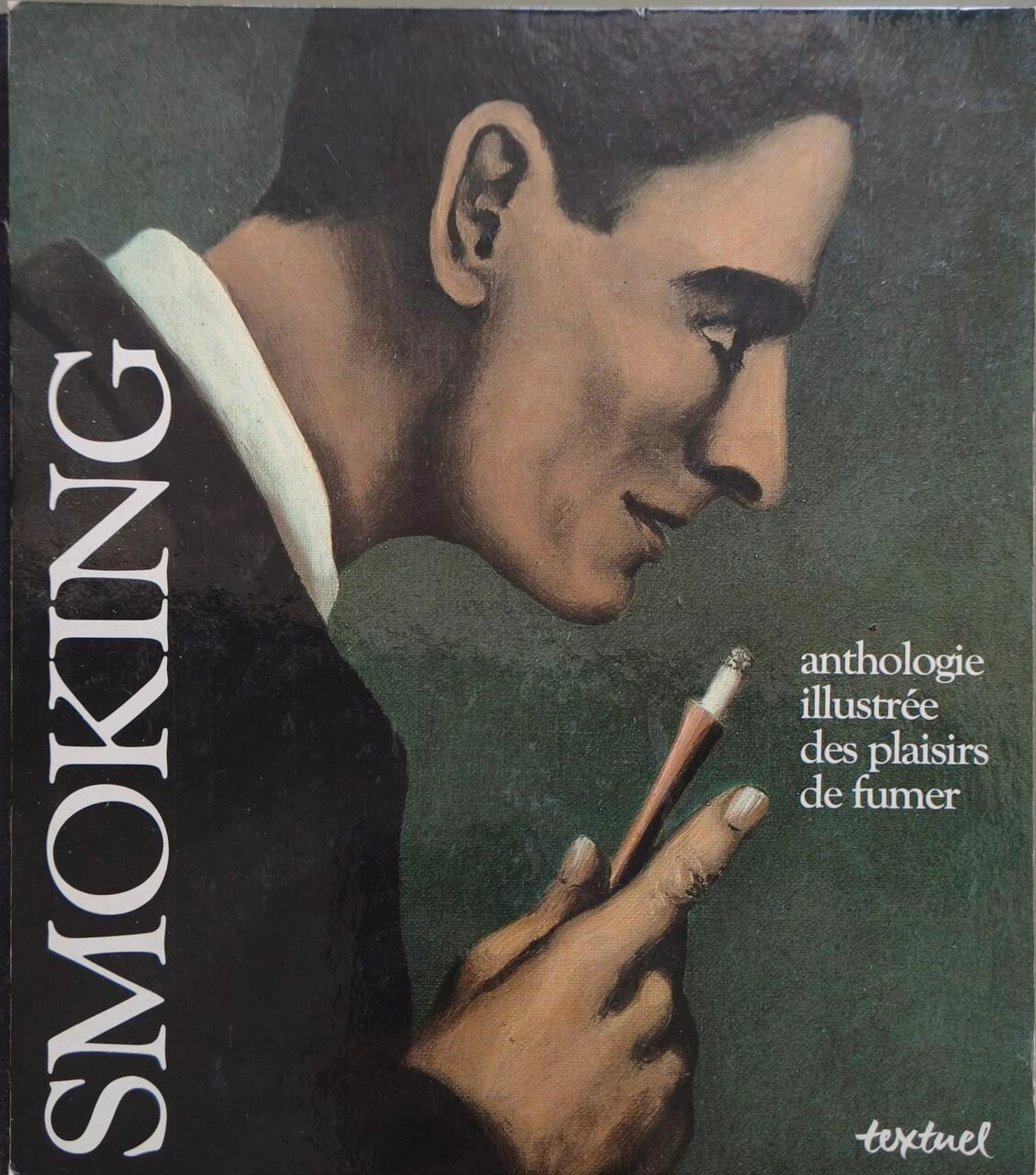
1997réf. 17591Les Editions Textuel 1997 20 4x2 2x22 8cm. 1997. Broché. anthologie illustrée des plaisirs de fumer