1 342 résultats
réf. BN369551Acupuncture et phytotherapie t1 : pharmacologie. les plantes du bois Hardcover Acupuncture et phytotherapie t1 : pharmacologie. les plantes du bois Hardcover Acupuncture et phytotherapie t1 : pharmacologie. les plantes du bois Hardcover hardcover
réf. 41544EDINBURGH BELL AND BRADFUTE 1801. SEVENTH EDITION COMPLETE IN SEVEN VOLUMES. WITH 113 COPPER PLATES AS CALLED FOR ONE BOUND UPSIDE DOWN. OCTAVO NEAT MODERN BROWN CLOTH BINDING NEW ENDPAPERS. EX BRITISH MEDICAL ASSOCIATION LIBRARY WITH THEIR STAMP TO EACH TITLE PAGE. A VERY NICE SET CLEAN AND TIGHTLY BOUND. UNCOMMON. EDINBURGH, BELL AND BRADFUTE, 1801 hardcover
réf. 28622LONDON G NICOL 1788. SECOND EDITION QUARTO RECENT FINE HALF LEATHER BINDING RAISED BANDS GILT TITLES NEW ENDPAPERS 7 ENGRAVED PLATES. A VERY ATTRACTIVE COPY. LONDON, G NICOL, 1788 hardcover
1984réf. yam1149Fort in-4 broché en bon état sous jaquette illustrée en état moyen usée par endroits 717 pages
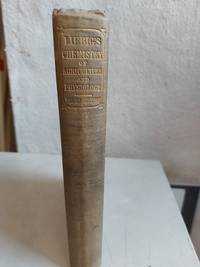
1843réf. 79718London: Taylor and Walton 1843. Gebunden. Taylor and Walton unknown
réf. 90559aafGuang Yi shu ju (Kuang I shu-chü), o.J., ca. 1913, in-8vo, 8x 11 + 4x 12 Bll. (insges. 136 Bll.) mit 2 ganzseitigen u. zahlr. weiteren Abb. im Text (schematische Zeichnungen des menschl. Körpers, Druckpunkte an verschiedenen Körperteilen, innere Organe etc.), gedruckt auf dünnem chinesischem Papier (jedes Blatt besteht aus 4 gefalt. Bll.), ein Titelblatt u. Einband innen etwas fleckig, ansonsten guter Zustand, einheitlicher chinesischer Orig.-Papiereinband d. Z. (mit Buchblock gebunden), Vorderdeckel jeweils mit Titel bedruckt, schönes Exemplar.
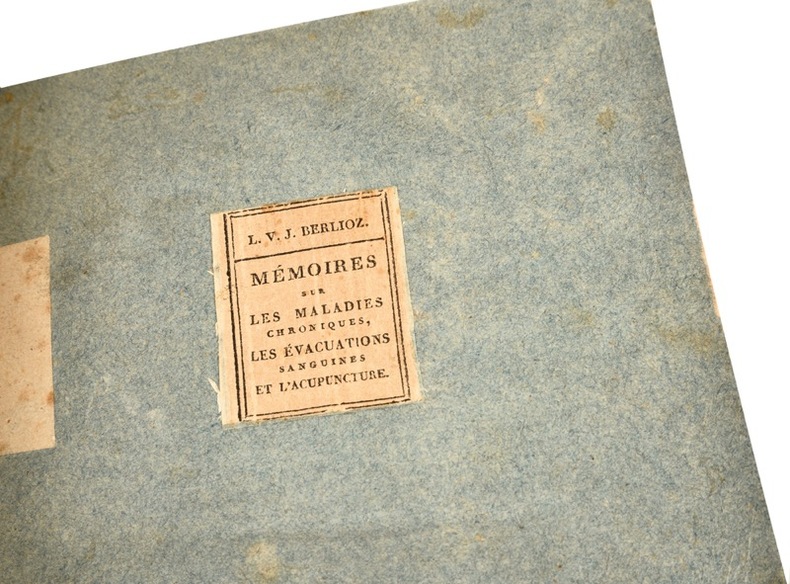
1816réf. 21648Paris, Croullebois, (imprimerie de Crapelet), 1816 ; in-8 (210 mm), demi-veau bleu outremer, dos à nerfs, titre doré, couverture bleu délavé de l’époque avec l’étiquette imprimée sur le plat, tête arasée, tranches non rognées (rel. de l’époque); VI, 343, [1bl.] pp., [2] pp. d’errata.
1894réf. 19159Paris, Chamuel éditeur, 1894. In-8°, 164 pp. (coin inf. lég écrasé). ENVOI MANUSCRIT DE L'AUTEUR à NEBO (Stanislas de Guaita). Br. (manques marginaux à la couv. et à la garde bl. inf., dos consolidé grossièrement, dos en partie cassé), une reliure redonnerait toute sa noblesse à cet exemplaire RARISSIME.
réf. 7073Two full-page brush & black ink illus. of the human body front & back with names of pressure points. 36 folding leaves. 8vo 247 x 172 orig. wrappers wrappers rather worn & wormed recased new stitching. Japan: late Edo. Our manuscript is arranged by section of the body from head to foot with a listing of about 120 pressure points and their meridians allied organs and related illnesses. There are precise instructions on how to locate each pressure point by measurement. At the end is a list of 45 pressure points that should not be touched followed by two full-page images of the body front and back with names of pressure points. These are followed by 354 pressure points arranged into groups. Each group is connected to a specific organ. Good copy. This manuscript is rather wormed increasingly towards the end but completely legible. unknown
réf. 7073Two full-page brush & black ink illus. of the human body front & back with names of pressure points. 36 folding leaves. 8vo 247 x 172 orig. wrappers wrappers rather worn & wormed recased new stitching. Japan: late Edo. Our manuscript is arranged by section of the body from head to foot with a listing of about 120 pressure points and their meridians allied organs and related illnesses. There are precise instructions on how to locate each pressure point by measurement. At the end is a list of 45 pressure points that should not be touched followed by two full-page images of the body front and back with names of pressure points. These are followed by 354 pressure points arranged into groups. Each group is connected to a specific organ. Good copy. This manuscript is rather wormed increasingly towards the end but completely legible. unknown books
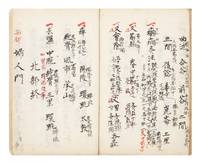
réf. 7074Two parts in one vol. 25 13 folding leaves. 8vo 198 x 135 mm. orig. wrappers rubbed old stitching. Japan: at the beginning of each part & on final leaf in trans.: “Oyo today Nagoya retired doctor Tokei or Tokoku Yoshida copied 6 June 1767.” The first part provides a detailed explanation of the theory and practice of acupuncture concentrating on 28 different ways to use the needle. At the end of this part there is a most interesting discussion of Zi Wu Liu zhu The Midnight-Noon Ebb-Flow Acupuncture Method which is used as a theoretical guide to determine whether the meridian is open at a particular moment. The second part contains descriptions of 36 common illnesses sexually transmitted diseases paralysis headache heart disease contagious diseases ulcers various pains fevers children’s diseases gynecological illnesses insanity etc. their symptoms appropriate pressure points for treatment and application of the needle shallow or deep etc. Fine copy written in a clear hand. unknown
réf. 7074Two parts in one vol. 25 13 folding leaves. 8vo 198 x 135 mm. orig. wrappers rubbed old stitching. Japan: at the beginning of each part & on final leaf in trans.: “Oyo today Nagoya retired doctor Tokei or Tokoku Yoshida copied 6 June 1767.” The first part provides a detailed explanation of the theory and practice of acupuncture concentrating on 28 different ways to use the needle. At the end of this part there is a most interesting discussion of Zi Wu Liu zhu The Midnight-Noon Ebb-Flow Acupuncture Method which is used as a theoretical guide to determine whether the meridian is open at a particular moment. The second part contains descriptions of 36 common illnesses sexually transmitted diseases paralysis headache heart disease contagious diseases ulcers various pains fevers children’s diseases gynecological illnesses insanity etc. their symptoms appropriate pressure points for treatment and application of the needle shallow or deep etc. Fine copy written in a clear hand. unknown books
réf. 41535LONDON WOODWARD 1726. 'CONTAINING AN EXACT AND COMPLEAT ACCOUNT OF THE NATURE SIGNS CAUSES AND CURES THEREOF .' OCTAVO FIRST ENGLISH EDITION TRANSLATED FROM THE FRENCH. A SUPER EXAMPLE OF A SCARCE BOOK. MODERN FINE BINDING IN HALF CALF OVER MARBLED BOARDS NEW ENDPAPERS. 490 PAGES PLUS CONTENTS ILLUSTRATIONS IN THE TEXT. VERY SCARCE. LONDON, WOODWARD, 1726 hardcover
réf. 6847Two brush & ink drawings in the text. 89 folding leaves. 8vo 190 x 127 mm. orig. wrappers wrappers somewhat frayed orig. stitching. Japan: mid-Edo. A most interesting and extensive manuscript on acupuncture and moxibustion divided into seven parts. Based on WorldCat and Kyoto University’s manuscript with the same title we can attribute the authorship of these texts to Chishin Tanaka a physician of the early Edo period. The first four parts “East” “West” “South” “North”; 17 17 25 12 leaves respectively are devoted to general principles of acupuncture and moxibustion. In each of these parts many symptoms and case histories are described in great detail along with their treatments through acupuncture and moxibustion. There are guides to locate the pressure points. Part Five eight leaves is devoted to female illnesses and their treatment. Menopause vaginal discharges irregular menstruation breast cancer difficulties during pregnancy and childbirth abortion etc. are all discussed. The sixth part in three leaves describes pediatric illnesses. The final section of seven leaves contains several “secret” methods including the “bone length method” to locate pressure points. The two illustrations depict the spine and associated pressure points. In very good condition. unknown
réf. 6847Two brush & ink drawings in the text. 89 folding leaves. 8vo 190 x 127 mm. orig. wrappers wrappers somewhat frayed orig. stitching. Japan: mid-Edo. A most interesting and extensive manuscript on acupuncture and moxibustion divided into seven parts. Based on WorldCat and Kyoto University’s manuscript with the same title we can attribute the authorship of these texts to Chishin Tanaka a physician of the early Edo period. The first four parts “East” “West” “South” “North”; 17 17 25 12 leaves respectively are devoted to general principles of acupuncture and moxibustion. In each of these parts many symptoms and case histories are described in great detail along with their treatments through acupuncture and moxibustion. There are guides to locate the pressure points. Part Five eight leaves is devoted to female illnesses and their treatment. Menopause vaginal discharges irregular menstruation breast cancer difficulties during pregnancy and childbirth abortion etc. are all discussed. The sixth part in three leaves describes pediatric illnesses. The final section of seven leaves contains several “secret” methods including the “bone length method” to locate pressure points. The two illustrations depict the spine and associated pressure points. In very good condition. unknown books
réf. 47108Juko Jushikei Hakki. Three parts in one volume. Kyoto Enami Jinbee Genroku 8 = 1685. 4to size 27.0 x 19.0 cm. Xylographically printed on 69 double leaves folded in an accordion or oriental style with 16 full-page woodcut plates. Original blue paper wrappers with xylographic text vignette on front. Contained in a modern blue cloth box made in Japanese style. = Very rare illustrated work on acupuncture. Bibliographically little is known about this work. It was anonymously published and our copy seems to be a second issue. Mestler describes a similar work that was issued in 1684; this copy was published in 1685. The book was written in classical Chinese in Japanese typescript. The author claims that he bases his writings on several classic Chinese medical texts from the 14th and 15th century. The beautiful illustrations appear to be made in the style of the mid-14th-century Chinese classic Shi si jing fa hui An Elucidation of the Fourteen Channels by Hua Shou. The plates show bodies of men with the acupunctural nodes indicated. The first 10 leaves have extensive contemporary handwritten annotations in two different hands in red and black. Minor worming to lower blank margin of last two leaves. Wrappers with some wear and slight loss of blue paper some uniform light age toning but otherwise a very good copy of this rare work. Mestler A Galaxy of Old Japanese Medical Books II 474-475. hardcover