MareMagnum
MareMagnum
Pratiche per l'aspurgo dei luoghi e degli oggetti che hanno servito ai colerosi
186522 cm, brossura originale; pp. 8
459 résultats
Jesi, presso V. Cherubini, [1855], in-8 piccolo, br. edit. con fregi tipografici, pp. 12.
1992réf. 34685(Hamburg, 1992). 82 S. Mit tls. farb. Abb. 4to. OBrosch.
186522 cm, brossura originale; pp. 8
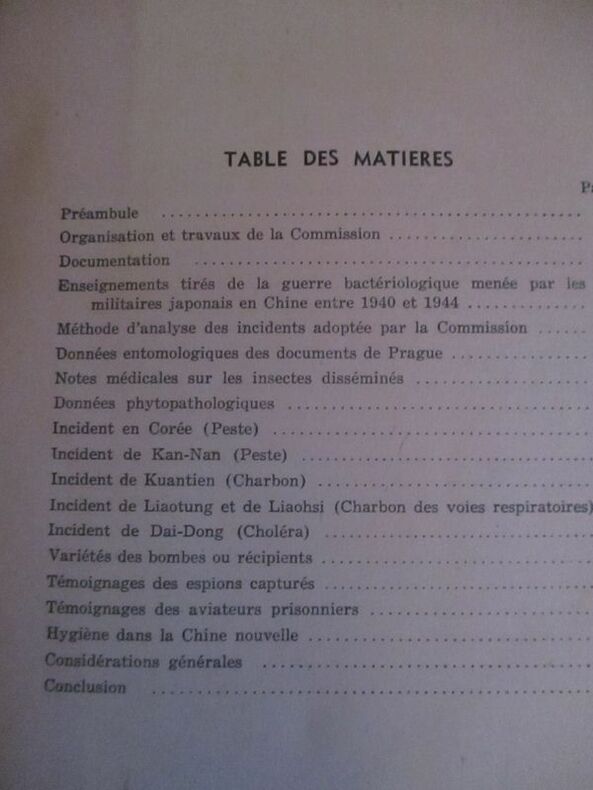
1952réf. 65131952 Pekin 1952 fort volume In8 659 pages très grandes planches dépliantes et reproductions photographiques dans le texte
1835In-8 p. (mm. 218x145). brossura muta coeva, pp. 75. Questo dettagliato rapporto considera: “come si sia svolta e quindi propagato il germe colerico - come esso si trasmetta da individuo a individuo - quale sia la sua natura - per quali vie si introduca nel corpo - quale o quali sistemi ne siano primitivamente affetti - quale sia il modo di agire di tal germe o principio colerico sull’economia anima - metodo di cura e regole profilattiche per frenare i progressi del male”. Buon esemplare.
186730 cm, copertina muta recente; pp. 4
1836réf. 15941836 Imp. Marius Olive, Marseille, 1836. In-8 broché, vignette en couverture. 323, (iv) pages
Estesa lettera in lingua francese, pp.4, in chiara grafia. Ricetta "Manière de composer le remede". Proveniente da Nizza è destinata a "Monsieur La Marquis Hippolite de Doni" di Firenze. Data sul timbro di spedizione non leggibile ma da collocarsi tra la fine del '700 e primissimi, '800. Piccole mancanze ai margini. Interventi di restauro.
réf. 6662o.J. Arzt in Wien, Armenarzt, 1831 Leitung des ersten Choleraspitals. 1764 Wien - 1833 ebd. Brustbild. Lithographie. Ca. 190 x 150 mm.
2007réf. 47523Hamburg, Verlag Verein für Hamburgische Geschichte, 2007. 347 S. Mit mehreren Abb. Gr.-8vo. OBrosch.
réf. 48106Amsterdam Van der Post Novembre 1848. 61 pages. 1 feuillet. 20x19 Cm. Dérelié. Taches. L'auteur préconise l'utilisation du Chlore pour combattre le choléra. Références au Chloroforme que Morton venait de découvrir et à son utilisation en Angleterre contre cette maladie. Document très bien conservé. Amsterdam, Van der Post, Novembre 1848. unknown
183516°, pp.28, cop. posticcia. Lievi fioriture e strappetti senza mancanze ai marg. interni. L'opuscolo inizia: "Quando il cholera faceva strage in Ispagna nell'anno 1834, prese pure gli abitanti di Roda, una piccola città della Catalogna.."(p.5). L'Aut. il cui nome si legge al termine della dedica "Al popolo toscano"(p.3), descriveva la malattia e la Società di scambievole assistenza a Roda.
1831In 8, da p. 401 a 528 con 4 tavv. f. t. in lit. raffiguranti piante e spaccati del modello di un lazzaretto. Br. antica rifatta. Provvedimenti emanati da Carlo Alberto per contrastare l'avanzata negli Stati Sardi del cholera morbus, epidemia che pero' si diffuse in seguito per tutto il nord italia sino al 1836 - 37.
1835In 8, pp. 14 + (2b). Br. muta coeva.
1831In 8, pp. 29 + (1b). Lieve mancanza al marg. int. dell'occhietto e del fr. Usuali fioriture. Br. muta coeva. Rapporto a cura del Magistrato della Salute di Napoli relativo alla diffusione del colera in citta' con descrizione della malattia, del suo decorso e del metodo curativo.
1838In 8, pp. XX + 699 + (1b) con ill. n.t. e 8 tavv. f.t. in b/n e a colori di cui alcune rip. Usuali fioriture della carta. Ex libris al controp. ant. Annotazioni manoscritte coeve al verso della sguardia. Legatura in mz. pl. coeva con tit. e filetti oro al d. Pubblicazione con la quale l'A. dichiara di voler fornire ai futuri e agli attuali capitani un libro di testo adatto alle loro scarse cognizioni teoriche che contenga tutto cio' che si riferisca alla navigazione e specialmente ai metodi per regolare e compensare le moderne bussole Thomson, Magnaghi, Peichl, Duchemin.
1885In 8, pp. 30. Br. ed. Studio sulla natura del colera e sul fatto di essere contagioso mka legato alla sulubrita' del luogo. Il tutto parte dal fatto che Roma rimase immune dal colera che imperversava altrove.
1972réf. 25316Nantes aux Bureaux de la Société Archéologique de Nantes et de Loire-atlantique 1972 -in-8 demi-basane 1 année, brochée in-octavo marron Editeur (24,2 x 16 cm), dos et couverture imprimées en noir, orné de 3 gravures hors-texte en noir + 1 gravure in-texte en noir , (XXI + 66 pages + 1 p. de Tables) pages, 1972 Nantes aux Bureaux de la Société Archéologique et Historique de Nantes et de Loire-Atlantique Editeur,
1971réf. LFA-126741272Tome XXXI-2 - 1971-2 : 232 pages, format 165 x 240 mm, broché, bon état
1835Brossura muta d’attesa, in ottavo cm 23x15, pp 14 + 1 carta bianca.
1850réf. BK0017Sacramento City California 1850. Autograph letter signed "Sam'l Locke" to his wife in Belfast Maine. 6 pp. Stampless folded letter with clear circular "SACRAMENTO CITY / CAL." postmark and "40" rate handstamp; manuscript notation recording receipt in Maine on December 19 1850. Light soiling; very good. A bleak California Gold Rush letter written during the 1850 Sacramento cholera epidemic by Samuel Locke a Maine emigrant suffering from prolonged fever and unable to regain his strength. Surrounded by sickness failed mining ventures violent crime and men too poor or ill to return home Locke plans to seek recovery in the Sandwich Islands while relying upon his religious faith for consolation. Locke had been ill since August and was now so weak that ordinary work exhausted him: "My limbs or legs are very weak short breath and no appetite at all. I have no desire to eat anything not one thing I can think of. I have no strength to go into any business or to do any. I do a few little chores round or about the store occasionally but to sweep the store it beats me all out . O how I long to get out of this place. Can't get any strength don't know as I can anywhere but I long to try." Friends advised him to spend the winter in the Sandwich Islands. He expected to travel first to San Francisco and then make the fifteen- to twenty-day passage to Hawaii though he feared that continued illness might leave him unable either to support himself there or return to Maine. He states that he will "trust in providence yes trust in God who I feel is my only refuge". Locke gives a grim account of California's climate and the spread of cholera through Sacramento claiming that the climate in California prevented the sick from recovering their strength as the "air is very light & bad middle of the day very hot and nights very cool." The previous week's report had stated forty dead but "nothing near all the cases were reported" with Locke himself knowing of several unreported cases personally. A local blacksmith died overnight after his companions borrowed Locke's syringe and "We can hardly see a healthy looking individual in the streets." The letter also records the uncertain fortunes of men from Locke's home region scattered through the mines. William Beckett and his partners had spent the summer constructing a mining dam had struck gold on the first day and then immediately "the dam was washed away so they lost all their summer's labor." Other acquaintances had moved to Kelsey's Bar the southern mines or Oregon or were preparing to return east by way of Panama. Some remained convinced that California would reward perseverance while others had "seen enough" after accomplishing nothing. Locke regarded success as largely accidental: "Thousands are here and in the mines who want to get home and cannot-not able to do seamen's duty and no money to pay but they have got to stay in the mines and do the best they can. Some it is true have been lucky. It is all luck. If they happen to hit a good place they do well." News that cholera had entered the mining districts increased his alarm. Locke feared especially for men living in tents as the rainy season approached with poor food and little protection from exposure. Sacramento itself was marked by nightly violence: "There are murders or robberies about every night. One man killed in front of our house a few nights ago. We heard him holler and heard the blows. Next morning he died. His head was dreadfully mangled." Locke closes with an emotional message to his wife and children. His health finances and prospects all appeared uncertain and he repeatedly asked his family and church to pray for him: "Tell the dear Children to be good and if they never see me again when I am gone they will have the satisfaction . of knowing they acted as thy Father requested . Pray for me ask the Church to pray for me indeed I know I have your prayers and you have mine often." A particularly bleak account of the human cost of the California Gold Rush documenting epidemic disease physical collapse failed mining schemes violent crime religious faith and the predicament of emigrants unable to escape California after their health and resources were exhausted. . unknown
1850réf. BK0017Sacramento City California 1850. Autograph letter signed "Sam'l Locke" to his wife in Belfast Maine. 6 pp. Stampless folded letter with clear circular "SACRAMENTO CITY / CAL." postmark and "40" rate handstamp; manuscript notation recording receipt in Maine on December 19 1850. Light soiling; very good. A bleak California Gold Rush letter written during the 1850 Sacramento cholera epidemic by Samuel Locke a Maine emigrant suffering from prolonged fever and unable to regain his strength. Surrounded by sickness failed mining ventures violent crime and men too poor or ill to return home Locke plans to seek recovery in the Sandwich Islands while relying upon his religious faith for consolation. Locke had been ill since August and was now so weak that ordinary work exhausted him: "My limbs or legs are very weak short breath and no appetite at all. I have no desire to eat anything not one thing I can think of. I have no strength to go into any business or to do any. I do a few little chores round or about the store occasionally but to sweep the store it beats me all out . O how I long to get out of this place. Can't get any strength don't know as I can anywhere but I long to try." Friends advised him to spend the winter in the Sandwich Islands. He expected to travel first to San Francisco and then make the fifteen- to twenty-day passage to Hawaii though he feared that continued illness might leave him unable either to support himself there or return to Maine. He states that he will "trust in providence yes trust in God who I feel is my only refuge". Locke gives a grim account of California's climate and the spread of cholera through Sacramento claiming that the climate in California prevented the sick from recovering their strength as the "air is very light & bad middle of the day very hot and nights very cool." The previous week's report had stated forty dead but "nothing near all the cases were reported" with Locke himself knowing of several unreported cases personally. A local blacksmith died overnight after his companions borrowed Locke's syringe and "We can hardly see a healthy looking individual in the streets." The letter also records the uncertain fortunes of men from Locke's home region scattered through the mines. William Beckett and his partners had spent the summer constructing a mining dam had struck gold on the first day and then immediately "the dam was washed away so they lost all their summer's labor." Other acquaintances had moved to Kelsey's Bar the southern mines or Oregon or were preparing to return east by way of Panama. Some remained convinced that California would reward perseverance while others had "seen enough" after accomplishing nothing. Locke regarded success as largely accidental: "Thousands are here and in the mines who want to get home and cannot-not able to do seamen's duty and no money to pay but they have got to stay in the mines and do the best they can. Some it is true have been lucky. It is all luck. If they happen to hit a good place they do well." News that cholera had entered the mining districts increased his alarm. Locke feared especially for men living in tents as the rainy season approached with poor food and little protection from exposure. Sacramento itself was marked by nightly violence: "There are murders or robberies about every night. One man killed in front of our house a few nights ago. We heard him holler and heard the blows. Next morning he died. His head was dreadfully mangled." Locke closes with an emotional message to his wife and children. His health finances and prospects all appeared uncertain and he repeatedly asked his family and church to pray for him: "Tell the dear Children to be good and if they never see me again when I am gone they will have the satisfaction . of knowing they acted as thy Father requested . Pray for me ask the Church to pray for me indeed I know I have your prayers and you have mine often." A particularly bleak account of the human cost of the California Gold Rush documenting epidemic disease physical collapse failed mining schemes violent crime religious faith and the predicament of emigrants unable to escape California after their health and resources were exhausted. . unknown books
1781réf. AQ13177Edinburgh: Apud Balfour et Smellie Academiae Typographos 1781. 2 39pp. Recent marbled paper boards. Very minor wear to extremities. Leaves lightly toned. A dissertation presented as a part of the medical doctorate of one William Cullen on the causes symptoms and treatment of cholera. . First edition. 8vo. Apud Balfour et Smellie, Academiae Typographos hardcover
réf. 26909Lambeth 7 July 1832. Four pages folio bifolium tipped onto card minor damage not affecting text crude repair with sellotape on 'spine' aged fair condition. A. The 'Petition' two pages folio in a tidy handwriting commencing: "We the undersigned regret to have occasion to trouble your Lordship but under the present alarming apprehension of that dreadful disease of Cholera we intreat your Lordships assistance in the removal of a monstrous nuisance in our immediate neighbourhood. The dust yard of Messrs Sinott situate in Belvedere Road Lambeth is the receptacle for the refuse of the vegetables from Covent Garden market where it is as well as much other very offensive matter suffered to remain till far advanced in decomposition long thought the source of cholera the effluvia from which especially during the present warm weather is almost unbearable and we fear unless abated will materially endanger the lives of many in our populous neighbourhood ." They ask for his Lordship's interference to deal with a longstanding problem. Signed by Thomas Langton Samuel Cross John Barnard John Chas Stahlschmidt and ten others. B. Final page of the bifolium copy of letter presumably sent to Sinnottsalso dated 7 July 1832 tipped on to card with loss of a letter or two initialled discussing the source of effluvia affecting the lives of people a "crowded population" and its connection to cholera. See Image. Notes: a. "Lord Melbourne William Lamb 2nd Viscount Melbourne was heavily involved in the government's response to the first major cholera epidemic in Britain during his time as Home Secretary in the early 1830s" AI; b. "The 1832 Cholera Outbreak in LambethConditions: Lambeth situated along the Thames was a hub of industry and a magnet for poor migrant workers living in cramped filthy conditions with no proper sewerage systems.Water Supply: Residents including those in Lambeth drank directly from the heavily contaminated Thames accelerating the spread of the disease.Impact: By February 1832 cases were reported in London with Lambeth and Southwark among the early affected areas. By the end of 1832 the epidemic had killed over 32000 people across Britain."Miasma" Theory: At the time officials like Edwin Chadwick and the Central Board of Health believed cholera was caused by "miasma"—poisonous air arising from decomposing matter." AI Lambeth, 7 July 1832 unknown
1970réf. 25261Nantes aux Bureaux de la Société Archéologique de Nantes et de Loire-atlantique 1970-75 -in-8 demi-basane 7 années reliées en un volume, reliure demi-basane marron foncé in-octavo à coins (half binding sheepskin in-8 with corners) (24,2 x 16 cm), RELIURE D'ÉPOQUE, dos à 4 nerfs (spine with raised bands) décoré "or" et à froid (gilt and blind stamping decoration),Titre et Année frappées "or" (gilt title) avec un filet "or" de part et d'autre, double filets à froid de part et d'autre des nerfs et en tête et en pied, papier marbré violet et crème aux plats, toutes tranches lisses, couvertures marron Editeur imprimées en noir conservées, sans illustration (pour l'année 1967) + orné d'1 gravure hors-texte en noir + 2 gravures in-texte en noir (pour l'année 1968) + 3 gravures hors-texte en noir + 1 gravure in-texte en noir (pour l'année 1969) + 2 gravures hors-texte en noir (pour l'année 1970-1971) + 2 gravures hors-texte en noir et 4 gravures in-texte en noir (pour l'année 1972) + 5 gravures hors-texte en noir(pour l'année 1973), (XXIX + 48 + 1 p. de Tables) + ( XXVI + 79 + 1 p. de Tables) + (XXI + 66 pages + 1 p. de Tables) + (XXVI + 80) + (XIX + 73 +1 p. de Tables) + (XVII + 89)pages, 1970-75 Nantes aux Bureaux de la Société Archéologique et Historique de Nantes et de Loire-Atlantique Editeur,