Bichat, JBiblio.com

réf. 50683495like new. unknown
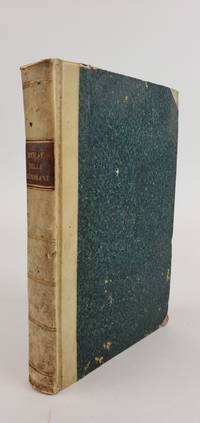
1833réf. 1355413Roma: Giuseppe Brangadoro e Comp 1833. First Italian Edition. Hardcover. Octavo XXXIV 331 pp. Good; bound in contemporary paper with vellum spine; some surface marks to covers and wear to spine edges and corners; binding tight; text block clean; scattered foxing throughout. Text entirely in Italian. MF consignment. 1355413. Special Collections. Giuseppe Brangadoro e Comp hardcover
1833réf. 1355413Roma: Giuseppe Brangadoro e Comp 1833. First Italian Edition. Hardcover. Octavo XXXIV 331 pp. Good; bound in contemporary paper with vellum spine; some surface marks to covers and wear to spine edges and corners; binding tight; text block clean; scattered foxing throughout. Text entirely in Italian. MF consignment. 1355413. Special Collections. Giuseppe Brangadoro e Comp hardcover books
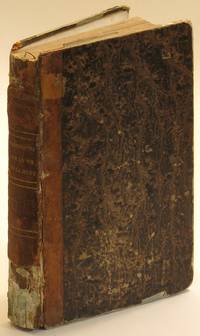
1850réf. 290376Fortin Masson et Cie. and Carpentier 1850. Hardcover. xxxv 1 391 pages. Frontis piece illustration with tissue guard of Bichat by David D'Angers 1788-1850. G-M 597 for 1800 edition. Later printing. A very good copy in paper over boards and brown leather. Bookplate of former owner on front pastedown. Front hinge broken and front cover loosened. Chips missing from spine top and bottom. Edge and corner wear with boards showing at edges. Contents remain very good. Fortin, Masson et Cie., and Carpentier hardcover
réf. 116078549X.Gpaperback. Good. Access codes and supplements are not guaranteed with used items. May be an ex-library book. paperback
réf. 1168098440.Gpaperback. Good. Access codes and supplements are not guaranteed with used items. May be an ex-library book. paperback
réf. 41261Margin: 170x111 mm. Very good condition. unknown
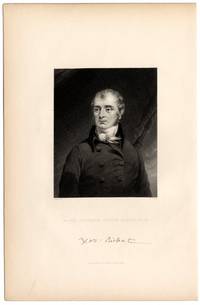
1847réf. 41262London: Fisher Son & Co 1847. Margin: 277x213 mm. Very faint foxing around the edges. Facsimile signature. Fisher, Son & Co unknown
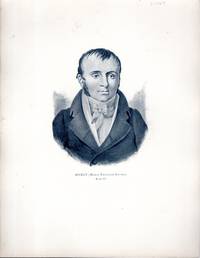
1906réf. 117684Paris: Imprimerie Nationale 1906. 1st . Unbound. Very Good. 10" x 12.75. B/w Engraving. 10" x 12.75" b/w engraving as shown; faint stamp on reverse. Marie François Xavier Bichat was a French anatomist and pathologist known as the father of modern histology.The Bichatian tissue theory was "largely instrumental in the rise to prominence of hospital doctors" as opposed to empiric therapy as "diseases were now defined in terms of specific lesions in various tissues and this lent itself to a classification and a list of diagnoses Imprimerie Nationale unknown
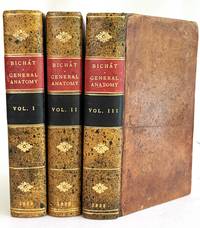
1822réf. 18963Boston: Richardson and Lord 1822. FIRST EDITION IN ENGLISH. Contemporary mottled calf rebacked and recased. A fine set. First English edition of this text that "revolutionized descriptive anatomy and that . marks the beginning of modern histology" G-M. Relying on verbal descriptions rather than illustrations Bichat addresses individual tissues within the organs while his contemporaries typically wrote on whole organs alone. He worked mostly without microscope technology but was able to isolate 21 different types of tissues. Bichat 1771-1802 was French pathologist and anatomist. He is remembered for bridging the gap between organ pathology and cell pathology. Garrison-Morton 403. Richardson and Lord unknown
1838réf. 384951838. Pettigrew's Med. Portr. Gall. 1/ 4. - London published by Fisher Son & Co. 1838 115 x 95 auf 26 x 175 cm; 8 pp. Biography. Marie Francois Xavier Bichat 1771-1802 Professor of medicine physiology and antomy at Lyons and Paris. Wellocme 292/4 unknown
1852réf. 000283Paris: Charpentier 1852. Hardcover. See Description. Fifth Edition. 12mo. pp. 4 XXXII 382. With a fine frontispiece engraving portraying a marble statue of the author. Bound in quarter red morocco with gilt spine and marbled boards. Mild rubbing; generally a fine copy. Pages are clean. Includes the notes of Dr. Cerise first printed in the 1844 edition. F-X Bichat 1771-1802 Famous french physician and anatomist. Garrison's History of Medicine refers to him as the creator of descriptive anatomy. His book Recherches physiologiques sur la vie et la mort was first published in 1800. According to Garrison and Morton: "When Volta questioned the validity of experiments claiming to show responsiveness of an ex vivo heart devoid of blood flow and nervous connections Bichat obtained permission to experiment upon the freshly killed bodies of those guillotined during the French Revolution. His trials on both laboratory animals and human cadavers led him to conclude that cardiac excitation by electricity would occur only when the organ was stimulated by direct contact." Garrison & Morton 597 - listing 1800 ed.; Caillet 1149; Osler 1303 - listing the 1844 edition. Charpentier hardcover
réf. 41261Margin: 170x111 mm. Very good condition. unknown books
1847réf. 41262London: Fisher Son & Co 1847. Margin: 277x213 mm. Very faint foxing around the edges. Facsimile signature. Fisher, Son & Co unknown books
1822réf. 18963Boston: Richardson and Lord 1822. FIRST EDITION IN ENGLISH. Contemporary mottled calf rebacked and recased. A fine set. First English edition of this text that "revolutionized descriptive anatomy and that . marks the beginning of modern histology" G-M. Relying on verbal descriptions rather than illustrations Bichat addresses individual tissues within the organs while his contemporaries typically wrote on whole organs alone. He worked mostly without microscope technology but was able to isolate 21 different types of tissues. Bichat 1771-1802 was French pathologist and anatomist. He is remembered for bridging the gap between organ pathology and cell pathology. Garrison-Morton 403. Richardson and Lord unknown books
1801réf. 35672Kjøbenhavn Tikjøb 1801. Nyere hpergamentsbd. 105127 pp. Disse to dele udkom i "Nyt Bibliothek for Physik Medicin og Oeconomie" Udgivet af C.G. Rafn. 3 blade repareret i nederste hjørne. Første danske udgave af Bichats berømte værk "Recherches physiologiques sur la vie et la mort. Paris 1800." i øversættelse og bearbejdelse ved Herholdt og Rafn. - First Danish translation. unknown
1860réf. 44893Paris: Fortin Masson et Cie Editeurs circa 1860. Hardcover. Fine. 391p plus eratta 12mo. frontis. A fine copy rebound in modern brown cloth leather label. Fortin Masson et Cie Editeurs hardcover
1855réf. 4213bdParis: Adolphe Delahays 1855. Octavo calf & patterned boards hardcover double-columned vii 406 pp. Bichat famously defined life as “those set of Functions which resist death.” His career is recounted in George Eliot’s Middlemarch. Very Good. Adolphe Delahays, 1855. hardcover
1855réf. 4213bdParis: Adolphe Delahays 1855. Octavo calf & patterned boards hardcover double-columned vii 406 pp. Bichat famously defined life as “those set of Functions which resist death.” His career is recounted in George Eliot’s Middlemarch. Very Good. Adolphe Delahays, 1855. hardcover books
1824réf. e2982London: S Highley. Worn condition. Boards worn and detached. Spines missing. Some foxing. Content in overall good condition. Ex Royal College of Surgeons Ireland Library. 1824. Revised Edition. Brown hardback half-leather cover. 220mm x 140mm 9" x 6". ci 742pp; xxxii 960pp. Heavy item - shipping supplement may apply for overseas. . S Highley hardcover
1813réf. h43065Boston: Cummings & Hilliard 1813. First American Printing. Hardcover. Very good. First English language edition. 8vo 9 x 5.25 inches early or original full calf very good light toning to text light wear to front inner hinge previous owner's name and information on flyleaf Dr. William Chambers Broadalbin NY 1798-1874 studied medicine in Boston. xix 21 -259 pp errata. "Bichat conceived the idea of a science of anatomy and pathology based upon an accurate classification of the various organs and parts and their particular susceptibilities to disease. He is regarded as the founder of modern histology and tissue pathology." Garrison & Morton. Cummings & Hilliard hardcover
réf. 1013525493.Gpaperback. Good. Access codes and supplements are not guaranteed with used items. May be an ex-library book. paperback
1813réf. 1355411Boston: Cummings and Hilliard 1813. First Thus. Hardcover. Octavo xix 21-253 154 255-259. Good; text complete despite pagination error; rebound in modern brown cloth boards with very light wear to spine edges and corners; binding tight; previous owner's stamps in ink on several pages as well as fore edge and top and bottom edges; other previous owner's name in ink on title page "Th. Henderson" text block else clean with a few areas of discoloration; extensive foxing and age-toning throughout. MF consignment. 1355411. Special Collections. Cummings and Hilliard hardcover
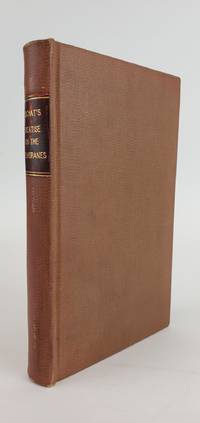
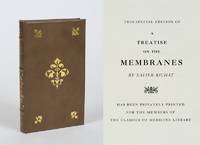
1987réf. 305639Birmingham: Classics of Medicine 1987. Reprint. hardcover. fine. Translated by John G. Coffin. 259 pages 8vo full leather a.e.g. Birmingham: Privately Printed for the Classics of Medicine 1987. Mint. "He Bichat is regarded as the founder of modern histology and tissue pathology." GM 537. Facsimile of the Boston 1813 edition. Classics of Medicine unknown
1987réf. 120343AB1987. Special reprint edition of Boston Cummings and Hilliard 1813. Birmingham AL The Classics of Medicine Library 1987. 13.5 cm x 22.5 cm. XIX 259 pages. Beautiful Hardcover with gilt lettering and ornament on spine with raised bands. Gilt designs to both boards. Marbled pastedowns and endpapers. All edges gilt. Beaver-brown silk ribbon bookmarker. Near fine condition. With protective mylar jacket. Bookplate of preowner stating "This is copy number 541 of the Classics of Medicine Library edition". Includes for example the following: General Considerations on the Classification of the Membranes / Of Mucous Membranes / Of Serous Membranes / Of Fibrous Membranes / Of Compound Membranes / Membranes Not Classed / Of Membranes Resulting from Disease /On the Arachnoid Membrane / Of the Synovial Membrane etc. Marie François Xavier Bichat 14 November 1771 22 July 1802 was a French anatomist and pathologist known as the father of modern histology. Bichat studied anatomy and surgery under Marc-Antoine Petit chief surgeon at the Hôtel Dieu in Lyon. In 1793 he became a pupil then assistant of Pierre-Joseph Desault surgeon and anatomist in Paris. After his teachers death in 1795 Bichat completed the fourth volume of Desaults Journal de chirurgie adding a biographical memoir of its author. In addition to his observations at the bedsides of patients at the Hôtel Dieu Bichat studied the postmortem changes induced in various organs by disease. Without knowledge of the cell as the functional unit of living things he was among the first to visualize the organs of the body as being formed through the differentiation of simple functional units or tissues. This view he developed in Traité des membranes 1800; Treatise on Membranes. Although he worked without a microscope Bichat distinguished 21 types of elementary tissues from which the organs of the human body are composed. Encyclopedia Britannica hardcover