5 838 résultats
2013réf. __0194711250OUP Oxford 2013. Paperback. New. 239 pages. 10.83x8.74x0.39 inches. OUP Oxford paperback
réf. 0332389553.Ghardcover. Good. Access codes and supplements are not guaranteed with used items. May be an ex-library book. hardcover
réf. 1330546423.Gpaperback. Good. Access codes and supplements are not guaranteed with used items. May be an ex-library book. paperback
réf. 1333126964.Gpaperback. Good. Access codes and supplements are not guaranteed with used items. May be an ex-library book. paperback
réf. 1334410070.Gpaperback. Good. Access codes and supplements are not guaranteed with used items. May be an ex-library book. paperback
réf. 0483797669.Ghardcover. Good. Access codes and supplements are not guaranteed with used items. May be an ex-library book. hardcover
1990réf. d18785764371Bryan Edwards Publishing 1990. paperback. Used-Very Good/n/a. Bryan Edwards Publishing paperback
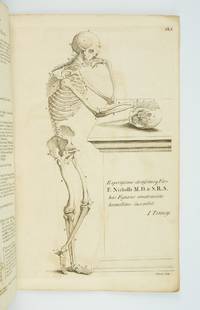
1770réf. ST20219London: Printed for Robert Sayer ca. 1770. 380 x 242 mm. 15 x 9 1/2". 4 leaves of text followed by plates. Original gray paper wrappers. WITH EIGHT FINE ENGRAVED PLATES of the male body in various poses three depicting the skeleton and five the musculature. Russell 816; Wellcome V p. 273; ESTC N51161. See also Russell "John Tinney's Compendium Anatomicum and its publishers." Wrapper a bit soiled and foxed corners torn with two snags two-inch and half-inch to lower cover most of spine chipped away but the stitching holding the book firmly together; mild offsetting from engravings and a few spots of foxing but a really excellent copy internally the leaves fresh and clean and with very good impressions of the engravings. This rare collection of striking anatomical engravings is wonderfully preserved in its original unrestored wrappers. First published in 1743 as "Compendium Anatomicum" the work's plates are adapted from the famous anatomies of Vesalius and Cowper. It was intended as a reference work for artists but as its name suggests it was published with a wider audience in mind. As Tinney humbly tells the reader in the subtitle this is "a work not only very useful but absolutely necessary to painters statuaries and all professors of drawing and design as well as a proper introduction to the study of anatomy for the use of young surgeons" not to mention an "instructive furniture for the studies and libraries of the curious." The work remained in print for a full century though because it was a frequently used book few copies have come down to us in collectible condition. John Tinney ca. 1706-61 was an engraver and print seller who dealt in a wide variety of material being particularly known for maps and satirical prints as well as the present work. Our edition while undated almost certainly dates to the period between 1762-70. The first posthumous edition of "A Compendious Treatise" was released in 1762 by Robert Sayer a map and print seller who was an associate of Tinney's during his lifetime and who likely purchased his stock of plates from his widow following his 1761 death. In 1770 Sayer began a partnership with John Bennett after which the firm was known as "Sayer and Bennett." Since the present edition was published under Sayer's name alone it no doubt comes from the period following the 1762 edition but before the partnership. The present copy has made it through the centuries in remarkably good condition given its flimsy binding and the plates inside with their cheerfully macabre figures remain quite fresh and pleasing. Printed for Robert Sayer unknown
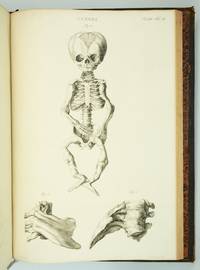
1793réf. ST20586Lugduni Batavorum Leyden: S. & J. Luchtmans 1793 1827 1835. FIRST EDITION A COMPLETE SET. 525 x 350 mm. 20 3/4 x 14". Four volumes. First two volumes in contemporary cat's paw calf volumes III and IV in contemporary flamed calf raised bands spines gilt in compartments with central fleuron one red and one black morocco label. WITH 206 ENGRAVED ANATOMICAL PLATES all with guards. Front pastedowns with bookplate of Harvard Medical School Library; library shelf markings in white at bottom of spines; bookseller's ticket of Schönhof & Mueller Foreign Books Boston. Bibliotheca Walleriana 8549; Choulant pp. 312-13; Larousse XIX vol. 14 p. 171. Lucas L. Boer Peter L. J. Boek Andries J. van Dam and Roelof-Jan Oostra "History and highlights of the teratological collection in the Museum Anatomicum of Leiden University The Netherlands " American Journal of Medical Genetics Part A Volume 176 no. 3 2018 pp. 618-37. Shallow chips across the tail of first two volumes covers variably abraded one noticeably so corners somewhat worn partially with boards showing through vague additional signs of wear but the bindings solid and retaining much of their original appeal; plates in first two volumes with faint overall browning either because of paper stock or because of contact with guards a handful of trivial tears but all in all an extremely pleasing set the plates in volume IV very clean and bright and the plates elsewhere and the wide-margined text clean and fresh throughout. This is an extremely scarce complete set of a very substantially proportioned anatomical work with more than 200 striking giant folio engravings that emphasize birth defects and that range from clinically cheerless to heartbreaking. A physician and professor of anatomy at Leyden Eduard Sandifort 1742-1814 was commissioned by the University and the city council to publish this account of the school's anatomical collections with a focus on pathological anatomy including especially congenital abnormalities. After the publication of the first two volumes in 1793 the third and fourth were issued following Sandifort's death by his son Gerard 1779-1848 who followed in his father's professorial footsteps in Leyden. The first second and fourth volume are illustrated with copperplate engravings which Larousse tell us make this book "one of the most beautiful works of this genre" though "beautiful" needs to be understood here to mean "convincing" or "compelling" rather than aesthetically appealing. The first volume concludes with nine full-size depictions of skulls; the illustrations in the second and fourth are of a more affecting nature consisting of malformed bodies and body parts damaged or destroyed by disease and birth defects. The engravings of the conjoined twins in these volumes are especially powerful--consisting of poignant even haunting images showing undeserving victims of pronounced congenital defects though some are softened with a touch of the fanciful in their presentation. The thoroughness and accuracy of the work is so great that it remains of scholarly value even today. A recent study by Dutch curators and anatomical scholars Lucas L. Boer Peter L. J. Boek Andries J. van Dam and Roelof-Jan Oostra used "Museum Anatomicum" as a guide to identify and re-diagnose the University's historic teratological collections noting that "many historically made diagnoses could not be improved upon after re-diagnosing the specimens with contemporary dysmorphological knowledge actually confirming that these old collectors were perhaps the first dysmorphologists and can be seen as true pioneers in the field of teratology." Although single volumes and incomplete sets of this work come on the market with some regularity we have been able to trace only five complete sets at auction since 1872. And ours especially fresh and wide-margined in pleasing contemporary calf is a particularly attractive specimen. S. & J. Luchtmans unknown
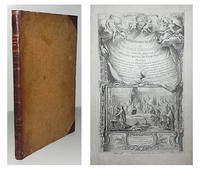
1784réf. 000285Etienne Charpentier 1784. Hardcover. See Description. Tall folio 385 mm. The entire book including the text was printed from engraved copper plates 60 plates an illustrated title page plate 29 anatomical plates and 30 calligraphic letterpress plates. Bound in a contemporary or near contemporary binding with calf spine and decorative paste paper boards - rubbed edges shelf worn old ink stain on rear cover. Both the upper portion of the spine and the tail cap are carefully restored. Board corners are neatly repaired. Interior contains an occasional minor spots of marginal foxing; a couple of tiny holes or paper defects are present on the text plate opposite plate 20. The leaves are otherwise generally clean. Francois-Michel Disdier 1708-1781 was a professor of surgery and a drawing master at the Academy of Painting in Paris. His "Tableaux anatomiques" a deluxe anatomy book for physicians was first published in 1758. Many of the plates were done by Crepy and Charpentier some after the style of Vesalius and others following Eustachi. The engraved title page designed by François Bouchet depicts students in an anatomy class studying a cadaver. The whole scene is framed in ornate baroque style. Blake NLM p. 122; Heirs of Hippocrates 894 listing 1778 edition; Hirsch II p. 190. Etienne Charpentier hardcover
réf. 2548128 April 1886; on letterhead of 10 Savile Row W. London. See his entry in the Oxford DNB. From the Piffard papers. Marshall’s handwriting is hurried and in places difficult to decipher. 2pp 12mo. In good condition lightly aged. Folded once. Addressed to ‘Dear Mr. Piffard’ and signed ‘John Marshall’. Piffard’s gift of ‘the Box of flowers with ’ leads him to opine: ‘The Daffodils are lovely. - Why is Nature so beautiful Can it be merely to please the Eye of Man Surely not for much of it nay most of it would evolve itself if man were to be exterminated tomorrow.’ After expressing pleasure at Piffard’s continuing good health he discusses ‘remarks about Sponge’ by the recipient ending with the observation that the response of ‘larynx & trachea & bronchi to the action of cold air & East Wind remains as an individual factor “a personal equation” the would say which strike faces’. He ends by explaining that he should have been in Dublin on that day ‘receiving the Honorary Fellowship of the Royl. Coll. of Surgeons in Ireland - dining c. the Lord Lieutenant &c. &c.’ but that he ‘dare not risk the double journey’. In a postscript he adds that there is ‘nothing of Epilepsy or other serious trouble in Mrs. Piffard’s attacks. Irregularity of the Circulation owing to temporary causes will account for all.’ 28 April 1886; on letterhead of 10 Savile Row, W. [London]. unknown
1860réf. 17483Van Voorst 1860. Book Hardcover. Good. Embossed cloth bumped at corners and spine ends. Frontispiece loose. Some damp staining to plates. Van Voorst hardcover
1964réf. 16556Philadelphia: At the Wistar Institute Press 1964. First Edition. Paperback. Fair/No Dust Jacket. 9.90 x 6.90 x 0.50 inches. Symposium on Molecular Action of Mutagenic and Carcinogenic Agents: Given at Research Conference for Biology and Medicine of the Atomic Energy Commission. Sponsored by the Biology Division Oak Ridge National Laboratory Oak Ridge Tennessee. Held at Gatlinburg Tennessee April 6-9 1964; reprinted from Journal of Cellular and Comparative Physiology. Softcover publication in plain blue-gray wraps with black print on the covers and spine. Fair condition. The covers show some creasing slight soiling and general toning. The spine is creased and peeling slightly. The binding has been repaired at pages 65-66 where a split had occurred. Former owner's name and an organization stamp neatly marked out appear on the half-title page. The interior pages remain clean and unmarked.The book will be carefully packaged for shipment for protection from the elements. USPS electronic tracking number issued free of charge. Feel free to contact us for more information or pictures regarding the book. Journal of Cellular and Comparative Physiology 64 At the Wistar Institute Press paperback
réf. 35682Cantabrigiæ: Typis Academicis excudebat J. Archdeacon. Prostant venales apud T. & J. Merrill et J. Woodyer Cantabrigiæ; J. Beecroft Ben. White et T. Cadell Londini; et D. Prince Oxonii 1770. First edition 4 102 without the half-title and final errata leaf disbound. Cantabrigiæ: Typis Academicis excudebat J. Archdeacon. Prostant venales apud T. & J. Merrill, et J. Woodyer, Cantabrig unknown
réf. A9781345653144Hardback. New. hardcover
réf. 1166626075.Gpaperback. Good. Access codes and supplements are not guaranteed with used items. May be an ex-library book. paperback
1977réf. 0005586New York & Stuttgart GE: Editions Medicina Rara 1977 . Limited edition. Hardcover. Fine/issued without. Folio 387 pages Index quarter leather pastepaper boards; in fine publisher's slipcase. WITH the separate booklet of 26 pages being the Introduction by Dr. Christine Nutton. Copy 567 of 2800 copes. "One of the earliest books to discuss the therapeutic value of gymnastics and sports generally for the cure of disease and disability and an important study of gymnastics in the ancient world. The second edition DE ARTE GYMNASTICA . Venice . 1573 is the first illustrated book on gymnastics. It contains 29 woodcuts by Coriolan. - Garrison / Morton 1986.1." Editions Medicina Rara hardcover
réf. A9781166626075New. unknown
réf. 244103 April 1941. On letterhead of The Loaning Peebles Scotland. Considering his achievements and range of activities it is curious that Bryce should not have been accorded an entry in the Oxford DNB. Waterston was Bute Professor of Anatomy at the University of St Andrews from 1914 to 1942. In 1913 while Professor of Anatomy at King's College London he was the first authority to debunk the Piltdown Man hoax. 2pp 4to. 49 lines of closely-written text. Addressed to ‘My dear Waterston’ and signed ‘James H. Bryce’. In fair condition somewhat creased and aged. He explains the ill health and circumstances that forced him to miss Waterston’s ‘paper & exhibit’ at the Society of Antiquaries the previous Saturday and complains of the bad weather and its effect on his injury. Waterston is ‘lucky in having three able sons’. He himself had his only son ‘called back to the colours from the Emergency Reserve and is on Instruction at the R. A. Camp at Shrivenham in Wilts’. He has worried over the safety of Waterston’s department ‘when the Bute buildings were injured’ but is pleased to hear ‘that none of the contents of the anatomical department were injured’. He regrets not being able to take up Waterston’s invitation to visit St Andrews: ‘a train journey is impossible - and my self-driven motoring is also over’. He describes how his brother and his family have come to live with him as ‘evacuees from Edinburgh’. He ends in the hope of one day being able to see Waterston’s ‘ivory buckle’ with a comment on the ‘high’ artistry of the bronze age both in Scotland and Ireland. 3 April 1941. On letterhead of The Loaning, Peebles [Scotland]. unknown
réf. 243868 September 1939; and 9 February and 28 April 1940. All from 152 HD Field Ambulance R.A.M.C. T.A. B.E.F. the first also from Dundee the second and third written from France. Mulligan’s collection of lantern slides is now part of the St Andrew’s collections and information about him is to be gleaned from its web pages. David Waterston 1871-1942 was Bute Professor of Anatomy at the University of St Andrews from 1914 to 1942. In 1913 while Professor of Anatomy at King's College London he was the first authority to debunk the Piltdown Man hoax. A total of ten pages of closely and neatly written text. In fair condition lightly ruckled and with slight loss to the edge of one page and the ink of one leaf having slightly run on removal from mount. ONE 8 September 1939: 2pp 8vo. Begins by discussing the ‘laboratory work’ which ‘Colonel Mitchell’ said he would probably get ‘when he first suggested my entering the R.A.M.C. T.A.’ He hopes that Waterston will not need him ‘at the Bute’ until the war is over and sends his regards to his family. TWO 9 February 1940: 4pp 4to. While on duty in France he gives news of his activities: ‘Our work is at present to form hospitals and turn in a hospital for German measles. I expect I shall get it myself and when I look in the mirror I shall see what my former hero has done for me - another attack of German measles! I confess that every new record of German atrocity comes as a shock to me still for Germany and the Germans were once surrounded by romance for me - as you know. In spite of the unhappiness of my last visit to Germany I have happy memories of my work at Bonn and the people whom I met there. Now they are all enemies.’ THREE 28 April 1940: 4pp 4to. He begins with personal and professional news before commenting: ‘It is very difficult to think about research work here. The Royal Society of Medicine will not send me the books - barring text-books - for one thing. However I am settling down to read for the final F.R.C.S. again and will keep up my Anatomy. I may never have the opportunity to sit the examination or to get into a surgical ward to prepare for it but at any rate I shall be able to return to St. Andrews with ideas of value for teaching purposes . Of course if war breaks out in France these plans for reading will break down but I am making them because I am afraid of losing touch with the academic work and growing stale especially if the war lasts.’ 8 September 1939; and 9 February and 28 April 1940. All from 152 (HD) Field Ambulance, R.A.M.C. (T.A.), B.E.F., the first also f unknown
1929réf. 4804Cambridge University Press 1929. Very Good. 8vo cloth paper label nicked. Cambridge University Press hardcover
réf. 1120306191.Gpaperback. Good. Access codes and supplements are not guaranteed with used items. May be an ex-library book. paperback
1905réf. 6233Paris: Octave Doin 1905. Fifth Edition Corrected Revised & Enlarged. Hardcover. Good. 4tos quarter red calf raised bands a section of pages in vol.1 re-attached with cellophane tape ink stains on vol. 2 edgeworn Extensively illustrated. A classic of anatomy and still influential by a man who initially failed his anatomy examinations. Octave Doin hardcover
réf. B9781166626075New. unknown
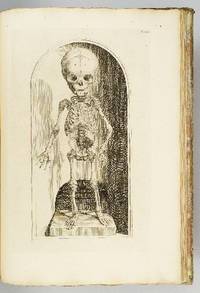
1739réf. ST12883Leyden: Johann Arnold Langerak 1739. First Edition in Latin. 540 x 380 mm. 21 1/4 x 15". 70 leaves of text.Translated by William Dundass. Original red quarter vellum over marbled boards raised bands UNTRIMMED EDGES. Engraved printer's device on title large decorative initials and tailpieces EXTRA ENGRAVED TITLE AND 114 STRIKING PLATES OF ANATOMICAL FIGURES three folding. Wellcome II 401; Heirs of Hippocrates 468; Choulant-Frank pp. 252-3; Russell 213. ◆Vellum on spine rather worn with three one-and-one-half-inch pieces broken away revealing structure underneath paper boards quite chafed other minor problems externally but an entirely solid unrestored binding. A couple of plates with short closed marginal tears one folding plate with one-inch closed tear into image no loss untrimmed edges a little browned and brittle with isolated small chips occasional minor foxing or insignificant stains three plates lightly browned but still AN UNUSUALLY ATTRACTIVE COPY INTERNALLY with the broadest of margins with especially clean and fresh leaves and with rich impressions of the plates. With plates of notable visual impressiveness this was the finest anatomy book in England during the first half of the 18th century; it also was largely a plagiarism borrowing most of its engraved content from a work by the Dutch physician Govert Bidloo published in 1685. Bidloo's work was the first large-scale anatomical atlas to appear after Vesalius' epoch-making "De Humani Corporis Fabrica" and the plates which are highly praised by Norman and Garrison-Morton are characterized by startlingly detailed life-size depictions of the human body both adult and infant with figures flayed to reveal muscles opened to show organs and unfleshed to exhibit bones. According to Choulant-Frank Bidloo's publishers sold 300 impressions of these plates to Cowper probably to recoup some of their money after disappointing sales. Cowper took Bidloo's original 105 plates added nine of his own and produced an English translation of the original Latin text to accompany them. Discussing the original plates produced by Gerard de Lairesse 1641-1711 Norman says that the figures are displayed "in an emotional almost tender manner contrasting the raw dissected parts with the full soft surfaces of uncut flesh placing flayed bound figures in ordinary nightclothes or bedding setting ordinary household objects such as books jars or cabinets in the same scene as cut-up torsos or limbs. His illustrations brought the qualities of Dutch still-life painting into anatomical illustration and gave a new darker spiritual expression to the significance of the act of dissection." When Cowper's version of the atlas first appeared as "The Anatomy of Humane Bodies" in London in 1698 there was also a 1737 Leyden printing in English before our more scholarly Latin edition Bidloo complained to the Royal Society and accused Cowper of plagiarism and fraud resulting in much acrimony and heated pamphleteering between the two physicians. Notwithstanding this scandal Cowper's achievements and discoveries--including the pair of glands that bear his name--were considerable and his text improved significantly upon the original work. Unfortunately as the DNB notes "the notoriety of this case has served to obscure a true appreciation of Cowper and of his many original contributions to anatomical illustration." The atlases of Bidloo and Cowper appear on the market regularly but at 540 x 380 mm. the present copy is distinguished by its size which is significantly larger than what is typically seen with this edition--we have not been able to trace a copy larger than ours from marketplace or institutional records. Johann Arnold Langerak unknown