Gore Vidal, Tore GillBiblio.com
6387 resultados
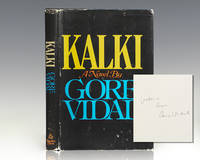
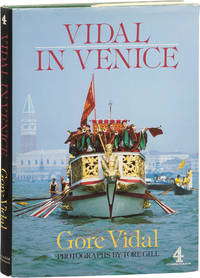
1985ref. 155417London: Weidenfeld and Nicholson 1985. First UK Edition preceded by the First American Edition published by Summit the same year. About Fine in a Near Fine dust jacket. Weidenfeld and Nicholson unknown
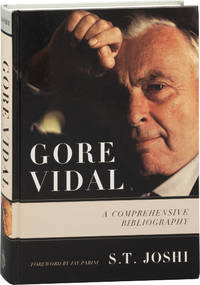
2007ref. 155496Lanham MD: Scarecrow Press 2007. First Edition. First Edition. Very Good plus with no dust jacket as issued lightly bumped on the bottom corners. Scarecrow Press unknown
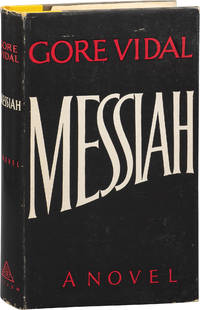
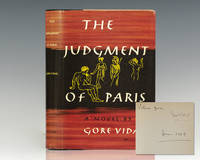
1954ref. 155426New York: E.P. Dutton 1954. First Edition. First Edition. Near Fine in an about Near Fine dust jacket. E.P. Dutton unknown
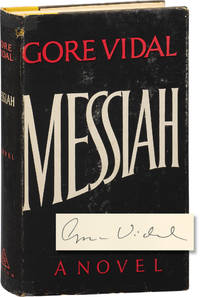
1954ref. 155428Boston: E.P. Dutton 1954. First Edition. First Edition. SIGNED by the author on the title page. Near Fine in a Very Good plus dust jacket. Jacket lightly rubbed with a chip on the bottom edge of the rear panel and cello tape reinforcements on the inside crown. E.P. Dutton unknown
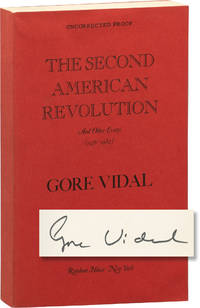
1983ref. 155421New York: Random House 1983. First Edition. UNCORRECTED PROOF preceding the First Edition. SIGNED by the author on the title page. Near Fine in wrappers. Random House unknown
1950ref. 155422New York: E.P. Dutton 1950. First Edition. First Edition. Near Fine in a strong Very Good plus dust jacket. Front board has two small bumps on the bottom and top edge respectively. Jacket spine lightly faded with tiny chips at the corners. A bright copy. E.P. Dutton unknown
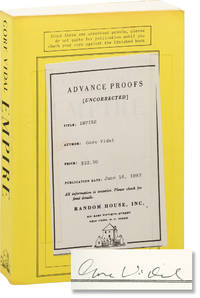
1987ref. 155676New York: Random House 1987. First Edition. UNCORRECTED PROOF preceding the First Edition. SIGNED by the author on the title page. The fourth novel in the Narratives of Empire series. Near Fine in wrappers. Random House unknown
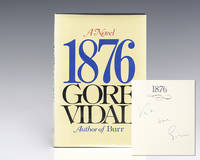
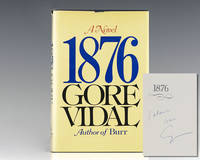
1976ref. 131323New York: Random House 1976. First edition of this classic novel. Octavo original cloth. Association copy inscribed by the author on the "Kit love Gore." The recipient Katherine “Kit” Vidal was Eugene Vidal’s second wife; he married her in 1939 when she was a 20 year old model with the Powers Agency only six years older than Gore. Near fine in a near fine dust jacket. A nice association. Gore Vidal's Narratives of Empire series spans the history of the United States from the Revolution to the post-World War II years. With their broad canvas and large cast of fictional and historical characters the novels in this series present a panorama of the American political and imperial experience as interpreted by one of its most worldly knowing and ironic observers. The centennial of the United States was celebrated with great fanfare--fireworks exhibitions pious calls to patriotism and perhaps the most underhanded political machination in the country's history: the theft of the presidency from Samuel Tilden in favor of Rutherford B. Hayes. This was the Gilded Age when robber barons held the purse strings of the nation and the party in power was determined to stay in power. Gore Vidal's 1876 gives us the news of the day through the eyes of Charlie Schuyler who has returned from exile to regain a lost fortune and arrange a marriage into New York society for his widowed daughter. And although Tammany Hall has faltered and Boss Tweed has fled the effects of corruption reach deep even into Schuyler's own family. "Vidal writes so well that you find yourself holding your breath over something that is a foregone conclusion. . . . Vidal's talent makes the bloated characters of Washington live in a way history books don't" The Boston Globe. Random House hardcover
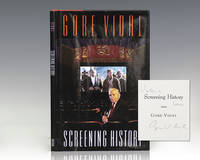
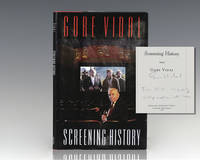
1992ref. 126011Cambridge MA: Harvard University Press 1992. First edition of this work by the award-winning novelist. Octavo original cloth. Association copy inscribed by the author on the title page "Valerie love Gore Vidal." The recipient Valerie Vidal was the author’s sister. Vidal’s father remarried in 1939 and had two children with his second wife; Valerie was born in 1946. Fine in a fine dust jacket. Jacket design by Lisa Clark. An exceptional association. Gore Vidal saw his first talking picture in 1929 when he was four years old. At age ten the film A Midsummer Night's Dream whetted his appetite for all of Shakespeare's plays and Mickey Rooney's Puck inspired his early fantasy about becoming an actor. Yet it was movies about history albeit history as brought to life on the silver screen that he remembers most vividly from his youth. Movies such as Roman Scandals The Prince and the Pauper and Fire Over England in his words "opened for me that door to the past where I have spent so much of my life-long present." Author of Burr Lincoln and other best-selling novels chronicling our experience Vidal shows how history and fiction blend in the private and public worlds of his generation. In Screening History he intertwines fond recollections of films savored in the movie palaces of his Washington D.C. boyhood with strands of autobiography and trenchant observations about American politics. Never before has Vidal--a scion of one of our oldest political families--revealed so much about his own life or written with such marvelous immediacy about the real and imagined forces that have shaped America in the twentieth century. We see Vidal witnessing history as his grandfather is sworn in for a fourth Senate term during the Depression; we see him making history as a young airman of ten flying a Hammond Y-1 under the watchful eye of his father FDR's Director of Aviation; and we journey back with him to America in the 1930s and 1940s to theaters with names like the Belasco and the Metropolitan where the history screened for the nation's moviegoers often turned reality into fantasy or into downright propaganda. Screening History is rich with anecdotes about Vidal's eminent family and shrewd insights about prominent figures known and observed. It captures the hold that movies have had on the American imagination and the mark they left on the mind of a youngster who grew up to become one of our best-known and most controversial literary figures. At times poignant often bitingly funny this is Gore Vidal at his best inscribing his views on the American political scene from FDR to George Bush and on issues from the writing of history to the inability of movies to set history straight. Harvard University Press hardcover
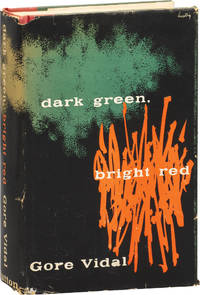
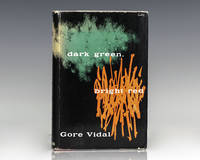
1950ref. 126599New York: E.P. Dutton & Company 1950. First edition of this “well-written work” Kirkus. Octavo original cloth. Association copy inscribed by the author on the front free endpaper "Valerie from Gore June 1954." The recipient Valerie Gore was the author’s sister. Vidal’s father remarried in 1939 and had two children with his second wife; Valerie was born in 1946. The two remained close throughout their lives. Near fine in a very good dust jacket which was laminated by Vidal. An exceptional association. Dark Green Bright Red is a novel by Gore Vidal concerning a revolution headed by a former military dictator in an unnamed Central American republic. It drew upon Vidal's experiences living in Guatemala during the Guatemalan Revolution. E.P. Dutton & Company hardcover
1992ref. 126598New York: Random House 1992. First edition of this novel by the award-winning author. Octavo original half cloth. Association copy inscribed by the author on the title page "Valerie love Gore." The recipient Valerie Gore was the author’s sister. Vidal’s father remarried in 1939 and had two children with his second wife; Valerie was born in 1946. The two remained close throughout their lives. Fine in a fine dust jacket. An exceptional association. Random House hardcover
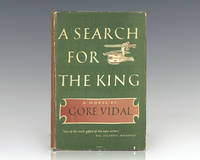
1950ref. 126014New York: E.P. Dutton & Company 1950. First edition of this classic novel. Octavo original cloth. Presentation copy inscribed by the author in the year of publication on the front free endpaper "Marie from Gore- all best wishes 1950." Near fine in a very good dust jacket. Gore Vidal's story of the faithful troubadour Blondel's search for Richard the Lionheart kidnapped and held to ransom by Duke Leopold of Austria after the Third Crusade. It interweaves historical characters with giants dragons werewolves libidinous ladies of the manor and a very nasty vampire. E.P. Dutton & Company hardcover
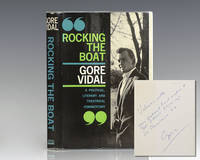
1962ref. 126579New York: Little Brown and Company 1962. First edition of this collection of essays by the award-winning novelist. Octavo original cloth. Association copy inscribed by the author "Valerie -- with semi-fraternal best wishes & God-paternal blessings for Christmas '62. Gore." The recipient Valerie Gore was the author’s sister. Vidal’s father remarried in 1939 and had two children with his second wife; Valerie was born in 1946. Near fine in a very good price-clipped dust jacket laminated by Vidal. An exceptional association. Little, Brown and Company hardcover
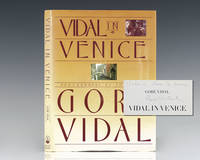
1985ref. 126474New York: Summit Books 1985. First edition of this wonderful overview of Venice. Quarto original cloth illustrated. Association copy inscribed by the author on the title page "Valerie from 1/2 brother Gore Vidal." The recipient Valerie Gore was the author’s sister. Vidal’s father remarried in 1939 and had two children with his second wife; Valerie was born in 1946. The two remained close throughout their lives. Fine in a near fine dust jacket. Jacket design by Karen Katz. Edited by George Armstrong. Photographs by Tore Gill. An exceptional association. The award-winning author offers his personal impressions of Venice recounts its long history and describes the paintings sculpture and architecture of the city. Summit Books hardcover
1976ref. 126331New York: Random House 1976. First edition of this classic novel. Octavo original cloth. Association copy inscribed by the author on the "Valerie love Gore." The recipient Valerie Gore was the author’s sister. Vidal’s father remarried in 1939 and had two children with his second wife; Valerie was born in 1946. The two remained close throughout the years. Near fine in a near fine dust jacket. Gore Vidal's Narratives of Empire series spans the history of the United States from the Revolution to the post-World War II years. With their broad canvas and large cast of fictional and historical characters the novels in this series present a panorama of the American political and imperial experience as interpreted by one of its most worldly knowing and ironic observers. The centennial of the United States was celebrated with great fanfare--fireworks exhibitions pious calls to patriotism and perhaps the most underhanded political machination in the country's history: the theft of the presidency from Samuel Tilden in favor of Rutherford B. Hayes. This was the Gilded Age when robber barons held the purse strings of the nation and the party in power was determined to stay in power. Gore Vidal's 1876 gives us the news of the day through the eyes of Charlie Schuyler who has returned from exile to regain a lost fortune and arrange a marriage into New York society for his widowed daughter. And although Tammany Hall has faltered and Boss Tweed has fled the effects of corruption reach deep even into Schuyler's own family. "Vidal writes so well that you find yourself holding your breath over something that is a foregone conclusion. . . . Vidal's talent makes the bloated characters of Washington live in a way history books don't" The Boston Globe. Random House hardcover
1992ref. 126912Cambridge MA: Harvard University Press 1992. First edition of this work by the award-winning novelist. Octavo original cloth. Association copy inscribed by the author on the title page "Gore Vidal For Kit my only stepmother all love." The recipient Katherine “Kit” Vidal was Eugene Vidal’s second wife; he married her in 1939 when she was a 20 year old model with the Powers Agency only six years older than Gore. Fine in a fine dust jacket. Jacket design by Lisa Clark. An exceptional association. Gore Vidal saw his first talking picture in 1929 when he was four years old. At age ten the film A Midsummer Night's Dream whetted his appetite for all of Shakespeare's plays and Mickey Rooney's Puck inspired his early fantasy about becoming an actor. Yet it was movies about history albeit history as brought to life on the silver screen that he remembers most vividly from his youth. Movies such as Roman Scandals The Prince and the Pauper and Fire Over England in his words "opened for me that door to the past where I have spent so much of my life-long present." Author of Burr Lincoln and other best-selling novels chronicling our experience Vidal shows how history and fiction blend in the private and public worlds of his generation. In Screening History he intertwines fond recollections of films savored in the movie palaces of his Washington D.C. boyhood with strands of autobiography and trenchant observations about American politics. Never before has Vidal--a scion of one of our oldest political families--revealed so much about his own life or written with such marvelous immediacy about the real and imagined forces that have shaped America in the twentieth century. We see Vidal witnessing history as his grandfather is sworn in for a fourth Senate term during the Depression; we see him making history as a young airman of ten flying a Hammond Y-1 under the watchful eye of his father FDR's Director of Aviation; and we journey back with him to America in the 1930s and 1940s to theaters with names like the Belasco and the Metropolitan where the history screened for the nation's moviegoers often turned reality into fantasy or into downright propaganda. Screening History is rich with anecdotes about Vidal's eminent family and shrewd insights about prominent figures known and observed. It captures the hold that movies have had on the American imagination and the mark they left on the mind of a youngster who grew up to become one of our best-known and most controversial literary figures. At times poignant often bitingly funny this is Gore Vidal at his best inscribing his views on the American political scene from FDR to George Bush and on issues from the writing of history to the inability of movies to set history straight. Harvard University Press hardcover
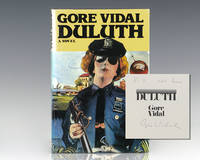
1983ref. 126272New York: Random House 1983. First edition of this novel by the award-winning author. Octavo original cloth. Association copy inscribed by the author on the title page "Kit - all love - Gore Vidal." The recipient Katherine “Kit” Vidal was Eugene Vidal’s second wife; he married her in 1939 when she was a 20 year old model with the Powers Agency only six years older than Gore. Fine in a near fine dust jacket. Jacket design by Robert Aulicino. Jacket art by Carol Wald. An exceptional association. A satiric look at the state of the union centers on a relocated Duluth and its assorted politicians policemen and women terrestrial and extraterrestrial aliens Hispanics feminists mobsters and other minorities Random House hardcover
1978ref. 126712New York: Random House 1978. First book club edition of this work by the award-winning author. Octavo original half cloth. Association copy inscribed by the author on the front free endpaper "Valerie love Gore." The recipient Valerie Gore was the author’s sister. Vidal’s father remarried in 1939 and had two children with his second wife; Valerie was born in 1946. The two remained close throughout their lives. Near fine in a near fine price-clipped dust jacket. Jacket design by Barbara Hall. An exceptional association. Random House hardcover
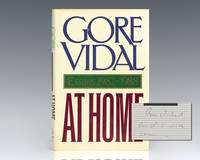
1988ref. 126989New York: Random House 1988. First edition of this collection of essays by the award-winning author. Octavo original cloth. Association copy inscribed by the author on the title page "Gore Vidal for Kit with love." The recipient Katherine “Kit” Vidal was Eugene Vidal’s second wife; he married her in 1939 when she was a 20 year old model with the Powers Agency only six years older than Gore. Fine in a near fine dust jacket. Jacket design by Jack Ribik. An exceptional association. Random House hardcover
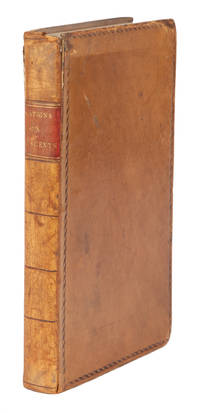
1819ref. 724041819. A Very Valuable Treatise on that Very Intricate and Important Subject" Watkins Charles 1767-1808. Vidal Robert Studley Editor. An Essay Towards the Further Elucidation of the Law of Descents; With an Appendix on the Distribution of the Personal Effects of Intestates. Corrected and Enlarged from the Author's Papers And Further Augmented with Notes of All the More Recently Adjudged Cases on the Subject Down to the Present Period. London: Printed for W. Clarke and Sons 1819. xvi 331 1 4 pp. Includes 4-page published catalogue publisher advertisment to verso of half-title. Two fold-out engraved copperplate tables of descents and consanguinity. Octavo 8-1/2" x 5". Contemporary calf blind fillets to boards lettering piece and blind fillets to spine. Minor nicks and scuffs to boards moderate rubbing to extremities light gatoring to spine small chip to head of spine joints starting at ends corners bumped and lightly worn early owner bookplate to front pastedown. Moderate toning to text light foxing in places light soiling to a few leaves some creasing and edgewear to folding tables. $350. Third edition. Charles Watkins 1767-1808 was a legal writer and poet. This is a useful supplement to Chapter 14 Volume II of Blackstone's Commentaries "Of Title by Descent". "Mr. Watkins' Essay on Descents is a very valuable treatise on that very intricate and important subject" Marvin. First published in 1793 this treatise went through four editions the final in 1837. Marvin Legal Bibliography 721 Citing Barton Modern Precedents in Conveyancing. Sweet & Maxwell A Legal Bibliography of the British Commonwealth 1:478 35. Rigg revised by Brown "Watkins Charles" Oxford Dictionary of National Biography accessed online. unknown
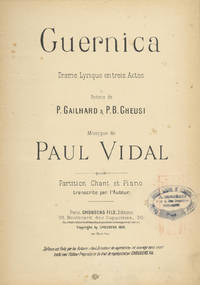
1895ref. 28710Paris: Choudens Fils PN A.C. 9757 1895. Large octavo. Full black cloth with titling gilt to spine. 1f. recto title verso blank 1f. recto dedication verso blank 213 i blank pp. Binding slightly worn. Occasional minor foxing; some signatures split or partially split; handstamps to free front endpaper and first three leaves. Second version. Choudens Fils [PN A.C. 9757] unknown
1978ref. 642Franklin Center Pennsylvania U.S.A.: The Franklin Library for The First Edition Society 1978. 1st Edition 1st Printing. Hardcover. Near Fine. Limited first edition of The First Edition Society. Octavo fully bound in maroon coloured leather with gilt lettering and design raised bands along spine all edges gilt sewn in ribbon bookmark. "Notes from the Editors" pamphlet sheets laid in. Tiniest of rubbing to bottom of spine at the corners. The Franklin Library for The First Edition Society hardcover
1952ref. 124488New York: E.P. Dutton & Company Inc 1952. First edition of this classic coming of age story. Octavo original cloth. Association copy inscribed by the author on the front free endpaper "Valerie from Gore Vidal June 1954." The recipient Valerie Gore was the author's sister. Vidal's father remarried in 1939 and had two children with his second wife; Valerie was born in 1946. Near fine in the original dust jacket which has been laminated by Vidal. Jacket design by George Salter. An exceptional association. Set in post-war Europe fresh-out-of-law-school Philip Warren takes a year to discover his future. In this classic coming-of-age story Philip journeys through various affairs misadventures and cities full of unforgettable characters that prompt his self-discovery and lessons on taking pleasure in both love and life. E.P. Dutton & Company, Inc hardcover
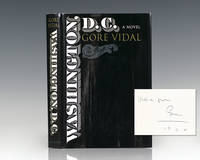
1967ref. 125449Boston: Little Brown and Company 1967. First edition of the final volume in Vidal's Narratives of Empire his acclaimed six-volume series of historical novels about the American past. Octavo original cloth. Association copy inscribed by the author on the second title page "Valerie from Gore 1968." The recipient Valerie Gore was the author's sister. Vidal's father remarried in 1939 and had two children with his second wife; Valerie was born in 1946. Near fine in a near fine dust jacket. Jacket design by Sheridan Germann. An exceptional association. Washington D.C. is the final installment in Gore Vidal's Narratives of Empirehis acclaimed six-volume series of historical novels about the American past. "Washington D.C. may well be the finest of contemporary novels about the capital" said The New Yorker and the Times Literary Supplement deemed it "a prodigiously skilled and clever performance. Little, Brown and Company hardcover
1992ref. 11422Cambridge: Harvard University Press 1992. First Edition. Printed Wrappers. Near Fine. 8vo. Frontis. 97 pp. illus. Uncorrected proof bound in light blue card covers. Some fading to spine else a fine copy. Proof title reads "The Screening of History" but book was published as "Screening History". Harvard University Press unknown