(INSANITY). PERFECT, WILLIAMBiblio.com
71 résultats
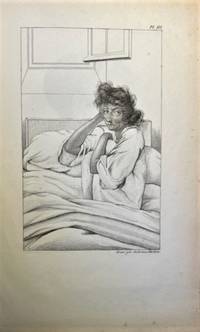
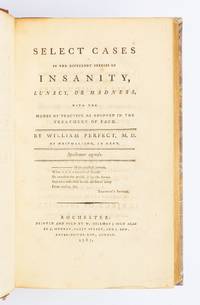
1787réf. ST19486Rochester: Printed and sold by W. Gillman 1787. Third Edition. 218 x 135 mm. 8 1/2 x 5 1/4". viii 335 pp. Recent retrospective calf-backed marbled boards flat spine gilt-ruled into panels with central floral ornament red morocco label with gilt titling. ESTC T126963. ◆First and last couple of leaves a bit foxed or browned isolated spots of foxing elsewhere but quite an excellent copy--clean and fresh with quite comfortable margins and in an unworn sympathetic binding. This is a collection of case studies by a pioneer in the humane treatment of mental illness detailing the symptoms presented and the treatments administered. William Perfect 1734-1809 began his career as an obstetrician then led efforts to inoculate the population in Kent against smallpox. In the 1760s he began to treat patients deemed insane operating his Kentish home as a private asylum. According to DNB "Gentleness and common sense seem to have characterized his approach whether dealing with women in childbirth or the insane." Perfect observed in one of his reports "gentle treatment contributed much to the case and should always be adopted in preference to rigorous measures where possible. . . . The proper management . . . is more to be depended upon than medicine but when both are judicially and humanely blended the patient has always the best chance of recovery." DNB notes he was a "keen believer in the value of advertising . . . and frequently publicized his medical services in the newspapers." He produced several books of case studies including the present work at least in part as a way of promoting his services and methods. This is a rare book: in addition to the present copy RBH lists just two copies sold at auction in 1969 and 2012 and the book is very seldom seen offered for sale by dealers. Printed and sold by W. Gillman unknown
1787réf. ST19486Rochester: Printed and sold by W. Gillman 1787. Third Edition. 218 x 135 mm. 8 1/2 x 5 1/4". viii 335 pp. Recent retrospective calf-backed marbled boards flat spine gilt-ruled into panels with central floral ornament red morocco label with gilt titling. ESTC T126963. ◆First and last couple of leaves a bit foxed or browned isolated spots of foxing elsewhere but quite an excellent copy--clean and fresh with quite comfortable margins and in an unworn sympathetic binding. This is a collection of case studies by a pioneer in the humane treatment of mental illness detailing the symptoms presented and the treatments administered. William Perfect 1734-1809 began his career as an obstetrician then led efforts to inoculate the population in Kent against smallpox. In the 1760s he began to treat patients deemed insane operating his Kentish home as a private asylum. According to DNB "Gentleness and common sense seem to have characterized his approach whether dealing with women in childbirth or the insane." Perfect observed in one of his reports "gentle treatment contributed much to the case and should always be adopted in preference to rigorous measures where possible. . . . The proper management . . . is more to be depended upon than medicine but when both are judicially and humanely blended the patient has always the best chance of recovery." DNB notes he was a "keen believer in the value of advertising . . . and frequently publicized his medical services in the newspapers." He produced several books of case studies including the present work at least in part as a way of promoting his services and methods. This is a rare book: in addition to the present copy RBH lists just two copies sold at auction in 1969 and 2012 and the book is very seldom seen offered for sale by dealers. Printed and sold by W. Gillman unknown books
1880réf. CAT0161Vermont 1880. Albumen photograph. 15 ½ x 10 inches on a 19 x 14 inch cardstock mount. Very Good. A rare 19th century view of an insane asylum. The Vermont Asylum for the Insane which later became the Brattleboro Retreat was founded based on Quaker principles of moral treatment. The founder Anna Hunt Marsh was the first woman credited with starting a hospital for the mentally ill. The approach was based on English institutions such as The York Retreat. “Moral treatment” first developed by William Tuke in the 18th century treated mental disorders as diseases and not character flaws or the results of sinning or mental depravity. This image is unrecorded and would date to sometime before 1890 when the institution was renamed. Some uneven fading otherwise well preserved. Mount toned at edges. Very good overall. unknown
1880réf. CAT0161Vermont 1880. Albumen photograph. 15 ½ x 10 inches on a 19 x 14 inch cardstock mount. Very Good. A rare 19th century view of an insane asylum. The Vermont Asylum for the Insane which later became the Brattleboro Retreat was founded based on Quaker principles of moral treatment. The founder Anna Hunt Marsh was the first woman credited with starting a hospital for the mentally ill. The approach was based on English institutions such as The York Retreat. “Moral treatment” first developed by William Tuke in the 18th century treated mental disorders as diseases and not character flaws or the results of sinning or mental depravity. This image is unrecorded and would date to sometime before 1890 when the institution was renamed. Some uneven fading otherwise well preserved. Mount toned at edges. Very good overall. unknown books
1860réf. 16096Berlin: A Hirschwald 1860. First Edition. Disbound. Good; remnants of clear tape along the backstrip and gutter of title; plates have a tide mark into the illustration. 8vo 55 1 pp. 4 folding lithographic plates. The first meeting of the German association of 'psychiatry' - with a total attendance of 21. The report provides summaries of the talks. Two papers were devoted to the issue of installing toilets in asylums and what the best design here illustrated and plumbing should be. One of the resolutions passed was to petition the univeristies to establish a chair of psychiatry in the medical schools. A Hirschwald unknown books
Second edition, enlarged, 8vo (225 x 140mm), half-title, xix, [1], 476pp., original boards, uncut, spine chipped, covers detached. Abercrombie was one of the chief consulting physicians and medical teachers in Scotland and showed an early interest in the mental aspects of medicine. He kept careful notes of all patients seen in his extensive practice among the rich and poor, and these formed the basis of this book. Hunter and MacAlpine, p. 801.
réf. 683Lyon. Prudhomme. 1902. Grand in-8 (25x16). 207 pages. Broché.
1862réf. 5945London: W Oliver 1862. First Edition. modern cloth. A very good copy. 8vo. A noted sanity trial of a member of the Windham family on charges of Gen. Charles Windham. The subject was found after weeks of testimony reported here to be sane. See DNB XXI 641 - 643. W Oliver hardcover books
réf. 68747Tome XXVI - 26ème année - N° 211 - 15 juillet 1911 - Fondées en 1886 avec la collaboration du Dr. Albert Bournet, transformées en 1893 avec Gabriel Tarde et en 1904 avec Paul Dubuisson - Editeurs A. Rey et Cie / Masson et Cie - Grand in-8 broché - 80 pages
1975Stock 1975, In-8 broché 380 p. + photos. Bon état.
1910réf. 105255Steinheil 1910 Paris, G. Steinheil Edieur, 1910, 253 p., broché, environ 25x16cm, avec un envoi de l'auteur, couverture en mauvais état mais intérieur bien propre, pages non coupées (jamais lu).
First edition, 8vo (225 x 140 mm), iv, 88pp., faint library stamp to title page, inner hinges shaken orig. cloth-backed boards, uncut. "A surgeon by profession, Brodie was often called upon to treat neurotic or hysterical patients who complained of somatic ailments, such facial neuralgia, joint pains or paralysis, in the absence of any organic disease. In the 'Lectures', Brodie adopted the original approach of discussing types of symptoms rather than particular diseases, distinguishing the manifestations of organic afflictions from those of hysterical origin, and giving the first systematic account of the diagnosis and treatment of pain and paralysis in the absence of local organic disease. He also gave the first description of 'oed?me bleu', the swelling and cyanosis of extremities during hysterical paralysis."?Hook & Norman. Provenance: Formerly in the library of the Birmingham Medical Institute. Hook & Norman, Haskell F. Norman Library I, 346; Hunter & Macalpine, pp. 860-64.
First edition, 8vo (220 x 130 mm), ix, [1], 320pp., some intermittent light foxing, 1 folding table, fait stamp to title page, later maroon cloth, rubbed, spine lettered in gilt. An investigation of the curability of insanity based on the statistics of a countrywide survey of mental institutions. "Burrows claimed to have cured eighty-one percent of all the mental patients in his private asylum, with the rate rising to ninety-one percent for cases of less than a year's duration?questionable figures that were nevertheless accepted uncritically by his book's many readers. The cult of curability was an extreme reaction to the earlier belief that insanity was beyond help; during the period of its greatest influence, it inspired a marked increase in the construction of state mental hospitals."?Hook & Norman. Provenance: Formerly in the library of the Birmingham Medical Institute. Hook & Norman, Haskell F. Norman Library I, 379; Hunter & Macalpine, p. 778; Wellcome II, p. 277.
First edition, 8vo (200 x 130 mm) [20], 316pp., ownership inscription on fly-leaf "Harbin - 1743", contemporary calf, spine with raised bands and ruled in gilt, slight nick to headband otherwise a very nice copy. In this work Cheyne aroused much interest in the investigation of the bodily fibres and in exploration of the metaphysical relationship of mind and body. "Like many other authors on nervous diseases of the depressive kind, Cheyne wrote from personal experience and so, perhaps claimed that those 'of the liveliest and quickest natural Parts..... whose Genius is most keen and penetrating' were most prone to such disorders: Fools, weak or stupid Persons, heavy and dull Souls, are seldom troubled with Vapours or Lowness of Spirits.' Perhaps for the same reason he considered that 'of all the Miseries that afflict Human Life, and relate principally to the Body, in this Valley of Tears, I think Nervous Disorders, in their extreme and last Degrees, are the most deplorable, and beyond comparison the worst.' He recommended treatment especially by evacuation and slender diet, by which he himself had been cured."?Hunter and McAlpine. Wellcome II, p.339; Hunter and MacAlpine, pp.351-54.
réf. 8369Syndicat National des réeducateurs en Psychomotricité In-8,broché,couverture grenat et blanche dans la série, 77pages,bel ensemble.
First edition, 8vo (200 x 115 mm), xxxvi, 392 + 12pp., of publishers' adverts at the front and 4pp., at end, with half-title, faint unobtrusive stamp to title, new endpapers, later quarter blue morocco by Chivers of Bath, untrimmed. Combe maintained that mental disorder was in fact a 'symptom of cerebral disease', and therefore to be regarded in the same way as the diseases of any other organ. Provenance: Formerly in the library of the Birmingham Medical Institute. Hunter & Macalpine, pp. 812-18; Wellcome II, p. 376.
réf. ND-MNWQ-0UYMNew. unknown
1984A clean, unmarked copy with a tight binding. 361 pages.
1967réf. 5026Éditions Doin 1967 163 pages uin8. 1967. broché. 163 pages.
1927x, 381 pages. Index. "It has been suggested to me that the experience gained through the many years in which I was chiefly concerned with the ascertainment of mental disorder and defect, in accused persons coming before the courts, should afford some help to others similarly engaged. This book is the result." - Preface. Author was a medical doctor, medical inspector of H.M. Prisons, England and Wales; Inspector of Retreats under the Inebriates Acts, Lecturer on Criminology and Forensic Psychiatry, Maudsley Hospital, and Senior Medical Officer, H.M. Prison, Brixton, etc. Most of the sixteen chapters are devoted to the various modes of insanity. Average wear to dark olive green boards. Gilt lettering upon spine. Prior owner's inkstamp upon free endpapers and title page. Ten Point Scale affixed inside back board. Back hinge open. Front hinge started. A worthy copy of this fascinating vintage text. Book
2003réf. 7335La fosse aux ours 2003 91 pages in8. 2003. broché. 91 pages. Publié en 1915 ce court roman raconte à travers le journal intime d'un enfant la descente dans la folie provoquée par une passion amoureuse non réciproque pour une femme nommée Angélica. Le récit décrit de façon implacable les étapes de cette démence des insomnies et de l'apathie jusqu'aux hallucinations et à l'hystérie
First edition, 2 vols., 8vo (210 x 130 mm), xviii, 678; [4], 864pp., with half-titles, BUT WITHOUT THE ATLAS VOLUME OF 27 PLATES, several neat library stamps, later library buckram, joints cracked, upper cover of vol. I detached. The first modern textbook of psychiatry. Provenance: Formerly in the library of the Birmingham Medical Institute. Hook & Norman, Haskell F. Norman Library I, 728; Hunter & Macalpine, pp. 731-38; Garrison-Morton, 4798.
1838réf. 22084Paris: J B Bailliere 1838. First Edition. Contemporary half leather. Very good; some occasional spotting and toning; joints somewhat chafed. 8vo 1 - xviii 1 - 678 pp.; II - 4 1 - 864 pp.; III - Atlas - 4 pp. 27 plates. One of the first systematic attempts to classify and describe the varieties of mental illness. "Esquirol coined the term monomania a concept which anticipated the modern view of schizophrenia and he was the first to distinguish hallucination from illusion. While at Salpêtrière where he succeeded Pinel as chief physician Esquirol introduced formal instruction in psychiatry and gained support for Pinel's humanitarian reform movements by lecturing throughout Europe . Des maladies mentales . served as a basic text in psychiatry for over fifty years." - Heirs of Hippocrates citing a later edition. Esquirol was Pinel's most illustrious pupil. He wrote a series of articles for different journals between 1812-1822. These articles and notices fully revised and supplied with more detail constitute the text of the book offered here. He hoped that his studies " . may contribute to overcome prejudices to dissipate errors to throw light upon obscure points connected with mental diseases and to make known truths of useful application in the treatment and regimen ." Hunter/MacAlpine pp. 731-738; G-M #4929; Norman #724. J B Bailliere hardcover books
2 works, 38 [107-144]; 17 [ 99-115]pp., disbound. Both works are re-issues published in the periodical 'The Pamphleteer, Vol. XIV & XV 1813.' Hunter & MacAlpine, p. 721. Formerly in the library of the Birmingham Medical Institute.
1992réf. 500380172Grasset 1992 1992. Melchior Marmont veuf et ayant récemment perdu son frère annule sa fête d'anniversaire pour annoncer qu'il va réaliser un film dont il sera scénariste réalisateur et producteur : 'La Démence du boxeur'. Le roman explore les thèmes de la vieillesse de la mort et de la création artistique avec une narration digressive et une collaboration faustienne entre le personnage et l'auteur