44.291 Ergebnisse
Paperback, XV+362 p., 14 b/w ill., 16 x 25. ISBN 9782503525341. Nota Bene explores a little-known juxtaposition of verbal text and musical notation in the Middle Ages. This particular intersection deserves attention from those interested in music, the reception of classical Latin literature, the history of education, and the development of punctuation. Between the late tenth century and the late twelfth century, the musical notation known as neumes was provided in dozens of manuscripts for, among other texts, a number of Horace's Odes as well as for sections of epics by Lucan, Statius, and Vergil. These materials constitute a paradoxical corpus of "classical poems in plainchant" that complicates our views of both how students learned Latin and what was being sung in an era most often associated with Gregorian chant. The book wrestles first with the literary-historical puzzle of why certain passages and not others were "neumed" and later with the ethnomusicological riddles of how, where, when, and by whom the passages were sung. Languages : English, Latin.
Paperback, 373 p., 17 b/w ill., 150 x 230 mm. ISBN 9782503521329. The first monograph to appear in The Medieval Translator series, Vernacular Mysticism in the Charterhouse presents a study of London, British Library, MS Additional 37790 (Amherst), a purpose-built anthology of major mystical texts by Richard Rolle, Julian of Norwich, Jan van Ruusbroec and Marguerite Porete, interspersed with shorter texts and compilations. Though the manuscript is famous mainly because it contains the only extant copy of Julian of Norwich's short text, it is an intriguing witness to the fifteenth-century spread of the vernacular into traditionally Latinate environments, in this case the Carthusian Order in England. In this process of transmission, translation plays a central part. Most of the texts in the anthology are translations from Latin or French into Middle English. In addition, the anthologist's selection and ordering of texts within the volume, intended to further the readers' spiritual lives, translates them anew for his intended audience. This study provides finely detailed analyses of the texts in the textual and material context of the Amherst anthology as well as in their religious and historical contexts. It also offers a first-time edition of Quedam introductiua extracta, a Latin compilation contained in the manuscript, and a discussion and listing of verbal marginal annotations reflecting early readers' reactions to the texts. By reading the texts in (one of) their medieval manuscript context(s), this book gives students and scholars of (translated) medieval religious texts a fresh view of the classics of mystical writing contained in the remarkable literary document that is the Amherst anthology. Languages : English.
Paperback, 358 p., 156 x 234 mm. ISBN 9782503535791. La comparaison de la chronique latine de Guillaume de Tyr, Historia Rerum in partibus transmarinis gestarum (XIIe siecle), avec sa version francaise anonyme, L'Estoire de Eracles (XIIIe siecle), fait apparaitre des differences capitales. Les nombreuses initiatives syntaxiques, lexicales et thematiques, conditionnees par les gouts du traducteur et de son public, ainsi que par les exigences du travail de traduction et les possibilites offertes par la langue, temoignent principalement des difficultes rencontrees au contact du monument historiographique le plus complexe de la Croisade. Les observations decisives qu'elles permettent de conduire confirment que la notion medievale de translatio correspond souvent moins au concept moderne de traduction qu'a celui d'adaptation. Languages : French, Latin.
Paperback, 585 p., 12,5 x 19. ISBN 9782503531137. Thomas More s'exerca au dialogue en traduisant du grec ceux de Lucien, publies a Paris des 1506 dans un recueil ou il a Erasme pour emule. Il frequenta evidemment ceux de Platon, de Ciceron, et de saint Gregoire le Grand. En 1516 l'Utopie le revela comme un virtuose du genre. En 1529 il publia A Dialogue Concerning Heresies, premier des sept ouvrages en langue anglaise ou il combat l'heresie et tente de freiner la revolution dans l'Etat. Le Dialogue du reconfort, compose en prison, ne put paraitre qu'apres l'avenement d'une reine catholique, Mary, en 1553. Une longue lettre d'aout 1534, ou Margaret Roper raconte a sa belle-soeur Alice un long entretien qu'elle a eu avec leur pere, est souvent appelee Dialogue of Counsel : le prisonnier en est le principal interlocuteur, comme l'est l'oncle Antoine dans le Dialogue of Comfort. En avril 1534 More etait occupe a ecrire des pages qui demontrent, en s'appuyant sur les Peres grecs et latins, que la foi en la presence reelle du Christ dans l'Eucharistie est aussi ancienne que l'Eglise. Les editions patristiques lui faisant defaut en prison, il ne pouvait terminer cette etude. En revanche, l'ecrivain-ne qu'il etait mit a profit l'epreuve multiple de la captivite pour explorer les tresors accumules depuis un demi-siecle dans sa memoire fidele, et pour remonter a la source de tout reconfort. More n'envisage pas un dossier exhaustif concernant la tribulation et le reconfort ; un tel propos s'accorderait mal, du reste, avec le genre litteraire du dialogue. La Bible est neanmoins presente ici, de la Genese a l'Apocalypse, par des centaines d'emprunts, dont plus de cinquante au seul psautier, que l'auteur sait par coeur pour en avoir recite des pages tous les jours. More a rumine et vecu la ?« bonne nouvelle ?», en chretien ?« catholique ?», in medio Ecclesiae, sachant que l'echelle de Jacob descend du ciel jusqu'aux berges de la Tamise, jusqu'a celles du Danube : son Dialogue a pour cadre la Hongrie en partie annexee par le Turc ottoman. L'Evangile se trouve pleinement ?« acculture ?» dans son ouvrage, ou les livres inspires jouxtent Platon et Galien, Ciceron et Pline, Juvenal et Martial, Esope et Chaucer. Les fabliaux du Moyen Age y dialoguent avec les classiques de la spiritualite chretienne : Boece en aval de saint Augustin et de Cassien, Gerson dans le sillage de saint Bernard et de saint Thomas d'Aquin. Ce dernier texte de Thomas More est traduit et eclaire par une introduction, des notes et un index biblique par l'abbe Germain Marc'hadour, et l'une de ses anciennes etudiantes, Jocelyne Malhomme. C'est un texte spirituel d'une grande force et d'une grande beaute, ecrit avec ironie mais sans venin, par un homme qui savait que sa derniere heure etait proche. Languages : French, Latin.
Paperback, approx. 300 p., 15 x 25. ISBN 9782503547756. Ce volume presente une etude historique et socio-economique de l'art typographique dans les Pays-Bas meridionaux a partir de 1473 jusqu' a 1520. Languages : French, Latin.
Hardback, 130 p., 160 x 235 mm. ISBN 9782503507804. This book is an edition of Hieronymus Ammon?s Imitatio Crameriana, which is a compilation of forty heart emblems in imitation of Daniel Cramer?s Emblemata Sacra, and in the context of contemporary Nuremberg as a thriving centre of culture important as a theory of learning and translation. In 1649 Hieronymus Ammon, a town lawyer in Nuremberg, published a sophisticated bilingual emblem book in Latin and German under the title Imitatio Crameriana. The book is a compilation of forty heart emblems, imitations of Daniel Cramer's Emblemata Sacra. At this time Nuremberg was a centre of economic and political power, and boasted a thriving culture. The town's poets had a serious interest in rhetoric and poetics, and they showed an appreciation for the vernacular culture that was being promoted by the Sprachgesellschafften. In this context the notion of imitatio is important as a theory of learning and translation. Imitating classical patterns was considered a means to develop style through independent variation. Cramer's heart emblems were considered by Ammon and his friends as an ideal model. Even more so because they adhered to orthodox protestant dogma. Thus these emblems fulfilled the expectations of erudition and wit, while satisfying protestant principles of scripture. Most of the biblical mottoes were texts used for daily sermons in the Lutheran church. The substantial introduction is followed by a list of Ammon's Latin mottoes which are juxtaposed with their source mottoes in Cramer's emblems and accompanied by English translations; there is also a second list of the key motifs in the emblem pictures. Languages : English.
Best.-Nr. 39051Turnhout, Brepols, 1999 Hardback, 130 p., 160 x 235 mm. ISBN 9782503507804.
Hardback, 166 p., 160 x 235 mm. ISBN 9782503507743. This first modern reprint of Antonius a Burgundia?s neat and concise emblem book is based on the copy in the Royal Library Albert I at Brussels, and focuses on the vices of the tongue: abuse, equivocation, insults, detraction, blasphemy, lying, perjury, and calumny. This first modern reprint of Antonius a Burgundia's neat and concise emblem book Lingua vitae et remedia is based on the copy in the Royal Library Albert I at Brussels. The book focusses on one extremely important issue: the vices of the tongue-abuse, equivocation, insults, detraction, blasphemy, lying, perjury and calumny. It was issued almost simultaneously in Latin and Dutch with the vices of speech, the second offers remedies for such defects. In a wide-ranging introduction Van Houdt discusses the cultural and literary context of the book and the issues it raises, setting it in the intellectual framework which shaped its pedagogical principles and ethical ideas. The catalogue of sins and remediescan be traced back to theological and humanistic sources, among which Erasmus'diatribe Lingua holds a special place.The appendix includes collated variants, an index of Latin mottoes with an English translation, a list of pictorial motifs, and an index of themes. Languages : English.
Best.-Nr. 39049Turnhout, Brepols, 1999 Hardback, 166 p., 160 x 235 mm. ISBN 9782503507743.
Paperback, 264 p., 150 x 230 mm. ISBN 9782503507170. This is a collection of essays delivered at the International Conference of Beverly-Hull in July 1997, discussing the lives of Saint Birgitta of Sweden in the vernacular. Languages : English.
Best.-Nr. 0428729894.Ghardcover. Good. Access codes and supplements are not guaranteed with used items. May be an ex-library book. hardcover
Best.-Nr. DADAX047114441XNew unknown
2013Best.-Nr. 470321Austrian Academy of Sciences Press 2013. 1st. paperback. New. 0x0x0. Austrian Academy of Sciences Press paperback
2013Best.-Nr. 475601Austrian Academy of Sciences Press 2013. 1st. paperback. New. 0x0x0. Austrian Academy of Sciences Press paperback
1930Best.-Nr. w240533144G.P. Putnam's Sons 1930. 322pp. Blue cloth hardback light rubbing and wear along edges type on spine slightly broken corner tips slightly bumped owner nameplate on inside front cover fold out map in rear of book b&w photos Biography of an American naturalist and explorer. He collected numerous specimens on nearly forty expeditions that he joined for museums and several species have been named after him . First Edition. Hard Cover. Good /No Jacket. G.P. Putnam's Sons Hardcover
Best.-Nr. 3457Ithaca: Cornell University Press 1991. First edition. A beautiful copy as new in fine condition. Pp. xii 724 numerous text-figures and photos. Original brown cloth lettered in gilt on the spine and front cover lg 8vo. Major work on vertebrate evolution emphasizing anatomical and biomolecular evidence. Former owner's name neatly crossed out on front endpaper. Ithaca: Cornell University Press, 1991. First edition hardcover
1934Best.-Nr. 055566Kyiv Ukraine: Ukrainian Academy of Sciences 1934. Paper Back. Very Good/No Jacket. 8vo - over 7¾" - 9¾" tall. 148pp.; SC white w/blk.; rubbed w/wear one edges&corners; 1x3"chiptp.edge; dampstainbttm.corner; 2x2"chiptitle; bookplate; some tan<.dampstainotherwise cleantight pgs. Has Ukranian & French titlebut only Ukranian text. Title trans.: "Scientific Notes: Institute of the History of Material Culture Book 2" in Ukranian Ukrainian Academy of Sciences unknown
Best.-Nr. 0309288231.Gpaperback. Good. Access codes and supplements are not guaranteed with used items. May be an ex-library book. paperback
Best.-Nr. 0265761409.Ghardcover. Good. Access codes and supplements are not guaranteed with used items. May be an ex-library book. hardcover
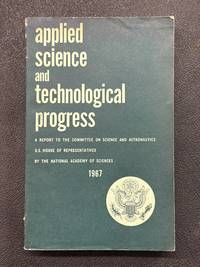
1967Best.-Nr. 55514U.S. Government Printing Office 1967. Good. This preowned item is in good condition with some visible wear and tear marks. This item may have some visible damage such as corner dings small tears/rips bent pages scuffs or scratches etc. There may be visible writing or highlighting within the cover or pages of the book. U.S. Government Printing Office unknown
Best.-Nr. 0265394244.Ghardcover. Good. Access codes and supplements are not guaranteed with used items. May be an ex-library book. hardcover
Best.-Nr. 0656611499.Ghardcover. Good. Access codes and supplements are not guaranteed with used items. May be an ex-library book. hardcover
Best.-Nr. 0484131028.Ghardcover. Good. Access codes and supplements are not guaranteed with used items. May be an ex-library book. hardcover
Best.-Nr. 0364952261.Ghardcover. Good. Access codes and supplements are not guaranteed with used items. May be an ex-library book. hardcover
Best.-Nr. 0656469366.Ghardcover. Good. Access codes and supplements are not guaranteed with used items. May be an ex-library book. hardcover