43 973 résultats
1989réf. Alibris0003802University of North Texas 1989. First edition. Hard cover. Very Good/No DJ Issued. Very good. No dust jacket as issued. Very Good/No Dj hardback First Edition Lisa-517 University of North Texas hardcover
1985réf. 348479Moscow: Progress Publishers 1985. 459p. hardcover blue cloth boards; in very good condition. Progress Publishers unknown
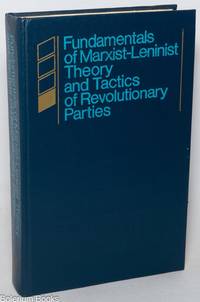
1985réf. 348479Moscow: Progress Publishers 1985. 459p. hardcover blue cloth boards; in very good condition. Progress Publishers unknown books
1975réf. 78945Seoul: Printed by Samhwa Printing Co 1975. Hardcover. Very Good. 12 627p. Original green cloth. 23cm. Minor scuffing and wear. No Jacket. Printed by Samhwa Printing Co hardcover
1975réf. 78945Seoul: Printed by Samhwa Printing Co 1975. Hardcover. Very Good. 12 627p. Original green cloth. 23cm. Minor scuffing and wear. No Jacket. Printed by Samhwa Printing Co hardcover books
1965réf. 006465Monuments Serica 1965. Book. Near Fine. Pamphlet. Reprint. 8vo - over 7¾" - 9¾" tall. RARE. Reprint from Monumenta Serica Vol. XXIV 1965. Near fine slight soiling rear cover. Paginated 207-272. Addenda sheet laid in. Monuments Serica Paperback
1965réf. 006465Monuments Serica 1965. Book. Near Fine. Pamphlet. Reprint. 8vo - over 7¾" - 9¾" tall. RARE. Reprint from Monumenta Serica Vol. XXIV 1965. Near fine slight soiling rear cover. Paginated 207-272. Addenda sheet laid in. Monuments Serica Paperback books
1997réf. 200717012Kumarian Press 1997-04-01. Paperback. Good. pb 2005 6th printing 2nd Ed Revised and Expanded dif cover has some shelf/corner/edge- wear otherwise nice clean text no underlining/highlighting decent condition binding tight SKU-A151-M-7/20 A small family business committed to BIG service! Kumarian Press paperback
1965réf. 66082Washington DC: National Academy of Sciences-National Research Council 1965. Presumed first edition/first printing. Good. No dust jacket as issued. Cover has some wear and soiling. 2 13 1 p. Stapled pages. Recommendations. The study reported on here was conducted by the National Academy of Sciences under Contract FDA 64-65 with the Food and Drug Administration U.S. Department of Health Education and Welfare and the U.S. Department of Agriculture. This type of National Academy of Sciences product is usually quite ephemeral. National Academy of Sciences-National Research Council unknown
1993réf. 73056Washington DC: National Academy Press 1993. Presumed First Edition/First Printing. Trade paperback. Very good. ix 1 65 1 pages. Footnotes. Publisher's press release laid in. Cover has slight wear and soiling. The situation for human rights in Syria is considered exceptionally poor among international observers. A state of emergency was in effect from 1963 until April 2011 giving security forces sweeping powers of arrest and detention. From 1973-2012 Syria was a single-party state. The authorities have been accused of harassing and imprisoning human rights activists and other critics of the government. Freedom of expression association and assembly are strictly controlled. Women and ethnic minorities face discrimination. According to Human Rights Watch President Bashar al-Assad failed to improve Syria's human rights record in the first 10 years of his rule and Syria's human rights situation remained among the worst in the world. According to Amnesty International the government may be guilty of crimes against humanity based on "witness accounts of deaths in custodyrape= and arbitrary detention" during the crackdown against the 2011 uprising and during the Syrian Civil War. The Committee on Human Rights CHR created in 1976 is a standing membership committee of the United States National Academy of Sciences NAS National Academy of Engineering NAE and National Academy of Medicine NAM institutions composed of many of the world's most distinguished scientists engineers physicians and researchers. The CHR serves as a bridge between the human rights and scientific communities in recognition of the importance of rights protection both for scientific inquiry and the realization of human dignity worldwide. The CHR brings the influence of the National Academies' members to bear on situations of serious human rights concern. It advocates in support of scientists engineers and health professionals subjected to serious human rights abuses worldwide with a focus on individuals targeted for their professional activities and/or for having exercised the universally protected right to freedom of expression which provides a crucial foundation for scientific research and progress. It provides assistance to professional colleagues under threat by linking them to the wider international scientific community and to organizations that provide pro bono legal support and other services. Finally the CHR raises awareness concerning the links between science technology health and human rights including through briefings symposia and use of interactive media. The CHR supported by a staff of human rights professionals is composed of 14 members drawn from the membership of the three Academies and appointed by the Academies' Presidents. The three foreign secretaries of the NAS NAE and NAM are among these members and serve on the committee in an ex officio capacity. More than 1600 members of the National Academies are "CHR Correspondents" who receive regular information on the CHR's activities and frequently make appeals in human rights cases identified by the CHR. Since 1993 the CHR has served as Secretariat of the International Human Rights Network of Academies and Scholarly Societies which brings together national academies and scholarly societies from all regions of the world for the purpose of addressing shared science and human rights concerns. National Academy Press paperback
1994réf. 66389Washington DC: National Academies Press 1994. Trade paperback. Very good. xiv 2 108 pages. Illustrations. References. Glossary. As a result of contamination by radionuclides released during nuclear weapons testing by the United States during the 1940s and 1950s the residents of Rongelap Atoll were evacuated from the Marshall Islands. This book provides an assessment of issues surrounding their resettlement and an evaluation of radiological conditions on certain Marshall Islands particularly Rongelap Atoll. On On March 1 1954 the United States conducted a nuclear test on Bikini Atoll in the northern Marshall Islands code named Bravo that led to widespread fallout contamination over inhabited islands of Rongelap Ailinginae and Utr k Atolls. Prior to Bravo little consideration was given to the potential health and ecological impacts of fallout contamination beyond the immediate vicinity of the test sites. A total of 64 people living on Rongelap Atoll including people residing on Ailinginae Atoll at the time of the blast received significant exposure to "fresh" radioactive fallout and had to be evacuated to Kwajalein Atoll for medical treatment. The Rongelap community spent the next 3 years living on Ejit Island Majuro Atoll before returning home to Rongelap in June 1957. However growing concerns about possible long-term health effects associated with exposure to residual fallout contamination on the island prompted residents to relocate again to a new temporary home on Mejatto Island on Kwajalein Atoll in 1985. The people of Rongelap are still resident on Mejatto today although parts of the community have split off to live on Ebeye Island Kwajalein Atoll and Majuro Atoll. The Rongelap community has always expressed a strong desire to return to their ancestral homeland. Through the Rongelap Resettlement Act the United States Congress approved and continued a 1996 resettlement agreement between the United States and the Rongelap Atoll Local Government and extended distribution authority for 10 years to advance resettlement. As a part of the 1996 resettlement agreement a Phase I resettlement program was initiated in 1998. The United States Department of Energy the Rongelap Atoll Local Government and the Republic of the Marshall Islands have since agreed to a Memorandum of Understanding MOU 1999 outlining shared provisions in support of resettlement. Under this agreement scientists from the Lawrence Livermore National Laboratory were tasked with developing individual radiation protection monitoring programs for resettlement workers and to verify the effects of the remedial actions. National Academies Press paperback
réf. 68936832-75Used - Very Good. Pages intact with possible writing/highlighting. Binding strong with minor wear. Dust jackets/supplements may not be included. Stock photo provided. Product includes identifying sticker. Better World Books: Buy Books. Do Good. unknown
réf. 0267436734.Ghardcover. Good. Access codes and supplements are not guaranteed with used items. May be an ex-library book. hardcover
1971réf. 359857Beograd : Radiša Timoti 1971. First Edition. Hardcover. Near fine copy in the original gilt-blocked pictorial cloth. Slightest suggestion only of dust-dulling to the spine bands and panel edges. Remains particularly well-preserved overall; tight bright clean and strong. Physical description; 397 p. 13 l. of plates : ill. maps some fold. ; 25 cm. Notes; At head of title: Comité national d'organisation du VIIIe congrès international des sciences préhistoriques et protohistoriques. Includes bibliographies. Subjects; Archaeology Yugoslavia Congresses. Yugoslavia Antiquities Congresses. Genres; Bibliography. Conference publication. Illustrated. Beograd : Radiša Timoti? hardcover
réf. 18-4461Cambridge M.A.: The American Academy of Arts and Sciences 1969. . 8vo. 755 pp - 764 pp. Soft stapled printed wraps. Fair with edgewear. dampstaining and possibly missing outer wraps. Article by Jesse Reichek reprinted from Daedalus Journal Vol. 93 No. 3 in the summer of 1969. From the Collection of the Art Historian Peter Selz. Cambridge, M.A.: The American Academy of Arts and Sciences, 1969. paperback
1996réf. 88096Washington DC: National Academy Press 1996. Presumed First Edition First printing. Wraps. Good. The format is approximately 8.25 inches by 10.75 inches. xii 75 1 pages. Illustrated front cover. Some red ink marks noted. Figures. Tables. References. This is one of the National Academies Compass Series. Astronauts who venture beyond the protection of Earth's atmosphere and magnetosphere risk exposure to levels of radiation far exceeding those on Earth. Of all the risks this one is probably the most straightforward to control—by providing adequate shielding. However because shielding adds weight cost and complexity to space vehicles it is very important for designers to have a good quantitative understanding of the risk and its degree of certainty. This report assesses our understanding of radiation hazards in space. It also considers the additional research needed to reduce the areas of uncertainty research that must be completed prior to undertaking the detailed design of a vehicle carrying crew members into space for periods of extended exposure. The report finds that it will take more than a decade of research to answer even the narrowest set of key questions. The nation has backed away from a specific timetable for human exploration of the moon and Mars. Yet it seems plausible that such expeditions will be mounted sometime in the first quarter of the 21st century especially given the recent resurgence of interest in possible life on Mars from the study of meteorites. It becomes clear when the lengthy time scale of the research is also taken into account that the present report is indeed timely and should receive prompt consideration by NASA planners. NASA's long-range plans include possible human exploratory missions to the moon and Mars within the next quarter century. Such missions beyond low Earth orbit will expose crews to transient radiation from solar particle events as well as continuous high-energy galactic cosmic rays ranging from energetic protons with low mean linear energy transfer LET to nuclei with high atomic numbers high energies and high LET. Because the radiation levels in space are high and the missions long adequate shielding is needed to minimize the deleterious health effects of exposure to radiation. The knowledge base needed to design shielding involves two sets of factors each with quantitative uncertainty—the radiation spectra and doses present behind different types of shielding and the effects of the doses on relevant biological systems. It is only prudent to design shielding that will protect the crew of spacecraft exposed to predicted high but uncertain levels of radiation and biological effects. Because of the uncertainties regarding the degree and type of radiation protection needed a requirement for shielding to protect against large deleterious but uncertain biological effects may be imposed which in turn could result in an unacceptable cost to a mission. It therefore is of interest to reduce these uncertainties in biological effects and shielding requirements for reasons of mission feasibility safety and cost. National Academy Press paperback
réf. 0484659928.Ghardcover. Good. Access codes and supplements are not guaranteed with used items. May be an ex-library book. hardcover
réf. 0666360081.Ghardcover. Good. Access codes and supplements are not guaranteed with used items. May be an ex-library book. hardcover
1933réf. 006566Oslo Norway: H. Aschehoug & Co. 1933. Book. Very Good. Printed Wrappers. First Edition. 8vo - over 7¾" - 9¾" tall. SCARCE. From the collection of noted semiotician and linguist Thomas A. Sebeok his signature in ink front end pages of all 3 volumes. A Professor Emeritus at Indiana University Sebeok was among the founders of biosemiotics and editor-in-chief of the journal Semiotica the leading periodical in the field. Very Good chips to edges of wrappers corner chips rear end pages. H. Aschehoug & Co. Paperback
1933réf. 006566Oslo Norway: H. Aschehoug & Co. 1933. Book. Very Good. Printed Wrappers. First Edition. 8vo - over 7¾" - 9¾" tall. SCARCE. From the collection of noted semiotician and linguist Thomas A. Sebeok his signature in ink front end pages of all 3 volumes. A Professor Emeritus at Indiana University Sebeok was among the founders of biosemiotics and editor-in-chief of the journal Semiotica the leading periodical in the field. Very Good chips to edges of wrappers corner chips rear end pages. H. Aschehoug & Co. Paperback books
réf. 0666402590.Ghardcover. Good. Access codes and supplements are not guaranteed with used items. May be an ex-library book. hardcover
1953réf. 027415Charles C. Thomas: 1953. 164 pages. "The account of the nervious transmission presented in this book is in a sense a review of recent experiments done mainly on isolated single nerve fibers dealing with the nerve impulse in peripheral nerves." "Dr. Tasaki discovered saltatory feature of nerve conduction in Japan late 1930s he developed the method of intracellular perfusion and analyzed the mechanism of nerve conduction at NIH early 1960s he discovered and analyzed the production of fluorescence signal in nerve fibers in 1970s he discovered rapid swelling of nerve fibers in association with their excitation late 1970s and he developed a new method of detecting heat production associated with nerve excitation late 1980s." FINE HARDCOVER VERY GOOD DUST JACKET signed by Dr. Tasaki to Dr. Wald George I believe but not statedl. Dust jacket protected with a clear plastic acid-free jacket. Signed by Author. Hard Cover. Fine/Very Good. 8vo - over 7¾" - 9¾" tall. Charles C. Thomas: Hardcover
1965réf. 195888G.C. Sansoni Editore 1965. Paperback. Ink signature on front cover of both volumes bottom of sunned spines bumped paper tanned else very good plus clean & sound condition. Volumes 2 & 3 only. wraps v.2: 462pp. 152 illus v.3: 450pp. 198 illus. G.C. Sansoni Editore paperback
2009réf. 65979Washington DC: U S. Department of Energy 2009. Wraps. Very good. No dust jacket. 4 184 p. Includes illustrations. References. Acronyms. Professor Martin Greenwald was the Chair of the Fusion Energy Science Advisory Committee. This is the panel report of High Energy Density Laboratory Plasmas HEDLP prepared in response to a request from the Department of Energy of March 6 2008. THe panel identified compelling research opportunities in fundamental HEDLP science and identified the scientific issues of implosion physics and target design that need to be addressed to make the case for inertial fusion energy. The panel also provided essential information for an effective stewardship of the Joint HEDLP Program and background for a scientific plan for energy-related HEDLP studies. The Fusion Energy Science Advistory Committee voted unaminously to endorse this comprehensive report. U, S. Department of Energy paperback
2004réf. 65186Washington DC: U.S. Department of Energy Office of Science Office of Fusion Energy 2004. Presumed first edition/first printing. Trade paperback. Very good. No dust jacket as issued. COver has some wear and soiling. Includes: illustrations diagrams. Various paginations. This report responded to a letter from the Director Office of Science requesting a review of DOE's Inertial Fusion Energy IFE program to provide an assessment of the present status of the program. A principal conclusion of the report was that 'the quality of IFE science and engineering research is excellent." The panel identified specific contributions that appears especially accessib. e and pointed out the IFE seemed posied to make important contributions to astrophysics. U.S. Department of Energy, Office of Science, Office of Fusion Energy paperback