WORM, OLE.Livre Rare Book

44 227 résultats
1751réf. 61050Hafnia (Copenhagen), 1751. 8vo. Uniformly bound in two nice contemporary Cambridge-style mirror bindings with five raised bands and richly gilt spines. Small paper-label pasted on to top of both spines. Light wear to extremities. Front board of vol. 1 with light misolouring to upper margin and with a bit of loss of leather to the center frame, otherwise a nice and clean set. (10), XLVIII, 590 pp. + frontispiece (2), 591-1134, (60) pp.
1997réf. BN536307Elsevier Science Ltd 1997. 1997. Animal Alternatives Welfare and Ethics: Proceedings of the 2nd World Congress on Alternatives and Animal Use in the Life Sciences Held in Utrecht . in Animal & Veterinary Sciences Animal Alternatives Welfare and Ethics: Proceedings of the 2nd World Congress on Alternatives and Animal Use in the Life Sciences Held in Utrecht . in Animal & Veterinary Sciences World Congress on Alternatives and Animal Use in the Life Sciences 199L. F. M. Van Zutphen und Michael Balls Elsevier Science Ltd unknown
réf. SONG0387986367Used: Good unknown
réf. DADAX0387986758New unknown
1986réf. __0309077915National Academies Press 1986. Paperback. New. 107 pages. 10.90x8.30x0.30 inches. National Academies Press paperback
réf. DADAX0230580823New unknown
19961 vol. 4to. softcover, black & white maps and graphics, Word Wide Fund for Nature International - WWF, Hong Kong 1996, 529 pp. Text in English Very nice copy. Scarce, nowadays. Anglais
1996réf. 512881 vol. 4to. softcover, black & white maps and graphics, Word Wide Fund for Nature International - WWF, Hong Kong 1996, 529 pp. Text in English
1991The binding is still tight but the printed boards are stained (including a coffee ring) and grubby with bumped corners. The spine is also bumped . A well-used copy with highlighting, underlining and marginalia.
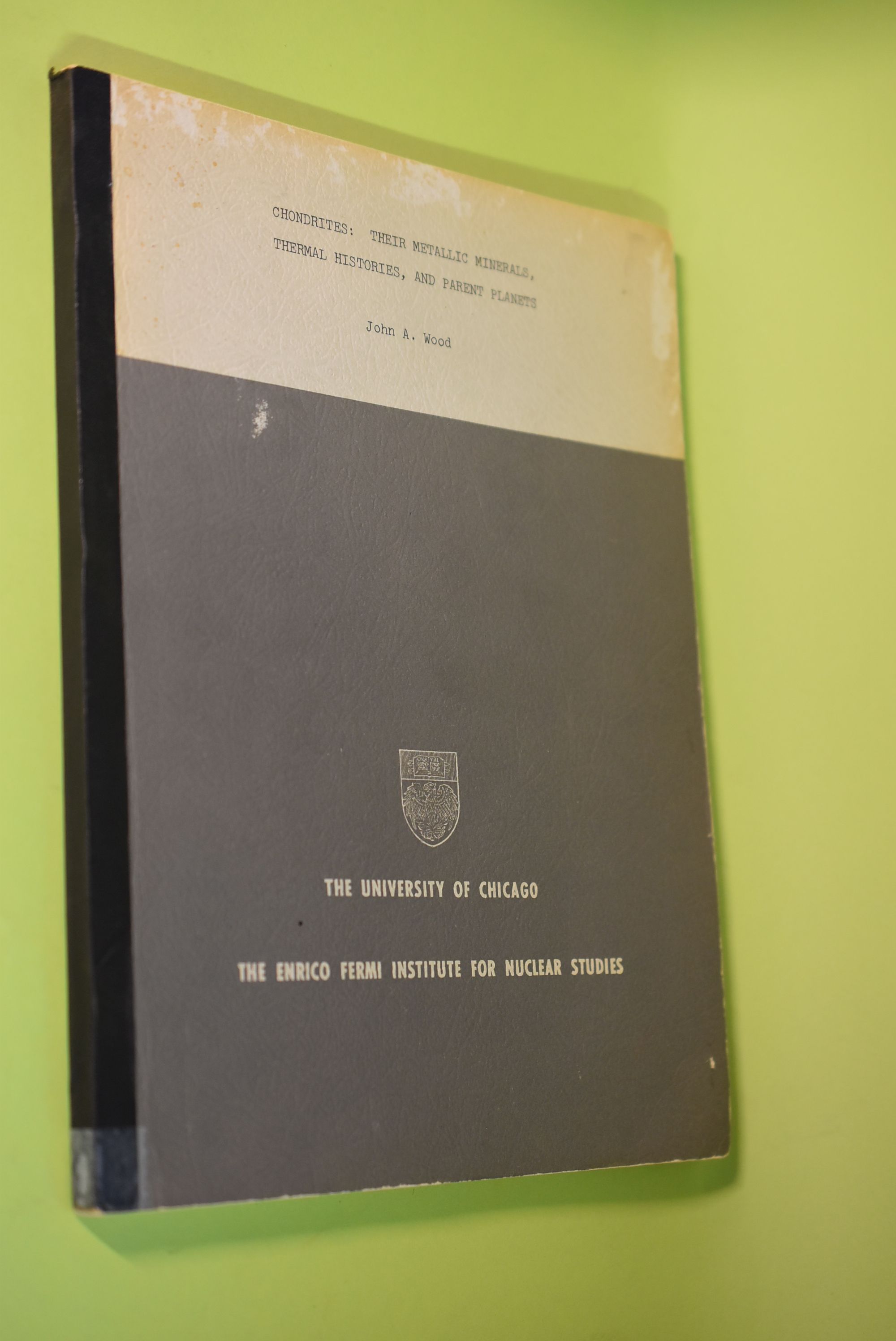
1966réf. 79207USA, The University of Chicago 1966. (1), 106 S., 27 figures; 28cm Karton 0
réf. 59906aafLondon, Longmans & Green, 1874, in-8vo, 780 p., 600 figures by E. A. Smith & J. B. Zwecker + plates, small legacy-stamp Dr. Guggisberg & ill. "Ex-Libris" J. Fetherstonhaugh Briscoe, orig. half leather with corners, paneled spine, 3 edges gilt, fine copy.
188631x23. 554p. Ilstr. Trad. E. L. De Verneuil. Enc. 1/2 piel cart. Algo rozada.
1968. 16mo. pp. 170. . Ottimo (Fine). . Prima edizione italiana (First Italian Edition). . Si aggiunge un secondo libro sull'argomento: Maurizio Morelli, Yoga come scienza totale. Celuc libri, 1979
1971réf. R320145763Groupe express. 1971. In-8. Relié. Etat d'usage, Couv. convenable, Dos satisfaisant, Intérieur frais. 212 pages - nombreuses illustrations en couleurs et en noir et blanc dans et hors texte - jaquette en état d'usage.. Avec Jaquette. . . Classification Dewey : 500-SCIENCES DE LA NATURE ET MATHEMATIQUES
réf. 41343KP BOOKS ,1993, in-4 de 335 pages ,illustrations in-texte et hors-texte ,broché ,Très bon état ,livre en anglais .Isbn : 9780873412360.(1 photo sur mon site https://www.vieuxlivre.fr .Les frais de port pour la France sont offerts à partir de 25 euros d'achat (Mondial relay ). (colissimo suivi +6,90 ).
réf. 41353KP Books ,2003, in-4 de 336 pages ,illustrations in-texte ,broché ,Très bon état ,livre en anglais .Isbn : 9780873413404.(3 photos du livre sur mon site https://www.vieuxlivre.fr) .Les frais de port pour la France sont offerts à partir de 25 euros d'achat (Mondial relay ). (colissimo suivi +6,90 ).
1926réf. 122008Copied From Original By Prior Owner. Very Good with No dust jacket as issued. 1926-27. Plastic comb binding. Copied sometime ago on equipment inferior to today's. Full of Illustrations of period pieces. The book is graded as "very good" as pages are not torn or marked though the copies have some shading. See images ; 8vo 8" - 9" tall; 50 pages . Copied From Original By Prior Owner unknown
réf. DADAX0313291802New unknown
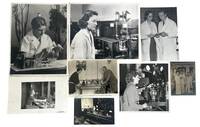
1910réf. 231321910. Women in STEM Women's scientific and technical employment photo archive documenting female laboratory labor from the early twentieth century through the 1940s historically significant for showing how women entered academic industrial and commercial research settings in roles that ranged from student and aide to biologist technician and physician at a period when scientific work remained overwhelmingly male and women's access to professional authority was still sharply constrained. The group includes five press photographs and three non press photographs with women pictured not as incidental clerical staff but as active operators of instruments handlers of test animals readers of charts and participants in experimental procedure establishing direct visual evidence of women's expanding place within the infrastructure of American science industrial testing and laboratory employment. Photo archive of 8 silver gelatin photographs ranging from 3.5 x 5.5 to 8 x 10 inches various U.S. locations circa 1910 to 1940s. The archive spans classroom laboratory and industrial interiors. One 1910 photograph shows two men and one woman standing in a laboratory identified as "three scientists or science students" an early image of mixed gender scientific training. A 1937 press photo titled "aviation biologist works with hatchlings" shows Dr. Manisera in a lab coat hand feeding two week old canaries with a third bird perched on her head turning animal handling and experimental care into a public image of female scientific expertise. Another press photo shows Sally Wulff identified on the verso as an engineering aide with a science degree from the University of Iowa seated at a control bench calibrating experimental instruments at Wright Field. A 1938 non press image shows Dr. Marie D'Amour and Fred D'Amour studying a chart before a blackboard covered with formulas and technical notations linking the photograph to mammalian physiology research. A Hoboken New Jersey press photo depicts a female technician in the chemical division of the United States Testing Company operating a Fisher titrimeter "for performing volumetric analyses by electronic means" while a 1939 press photo from Newton Massachusetts shows a laboratory worker testing newly developed Permatron tubes used in high frequency welding and power transmission. Another press image captioned "A 'noise machine' used in experiments in the Colgate laboratory" shows a woman and man positioned on either side of the apparatus and a separate 1940s laboratory group photograph places a single woman among five men before a long demonstration bench and blackboard diagrams underscoring both women's presence and their numerical isolation within technical settings. Several versos retain typed caption slips editorial markings and reference stamps consistent with press photo circulation. Across the first half of the twentieth century women entered scientific work through normal schools universities wartime research demand industrial laboratories and auxiliary technical appointments yet their advancement was often channeled into subordinate or specialized designations even when their work required substantial training. This archive makes that structure visible through named and captioned examples of women conducting measurement instrument calibration physiological research electronics testing and experimental animal work across corporate academic and applied research environments. Minor residue on versos from former press labels or caption attachments; otherwise clean and well preserved. Overall very good condition. As a record of women's early technical labor the archive supplies concrete visual evidence of the pathways limits and visibility of women's participation in American scientific work before the full opening of postwar professional opportunity. unknown books
1910réf. 231321910. Women in STEM Women's scientific and technical employment photo archive documenting female laboratory labor from the early twentieth century through the 1940s historically significant for showing how women entered academic industrial and commercial research settings in roles that ranged from student and aide to biologist technician and physician at a period when scientific work remained overwhelmingly male and women's access to professional authority was still sharply constrained. The group includes five press photographs and three non press photographs with women pictured not as incidental clerical staff but as active operators of instruments handlers of test animals readers of charts and participants in experimental procedure establishing direct visual evidence of women's expanding place within the infrastructure of American science industrial testing and laboratory employment. Photo archive of 8 silver gelatin photographs ranging from 3.5 x 5.5 to 8 x 10 inches various U.S. locations circa 1910 to 1940s. The archive spans classroom laboratory and industrial interiors. One 1910 photograph shows two men and one woman standing in a laboratory identified as "three scientists or science students" an early image of mixed gender scientific training. A 1937 press photo titled "aviation biologist works with hatchlings" shows Dr. Manisera in a lab coat hand feeding two week old canaries with a third bird perched on her head turning animal handling and experimental care into a public image of female scientific expertise. Another press photo shows Sally Wulff identified on the verso as an engineering aide with a science degree from the University of Iowa seated at a control bench calibrating experimental instruments at Wright Field. A 1938 non press image shows Dr. Marie D'Amour and Fred D'Amour studying a chart before a blackboard covered with formulas and technical notations linking the photograph to mammalian physiology research. A Hoboken New Jersey press photo depicts a female technician in the chemical division of the United States Testing Company operating a Fisher titrimeter "for performing volumetric analyses by electronic means" while a 1939 press photo from Newton Massachusetts shows a laboratory worker testing newly developed Permatron tubes used in high frequency welding and power transmission. Another press image captioned "A 'noise machine' used in experiments in the Colgate laboratory" shows a woman and man positioned on either side of the apparatus and a separate 1940s laboratory group photograph places a single woman among five men before a long demonstration bench and blackboard diagrams underscoring both women's presence and their numerical isolation within technical settings. Several versos retain typed caption slips editorial markings and reference stamps consistent with press photo circulation. Across the first half of the twentieth century women entered scientific work through normal schools universities wartime research demand industrial laboratories and auxiliary technical appointments yet their advancement was often channeled into subordinate or specialized designations even when their work required substantial training. This archive makes that structure visible through named and captioned examples of women conducting measurement instrument calibration physiological research electronics testing and experimental animal work across corporate academic and applied research environments. Minor residue on versos from former press labels or caption attachments; otherwise clean and well preserved. Overall very good condition. As a record of women's early technical labor the archive supplies concrete visual evidence of the pathways limits and visibility of women's participation in American scientific work before the full opening of postwar professional opportunity. unknown
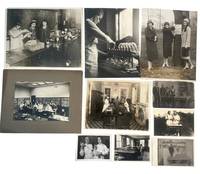
1900réf. 235831900. Women in laboratory sciences photo archive circa 1900 to 1946 documenting women's movement into chemistry bacteriology hospital medicine and classroom experiment at a time when scientific training and professional advancement remained largely organized around men with barriers of entry for women. The group begins with a pharmacological laboratory where one woman stands among men predating suffrage in the United States and continues through school laboratories hospital laboratories press photographs and postwar images of young women handling test tubes and glassware. World War I drew women chemists into schools universities analytical laboratories and war work while World War II accelerated laboratory demand again through bacteriology antibiotics and industrial drug production. Photo archive of 11 mixed phtoographic mediums including albumen silver gelatin and real photo postcard photographs various sizes ranging 5 x 4 inches to 8 x 10 inches United States and Europe early 20th century. The images show women and girls conducting experiments at benches lined with burners flasks pipettes test tubes reagent bottles and laboratory stands; a large pharmacological classroom with nearly all male staff and students and one woman present; high school girls in an early science classroom; two nuns or a nun and nurse working in a laboratory at Saint Anthony's Hospital Rockford Illinois identified on verso as early 1930s; and a bacteriological laboratory scene dated October 2 1923. A 1926 Acme press photograph identifies "Miss Virginia Trelease chemist student at Northwestern University Evanston Ill." using liquid oxygen from a Heylandt liquefier to fry an egg over "burning ice." Other images show two young women captioned "Resa Yusko and Bla Pesala" in 1946 smiling while handling laboratory equipment and a 1927 press photograph of Mrs. August Rus Oppenheim Mrs. Oswald Jimenis and Mrs. Arthur Bunker of the Southern Women's Educational Alliance posting a Metropolitan Opera benefit notice evidence of women's educational fundraising alongside the scientific scenes. The photographs trace women's scientific labor from gendered access to instruction into wartime necessity and postwar professional visibility. In the early twentieth century women who entered chemistry and medicine often worked through teaching nursing hospital laboratories and applied science fields that admitted them more readily than elite research posts while still relying on their technical skill. During World War II penicillin moved from laboratory microbiological study in 1940 to mass production by 1945 a shift that depended on fermentation work laboratory handling and industrial coordination rather than discovery alone. Light surface wear toning occasional creasing press stamps captions and handling marks; some images faded or rubbed. Overall good condition. A concentrated visual record of women learning demonstrating and performing laboratory science across the decades when modern medicine and chemistry increasingly required their work while still limiting their recognition. unknown books
1900réf. 235831900. Women in laboratory sciences photo archive circa 1900 to 1946 documenting women's movement into chemistry bacteriology hospital medicine and classroom experiment at a time when scientific training and professional advancement remained largely organized around men with barriers of entry for women. The group begins with a pharmacological laboratory where one woman stands among men predating suffrage in the United States and continues through school laboratories hospital laboratories press photographs and postwar images of young women handling test tubes and glassware. World War I drew women chemists into schools universities analytical laboratories and war work while World War II accelerated laboratory demand again through bacteriology antibiotics and industrial drug production. Photo archive of 11 mixed phtoographic mediums including albumen silver gelatin and real photo postcard photographs various sizes ranging 5 x 4 inches to 8 x 10 inches United States and Europe early 20th century. The images show women and girls conducting experiments at benches lined with burners flasks pipettes test tubes reagent bottles and laboratory stands; a large pharmacological classroom with nearly all male staff and students and one woman present; high school girls in an early science classroom; two nuns or a nun and nurse working in a laboratory at Saint Anthony's Hospital Rockford Illinois identified on verso as early 1930s; and a bacteriological laboratory scene dated October 2 1923. A 1926 Acme press photograph identifies "Miss Virginia Trelease chemist student at Northwestern University Evanston Ill." using liquid oxygen from a Heylandt liquefier to fry an egg over "burning ice." Other images show two young women captioned "Resa Yusko and Bla Pesala" in 1946 smiling while handling laboratory equipment and a 1927 press photograph of Mrs. August Rus Oppenheim Mrs. Oswald Jimenis and Mrs. Arthur Bunker of the Southern Women's Educational Alliance posting a Metropolitan Opera benefit notice evidence of women's educational fundraising alongside the scientific scenes. The photographs trace women's scientific labor from gendered access to instruction into wartime necessity and postwar professional visibility. In the early twentieth century women who entered chemistry and medicine often worked through teaching nursing hospital laboratories and applied science fields that admitted them more readily than elite research posts while still relying on their technical skill. During World War II penicillin moved from laboratory microbiological study in 1940 to mass production by 1945 a shift that depended on fermentation work laboratory handling and industrial coordination rather than discovery alone. Light surface wear toning occasional creasing press stamps captions and handling marks; some images faded or rubbed. Overall good condition. A concentrated visual record of women learning demonstrating and performing laboratory science across the decades when modern medicine and chemistry increasingly required their work while still limiting their recognition. unknown
réf. 1934268704.Gpaperback. Good. Access codes and supplements are not guaranteed with used items. May be an ex-library book. paperback
réf. 1934268674.Gpaperback. Good. Access codes and supplements are not guaranteed with used items. May be an ex-library book. paperback
1932réf. 150317006woman's Institute of Domestic Arts and Sciences 1932-01-01. Paperback. Very Good. Slight wear due to age woman's Institute of Domestic Arts and Sciences paperback