43,210 results
1911ref. 570861 vol. in-4 reliure de l'époque demi-percaline beige, Imprimerie Hardy & Bernard, Paris, 1911, 253 pp. avec une grande carte dépliante de la "Lombardie et de la Province de Novare (Piémont) avec les principales installations et canalisations électriques primaires (au 1/300.000)
1924ref. 50372Dourdan (Seine-et-Oise), émile Thézard & fils, éditeurs, sd., coll. « Bibliothèque de l’Enseignement professionnel » 1924 4 volumes : 2 de texte in-4, demi-chagrin bordeaux, dos à nerfs,couvertures conservées, 572- XI- 565 pp. Nombreux croquis dans le texte, 42 vues architecturales hors texte ; 2 portefeuilles in-folio à lacets, demi-percaline bordeaux, cartonnage gris, 100 & 100 planches. Les planches sont généralement effrangées. Une ternie restauration, deux lacunes planches n 31 et 36.
1894ref. 37427Gera, C. B. Griesbach’s 1894 In-folio, demi-basane noir à coins de l’éditeur, plats de percaline vert avec titre doré au premier plat, dos lisse orné,56 pp. 60 planches chromolithographies sur onglet : rapaces diurnes et nocturnes. Reliure un peu frottée. Quelques ternissures marginales traces de doigts sinon bon exemplaire. Cachets
2010ref. SBS-9780754627586ASHGATE 2010. Hardcover. New. ASHGATE hardcover
2010ref. SBS-9780754627586ASHGATE 2010. Hardcover. New. ASHGATE hardcover
ref. 3Christiania, Grondahl, 1881, 2 volumes in 4, broché, couvertures imprimées, T.1 : (2), 8pp., 621pp., T.2 : (3), 338pp., (2)
1760ref. 16477Briasson, Despilly & Hardy 1760 In-8 demi-basane brune, dos à nerfs, caissons ornés, roulettes, pièce de titre havane reliure restaurée, frontispice, figure de titre, 2 ff.- XXII- 404 pp. & 34 pl. repliées et une carte. Deux ff. manus. de devises interfoliés. Lég. hum en tête au 8 dernières pl.
1951ref. 12896New York: New York Council of the Arts Sciences and Professions 1951. Three items stapled together at top left corner together with a separate leaflet totaling seven pages. Minor edge wear one item with a short closed tear. Overall very good. A group of four printed items pertaining to an effort by New York arts professionals to encourage equality for African American arts professionals in midcentury United States where the lower half of the country was still mired in Jim Crow laws. The most notable of these items is a four-panel program detailing the conference with introductory text describing the ways in which racism limits the opportunities of Black artists and scientists and the failure to put recent anti-racist court decisions into actual practice. The program for the conference lists such themes as the effects of Jim Crow policy on the arts and representation of Black subjects the deleterious effects of racism on health and welfare and how cultural standards are lowered and violence encouraged by discrimination. According to the speakers list on the fourth page of the program participants in the conference included Oliver Harrington Jacob Lawrence Julian Mayfield Paul Robeson and other artists educators scientists and musicians. Attached to this program are two handbills; one is an invitation to an opening night event featuring new works of ballet chorus calypso and drama the night before the conference. This performance took place at the Pythian on November 9 1951. The other handbill announces the program for the Annual Convention of the New York Council which appears to have been a more general event on the day after the conference on equal rights. The text on this handbill notes the suppression of free speech under McCarthyism. The last item is an 8.5-x-14-inch handbill probably a press release of sorts announcing the conference also titled "A Call to a Conference on Equal Rights for Negroes in the Arts Sciences and Professions." The language of this handbill is the same as the second page of the four-page brochure but is dated a month before the conference in October 1951. Some of the language in the program introduction and handbill merit quoting here: "In the sciences and professions the majority of Negroes are deprived of equal educational opportunities by segregation and quota systems denied employment in the professions restricted to the most menial occupations confined to ghetto areas for their private practice and thus prevented from making a full contribution to the welfare of the nation. Blacklisting character assassination political inquisitions and other forms of censorship against white artists scientists and professionals cannot be ended - so long as discrimination against Negroes and other minority group members is maintained For those who violate the Constitution and foster a policy of discrimination against Negroes are the very same persons who are responsible for censorship blacklisting and the debasement of our science and culture. It is they who tolerate and promote the campaigns of violence and brutality against the Negro people as exhibited in Cicero in the bombing of the home of a world-renowned Negro chemist in the refusal of platforms to the most outstanding American Negro artists in the ‘legal lynchings’ of many young men guilty of nothing more than being Negroes. American culture Cannot live in the face of such terror against a large segment of our people. Standards of truth and humanism cannot be maintained in our cultural media so long as the truth of the Negro people's lives is denied expression. Nor can there be decent standards for white professionals in many fields so long as a reservoir of Negro unemployed is used to depress salaries and rates." Surprisingly OCLC is silent on any material from the conference though we doubt this group of ephemera is a unique survival. New York Council of the Arts, Sciences and Professions unknown
1951ref. 12896New York: New York Council of the Arts Sciences and Professions 1951. Three items stapled together at top left corner together with a separate leaflet totaling seven pages. Minor edge wear one item with a short closed tear. Overall very good. A group of four printed items pertaining to an effort by New York arts professionals to encourage equality for African American arts professionals in midcentury United States where the lower half of the country was still mired in Jim Crow laws. The most notable of these items is a four-panel program detailing the conference with introductory text describing the ways in which racism limits the opportunities of Black artists and scientists and the failure to put recent anti-racist court decisions into actual practice. The program for the conference lists such themes as the effects of Jim Crow policy on the arts and representation of Black subjects the deleterious effects of racism on health and welfare and how cultural standards are lowered and violence encouraged by discrimination. According to the speakers list on the fourth page of the program participants in the conference included Oliver Harrington Jacob Lawrence Julian Mayfield Paul Robeson and other artists educators scientists and musicians. Attached to this program are two handbills; one is an invitation to an opening night event featuring new works of ballet chorus calypso and drama the night before the conference. This performance took place at the Pythian on November 9 1951. The other handbill announces the program for the Annual Convention of the New York Council which appears to have been a more general event on the day after the conference on equal rights. The text on this handbill notes the suppression of free speech under McCarthyism. The last item is an 8.5-x-14-inch handbill probably a press release of sorts announcing the conference also titled "A Call to a Conference on Equal Rights for Negroes in the Arts Sciences and Professions." The language of this handbill is the same as the second page of the four-page brochure but is dated a month before the conference in October 1951. Some of the language in the program introduction and handbill merit quoting here: "In the sciences and professions the majority of Negroes are deprived of equal educational opportunities by segregation and quota systems denied employment in the professions restricted to the most menial occupations confined to ghetto areas for their private practice and thus prevented from making a full contribution to the welfare of the nation. Blacklisting character assassination political inquisitions and other forms of censorship against white artists scientists and professionals cannot be ended - so long as discrimination against Negroes and other minority group members is maintained For those who violate the Constitution and foster a policy of discrimination against Negroes are the very same persons who are responsible for censorship blacklisting and the debasement of our science and culture. It is they who tolerate and promote the campaigns of violence and brutality against the Negro people as exhibited in Cicero in the bombing of the home of a world-renowned Negro chemist in the refusal of platforms to the most outstanding American Negro artists in the ‘legal lynchings’ of many young men guilty of nothing more than being Negroes. American culture Cannot live in the face of such terror against a large segment of our people. Standards of truth and humanism cannot be maintained in our cultural media so long as the truth of the Negro people's lives is denied expression. Nor can there be decent standards for white professionals in many fields so long as a reservoir of Negro unemployed is used to depress salaries and rates." Surprisingly OCLC is silent on any material from the conference though we doubt this group of ephemera is a unique survival. New York Council of the Arts, Sciences and Professions unknown books
1899ref. 246396Washington: The Academy. Very Good. 1899-1911. Complete in 13 volumes 1899-1911 some with several parts ; most in original wrappers with vols 4 5 6 & 7 bound in maroon cloth. In 1911 the name was changed to "Journal of the Washington Academy of Sciences" with a new vol. 1 no. 1 issued on July 19 1911. . The Academy hardcover
1899ref. 246396Washington: The Academy. Very Good. 1899-1911. Complete in 13 volumes 1899-1911 some with several parts ; most in original wrappers with vols 4 5 6 & 7 bound in maroon cloth. In 1911 the name was changed to "Journal of the Washington Academy of Sciences" with a new vol. 1 no. 1 issued on July 19 1911. . The Academy hardcover books
1711ref. 6487CBZürich, Heinrich Bodmer, 1711. 8°. Titel, 133 S. Etwas spätererHalbpergamentband mit maschinengeschr. Rückenschild.
2010ref. x-9048158303Springer Netherlands 2010. Paperback. New. 544 pages. 11.69x8.50x1.20 inches. Springer Netherlands paperback
In-4 à l'italienne, 44p. Première édition. Illustré de 20 lithographies originales hors texte dessinées d'après nature par Pauquet, lithographiées par Bocquin et coloriées à la main. Illustré également de 140 vignettes sur bois dans le texte. Exemplaire fatigué, déchirure sans manque à la planche des fauves, traces de doigts marginales, mouillures et rousseurs, cela dit, fort peu courant.
1954ref. 121000Görlitz, 1828-1954. M. Ktn., Taf., Buntdrucken u. Abb. Hlwd. u. OBr. Teils berieben. Teils m. Rsign. Einige Umschl. teils gelöst u. eingerissen. Einige Rücken gelockert. 1 OU. fehlt. Teils stockfl. Teils m. St. u. Sign. Teils Jgge. zusammengeb.
ref. 17498Paris, EDHIS 1981. Bound together in 7 volumes. 8vo. Imitation leather. All published. Well executed reprint of this rare and important revolutionary journal. The organ of the 'Cercle Social', defenders of the 'tribuns' of the people. The primary function was to reprint the minutes of the Cercle Social meetings and discuss issues relevant to the club's concerns. Worthy of special mention are Fauchet's weekly commentaries on Rousseau's Contrat Social, many of Etta Palm's feminist writings, speeches by Condorcet on political matters, a debate over Voltaire's place among the Revolutionary patriarchs, and a letter by Madame Roland advocating inheritance law reform. During the spring of 1791, the journal reprinted many documents from the burgeoning democratic movement, including several Cordeliers Club petitions. Among the other authors published in this journal were Cloots and Thomas Paine (Historical Dictionary of the French Revolution, 1789-1799, vol. 1, p. 112).
1826ref. 178013Halle, Exped. d. Vereins zur Verbreitung von Naturkenntnis, 1826. M. 3 Kpfr.-Taf. u. mehr. Tab. XVI, 496 S. Pp. d. Zt. m. Rsch. Einbd. berieben u. bestoßen. Gebräunt u. braunfl. St. a. Innendeckel, Tit. u. verso Tit.
1754ref. 193884Erfurt, Nonnens sel. Witwe, 1754. M. 15 Kpfr.-Taf. 960 S. Schlichter Hldrbd. d. Zt. Einbd. beschabt u. bestoßen. Rücken u. Ecken m. Fehlst. Vorsatz, 1 Taf. u. Tit. m. kl. Löchlerin. Gebräunt u. braunfl. Vorsätze m. Kritzeleien von alter Hd. Titel in Rot u. Schwarz.
ref. ORD-1139Ex Officina Plantiniana Raphelengii. 1612. Petit in-32 (60 x 113mm) plein maroquin rouge, dos à 4 nerfs muet, orné de caissons or, double filet or encadrant les plats avec écoinçons, roulettes sur les coupes, tranches mouchetées de rouge et de noir (reliure de l'époque), 670 pages. Texte en grec. Papier bruni, reliure un peu frottée mais bel exemplaire. Rare.
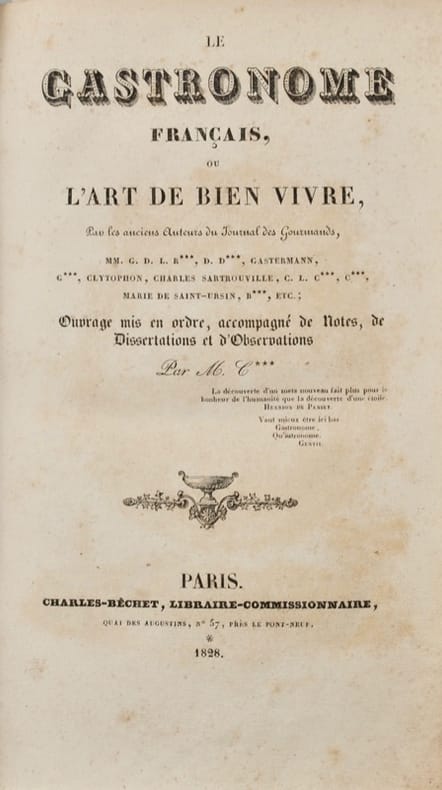
1828ref. 40434Paris, [Imprimerie de H. Balzac] Charles-Béchet, 1828. In-8 de VIII-503 pp., frontispice, demi-basane havane, dos orné à nerfs, pièce de titre en maroquin rouge (reliure postérieure du XIXe).
1873ref. 132294Paris Au Secrétariat de Paris Au Secrétariat de l'Association 1873 - 1909. Ensemble de 37 années bien complètes et suivies en 57 volumes, de la 1re année à la 3ème année incluse. Chaque volume au format grand In-8 relié pleine percaline éditeur rouille. Suivant les années et donc la matière, les comptes rendus sont parus en un ou deux volumes se décomposant ainsi : Du N° 1 à 12 inclus, en un seul volume - Du N° 13 à 32 inclus, en deux volumes - 33 et 34 en un seul volume - 35, 36 et 37 en deux volumes + 3 volumes de Conférences de 1915 à 1920 inclus soit au total 60 volumes. Les planches sont regroupées en fin de chaque volume. Chaque année compte de 1200 à 1500 pages. Le but de l'Association française pour l'avancement des Sciences était de favoriser le progrès et la diffusion des Sciences au double point de ve de la théorie pure et du développement des applications pratiques. Une session annuelle se tenait, 8 jours durant, dans une ville différente : divisée en 4 groupes : Sciences Mathématiques, Sciences Physiques et Chimiques, Sciences Naturelles, Sciences Economiques donnant ainsi lieu publication des contributions. Elle fut reconnue d'utilité publique et les plus grands noms de la science y ont contribués. On compte entre autres, au nombre de ses fondateurs, Claude Bernard. Quelques petites rousseurs éparses et petits accrocs sans gravité. Bel et rare ensemble aussi complet.
1873Paris Au Secrétariat de l'Association 1873 - 1909. Ensemble de 37 années bien complètes et suivies en 57 volumes, de la 1re année à la 3ème année incluse. Chaque volume au format grand In-8 relié pleine percaline éditeur rouille. Suivant les années et donc la matière, les comptes rendus sont parus en un ou deux volumes se décomposant ainsi : Du N° 1 à 12 inclus, en un seul volume - Du N° 13 à 32 inclus, en deux volumes - 33 et 34 en un seul volume - 35, 36 et 37 en deux volumes + 3 volumes de Conférences de 1915 à 1920 inclus soit au total 60 volumes. Les planches sont regroupées en fin de chaque volume. Chaque année compte de 1200 à 1500 pages. Le but de l'Association française pour l'avancement des Sciences était de favoriser le progrès et la diffusion des Sciences au double point de ve de la théorie pure et du développement des applications pratiques. Une session annuelle se tenait, 8 jours durant, dans une ville différente : divisée en 4 groupes : Sciences Mathématiques, Sciences Physiques et Chimiques, Sciences Naturelles, Sciences Economiques donnant ainsi lieu publication des contributions. Elle fut reconnue d'utilité publique et les plus grands noms de la science y ont contribués. On compte entre autres, au nombre de ses fondateurs, Claude Bernard. Quelques petites rousseurs éparses et petits accrocs sans gravité. Bel et rare ensemble aussi complet.
1784ref. 55815Chez Cuchet | à Paris 1784 | 13 x 20 cm | relié
cartonnage illustre de l'editeur, 2 volumes, in-folio, 39,5 x 28,5 cm. 127+ 378 pages (text of the second and third part) ; (4)nn pp + 48 coloured lithographic plates .(25 planches + 23 planches) Publié comme Tôme XII des Annales du Musée Royal d'Histoire Naturelle de Belgique. Textes en français. Ouvrage bien illustré sur les arachnides.
cartonnage illustre de l'editeur, 2 volumes, in-folio, 39,5 x 28,5 cm.127+ 378 pages (text of the second and third part) ; (4)nn pp + 48 coloured lithographic plates .bon etat! Publié comme Tôme XII des Annales du Musée Royal d'Histoire Naturelle de Belgique. Textes en français. Ouvrage bien illustré sur les arachnides.