43,210 results
1683Paris, Florentin Lambert et Jean Cusson, 1683. 4to. Contemp. full calf. Raised bands. Gilt spine. Wear to spine ends. A crack in leather along upper joint. Corners bumped.
1855ref. 372071 vol. in-8 reliure demi-basane bleue, Librairie de L. Hachette et Cie, Paris, 1855, 2 ff., 152 pp.
1683ref. 59146Paris, Florentin Lambert et Jean Cusson, 1683. 4to. Contemp. full calf. Raised bands. Gilt spine. Wear to spine ends. A crack in leather along upper joint. Corners bumped.
1767ref. 59133Paris L'Imprimerie Royale 1767. 4to. Contemp. hvellum. Handwritten titlwe on spine. 8206579 pp. 15 partly folded engraved plates 1 table. Internally clean and fine. With original memoirs by: Buache le Monnier Haller d'Alembert Nouvelle Recherches sur les Verres optiques. pp. 75-146 de Séjour Tillet Morand le fils Fougeroux de Bondaroy Pingré Bailly le Cardinal du Luynes & Bailly Bezout Recherches sur le degré des Équations résultantes de l'évanouissement des inconnues & sur les moyens qu'il convient d'employer pour trouver ces Équations now called the Bezoutiant Cassini de Thury Chappe d'Auteroche Tenon l'Abbe Nollet Memoire sur les effets du Tonnerre comparés à ceux de l'Électricité. pp. 408-453 Deparcieux le Monnier Guettard Troisieme Memoir sur la Mineralogie des environs de Paris & de Corps marins qui s'y trouvent. Pp. 492-526 du Hamel de la Lande Daubenton Montet. hardcover
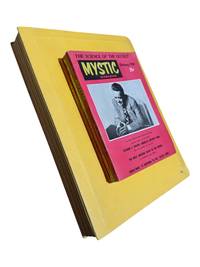
1962ref. 10289Vista CA: Borderland Sciences Research Associates 1962. Second edition. Quarto 130; 28; 34; 38; 35 1; 30; 35 1; 30; 28; 32pp. Thirteen parts each with its own cover sheet and index on various color and thickness of stock; complete as issued. Original two-brad paper folder binding. Very clean. Included are 3 relevant issues of Mystic Magazine: August 1954 February and June 1955 on Mark Probert. A complete series of transcripts of thirteen seances held in September of 1946-February of 1949. Meade Layne occultist and founder of the Borderland Sciences Research Associates came to prominence when a story recorded in his newsletter "Round Robin" was broadcast via the wire service. Layne claimed he knew a medium ex-vaudeville star Mark Probert who was communicating telepathically with people in a space ship. Probert also became quite popular in his channeling of an "Inner Circle" that included Lao-Tse Michael Faraday Thomas Carlyle and Yada di Shi'ite a supposed 500000 year old Himalayan priest. Layne and Probert were a bit ahead of the UFO craze of the 50s and their theories that flying saucers were not extraterrestrial but rather materialized from a parallel plane became central in what would later be known as the interdimensional UFO hypothesis. The original memoranda were issued from San Diego and Borderland Sciences was operating from Vista by the late 1950s so these are likely the second printing of these transcriptions and perhaps the first collected edition. In any event these are quite scarce with OCLC citing no physical holdings. An important group of writings from an early duo who were quite influential in advancing ufology. . Borderland Sciences Research Associates unknown
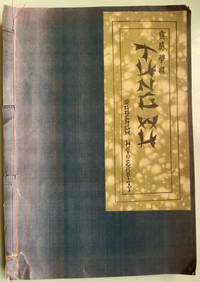
1935ref. ABE-1767149766336soochow: College of Arts and Sciences Soochow University 1935 1935 Original first edition. Octavo 23.816.7cm 135pp. Illustrated. Traditional Chinese sewn binding with double leaves. Front wrapper MISSING but replaced with a photocopy/facsimile rear wrapper worn and chipped owner's name on title page some marginalia and notation otherwise a quite good copy. 1st Edition. Soft cover. Fair. More photos available upon request. College of Arts and Sciences, Soochow University, 1935 paperback
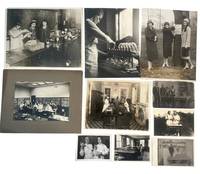
1900ref. 235831900. Women in laboratory sciences photo archive circa 1900 to 1946 documenting women's movement into chemistry bacteriology hospital medicine and classroom experiment at a time when scientific training and professional advancement remained largely organized around men with barriers of entry for women. The group begins with a pharmacological laboratory where one woman stands among men predating suffrage in the United States and continues through school laboratories hospital laboratories press photographs and postwar images of young women handling test tubes and glassware. World War I drew women chemists into schools universities analytical laboratories and war work while World War II accelerated laboratory demand again through bacteriology antibiotics and industrial drug production. Photo archive of 11 mixed phtoographic mediums including albumen silver gelatin and real photo postcard photographs various sizes ranging 5 x 4 inches to 8 x 10 inches United States and Europe early 20th century. The images show women and girls conducting experiments at benches lined with burners flasks pipettes test tubes reagent bottles and laboratory stands; a large pharmacological classroom with nearly all male staff and students and one woman present; high school girls in an early science classroom; two nuns or a nun and nurse working in a laboratory at Saint Anthony's Hospital Rockford Illinois identified on verso as early 1930s; and a bacteriological laboratory scene dated October 2 1923. A 1926 Acme press photograph identifies "Miss Virginia Trelease chemist student at Northwestern University Evanston Ill." using liquid oxygen from a Heylandt liquefier to fry an egg over "burning ice." Other images show two young women captioned "Resa Yusko and Bla Pesala" in 1946 smiling while handling laboratory equipment and a 1927 press photograph of Mrs. August Rus Oppenheim Mrs. Oswald Jimenis and Mrs. Arthur Bunker of the Southern Women's Educational Alliance posting a Metropolitan Opera benefit notice evidence of women's educational fundraising alongside the scientific scenes. The photographs trace women's scientific labor from gendered access to instruction into wartime necessity and postwar professional visibility. In the early twentieth century women who entered chemistry and medicine often worked through teaching nursing hospital laboratories and applied science fields that admitted them more readily than elite research posts while still relying on their technical skill. During World War II penicillin moved from laboratory microbiological study in 1940 to mass production by 1945 a shift that depended on fermentation work laboratory handling and industrial coordination rather than discovery alone. Light surface wear toning occasional creasing press stamps captions and handling marks; some images faded or rubbed. Overall good condition. A concentrated visual record of women learning demonstrating and performing laboratory science across the decades when modern medicine and chemistry increasingly required their work while still limiting their recognition. unknown
1900ref. 235831900. Women in laboratory sciences photo archive circa 1900 to 1946 documenting women's movement into chemistry bacteriology hospital medicine and classroom experiment at a time when scientific training and professional advancement remained largely organized around men with barriers of entry for women. The group begins with a pharmacological laboratory where one woman stands among men predating suffrage in the United States and continues through school laboratories hospital laboratories press photographs and postwar images of young women handling test tubes and glassware. World War I drew women chemists into schools universities analytical laboratories and war work while World War II accelerated laboratory demand again through bacteriology antibiotics and industrial drug production. Photo archive of 11 mixed phtoographic mediums including albumen silver gelatin and real photo postcard photographs various sizes ranging 5 x 4 inches to 8 x 10 inches United States and Europe early 20th century. The images show women and girls conducting experiments at benches lined with burners flasks pipettes test tubes reagent bottles and laboratory stands; a large pharmacological classroom with nearly all male staff and students and one woman present; high school girls in an early science classroom; two nuns or a nun and nurse working in a laboratory at Saint Anthony's Hospital Rockford Illinois identified on verso as early 1930s; and a bacteriological laboratory scene dated October 2 1923. A 1926 Acme press photograph identifies "Miss Virginia Trelease chemist student at Northwestern University Evanston Ill." using liquid oxygen from a Heylandt liquefier to fry an egg over "burning ice." Other images show two young women captioned "Resa Yusko and Bla Pesala" in 1946 smiling while handling laboratory equipment and a 1927 press photograph of Mrs. August Rus Oppenheim Mrs. Oswald Jimenis and Mrs. Arthur Bunker of the Southern Women's Educational Alliance posting a Metropolitan Opera benefit notice evidence of women's educational fundraising alongside the scientific scenes. The photographs trace women's scientific labor from gendered access to instruction into wartime necessity and postwar professional visibility. In the early twentieth century women who entered chemistry and medicine often worked through teaching nursing hospital laboratories and applied science fields that admitted them more readily than elite research posts while still relying on their technical skill. During World War II penicillin moved from laboratory microbiological study in 1940 to mass production by 1945 a shift that depended on fermentation work laboratory handling and industrial coordination rather than discovery alone. Light surface wear toning occasional creasing press stamps captions and handling marks; some images faded or rubbed. Overall good condition. A concentrated visual record of women learning demonstrating and performing laboratory science across the decades when modern medicine and chemistry increasingly required their work while still limiting their recognition. unknown books
1818ref. 166860Berlin, Amelang, 1814-1818. M. mehr. Kpf.-Taf. Verschied. gebunden. Meist Bibliotheksex. m. Rsign. Bd. 8 m. St. verso Tit., Tafeln braunfl. u. 1 Falttaf. angerissen u. 6 statt d. angegebenen 7 Tafeln, im Vergleich mit anderen Ex. jedoch wahrscheinlich vollständig. Bd. 11 ist 1 Taf. beschäd.Bd. 11 u. 15 fehlt Rücken. St. a. Tit.
1861Leizig, Ernst Schäfer, 1861. Lex8vo. 2 cont. full cloth, covers blindtooled. Small traces of use at top-and bottom of spines. VII,640,540 pp. A few brownspots. - First edition.
1971ref. 637040Chur, Hitz/Schuler, 1858-1971. M. Portr., mehr. Taf., Ktn. u. Abb. Hlwd. m. goldgepr. Rtit., Pp. u. in Heften. Einige Jgge. zusammengeb. Teils berieben, angerissen u. angeschmutzt. Wenige Buchbl. gebrochen. Einige Umschl. fehlen. Einige m. Rsign. u. St. a. Vorsatz u. Tit. Teils etwas stockfl. Meist unaufgeschn. Fehlt: Jg. 48, Beilagen zu Jg. 38 u. 41, Anhang zu Jg. 42 u. 43, wiss. Teil u. Anhang zu Jg. 44 u. Inh.-Verz. zu Jg. 51.
1953ref. 189048Washington, 1911-1947 u. 1953 (Index). M. einigen Taf. u. Abb. Hlwdbde. Kaum berieben. Einige S. minimal stockfl.
ref. 81353Barba Paris, Barba, 2 volumes, 1810, pleines reliures d'époque, 17x10.5cm, 12 gravures H.T., xij (avertissement, discours préliminaire -pour les 2 volumes-), 310 p., 331 p., des trous de ver et des épidermures sur la reliure, coins émoussés, des rousseurs sur les toutes premières pages de chaque volume, intérieur propre pour le reste.
1752ref. 39695Paris, Guerin, 1752. In-12 de XXXI-(1)-215-(5) pp., cartonnage souple de papier marbré, pièce de titre en maroquin vert (reliure postérieure).
ref. 388344 volumes in-8 (188 x 117 mm), plein maroquin bordeaux de l'époque, dos lisses richement ornés de compartiments entièrement garnis d'un jeu de filets droits, filets ondulés et fer spécial répété encadré d'un décor rocaille, roulette d'encadrement sur les plats, pièce de titre de maroquin bleu, roulette dorée sur les coupes et les coiffes, tranches dorées, (4), 422 et 2 p. d'errata; (4), 406 et 2 p. d'errata; (4)., 391 et 2 p. d'errata et (4), 282 p. y compris l'errata. S.l. [Genève, Cramer], 1768.
1807ref. 606611 vol. in-12 reliure de l'époque pleine basane racinée, dos lisse orné, fers de prix "Enseignement Mutuel H. Boismont" au premier plat, fers dorés d'encadrement en plats, toutes tranches marbrées, Chez H. Barbou, Paris, 1807, xxxij-334 pp. et 1 f., avec frontispice gravé par Sophie Massard
18071 vol. in-12 reliure de l'époque pleine basane racinée, dos lisse orné, fers de prix "Enseignement Mutuel H. Boismont" au premier plat, fers dorés d'encadrement en plats, toutes tranches marbrées, Chez H. Barbou, Paris, 1807, xxxij-334 pp. et 1 f., avec frontispice gravé par Sophie Massard "Curieux et rare ouvrage d'un savant oratorien bibliographe (1748-1818) à qui on doit de nombreux catalogues. [... ] L'ouvrage contient une importante préface, une bibliographie des ouvrages cités et consultés, et à la fin une très curieuse liste des jouets et jeux qui se trouvent chez Vaugeois, rue des Arcis, au Singe vert. Chapitre sur le jeu de Pailles et des Noyaux qui se jouent chez les sauvages du Canada, d'après Boucher, de la Hontan et le P. Latifau". L'établissement d'enseignement mutuel Boismont se trouvait à Paris, rue Mandar. Etat très satisfaisant (petite mouill. au frontispice, défaut manifestement d'origine au premier feuillet de garde volante, coins frottés, très petite galerie d'insecte au premier plat et en coiffe de queue, bon état par ailleurs). Gumuchian, 246 ; Huguet, Dictionnaire, 221 Français
1654ref. 98381654 velin souple époque (assez large mouillure à plusieurs ff.). pet. in-8, (4ff.), 134pp., (4ff. tables),5 planches gravées dont une comporte 2 cuivres, P. Vve Mathurin Hénault 1654,
ref. 90562A Paris, chez Bossange, Masson et Besson, An Viii (1799-1800), 3 volumes in-8 de 130 mm environ, tome 1 : (1) f., civ-372 pages, (1) f., - tome 2 : (1) f., faux-titre, titre, 439 pages, (1) f., - tome 3 : (1) f., faux-titre, titre, 469 pages, (1) f., pleine basane brune, dos lisses portant titres et tomaisons dorés sur pièces rouges, ornés de caissons à fleurons et motifs dorés, coupes dorées, tranches jaunes, gardes marbrées. Complet des 46 planches dépliantes (12 pl. pour le tome 1, 19 pl., pour le tome 2, et 15 pl. pour le tome 3). Coins émoussés, coupes et coiffes frottées (une coiffe arasée), des épidermures, des pages brunies, une erreur de pagination (993 au lieu de 399) dans le tome 2, sinon bon état.
ref. 13820P., Hachette, 1841, 2 VOLUMES in 8 reliés en demi-basane, dos orné de fers et filets dorés (reliures de l'époque), (petite tache brune à un mors), T. 1 : 20pp., 495pp., (1), 4 PLANCHES dépliantes, T.2 : 8pp., 528pp., 2 PLANCHES dépliantes, soit 6 PLANCHES DEPLIANTES
1849ref. 594581 vol. in-8 reliure de l'époque demi-chagrin à coins vert, dos à 4 nerfs, filet doré en mors et coins, mention "Spécimen" au dos en queue, Chez les Editeurs, Renard Martinet et Cie, Langlois et Leclercq, Victor Masson, Paris, 1849, 2 ff., 17 pp. et 1 f., 2 ff., 22 pp., 2 ff., 23 pp. et 18 planches en couleurs
18491 vol. in-8 reliure de l'époque demi-chagrin à coins vert, dos à 4 nerfs, filet doré en mors et coins, mention "Spécimen" au dos en queue, Chez les Editeurs, Renard Martinet et Cie, Langlois et Leclercq, Victor Masson, Paris, 1849, 2 ff., 17 pp. et 1 f., 2 ff., 22 pp., 2 ff., 23 pp. et 18 planches en couleurs Très rare spécimen d'époque de l'édition originale de l'Atlas du Dictionnaire de d'Orbigny, réunissant les tables et quelques planches de l'atlas. Français
1774ref. 182329Imprimerie Royale A Paris, de l'Imprimerie Royale, 1774. In-4 relié plein veau, dos à nerfs très orné, pièce de titre de maroquin rouge, tranches rouges. 2 feuillets blancs, titre, 1 feuillet blanc, xxiii + 248 pages, 2 feuillets blancs. Bien complet des deux planches dépliantes et d'un tableau : Plan du nouveau canal et pas de Trollhette dans la rivière de Gotha en Suède, et, Cours du Po de Primaro et des rivières de plaines, du Boulonnois et de la Romagne, avec quelques lignes proposées. Mors un peu fragile et petit manque en coiffe, coins émoussés. 2 feuillets blancs sont annotés de lettres du Baron d'Holbach copiées à la bibliothèque de Milan. Ex-libris. R.P Frisi , était Professeur royal de Mathématiques à Milan, membre de la Société Royale de Londres, de l'Institut de Bologne, des Académies, de Petersbourg, de Berlin & de Stockolm,etc. Correspondant de l'Académie royale des Sciences de Paris. Edition originale de la traduction française par De Serrey. Frisi (ou parfois orthographié Frizy), est un auteur technique spécialisé dans le domaine de l'ingénierie hydraulique, et particulièrement réputé pour son traité sur les cours d'eau. Dans son ouvrage "Traité des Rivières et des Torrents", Frisi aborde de manière exhaustive les dynamiques des rivières et des torrents, en s'intéressant aux problèmes hydrauliques posés par leur gestion, leur aménagement, et les méthodes de prévention des inondations et des érosions. Hydrodynamique et comportement des eaux courantes : Frisi examine les principes hydrodynamiques qui gouvernent les flux d'eau, en analysant les forces qui influencent le mouvement des rivières et des torrents, notamment la vitesse, la pression, et la force d'érosion. Gestion et contrôle des rivières : Le traité explore des solutions pratiques pour maîtriser les rivières et les torrents, particulièrement les techniques de construction de barrages, de digues, et de canaux pour diriger et contrôler les flux deau afin de réduire les risques d'inondation. Érosion et sédimentation : Frisi analyse les processus d'érosion des berges et le transport de sédiments par les rivières. Il propose des moyens pour stabiliser les berges et limiter la formation d'embâcles, souvent responsables des débordements. Application à l'ingénierie et à l'agriculture : Le traité inclut des méthodes pour canaliser et utiliser les rivières dans les projets d'irrigation et de drainage agricoles, ce qui montre son intérêt pour une application pratique de la gestion des ressources en eau. Le traité de Frisi est important dans lhistoire de lingénierie hydraulique et de la gestion des cours d'eau, influençant les approches de gestion hydraulique dans l'Europe du XVIIIe siècle. Son travail a inspiré les ingénieurs dans la conception d'ouvrages pour lutter contre les catastrophes naturelles liées à l'eau et pour améliorer les infrastructures hydrauliques, un domaine crucial pour les économies agricoles et industrielles de l'époque.