1.702 resultados
1906ref. 8829Duluth Minn: Western Fruit Jobbers' Association; Trade News Publishing Co. Printers 1906. Octavo stapled in wrappers 23.5 x 16 cm. 30 pages. Date from a three page TLS from the Association laid-in transmitting the Resolutions of the Association; and also from pencil annotation on the rear wrapper "Rcv'd 3/14/06". FIRST EDITION. "This is primarily a Bill to Eliminate Private Freight Cars Correct Refrigerating Abuses and Bring Express Companies Under the Interstate Commerce Acts and Prohibit their Dealing in Commodities Handled by Them." Roger S. Powell was the Attorney for the Association. ~ Tiny bit of edgewear and tanning to edges of wrappers otherwise fine. OCLC locates two copies UDenver WisconsinHistSoc. Western Fruit Jobbers' Association; Trade News Publishing Co., Printers unknown
ref. 1390422321.Gpaperback. Good. Access codes and supplements are not guaranteed with used items. May be an ex-library book. paperback
ref. 0265505224.Ghardcover. Good. Access codes and supplements are not guaranteed with used items. May be an ex-library book. hardcover
ref. 0265891809.Ghardcover. Good. Access codes and supplements are not guaranteed with used items. May be an ex-library book. hardcover
ref. 126729Eraklea et Kookaburra Editions - 1990 - In-8 broché, couverture illustrée - 143 pages
1925ref. UUI-5479In-8 broché, Publications agricoles de la Compagnie d'Orléans, 1925, 308 pp. Un peu frotté, petites pliures et déchirures, notamment aux charnières, fait un peu son âge, usure d'usage, bon état général. Actes du Colloque de Tours le 18 mai 1924. Illustrations et statistiques. Peu courant. Poids 400 g. Frais d'envoi 4,10 euros sur la France, 7 euros UE et Suisse, 8,50 euros pour le reste du monde (tarifs de base hors envois suivis). Possibilité de remise en mains propres sur Paris, n'hésitez pas à me contacter avant de passer commande.
First edition, 12pp., title page a little dusty, disbound. Formerly in the library of the Birmingham Medical Institute. Copac locates copies at the Wellcome and Royal College of Surgeons of England.
19098vo; 228pp, frontis, illus. original cloth, spine ends bit rubbed, front hinge re-enforced with tape, very good. A picture of this book is available upon request by email.
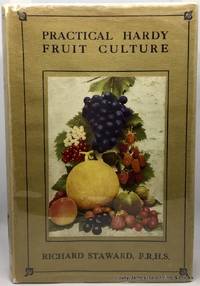
1920ref. 6929London:: The Swarthmore Press LTD 1920. First edition. Fine. First printing. Fine condition in a Near Fine DJ minor chips to head and foot of spine. Octavo 5 x 7.5 Inches. Brown cloth with brown lettered boards and spine. Pp. 216 chromolithograph frontispiece illustrated with b/w & color photographs. Covers all aspects of propagation and cultivation of fruits. From the Books for Garden Lovers series by Ruskin House. Cloth The Swarthmore Press LTD, hardcover
in-8, 106 pp., broché, couverture illustrée. Bon état. [CA29-5]
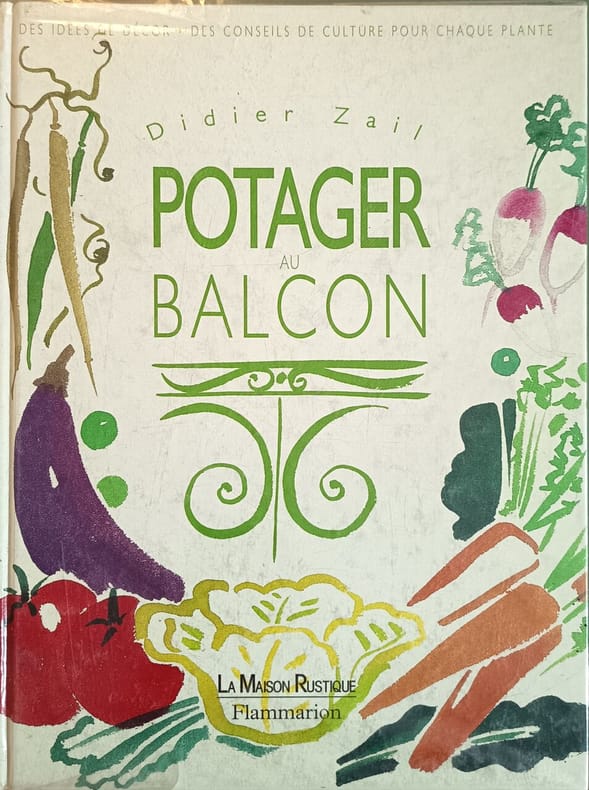
1999ref. 6479La Maison Rustique 1999 76 pages 20x27x1cm. 1999. Cartonnage editeur. 76 pages.
1980Undated. Circa 1980? "You can paint almost any subject or kind of decoration on porcelain. My personal interest has always been the study of flowers and fruit, so I have not attempted to cover other possibilities here. The tools and techniques which are described are those which I find most helpful." - the author. Jean Sadler is internationally recognized by porcelain artists for her paintings of flowers and fruit. She captures their beauty with an unusual combination of subtle shadows, strong contrast and graceful line arrangement. All colour. Moderate wear. Clean and unmarked. Nice copy. Book
198546 pages. Features: Helen Johnson; Irene Goodwin; Katherine Eckstrom; Mario Watanabe; Marjorie Dodd; Gerald Delaney; Lolita C. Smith; An Approach to Painting Fruit; Paul White; Ann Zitterkopf; Thomas Campbell; Millie Jones; Pat Hoover; Temple Beall; Ana Quiros; NAncy Beamish. Clean and unmarked with moderate wear. A quality copy. Book
ref. 76103West Palm Beach (Floride - USA), éd. Waddington and Tribby Fin Art, 2001, pt. in-4 oblong, cartonnage souple, couv. photo coul. sur fond orange éd., 32 pp., papier glacé, très nb. reproductions en coul. de bronzeq, biographie et "parcours artistiques" des deux artistes, Superbe catalogue de bronzes représentant des fruits des deux sculpteurs espagnols, Luis Montoya et Leslie Ortiz. RARE Très bon état
1996ref. 5626Portland:: Timber Press 1996. First printing. Fine in Fine DJ. Fine in a Fine DJ. Octavo 6 x 9 Inches. Green boards with gold lettering to spine b/w illustrated endpapers. Illustrated in b/w with 8 color plates 1-4 433 pp. Documenting the connection between pomology social history and the history of ideas. Boards Timber Press, hardcover
1817ref. 742London:: Longmans Hurst Rees Orme & Brown 1817. First edition. Fine with original hand-coloring. Fine original hand-colored stipple engraving.Pl. XXIII Smith's Early Newington Buckinghamshire Minion & Barrington Peaches. Large Quarto Edition 11 x 13.5 inches. Pomona Britannica is considered one of the most distinguished pomologies ever produced and is described as "one of the finest colour-plate books in existence." Prideaux. Named for Pomona the Roman Goddess of Fruit and Fruit Trees a pomology is simply a treatise on fruit culture. However there was nothing simple about the intent and execution of this fine work. In an effort to educate the landed country gentleman on the cultivation of fruit George Brookshaw 1751-1823 rendered and described the finest fruit under cultivation in the most esteemed gardens in London and the Royal Gardens particularly around Hampton Court and Kensington. Very little is known about the early years of Brookshaw's life and education. He was born in Birmingham and died an undistinguished death in London. However during the late 18th Century Brookshaw enjoyed significant notoriety as a talented cabinetmaker distinguished by royal patronage. Receipts from the Prince of Wales dating 1783 document the finely painted furniture commissioned from G. Brookshaw. Elegant cabinets tables and chimney pieces were painted with exquisite allegorical scenes bouquets of flowers and abundant cornucopias offering a glimpse into what was to become the hallmark of Brookshaw's talent; elegant and fluid renditions of fruit and flowers. George's talent as an engraver was perhaps influenced by Richard Brookshaw brother an established and talented mezzotint engraver in Paris during the 19th Century. Richard Brookshaw engraved several of the plates for the Folio edition of Pomona Britannica c.1812 however as the last of Richard's engravings are dated 1804 we conclude every one of the plates in this large Quarto edition were engraved by George Brookshaw himself. This edition should not be considered a miniature version of the Folio edition where the fruit is set on dark mezzotint grounds. This large Quarto edition features beautifully hand-colored stipple engravings which float on soft ivory backgrounds. Ref. Dunthorne 55 Christie's 4-97. Longmans, Hurst, Rees, Orme, & Brown, unknown
1817ref. 746London:: Longmans Hurst Rees Orme & Brown 1817. First edition. Fine with original hand-coloring. Fine original hand-colored stipple engraving. Pl. XXVII Duke of Marlborough's & Rumbullion Peaches. Large Quarto Edition 11 x 13.5 inches. Pomona Britannica is considered one of the most distinguished pomologies ever produced and is described as "one of the finest colour-plate books in existence." Prideaux. Named for Pomona the Roman Goddess of Fruit and Fruit Trees a pomology is simply a treatise on fruit culture. However there was nothing simple about the intent and execution of this fine work. In an effort to educate the landed country gentleman on the cultivation of fruit George Brookshaw 1751-1823 rendered and described the finest fruit under cultivation in the most esteemed gardens in London and the Royal Gardens particularly around Hampton Court and Kensington. Very little is known about the early years of Brookshaw's life and education. He was born in Birmingham and died an undistinguished death in London. However during the late 18th Century Brookshaw enjoyed significant notoriety as a talented cabinetmaker distinguished by royal patronage. Receipts from the Prince of Wales dating 1783 document the finely painted furniture commissioned from G. Brookshaw. Elegant cabinets tables and chimney pieces were painted with exquisite allegorical scenes bouquets of flowers and abundant cornucopias offering a glimpse into what was to become the hallmark of Brookshaw's talent; elegant and fluid renditions of fruit and flowers. George's talent as an engraver was perhaps influenced by Richard Brookshaw brother an established and talented mezzotint engraver in Paris during the 19th Century. Richard Brookshaw engraved several of the plates for the Folio edition of Pomona Britannica c.1812 however as the last of Richard's engravings are dated 1804 we conclude every one of the plates in this large Quarto edition were engraved by George Brookshaw himself. This edition should not be considered a miniature version of the Folio edition where the fruit is set on dark mezzotint grounds. This large Quarto edition features beautifully hand-colored stipple engravings which float on soft ivory backgrounds. Ref. Dunthorne 55 Christie's 4-97. Longmans, Hurst, Rees, Orme, & Brown, unknown
1817ref. 744London:: Longmans Hurst Rees Orme & Brown 1817. First edition. Fine with original hand-coloring. Fine original hand-colored stipple engraving. Pl. XXV Montauban Grosse Mignonne & Old Royal George Peaches. Large Quarto Edition 11 x 13.5 inches. Pomona Britannica is considered one of the most distinguished pomologies ever produced and is described as "one of the finest colour-plate books in existence." Prideaux. Named for Pomona the Roman Goddess of Fruit and Fruit Trees a pomology is simply a treatise on fruit culture. However there was nothing simple about the intent and execution of this fine work. In an effort to educate the landed country gentleman on the cultivation of fruit George Brookshaw 1751-1823 rendered and described the finest fruit under cultivation in the most esteemed gardens in London and the Royal Gardens particularly around Hampton Court and Kensington. Very little is known about the early years of Brookshaw's life and education. He was born in Birmingham and died an undistinguished death in London. However during the late 18th Century Brookshaw enjoyed significant notoriety as a talented cabinetmaker distinguished by royal patronage. Receipts from the Prince of Wales dating 1783 document the finely painted furniture commissioned from G. Brookshaw. Elegant cabinets tables and chimney pieces were painted with exquisite allegorical scenes bouquets of flowers and abundant cornucopias offering a glimpse into what was to become the hallmark of Brookshaw's talent; elegant and fluid renditions of fruit and flowers. George's talent as an engraver was perhaps influenced by Richard Brookshaw brother an established and talented mezzotint engraver in Paris during the 19th Century. Richard Brookshaw engraved several of the plates for the Folio edition of Pomona Britannica c.1812 however as the last of Richard's engravings are dated 1804 we conclude every one of the plates in this large Quarto edition were engraved by George Brookshaw himself. This edition should not be considered a miniature version of the Folio edition where the fruit is set on dark mezzotint grounds. This large Quarto edition features beautifully hand-colored stipple engravings which float on soft ivory backgrounds. Ref. Dunthorne 55 Christie's 4-97. Longmans, Hurst, Rees, Orme, & Brown, unknown
1817ref. 745London:: Longmans Hurst Rees Orme & Brown 1817. First edition. Fine with original hand-coloring. Fine original hand-colored stipple engraving. Pl. XXVI Late Admirable Double Mountain & Red Magdalen Peaches. Large Quarto Edition 11 x 13.5 inches. Pomona Britannica is considered one of the most distinguished pomologies ever produced and is described as "one of the finest colour-plate books in existence." Prideaux. Named for Pomona the Roman Goddess of Fruit and Fruit Trees a pomology is simply a treatise on fruit culture. However there was nothing simple about the intent and execution of this fine work. In an effort to educate the landed country gentleman on the cultivation of fruit George Brookshaw 1751-1823 rendered and described the finest fruit under cultivation in the most esteemed gardens in London and the Royal Gardens particularly around Hampton Court and Kensington. Very little is known about the early years of Brookshaw's life and education. He was born in Birmingham and died an undistinguished death in London. However during the late 18th Century Brookshaw enjoyed significant notoriety as a talented cabinetmaker distinguished by royal patronage. Receipts from the Prince of Wales dating 1783 document the finely painted furniture commissioned from G. Brookshaw. Elegant cabinets tables and chimney pieces were painted with exquisite allegorical scenes bouquets of flowers and abundant cornucopias offering a glimpse into what was to become the hallmark of Brookshaw's talent; elegant and fluid renditions of fruit and flowers. George's talent as an engraver was perhaps influenced by Richard Brookshaw brother an established and talented mezzotint engraver in Paris during the 19th Century. Richard Brookshaw engraved several of the plates for the Folio edition of Pomona Britannica c.1812 however as the last of Richard's engravings are dated 1804 we conclude every one of the plates in this large Quarto edition were engraved by George Brookshaw himself. This edition should not be considered a miniature version of the Folio edition where the fruit is set on dark mezzotint grounds. This large Quarto edition features beautifully hand-colored stipple engravings which float on soft ivory backgrounds. Ref. Dunthorne 55 Christie's 4-97. Longmans, Hurst, Rees, Orme, & Brown, unknown
1817ref. 747London:: Longmans Hurst Rees Orme & Brown 1817. First edition. Fine with original hand-coloring. Fine original hand-colored stipple engraving. Pl. XXIX Bourdine Nivette or Belle de Vitry Peaches. Large Quarto Edition 11 x 13.5 inches. Pomona Britannica is considered one of the most distinguished pomologies ever produced and is described as "one of the finest colour-plate books in existence." Prideaux. Named for Pomona the Roman Goddess of Fruit and Fruit Trees a pomology is simply a treatise on fruit culture. However there was nothing simple about the intent and execution of this fine work. In an effort to educate the landed country gentleman on the cultivation of fruit George Brookshaw 1751-1823 rendered and described the finest fruit under cultivation in the most esteemed gardens in London and the Royal Gardens particularly around Hampton Court and Kensington. Very little is known about the early years of Brookshaw's life and education. He was born in Birmingham and died an undistinguished death in London. However during the late 18th Century Brookshaw enjoyed significant notoriety as a talented cabinetmaker distinguished by royal patronage. Receipts from the Prince of Wales dating 1783 document the finely painted furniture commissioned from G. Brookshaw. Elegant cabinets tables and chimney pieces were painted with exquisite allegorical scenes bouquets of flowers and abundant cornucopias offering a glimpse into what was to become the hallmark of Brookshaw's talent; elegant and fluid renditions of fruit and flowers. George's talent as an engraver was perhaps influenced by Richard Brookshaw brother an established and talented mezzotint engraver in Paris during the 19th Century. Richard Brookshaw engraved several of the plates for the Folio edition of Pomona Britannica c.1812 however as the last of Richard's engravings are dated 1804 we conclude every one of the plates in this large Quarto edition were engraved by George Brookshaw himself. This edition should not be considered a miniature version of the Folio edition where the fruit is set on dark mezzotint grounds. This large Quarto edition features beautifully hand-colored stipple engravings which float on soft ivory backgrounds. Ref. Dunthorne 55 Christie's 4-97. Longmans, Hurst, Rees, Orme, & Brown, unknown
1817ref. 748London:: Longmans Hurst Rees Orme & Brown 1817. First edition. Fine with original hand-coloring. Fine original hand-colored stipple engraving. Pl. XXX Chancellor Catherine & Old Newington Peaches. Large Quarto Edition 11 x 13.5 inches. Pomona Britannica is considered one of the most distinguished pomologies ever produced and is described as "one of the finest colour-plate books in existence." Prideaux. Named for Pomona the Roman Goddess of Fruit and Fruit Trees a pomology is simply a treatise on fruit culture. However there was nothing simple about the intent and execution of this fine work. In an effort to educate the landed country gentleman on the cultivation of fruit George Brookshaw 1751-1823 rendered and described the finest fruit under cultivation in the most esteemed gardens in London and the Royal Gardens particularly around Hampton Court and Kensington. Very little is known about the early years of Brookshaw's life and education. He was born in Birmingham and died an undistinguished death in London. However during the late 18th Century Brookshaw enjoyed significant notoriety as a talented cabinetmaker distinguished by royal patronage. Receipts from the Prince of Wales dating 1783 document the finely painted furniture commissioned from G. Brookshaw. Elegant cabinets tables and chimney pieces were painted with exquisite allegorical scenes bouquets of flowers and abundant cornucopias offering a glimpse into what was to become the hallmark of Brookshaw's talent; elegant and fluid renditions of fruit and flowers. George's talent as an engraver was perhaps influenced by Richard Brookshaw brother an established and talented mezzotint engraver in Paris during the 19th Century. Richard Brookshaw engraved several of the plates for the Folio edition of Pomona Britannica c.1812 however as the last of Richard's engravings are dated 1804 we conclude every one of the plates in this large Quarto edition were engraved by George Brookshaw himself. This edition should not be considered a miniature version of the Folio edition where the fruit is set on dark mezzotint grounds. This large Quarto edition features beautifully hand-colored stipple engravings which float on soft ivory backgrounds. Ref. Dunthorne 55 Christie's 4-97. Longmans, Hurst, Rees, Orme, & Brown, unknown
1817ref. 749London:: Longmans Hurst Rees Orme & Brown 1817. First edition. Fine with original hand-coloring. Fine original hand-colored stipple engraving. Pl. XXXIV Murry & Newington Nectarine. Large Quarto Edition 11 x 13.5 inches. Pomona Britannica is considered one of the most distinguished pomologies ever produced and is described as "one of the finest colour-plate books in existence." Prideaux. Named for Pomona the Roman Goddess of Fruit and Fruit Trees a pomology is simply a treatise on fruit culture. However there was nothing simple about the intent and execution of this fine work. In an effort to educate the landed country gentleman on the cultivation of fruit George Brookshaw 1751-1823 rendered and described the finest fruit under cultivation in the most esteemed gardens in London and the Royal Gardens particularly around Hampton Court and Kensington. Very little is known about the early years of Brookshaw's life and education. He was born in Birmingham and died an undistinguished death in London. However during the late 18th Century Brookshaw enjoyed significant notoriety as a talented cabinetmaker distinguished by royal patronage. Receipts from the Prince of Wales dating 1783 document the finely painted furniture commissioned from G. Brookshaw. Elegant cabinets tables and chimney pieces were painted with exquisite allegorical scenes bouquets of flowers and abundant cornucopias offering a glimpse into what was to become the hallmark of Brookshaw's talent; elegant and fluid renditions of fruit and flowers. George's talent as an engraver was perhaps influenced by Richard Brookshaw brother an established and talented mezzotint engraver in Paris during the 19th Century. Richard Brookshaw engraved several of the plates for the Folio edition of Pomona Britannica c.1812 however as the last of Richard's engravings are dated 1804 we conclude every one of the plates in this large Quarto edition were engraved by George Brookshaw himself. This edition should not be considered a miniature version of the Folio edition where the fruit is set on dark mezzotint grounds. This large Quarto edition features beautifully hand-colored stipple engravings which float on soft ivory backgrounds. Ref. Dunthorne 55 Christie's 4-97. Longmans, Hurst, Rees, Orme, & Brown, unknown
First edition, folio (330 x 210 mm), 3 parts in one, [2], 36; [4], 70; [4], 87, [5]pp., three separate title-pages within border of type ornaments, 39 engraved folding plates of fruits, all with bright contemporary hand-colouring, several related notes in ink to front free-endpaper, cont. half calf, paper covered boards (peeled away from upper cover), uncut. Johann Hermann Knoop (1700-1769), carried out much of his botanical research whilst curator of the gardens of Princess Maria Louisa in Leeuwarden. He broke new ground in the study of fruit varieties and he is regarded as the father of pomology. The first two part are devoted to the kitchen garden, the first part is illustrated with 20 splendid full-page engraved plates with hand-colouring, 12 are apples, 8 of pears, all showing several varieties, each labelled with its time of ripening, many for species now lost. The second has 19 engraved plates with contemporary hand-colouring showing peaches, plums, cherries, berries, etc. Part three is devoted to the cultivation of the garden and was issued un-illustrated. The fruit monographs are among the earliest books on the subject to be illustrated with coloured plates. Knoop himself made the original drawings, which were engraved by Jan C. Philips (1700-1773) or Jacob Folkema (1692-1767). Landwehr, Dutch Books with Coloured Plates, 88 (I) & 92 (II); Nissen, 1078 (I) & 1077 (II); Pritzel, 4754-4755.
ref. 137221aafPublicationde la Fédérationdes Soc. d’horticulture de la Suisse Romande, 1916, in-8vo, 72 p. + 50 planches couleurs (chromolithographie), brochure originale illustrée.
ref. 137242aafPublicationde la Fédérationdes Soc. d’horticulture de la Suisse Romande, 1916, in-8vo, 72 p. + 50 planches couleurs (chromolithographie), brochure originale illustrée. Dos avec petit manque.