6060 risultati
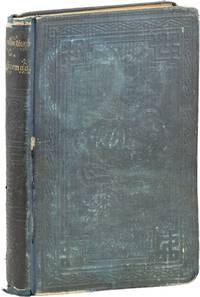
1852rif. 82443New York: Cornish Lamport & Co 1852. First American Edition. Octavo. 19cm. Publisher's original dark blue embossed cloth titled in gilt to spine with elaborate blindstamping to boards. 238pp. Wear rubbing and scuffing to extremities with book board showing through the cloth at corners and edges fraying and loss to spine ends not interfering with the title in addition there is a cosmetic split to the cloth of the front spine hinge. A good serviceable copy with some conspicuous wear. Internally clean rear inner hinge split two previous ownerships in pencil to the prelims with an additional pencil name to page 22. Some thumbing to prelims and with a pale damp stain to the lower front corner of the first 20pp or so. Perhaps not the most beautiful example of this scarce and sought after title to surface but a legitimate rarity nonetheless. This first US edition although of dubious legality predates the official first edition of this work by 4 years having been collected from US magazine publications syndicating from the Edinburgh Review and bolted together into book form. One of the very earliest fictional police procedurals and an early contributor to the enduring mystique of Scotland Yard. Cornish, Lamport & Co unknown
1852rif. 82443New York: Cornish Lamport & Co 1852. First American Edition. Octavo. 19cm. Publisher's original dark blue embossed cloth titled in gilt to spine with elaborate blindstamping to boards. 238pp. Wear rubbing and scuffing to extremities with book board showing through the cloth at corners and edges fraying and loss to spine ends not interfering with the title in addition there is a cosmetic split to the cloth of the front spine hinge. A good serviceable copy with some conspicuous wear. Internally clean rear inner hinge split two previous ownerships in pencil to the prelims with an additional pencil name to page 22. Some thumbing to prelims and with a pale damp stain to the lower front corner of the first 20pp or so. Perhaps not the most beautiful example of this scarce and sought after title to surface but a legitimate rarity nonetheless. This first US edition although of dubious legality predates the official first edition of this work by 4 years having been collected from US magazine publications syndicating from the Edinburgh Review and bolted together into book form. One of the very earliest fictional police procedurals and an early contributor to the enduring mystique of Scotland Yard. Cornish, Lamport & Co unknown books
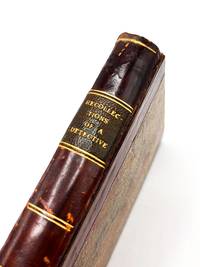
1856rif. 53813London: J. & C. Brown & Co 1856. First edition. Very good. First authorized edition in book form of these collected police detective stories the first ever of their kind to feature an investigator from Scotland Yard. Originally published in CHAMBERS'S EDINBURGH JOURNAL the thirteen stories of the First Series plus an eight additional episodes gathered three years later in the Second Series mark the first appearance in fiction of a Scotland Yard detective. Russell in the persona of "Waters" presented his narratives as first-person recollections in line with the conventions of the mid-Victorian police memoir then enjoying great popularity while offering to the reading public a new kind of hero: a policeman with intelligence curiosity and integrity. Detective fiction has always pressed up against the porous borders of that much-derided segment of popular literature now known as "true crime": just as the latter is frequently embellished and distorted for the sake of a better story crime and detective fiction in its earliest forms borrowed the shock of the real insisting as a matter of genre convention that the events depicted were only lightly fictionalized that the reader was given entrée into the "marginalized social space between 'respectable' and 'criminal'" Saunders occupied by the real-life police detective; that they were being told a true story by an insider. Verisimilitude was the point: "The genre was designed to take the private spaces operations and methodologies of the police force and publicize them for the reader and Russell himself explained that his memoir writing was designed to present an inside view into policing for readers" Saunders. Given the bedrock importance of this interplay between the real and the unreal at the dawn of detective fiction it is perhaps unsurprising that Sherlock Holmes the most famous fictional private detective of later Victorian decades would inspire a legion of devotees to insist on his factual reality perfectly well aware that this was not true and sublimely indifferent to it. A handsome copy of this scarce and vital Queen's Quorum and Haycraft-Queen title - especially uncommon complete in one volume. Two octavo volumes bound in one 6.25'' x 4''. Contemporary half calf marbled boards. Gilt-ruled spine with spine label. Lacking frontispiece as sometimes seen. 8 310 pages. In custom cloth slipcase. Sympathetically rebacked with reinforcement to hinges. Some rubbing chipping rear joint. Overall clean and sound. J. & C. Brown & Co unknown
1859rif. LTH31-C-16London: W. Kent and Co 1859. Leather. Very Good. 6.5" by 4". None. A very scarce account of a Victorian detective in very attractive leather binding. Second series. Writing under the pseudonym "Waters" the author offers a fascinating insight into nineteenth century policing. With the book plate of Arthur Gregg to the front pastedown. In half-calf binding with gilt detailing and paper-covered boards. Externally sound there is wear to the boards joints extremities and backstrip with some cracking to joints and starting to backstrip with tenderness to hinges. Internally the pages are firmly bound and are bright and clean throughout though there are instances of spotting and tide-marking to certain areas. Very Good W. Kent and Co hardcover
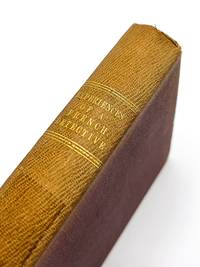
1861rif. 54625London: Charles H. Clarke 1861. Very good plus. First edition of this classic Victorian detective novel ostensibly written in the form of a memoir by an expat detective who fled his home country to avoid political persecution. After his RECOLLECTIONS OF A DETECTIVE POLICE-OFFICER 1856 the first novel of its kind to feature an investigator from Scotland Yard Russell followed-up with this first-person series of eight short stories featuring Detective Duhamel "who escaped his native France to avoid imprisonment for political reasons" Dever 234. Detective fiction has always pressed up against the porous borders of that much-derided segment of popular literature now known as "true crime": just as the latter is frequently embellished and distorted for the sake of a better story crime and detective fiction in its earliest forms borrowed the shock of the real insisting as a matter of genre convention that the events depicted were only lightly fictionalized that the reader was given entrée into the "marginalized social space between 'respectable' and 'criminal'" Saunders occupied by the real-life police detective; that they were being told a true story by an insider. Verisimilitude was the point: "The genre was designed to take the private spaces operations and methodologies of the police force and publicize them for the reader and Russell himself explained that his memoir writing was designed to present an inside view into policing for readers" Saunders. To this end Russell / Duhamel begin the book with an "essay" "The Difference Between English and French Detectives" writing: "It is true they are alike agents of the public force and that their common mission is to frustrate or detect offenses against the person and against property. But there the resemblance ends . Yes multifarious all-embracing are the duties of the French Secret Police." Rare; OCLC locates just eight copies. 6.25'' x 4''. Original full purple textured cloth with gilt spine titles. 2 13-317 1 publisher's ad pages complete. Spine sunned with faint perished label shadow. Minor shelfwear. Overall clean and sound. Charles H. Clarke unknown
1856rif. 53813London: J. & C. Brown & Co 1856. First edition. Very good. First authorized edition in book form of these collected police detective stories the first ever of their kind to feature an investigator from Scotland Yard. Originally published in CHAMBERS'S EDINBURGH JOURNAL the thirteen stories of the First Series plus an eight additional episodes gathered three years later in the Second Series mark the first appearance in fiction of a Scotland Yard detective. Russell in the persona of "Waters" presented his narratives as first-person recollections in line with the conventions of the mid-Victorian police memoir then enjoying great popularity while offering to the reading public a new kind of hero: a policeman with intelligence curiosity and integrity. Detective fiction has always pressed up against the porous borders of that much-derided segment of popular literature now known as "true crime": just as the latter is frequently embellished and distorted for the sake of a better story crime and detective fiction in its earliest forms borrowed the shock of the real insisting as a matter of genre convention that the events depicted were only lightly fictionalized that the reader was given entrée into the "marginalized social space between 'respectable' and 'criminal'" Saunders occupied by the real-life police detective; that they were being told a true story by an insider. Verisimilitude was the point: "The genre was designed to take the private spaces operations and methodologies of the police force and publicize them for the reader and Russell himself explained that his memoir writing was designed to present an inside view into policing for readers" Saunders. Given the bedrock importance of this interplay between the real and the unreal at the dawn of detective fiction it is perhaps unsurprising that Sherlock Holmes the most famous fictional private detective of later Victorian decades would inspire a legion of devotees to insist on his factual reality perfectly well aware that this was not true and sublimely indifferent to it. A handsome copy of this scarce and vital Queen's Quorum and Haycraft-Queen title - especially uncommon complete in one volume. Two octavo volumes bound in one 6.25'' x 4''. Contemporary half calf marbled boards. Gilt-ruled spine with spine label. Lacking frontispiece as sometimes seen. 8 310 pages. In custom cloth slipcase. Sympathetically rebacked with reinforcement to hinges. Some rubbing chipping rear joint. Overall clean and sound. J. & C. Brown & Co unknown books
1861rif. 54625London: Charles H. Clarke 1861. Very good plus. First edition of this classic Victorian detective novel ostensibly written in the form of a memoir by an expat detective who fled his home country to avoid political persecution. After his RECOLLECTIONS OF A DETECTIVE POLICE-OFFICER 1856 the first novel of its kind to feature an investigator from Scotland Yard Russell followed-up with this first-person series of eight short stories featuring Detective Duhamel "who escaped his native France to avoid imprisonment for political reasons" Dever 234. Detective fiction has always pressed up against the porous borders of that much-derided segment of popular literature now known as "true crime": just as the latter is frequently embellished and distorted for the sake of a better story crime and detective fiction in its earliest forms borrowed the shock of the real insisting as a matter of genre convention that the events depicted were only lightly fictionalized that the reader was given entrée into the "marginalized social space between 'respectable' and 'criminal'" Saunders occupied by the real-life police detective; that they were being told a true story by an insider. Verisimilitude was the point: "The genre was designed to take the private spaces operations and methodologies of the police force and publicize them for the reader and Russell himself explained that his memoir writing was designed to present an inside view into policing for readers" Saunders. To this end Russell / Duhamel begin the book with an "essay" "The Difference Between English and French Detectives" writing: "It is true they are alike agents of the public force and that their common mission is to frustrate or detect offenses against the person and against property. But there the resemblance ends . Yes multifarious all-embracing are the duties of the French Secret Police." Rare; OCLC locates just eight copies. 6.25'' x 4''. Original full purple textured cloth with gilt spine titles. 2 13-317 1 publisher's ad pages complete. Spine sunned with faint perished label shadow. Minor shelfwear. Overall clean and sound. Charles H. Clarke unknown books
2002rif. AME_9780471008330Wiley 2002. N/A. Hardcover. New/New. _ Wiley hardcover
rif. a97991Philadelphia 1938 first edition. American Philosophical Society. green octavo wraps. Waters article pp. 213-302 with 8 line drawing plates. Issue paginated 145-326. VG . paperback
1877rif. C49353London: Robson & Sons 1877. First Edition. Hardback. No Dust Jacket. Hardcover Hardcover. Good. First Edition. Hardback. No Dust Jacket. 4to. pp x 162. Original publisherÕs black cloth lettered gilt at spine and illustrated in gilt on the front cover. Illustrated in b/w throughout. Minor signs of ex-library status; The Marc Fitch fund library label and bookplate on the front patedown including a bookseller label and catalouge clipping. Slight rubbing at extremities and slight wear and slight splitting at spine head otherwise a sound close very good copy with clean text. Robson & Sons, hardcover
2004rif. DADAX0954246462Caister Academic Press Limited 2004-03-01. 1. hardcover. New. 6.30x1.50x9.50. Buy with confidence. Excellent Customer Service & Return policy. Caister Academic Press Limited hardcover
2004rif. SONG0954246462Caister Academic Press Limited 2004-03-01. 1. hardcover. Used: Good. 6.30x1.50x9.50. Buy with confidence. Excellent Customer Service & Return policy. Caister Academic Press Limited hardcover
rif. 62402John Churchill and Sons London; Adam Holden Liverpool. 1868. pp. viii ii 418 ii 40 Catalogue. 9 plates a couple of figures coloured. Original cloth spine a bit faded and slightly worn at the ends joints weak a good copy overall. John Churchill and Sons, London; Adam Holden, Liverpool. 1868. hardcover
1873rif. j7128aLondon: John Churchill. G: in good condition without dust jacket as issued. Cover rubbed. Spine faded. Ex Royal College of Surgeons Ireland Library. Prelims foxed. 1873. Second Edition. Maroon hardback cloth cover. 230mm x 160mm 9" x 6". xi 431pp plates & ads. Nine b/w plates. . John Churchill hardcover
1862rif. j7126London: John Churchill. G: in good condition without dust jacket as issued. Corners bumped and with minor rubbing to covers. Ex library with library stamps of the Royal College of Surgeons. 1862. First Edition. Brown hardback cloth cover. 230mm x 160mm 9" x 6". 114pp 32pp ads. 7 b/w plates. . John Churchill hardcover
1990rif. 044172Wash. D. C.: USGPO. The paperback book is fine with no markings and the six very large maps are near fine with no markings. A complete set. The publishers pictorial case shows obvious wear and looks used. A Comprehensive and impressive view of this area. Quite fascinating. Size: 4to - over 9¾" - 12" tall . Good Plus. Paperback. 1990. USGPO paperback
2020rif. x-1789663385Kogan Page Ltd 2020. Hardcover. New. 2nd edition. 202 pages. 8.75x5.75x0.75 inches. Kogan Page Ltd hardcover
rif. 1789663385.Ghardcover. Good. Access codes and supplements are not guaranteed with used items. May be an ex-library book. hardcover
2009rif. DADAX1789663385Kogan Page 2020-09-29. 2. hardcover. New. 5.79x0.87x8.82. Buy with confidence. Excellent Customer Service & Return policy. Kogan Page hardcover
2009rif. SONG1789663385Kogan Page 2020-09-29. 2. hardcover. Used: Good. 5.79x0.87x8.82. Buy with confidence. Excellent Customer Service & Return policy. Kogan Page hardcover
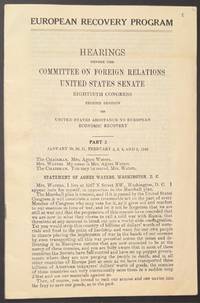
1948rif. 348912Washington DC: Agnes Waters 1948. 16p. including covers; staplebound 5.5x8.5 inch pamphlet faintly fold-creased otherwise very good. Waters has been called the most inflammatory speaker from the Mothers' Movement a network of far-right isolationist women's groups that sought to prevent the US from entering WWII and after it had begun sought withdrawal. The first half of this pamphlet reproduces her testimony before Congress opposing the Marshall Plan. The rest of the pages are devoted to polemics against Jews as the sponsors of Communism a reprint of a leaflet urging "militant Christians to fight Communism" reprints of brief newspaper articles and on the rear cover a portrait of Waters captioned "For my country- against the Jews" with facsimile inscription at the bottom identifying her as "only woman candidate for president of the United States. [Agnes Waters] unknown
1948rif. 320109Washington DC: Agnes Waters 1948. 16p. including covers; staplebound 5.5x8.5 inch pamphlet penciled notation about anti-Semitic contents mostly erased but still partly visible on cover. Waters has been called the most inflammatory speaker from the Mothers' Movement a network of far-right isolationist women's groups that sought to prevent the US from entering WWII and after it had begun sought withdrawal. The first half of this pamphlet reproduces her testimony before Congress opposing the Marshall Plan. The rest of the pages are devoted to polemics against Jews as the sponsors of Communism a reprint of a leaflet urging "militant Christians to fight Communism" reprints of brief newspaper articles and on the rear cover a portrait of Waters captioned "For my country- against the Jews" with facsimile inscription at the bottom identifying her as "only woman candidate for president of the United States. [Agnes Waters] unknown
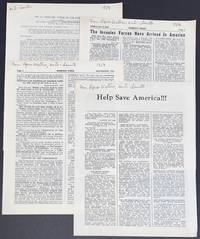
1954rif. 304860Washington DC: Agnes Waters 1954. Four different 8.5x11 inch leaflets one of them a single sheet the others 4 pages; they are marked in pencil by the original recipient "From Agnes Waters Anti-Semite." Otherwise minor handling wear. The single-page leaflet is titled "Help save America!" One of the four-pagers is titled "The All Engulfing Terror or The World Tetrarchy" and the other two are open letters reprinted from the pages of the far-right publication Women's Voice. Each item cites Waters as "Only woman candidate for President of the United States." Waters has been called the most inflammatory speaker from the Mothers' Movement a network of far-right isolationist women's groups that sought to prevent the US from entering WWII and after it had begun sought withdrawal. Here a decade later she blames the Jews for the Korean War. As a sample of her tone this passage describes a chance encounter on the street in Washington DC during a visit by British officials: "Well when Churchill and Eden passed by I said to them 'No War Mr. Churchill NO WAR!' then came Anthony Eden and I said the same thing to him; and Mr. Churchill bowed low before me! I went into the street weeping! the whole panorama of wars was passing thru my mind like a picture and I cried out loud in the public place so I felt ashamed of my tears! so I decided to hide myself away in a small hotel across the street from The Statler Hotel and running over there I ran right into that devil of a Barney Baruch! Well my tears changed like lightning to HOLY FURY! and I almost grabbed that big horsy-looking Jew by the throat! I know him when I see him and he KNOWS ME TOO! as we have often seen each other on the Hill in battles there where I was fighting him and his JEWS! It was like The Holy Ghost taking ahold of me! I was So FURIOUS! and what I said to him is beyond the pale of print to write down! But the gist of it was that I whirled in my tracks and paced him down the street to the corner and gave him all hell at every step! The Jew Herbert Morrison was with him at his other side and this little pot-bellied JEW is the Secretary of The British Labor Party! I told Baruch in this Jew's hearing and good and loud too so that a big crowd gathered to hear me yell at him that if he took us to war again that there would not be a Jew left living from New York to San Francisco! and that he better weigh every word I said well as there was a million Americans behind every word I said! I also informed him that we were wise to his old tricks of getting us mass-murdered in his hell-holes and that Guatemala was another one that would not fool us! I called him every name I could think of too! When I left him he was as white as a sheet! and I KNEW HE WAS DEFEATED. for he well knows that his game is up now and that there will be a revolt of the American people if these Jews get us into war again! Agnes Waters unknown
1946rif. 306971Washington DC: Agnes Waters 1946. Ephemera. 4p. 8.5x14 inch mimeographed press release with mimeo cover letter stapled to the front; note penciled at the top by the original recipient: "From Agnes Waters- Native Fascist." Horizontal fold otherwise very good condition. Waters has been called the most inflammatory speaker from the Mothers' Movement a network of far-right isolationist women's groups that sought to prevent the US from entering WWII and after it had begun sought withdrawal. Here in the context of postwar diplomatic rifts with the Soviet Union she accuses everyone from Albert Einstein to the CIO of being internal servants of the Jewish-Communist conspiracy set to destroy America through the United Nations. The cover letter asks her supporters to circulate the statement widely. Agnes Waters unknown
1945rif. 511672Washington D. C.: Agnes Waters 1945. Unbound. Fine. Promotional postcard and invitation to a speech by Agnes Waters. Measuring 5.5" x 3.5". Printed on recto. Verso is addressed to "Mr. M. B. Rorner Buffalo New York" and is postmarked "Washington D. C. June 25 1945." A single tiny closed tear else a fine copy. Agnes Waters was a political activist and write-in candidate for President in four elections starting in 1944. Agnes Waters unknown