G CuvierBiblio.com

1150 risultati
rif. 0265640695.Ghardcover. Good. Access codes and supplements are not guaranteed with used items. May be an ex-library book. hardcover
rif. 0259284262.Gpaperback. Good. Access codes and supplements are not guaranteed with used items. May be an ex-library book. paperback
rif. 0265346800.Ghardcover. Good. Access codes and supplements are not guaranteed with used items. May be an ex-library book. hardcover
rif. 0266161766.Gpaperback. Good. Access codes and supplements are not guaranteed with used items. May be an ex-library book. paperback
rif. 0364382805.Ghardcover. Good. Access codes and supplements are not guaranteed with used items. May be an ex-library book. hardcover
rif. 0656292636.Gpaperback. Good. Access codes and supplements are not guaranteed with used items. May be an ex-library book. paperback
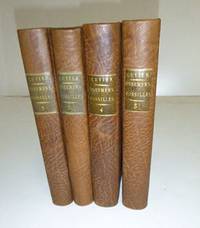
1819rif. 35267Strasbourg: F.G. Levrault 1819. Fine. F.G. Levrault Strasbourg 1819 12 x 20 cm relié First edition a sequel would appear in 1827 then another until 1832. Contemporary half sheep binding in brown. Smooth spine with fillet and roulette. Yellow edges. Permanent Secretary of the Academy of Sciences it was Cuvier's responsibility to compose these biographies of celebrated scientists who had been members. These were read during public sessions; the first volume brings together the speeches delivered from 1799 to 1810 the second from 1810 to 1819. The work also contains Cuvier's reception speech at the Academy as well as a preface on the future of sciences. F.G. Levrault unknown
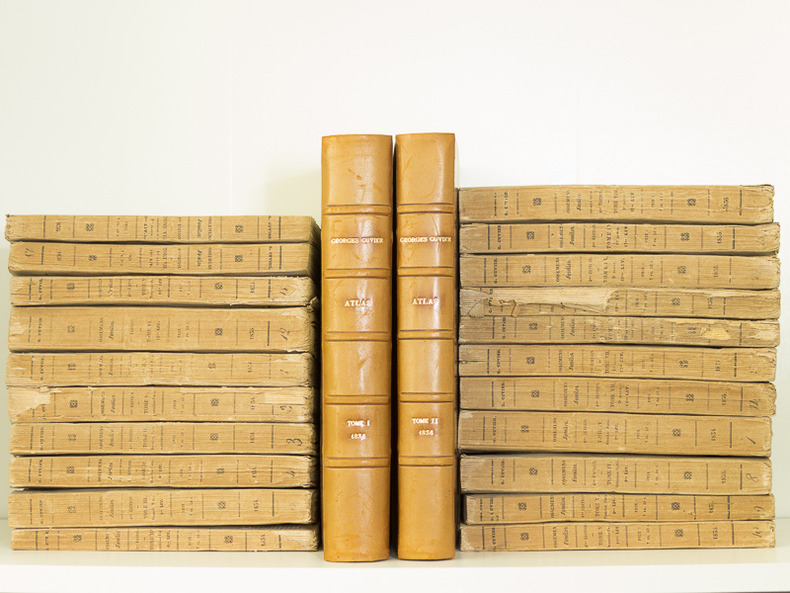
1834rif. 41646Quatrième édition, revue et complétée au moyen de Notes additionnelles et d'un Supplément laissés par l'Auteur, 21 vol. in-8 br. et 2 vol. in-4 reliure moderne demi-basane à coins blonde, dos à 5 nerfs, Edmond d'Ocagne, J.B. Baillière, Crochard, Levrault, Roret, 1834 - 1836, ; T. I 1e P. : 16 pp. (Prospectus) et 256 pp. ; T. I 2e P. : pp. 257-587 ; T. II 1e P. : 2 ff. , 240 pp. ; T. II 2e P. : pp. 241-500 ; T. III 1e P. : 271 pp. ; T. III 2e P. : pp. 273-435 ; T. IV 1e P : 2 ff. , iv-368 pp. ; T. IV 2e P. : pp. 369-691 ; T. V. 1e P. : 3 ff., 240 pp. ; T. V. 2e P. : pp. 261-464 ; T. V. 3e P. : pp. 465-687 et 1 f. d'errata ; T. VI : 452 pp. ; T. VII 1e P. : 256 pp. ; T. VII 2e P. : pp. 257-533 ; T. VIII 1e P. : 2 ff., 272 pp. ; T. VIII Complément 1e P.. : pp. 255-463 et 2 ff. ; T. VIII 2e P. : 332 pp. : T. IX 1e P. : : 240 pp. ; T. IX 2e P. : pp. 241-501 et 1 f. d'errata ; T. X 1e P. : 256 pp. ; T. X 2e P. : pp. 257-497 ; Atlas Tome I : 2 ff., 88 pp. (explication des planches, manquent les explications des pl. 155 - partiellement - à 161) , 161 planches numérotées ; Atlas Tome II : 106 pp. (explication des planches), 1 f. n.ch., 100 planches numérotées de 162 à 260, avec 219 bis, et 18 planches numérotées de A à S (pas de planche I)
1834rif. 81161834 Paris: Edmond dOcagne, Baillière, Levrault, Crochard, Roret, 1834-1836. Complet en 10 vol. in-8 (13 x 21 cm) de texte et 2 vol. in-4 (22 x 27,5 cm) datlas. I/ 2 ff. n. chiff., xxiv-587 pp. + 2 tab. dép.; II/ 2 ff. n. chiff., 500 pp.; III/ 2 ff. n. chiff., 435-[1] pp.; IV/ 2 ff. n. chiff., iv-691 pp.; V/ 2 ff. n. chiff., 687-[1] pp.; VI/ 2 ff. n. chiff., 452 pp.; VII/ 2 ff. n. chiff., 535-[1] pp.; VIII/ 2 ff. n. chiff., 462-[1] pp. [tome VIII, 1ère partie], 2 ff. n. chiff., 332 pp. [tome VIII, 2ème partie]; IX/ 2 ff. n. chiff., 501 pp., 1 f. n. chiff.; X/ 2 ff. n. chiff., 494 pp., 1 f. n. chiff.;Atlas I/ 2 ff. n. chiff. [faux-titre, titre], 1 portr. grav., 94 pp. [explications des planches], 161 pl. grav. chiff. 1 à 161; Atlas II/ 106-[1] pp. [faux-titre, titre, explications des planches, impressum], 100 pl. grav. chiff. 162 à 260 (y c. 219 bis, pl.253 chiff. 255), 1 carte dép. chiff. pl. A, 17 pl. lith. chiff. pl. B à S.Quatrième et plus complète édition de cet écrit fondamental sur la paléontologie des vertébrés composé par le célèbre naturaliste Georges Cuvier (1769-1832) et édité par son frère Frédéric. Cette somme est illustrée dun portait de Cuvier gravé par Lorichon et de 261 planches dossements dessinées par Cuvier, Laurillard, Huet, et gravées par Couet, Canu, Coutant, Sauvage, la plupart dépliantes et regroupant toutes de nombreuses figures. À cela sajoutent une carte géognostique des environs de Paris, dépliante et rehaussée en couleurs, 1 pl. dép. représentant des coupes géognostiques des terrains de Paris, 6 pl. lithographiées de coupes de terrain, 1 carte en couleurs des bassins géognostiques de Paris et de Londres, ainsi que 9 pl. lith. de divers fossiles. Sobres et élégantes reliures de lépoque en demi-basane glacée olive à petits coins. Dos à quatre nerfs plats marqués de filets dorés et bordés de pointillés. Auteur, titre et tomaison en capitales dorées. Roulette végétale en queue. Ex-dono manuscrit sur toutes les pages de gardes: «donné par Mr Adolphe dEichthal / Paris 1845». Adolphe dEichthal, né en 1805 à Nancy et mort en 1895 à Paris, financier et politicien, sera notamment président de lassociation pour lavancement des sciences dans les années 1870.Rousseurs éparses. Dechirrures aux pp. 87 à 96 du tome III. Reliure et planches en très bon état. Désirable exemplaire de ce mythique ouvrage de sciences naturelles bien complet de toutes les planches.
1825rif. 57403Paris: Dufour et E. D'Ocagne 1825. Third edition. Quarto 32cm. Seven volumes complete in modern half black morocco green cloth over boards titled in gilt on spines and fronts; modern marbled endpapers; vol. I: vi194340pp; vol. II part I: ivIV2371229-232pp; vol. II part 2: iv239-648pp; vol. III: iv412pp; vol. IV: iv514pp; vol. V part 1: iv4051pp; vol. V part 2: iv 5471pp; 277 engraved plates including frontispiece one plate with hand color and 2 maps 1 letterpress folding table. Straight and sound with occasional scattered browning and soil a few page corners neatly restored one plate margin trimmed close to image area but largely clean and bright: Very Good. Third edition of the work in which Cuvier demonstrated the reality of extinction through detailed examination of fossils; a cornerstone work in paleontology biology and geology. Earlier editions appeared in 1812 and 1821-24. When Cuvier began his research in the late eighteenth century it was generally believed that no species had ever gone extinct. "Taking for his field the little-known fossil quadrupeds and applying to them the principles of comparative anatomy Cuvier astonished the world by reconstructing prehistoric forms of animal life whose existence had never been suspected" Glass Temkin & Straus Forerunners of Darwin 253. He established extinction as a fact demonstrated that the age of the earth was greater than six thousand years and did much to establish the fields of comparative anatomy and paleontology. However Cuvier forcefully opposed pre-Darwinian theories of evolution. In the introduction to Ossemens Fossiles later published separately as Discours sur les révolutions de la surface du globe 1826 Cuvier argued in favor of catastrophism-the theory that violent catastrophes like the Biblical flood had caused extinction events and shaped geological features. This theory left room for contemporaries to infer a divine force that caused catastrophes and created new species; thus his research "provided a safety valve . . . between the push of geology and the drag of theology" Forerunners 255. His theories were in part disproven by Darwin and Lyell who demonstrated that both species and geological formations undergo gradual change over time; but Cuvier's ideas about catastrophism were vindicated by more recent research into mass extinction events caused by volanic eruptions and asteroids. This edition not in Ward/Carozzi. Dufour et E. D'Ocagne unknown books
rif. 94473, s.d. (c. 1821), in-4, 331 pp, 1 table depl, Demi-basane olive de l'époque, dos lisse orné de fleurons romantiques, Manuscrit rédigé à l'encre d'une écriture soignée, entièrement réglé, reproduisant l'intégralité du célèbre Discours préliminaire de Georges Cuvier (1769-1832). Le copiste y a ajouté des extraits de plusieurs publications soutenant l'hypothèse du catastrophisme développée par le naturaliste : il y aurait eu autant de cataclysmes que d'âges fossiles, chaque espèce disparaissant de la surface de la terre lors de ces bouleversements, dont le dernier coïnciderait avec le Déluge de la Bible L'auteur du manuscrit a ici reproduit Discours préliminaire tel qu'il est paru en 1821, en ouverture de la seconde édition des Recherches sur les ossemens fossiles (Paris, Dufour, d'Ocagne, 1821). Ce texte important avait été publié pour la première fois avec le premier volume de l'édition originale de 1812. Il sera l'objet en 1825 d'un tiré à part sous le titre de Discours sur les révolutions de la surface du globe. Extraits ajoutés : - De Cuvier : "Les déluges d'Ogygès et de Deucalion sont-ils des évènements réels ou particuliers, ou des traditions altérées du Déluge universel?" (p. 267-275). Cette note est extraite de la Collection des auteurs classiques latins publiée par Lemaire, en tête du volume consacré à Ovide (t. 16, 8e livraison. 1821). - De Picot : "Réflexions sur le discours précédent. Sur les indices que la géologie et l'histoire des peuples fournissent relativement à l'antiquité du monde" (p. 279-287). Extrait de l'Ami de la religion et du roi, 19 décembre 1821, t. 30, n° 768. - De Lemontey, Cuvier, Brogniart... "Extraits sur différentes espèces de quadrupèdes fossiles" (288 et suiv.) : mastodonte, éléphant fossile, hippopotame, rhinocéros, félin, cerf, boeuf, baleine, tortues, etc. Cea beau document, qui relaie l'explication du fixisme, et donc du créationnisme, est enrichi d'un billet autographe signé de G. Cuvier du 17 juillet 1830, inséré en tête du volume : "Maillol laissera passer M. Werner avec deux poissons et deux oiseaux qu'il est en charge de peindre" [Jean-Charles Werner, peintre du Muséum, qui fut notamment chargé de réaliser la très belle illustration de l'Histoire naturelle des poissons de Cuvier et Valenciennes]. Ex-libris armorié de Mr de Badts de Cugnac sur le contreplat. Dos décollé et lacune en tête. Bel état intérieur. Couverture rigide
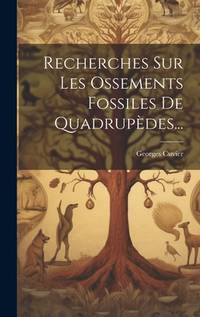
1969rif. 67762Impression anastaltique, Culture et Civilisations, Bruxelles, 1969, [Chez Déterville, Paris, 1812 ], rappel du titre complet : Recherches sur les Ossemens Fossiles de Quadrupèdes, où l'on rétablit les Caractères de plusieurs Animaux que les Révolutions du Globe paroissent avoir détruites (4 Tomes - Complet) Tome I : Contenant le Discours préliminaire et la géographie minéralogique des environs de Paris ; Tome II : Contenant les Pachydermes des couches meubles et des terrains d'alluvion ; Tome III : Contenant les os fossiles des environs de Paris ; Tome IV : Contenant les Ruminans, les Onguiculés et les Reptiles Fossiles
1812rif. 154897Paris: Chez Deterville 1812. hardcover. very good. 4 volumes. Illustrated with 154 splendid copperplates many folding and and an additional folding hand-colored geognostical map of Paris and vicinity. Each volume several parts with distinct pagination. 4to bound in early calf-backed boards with red leather labels spines are brittle and somewhat damaged at edges uncut edges. Paris: Chez Deterville 1812. First edition. Internally excellent copy with wide- margins and only faint scattered foxing. Through the method of reconstruction of what ancient mammals must have looked like on the basis of bone and other fossil remnants "Cuvier created the science of paleontology in the modern sense. At the same time he largely reformed the system of zoological classification by introducing fossil animals into it" Nordenskold. "His concept of geological revolutions which he believed to be a regular and natural part of earth's history was used to explain the mass extinction of species from previous opochs" Norman 566. "A landmark in the history of science" Horblit 20b. Chez Deterville unknown books
1825rif. 94468Paris, G. Dufour & E. d'Ocagne, 1825, in-4, 5 tomes en 7 vol, portrait-front, 279 pl, Demi-basane racinée de l'époque, dos lisses ornés de roulettes et de fleurons, Troisième édition, augmentée, des Recherches sur les ossements fossiles, parues pour la première fois en 1812. Les planches gravées sur cuivre, dont de nombreuses dépliantes, comprennent des figures d'ossements et de fossiles, 3 cartes et des coupes stratigraphiques de géognosie parisienne (dont 1 grande dépliante, 1 carte à simple page aquarellée et 1 très grande carte dépliante aquarellée). Ouvrage fondamental de la paléontologie dans lequel Georges Cuvier (1769-1832) s'est attaché à reproduire les animaux disparus à partir des collections ostéologiques du Muséum. Il ouvre sur le célèbre Discours préliminaire, "Discours sur les évolutions de la surface du globe", titre sous lequel il est publié à part la même année : cette exposition fixe définitivement les idées créationnistes de Cuvier, qui défend la thèse que tous les fossiles ont été créés par les catastrophes du passé; autrement dit, il y aurait eu autant de cataclysmes que d'âges fossiles, chaque espèce disparaissant de la surface de la terre lors de ces bouleversements, dont le dernier coïnciderait avec le Déluge de la Bible. Cuvier est considéré comme le fondateur de la paléontologie et de l'anatomie comparée. Il a été le premier à appliquer la notion d'équilibre à la nature, en l'envisageant comme un immense réseau au sein duquel les espèces dépendaient les unes des autres. Cet esprit brillant, qui rédigea plus de 300 articles scientifiques et publia plusieurs monographies majeures, endossa plusieurs fonctions importantes : celles de professeur au Collège de France et au Muséum, de secrétaire perpétuel de l'Académie des Sciences ou encore d'inspecteur général de l'Instruction publique. Pourtant, sa croyance dans la préexistence des germes ne le disposait pas à admettre l'idée transformiste. À l'inverse, il tira avantage de sa gloire académique pour défendre la théorie créationniste : il s'opposa à Lamarck, qu'il railla jusque dans son éloge funèbre (1832), et à Geoffroy Saint-Hilaire, son ancien ami, avec lequel il entra dans une controverse violente. Provenance : Jules de Vaucelle, avec ex-libris armoriés sur les contreplats. Bon exemplaire. Charnières frottées, rousseurs éparses. Nissen ZBI n° 1011. Couverture rigide
1825rif. 57403Paris: Dufour et E. D'Ocagne 1825. Third edition. Quarto 32cm. Seven volumes complete in modern half black morocco green cloth over boards titled in gilt on spines and fronts; modern marbled endpapers; vol. I: vi194340pp; vol. II part I: ivIV2371229-232pp; vol. II part 2: iv239-648pp; vol. III: iv412pp; vol. IV: iv514pp; vol. V part 1: iv4051pp; vol. V part 2: iv 5471pp; 277 engraved plates including frontispiece one plate with hand color and 2 maps 1 letterpress folding table. Straight and sound with occasional scattered browning and soil a few page corners neatly restored one plate margin trimmed close to image area but largely clean and bright: Very Good. Third edition of the work in which Cuvier demonstrated the reality of extinction through detailed examination of fossils; a cornerstone work in paleontology biology and geology. Earlier editions appeared in 1812 and 1821-24. When Cuvier began his research in the late eighteenth century it was generally believed that no species had ever gone extinct. "Taking for his field the little-known fossil quadrupeds and applying to them the principles of comparative anatomy Cuvier astonished the world by reconstructing prehistoric forms of animal life whose existence had never been suspected" Glass Temkin & Straus Forerunners of Darwin 253. He established extinction as a fact demonstrated that the age of the earth was greater than six thousand years and did much to establish the fields of comparative anatomy and paleontology. However Cuvier forcefully opposed pre-Darwinian theories of evolution. In the introduction to Ossemens Fossiles later published separately as Discours sur les révolutions de la surface du globe 1826 Cuvier argued in favor of catastrophism-the theory that violent catastrophes like the Biblical flood had caused extinction events and shaped geological features. This theory left room for contemporaries to infer a divine force that caused catastrophes and created new species; thus his research "provided a safety valve . . . between the push of geology and the drag of theology" Forerunners 255. His theories were in part disproven by Darwin and Lyell who demonstrated that both species and geological formations undergo gradual change over time; but Cuvier's ideas about catastrophism were vindicated by more recent research into mass extinction events caused by volanic eruptions and asteroids. This edition not in Ward/Carozzi. Dufour et E. D'Ocagne unknown
rif. 46385248like new. unknown
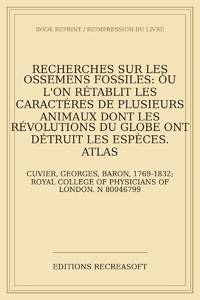
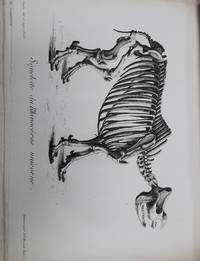
2026rif. LRB7008743Paris: Editions Recreasoft 2026 Langue : Français. Environ 786 pages. Français : Réimpression à la demande. Édition originale : 1836. Atlas accompagnant les Recherches sur les ossemens fossiles de Georges Cuvier ouvrage fondamental de paléontologie et d'anatomie comparée. Cette planche remarquable illustre l'étude des ossements fossiles et la reconstitution des caractères d'animaux disparus au coeur des débats scientifiques sur les révolutions du globe et l'histoire des espèces. Images du livre non contractuelles English : Print-on-demand reprint. Original edition : 1836. Atlas accompanying Georges Cuvier's Recherches sur les ossemens fossiles a fundamental work in palaeontology and comparative anatomy. This notable plate volume illustrates the study of fossil bones and the reconstruction of the features of extinct animals at the center of scientific debates on the revolutions of the globe and the history of species. Book images are non-contractual. Editions Recreasoft. Softcover. New. Editions Recreasoft paperback
2026rif. LRB13001241Paris: Editions Recreasoft 2026 Langue : Français. Environ 668 pages. Français : Réimpression à la demande. Édition originale : 1821. Ouvrage fondamental de Georges Cuvier consacré à l'étude des ossements fossiles et à la reconstitution de plusieurs animaux disparus. Texte majeur pour l'histoire des sciences naturelles de la paléontologie et de l'anatomie comparée particulièrement recherché pour son importance bibliographique et scientifique. Images du livre non contractuelles English : Print-on-demand reprint. Original edition : 1821. Landmark work by Georges Cuvier on fossil bones and the reconstruction of several extinct animals. A major text in the history of natural sciences palaeontology and comparative anatomy highly sought after for its scientific and bibliographical importance. Book images are non-contractual. Editions Recreasoft. Softcover. New. Editions Recreasoft paperback
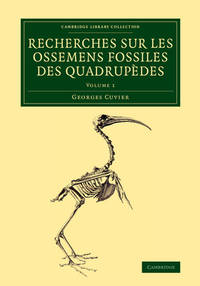
rif. aauphy990265Cambridge University Press. paperback. NEW. 7x0x10. Cambridge University Press paperback
rif. DADAX0270982035Wentworth Press 2018-07-29. hardcover. New. 6.14x0.94x9.21. Buy with confidence. Excellent Customer Service & Return policy. Wentworth Press hardcover
rif. 1024772209.Ghardcover. Good. Access codes and supplements are not guaranteed with used items. May be an ex-library book. hardcover
rif. 51-5714Paris Déterville 1812. 4 volumes. 4to. 21 x 27cm Later qtr goatskin with matching brown marbled boards. With 152 engraved plates of 154. Fine condition.Contents: T. 1. Discours preÌliminaire et la geÌographie mineÌralogique des environs de Paris.t. 2. Pachydermes des couches meubles et des terrains d'alluvion.t. 3. Os fossiles des environs de Paris.t. 4. Ruminans les onguiculeÌs et les reptiles fossiles .Vol. 1 includes Discours préliminaire in which Cuvier introduced the idea of geological ‘revolutions’ to explain mass extinctions of prehistoric species. Other papers include an essay on an Egyptian ibis mummy brought from Thebes during Napoleon's campaign in Egypt; and with Alexandre Brogniart 1770-1847 an updated version of Cuvier's important stratigraphical memoir of 1810 Essai sur la Géographie Minéralogique des Environs de Paris which contributed to the concept of faunal succession in rock strata of different periods. In Vol. 2 Cuvier describes species of pachyderms found in recent alluvial deposits including elephants mastodons rhinoceros hippopotamus and tapir. In Vol. 3 Cuvier's recalls the challenges of reconstruing fossils of different species. Vol. 4 concerns fossil horses and pigs bears hyenas and big cats and concludes by describing fossil sloths crocodiles turtles and marine dinosaurs.OCLC Number988198; Nissen ZBI 1011; BMNH Cat. I p. 409.Near the end of the eighteenth century scholars disputed whether fossils represented life forms that no longer existed or whether—as the Comte de Buffon at the Jardin des Plantes in Paris believed—the fossils found in Europe and America represented animals that had migrated to the tropics. Buffon argued that God would not have let his creations go extinct. In 1796 Cuvier presented a paper to the National Institute of Sciences and Arts in Paris in which he compared the anatomy of living and fossil elephants thus proving extinction to be a fact as the fossil elephants had not been seen by recent humans. In the following years Cuvier continued to document the extinction of animals such as the giant ground sloth the Irish elk and the American mastodon.Cuvier's research on extinct forms led him to investigate the causes of extinction. He proposed a catastrophist geological history of the earth. Édition originale de cet ouvrage important dans le domaine de la paléontologie. L'illustration se compose de 152 planches gravées sur 154 d'après les dessins de Cuvier et une très grande carte dépliante en couleurs "Carte géognostique des environs de Paris" Il s'agit d'un recueil d'articles que Cuvier fit paraître de 1795 à 1812 dans de nombreuses revues et en particulier dans les Annales du Muséum. Il s'ouvre sur un Discours préliminaire dans lequel l'auteur expose ses idées sur les cataclysmes qui ont bouleversé la terre en particulier le dernier qui coïncide avec le Déluge de la Bible. En français dans le texte 224. cartonnages frottés et usés manque 2 planches quelques feuillets et planches détachés intérieur très frais. Expertise by: François Giard Paris, Déterville, 1812 hardcover
rif. 102232084X.Gpaperback. Good. Access codes and supplements are not guaranteed with used items. May be an ex-library book. paperback
1812rif. A37982Paris: Chez Deterville 1812. 157 engraved plates some folding including a large folding hand-coloured map. . HB. 4 vols 4to 283x215mm orig. paper covered boards heavily rubbed/worn spines chipped gilt rules and leather title labels to spines; wide margins with edges uncut; some foxing and browning a few short marginal tears; one folding plate damaged - creased and torn with loss to several figures; 6cm tear to inner margin of another large folding plate.Pagination: Vol. I: 8 vi 120 20 viii 278 2 23 1; Vol. II: 4 10 12 21 1 33 1 30 24 20 6 140 43 1 20 4; Vol. III: 4 3 1 8 174 21 1 14 75 1 20 7 1 8 2 16 21 1 4 20; Vol. IV: 7 1 5 3 66 38 10 2 72 18 20 30 9 1 27 1 43 1 40 2 59 1 26 38 32 37 1 16. Scarce first edition of a work which laid the foundation of vertebrate paleontology Horblit One Hundred Books 20b. The separately paginated memoirs many of which first appeared in 'Ann. Mus. Hist. Nat. Paris' are here reissued in revised form prefaced by the important 'Discours preliminaire'. Georges Cuvier 1769-1832 was an outstanding French naturalist who helped to found the fields of vertebrate paleontology and comparative anatomy. He was professor of comparative anatomy at the Mus�um d�Histoire Naturelle Paris. As Martin J. S. Rudwick states 'It is difficult to overestimate the huge impact of Cuvier on zoology paleontology and geology.' Significant and highly influential results of Cuvier's palaeontological and geological research were presented in a series of essays published in these four volumes Recherches sur les ossemens fossiles de quadrupe`ds Paris 1812. Rudwick notes that Cuvier �called himself �a new species of antiquarian� who was using fossil bones instead of human artifacts as historical evidence. He therefore argued that naturalists such as himself could and should aspire to �burst the limits of time� � just as astronomers such as Pierre-Simon de Laplace to whom he dedicated his Ossemens fossiles had already �burst the limits of space". Vol. 1 includes Discours pr�liminaire in which Cuvier introduced the idea of geological �revolutions� to explain mass extinctions of prehistoric species. Other papers include an essay on an Egyptian ibis mummy brought from Thebes during Napoleon's campaign in Egypt; and with Alexandre Brogniart 1770-1847 an updated version of Cuvier's important stratigraphical memoir of 1810 Essai sur la G�ographie Min�ralogique des Environs de Paris which contributed to the concept of faunal succession in rock strata of different periods. In Vol. 2 Cuvier describes species of pachyderms found in recent alluvial deposits including elephants mastodons rhinoceros hippopotamus and tapir. In Vol. 3 Cuvier's recalls the challenges of reconstruing fossils of different species. Vol. 4 concerns fossil horses and pigs bears hyenas and big cats and concludes by describing fossil sloths crocodiles turtles and marine dinosaurs.Nissen ZBI 1011; BMNH Cat. I p. 409. Chez Deterville hardcover
1812rif. 154897Paris: Chez Deterville 1812. hardcover. very good. 4 volumes. Illustrated with 154 splendid copperplates many folding and and an additional folding hand-colored geognostical map of Paris and vicinity. Each volume several parts with distinct pagination. 4to bound in early calf-backed boards with red leather labels spines are brittle and somewhat damaged at edges uncut edges. Paris: Chez Deterville 1812. First edition. Internally excellent copy with wide- margins and only faint scattered foxing. Through the method of reconstruction of what ancient mammals must have looked like on the basis of bone and other fossil remnants "Cuvier created the science of paleontology in the modern sense. At the same time he largely reformed the system of zoological classification by introducing fossil animals into it" Nordenskold. "His concept of geological revolutions which he believed to be a regular and natural part of earth's history was used to explain the mass extinction of species from previous opochs" Norman 566. "A landmark in the history of science" Horblit 20b. Chez Deterville unknown