14 202 résultats
1990réf. 1042371990 Editions du Centre National de la Recherche Scientifique, Paris - 1973 à 1984 - 5 volumes in-8 - Cartonnage pleine toile verte - Titre et tomaison en doré - 1879 pages (pagination continue - Illustrations en noir et blanc hors texte - Couvertures originales conservées - OUVRAGE DE REFERENCE - Couverture plastique transparente protégeant les volumes ( accidents / déchirures à cette couverture plastique)
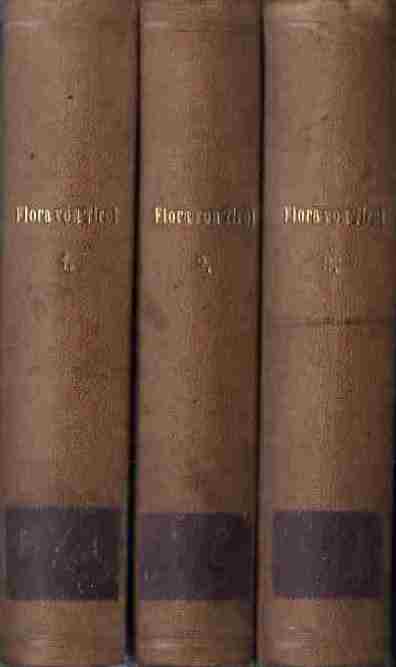
1854réf. 29004Innsbruck, Verlag der Wagner`schn Buchhandlung, 1851/1852/1854. 3 Bände ("Hefte") (8), XIV, 1614 S. Kl.-8°, Halbleinenbände der Zeit mit Rückentitel
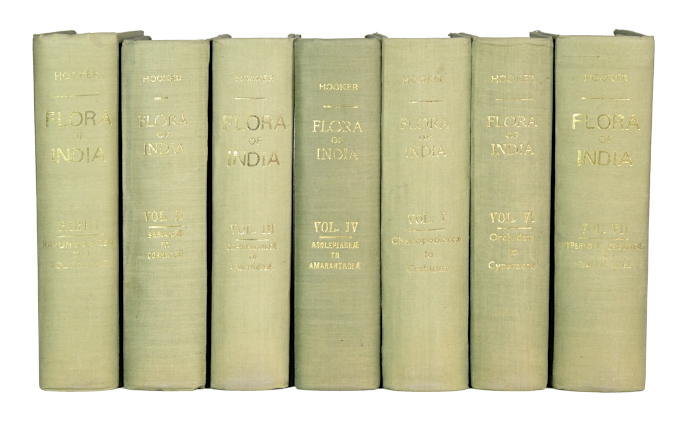
1897réf. 57629Delhi u. Dehradun, Periodical Expert Book Agency u. International Book Distributors, 1978 (Nachdruck der Ausgabe 1872-1897). 8°. Zus. ca. 5.500 S., OLwd.-Bde.
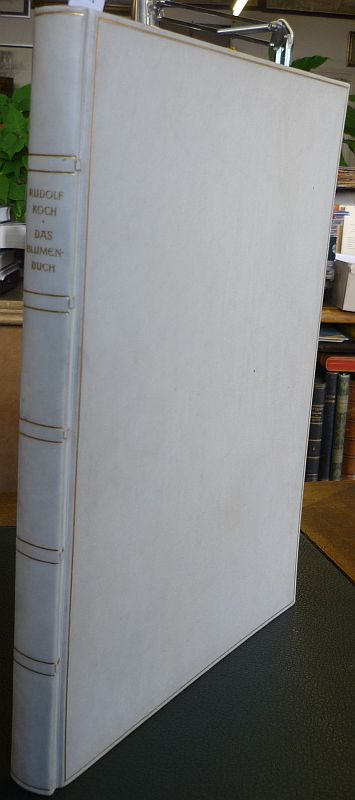
1942réf. 11831Leipzig, Insel, 1942. 4to. Mit 80 ganzs. v. Emil Wöllner handkolorierten Holzschnitten auf 80 Bl., 7 S. Text. OPgt. m. 5 durchgezogenen Bünden, Rückengoldprägung u. Filtenvergoldung der Deckel. Gelber Kopfschnitt.
1902In 8° (20,5×13,3 cm), XIV, 98, (2) pp. e 40 tav. fuori testo. Bellissima legatura editoriale in tutta tela rigida con titolo e fiori colorati al piatto anteriore. Prima edizione assai rara e completa delle 40 tavv. f.t. in cromolitografia protette da velina di questo importantissimo studio sulla flora delle alpi del grande botanico e ricercatore scientifico tedesco, naturalizzato italiano dove visse e lavorò, Ottone Penzig. Nato in Slesia nell’odierna Chojnow in Polonia, si laureò a Breslavia nel 1877. A causa di motivi di salute si trasferì prima in Costa Azzurra e poi in Italia, dove nel 1883 divenne direttore della Regia Stazione Agraria di Modena. Nel 1886 ottenne la cattedra di Botanica all’Università di Genova che tenne per quarant’anni. In seguito al matrimonio con Lucia Ottini di Breno in Valle Camonica, ed alla conseguente frequenza in quella valle, Ottone divenne amico di escursionisti del luogo e lui stesso fu escursionista, fatto al quale diede immediatamente significato scientifico, preparando per la flora e per altri reperti naturali (soprattutto fossili) del luogo, specifiche ricerche e pubblicazioni, nonché raccolte di campioni. Fondò e diresse Malpighia che restò per lungo tempo, la più importante rivista di botanica in Italia. Fu uno dei fondatori della Società Teosofica Italiana. A causa delle sue origini tedesche fu perseguitato e minacciato dai nazionalisti italiani e costretto durante il periodo bellico a ritirarsi a Loisine in Valle Camonica dove la moglie aveva grandi proprietà. Lo studio qui presentato è considerato come uno dei più importanti dedicati alla flora alpina. Bellissime le tavole botaniche in cromolitografia. Prima edizione (una seconda uscì qualche anno dopo) non comune ed in buone-ottime condizioni di conservazione.
Acquaforte misure: mm 201 x 267 Incisore e disegnatore italiano, probabilmente anche architetto e ingegnere attivo a Firenze eccetto che per un breve soggiorno nei Paesi Bassi fra il 1612 e il 1613. Non si formò presso l’accademia di Giulio Parigi a Firenze, come venne dichiarato, tuttavia collaborò spesso con lui, per esempio nel 1608 incise due serie di bulini inerenti il teatro di Giulio Parigi. La sua prima opera documentata è datata 1603, anno anche di una serie di acqueforti rappresentanti paesaggi. Lo stile delle sue primissime opere è influenzato da Paul Bril, ma il suo modo di creare la prospettiva attraverso l’intensificazione delle ombre rimanda ad Antonio Tempesta, è interessante notare che Cantagallina fu uno dei primi artisti ad adottare una nuova visione della natura, non più fantastica e spaventosa, ma vicina alla concretezza dei temi quotidiani. Il suo segno è riconoscibile, di impianto manierista tratta le ombreggiature accostando linee parallele, scandisce i piani con un approccio teatrale a quinte sovrapposte; l’influsso nordico si riconosce nelle tipiche sagome tondeggianti delle fronde. Questa stampa fa parte della serie, composta da 19 acqueforti, intitolata Navi degli Argonauti che documenta il combattimento navale rappresentato in Arno a Firenze nel 1608 in occasione delle nozze di Cosimo de Medici, erede al trono di Toscana, e Maria Maddalena d’Austria. In questa tavola, la numero 18 tratta da un soggetto di Iacopo Ligozzi, vediamo solcare i mari per la conquista del vello d'oro un'imbarcazione a forma di pavone dall'occhiuta chioma che porta sul dorso, seduti su di un trono, tre soldati quello centrale caratterizzato da un elmetto riccamente piumato. Oltre l'immagine incisi titolo e a destra "Battaglia navale rapp in Arno per le nozze del Ser. Princ di Tosc l'an 1608 Iacopo Ligosta I'", mentre nell'immagine al centro, a destra il monogramma di Remigio Cantagallina. Impressione eccellente. Ottimo stato di conservazione. Rifilata alla battuta del rame nel margine inferiore. Filigrana: corona nel cerchio. Bibliografia: Bartsch XX.63.37, Bertelà 95
1891réf. 6044789Prag, Rivnac 1891-1891. 8°. (10), IX, 676 pp; XX, 404 pp. Spõtere Halbleinwand. Schlicht. Solide. Stempel verso Titel. Sonst ordentlich.
1982réf. BN160676Campus Verlag 1982. 1982. Hardcover. State Economy and Society in Western Europe 1815-1975: Band 1 State Economy and Society in Western Europe 1815-1975: Band 1 Peter Flora Campus Verlag hardcover
1987réf. BN170185Campus Verlag 1987. 1987. Hardcover. State Economy and Society in Western Europe 1815-1975: Band 2 State Economy and Society in Western Europe 1815-1975: Band 2 Peter Flora Campus Verlag hardcover
1971réf. 147958capitol cityinc 1971 hardback book in very good conditioncovers the following family historyjoseph haney and sarah deckerdavid macfarlane and janet millarphilip henry moore and mary ann van wagenen and allied families. 1st Edition. Hardcover. Very Good. capitol city,inc hardcover
1912réf. Biblio30This is the first reprint 1912 of the original first published in 1905 in the A&C Black 20s Series. 6¼ x 9" pp. xii 216 with all 75 full-page colour plates with tissue guards present. Very good in crimson cloth with a peacock design blocked in gilt on the front and an ornamental design printed in green and yellow ochre on the front and spine titling blocked in gilt on the front and spine; top edge gilt. Generally tight and firm but rear hinge cracked. No dustwrapper. A little browning to front and rear pages but text and illustrations clean and bright. No stamps marks or stains. Label on front pastedown states the book was a History prize at Ampleforth College in 1915. Prize binding with gilt stamped design on front board mentioning St Lawrence the patron saint of Ampleforth and the rear board see photograph has a design in stamped gilt with "IOGD" in the centre with images of two palms and Palmam "Qui Meruit Ferat" around the edge. As far as I can discover this was not the moto of Ampleforth College but IOGD "In Omnibus Glorificetur Deus" is used by the Benedictines. Please ask if you would like more photographs or further information. Inman 38. A. & C. Black hardcover
First edition, 8vo (196 x 116 mm), [6], 17, [1], 272, [8, index]pp., 2 woodcut plates, new endpapers, recent quarter calf, marbled boards, spine tooled in blind and gilt, leather label. A work based upon Ray's Synopsis methodica stirpium Britannicarum, though not a translation of it, but is the first systematic account of British Plants in English. Wilson was a man in humble circumstances, a shoemaker, at Kendal. There is a good story about him in Pulteney's 'Sketches,' of how he was once sorely tempted to sell his own cow to buy a copy of Morison's 'Historia Plantarum,' and how a benevolent lady intervened and made him a present of it. In later life he became a teacher of botany, and removed to Newcastle, where his book was published. Henrey, 1501.
réf. 57643, , 1993 Bound in 5 volumes with a gold-stamped cloth binding. 2300 pages , 814 illustrations. 24 x 32 cm. 8,5 kg .English text. ** FINE condition new! ISBN 9782909717067.
réf. 33128205-nnew. unknown
2011réf. 2-0124014607Academic Press 2011. Paperback. New. 356 pages. 9.00x6.00x0.84 inches. Academic Press paperback
1788réf. 8439A Paris, à Caen, à Avranches, chez Belin, chez Manoury l'aîné, chez Le Court, 1788. In-8 de [2]-523 pages suivies des planches, plein veau moucheté, dos lisse orné de roulettes, fleurons, encadrements et titre dorés, tranches teintées rouge.
réf. 117554aafGöttingen und Bremen, Georg Ludewig Försters / Königsberg. Zeifens & Hartung, 1767, 1767, in-8vo, 16 n. n. S. (Vorrede) + 302 S. + 56 S., Original-Pappband.
1998réf. 16033Paris, Editions Belin, 1998. Grand in-4, plein skyvertex vert avec titre doré, jaquette couleurs. En très belle condition. 730 planches comportant 8000 illustrations en couleurs, soit plus de 3500 espèces de plantes présentées.
1970réf. 10198Genève, Conservatoire et Jardin Botaniques de Genève, Etienne-Denis Braillard impr., 1970. In-12 non paginé, reliure artisanale à la main plein parchemin de chèvre, tranches dorées, sous chemise bleue à rabat à laquelle manque l'image qui était contrecollée, lacet de parchemin retenant une petite brochure qui prend place sous l'ouvrage, in-16, honteusement photocopiée (mais c'est mieux que rien) et reliée à la ficelle, artisanalement et à la main aussi!
réf. 127948aafTübingen, Verlag des Schwäbischen Albvereins (Gg. Schnürlen), 1898, kl. in-8vo, XVI + 376 S. / XXVI + 424 S., mit 43 Chromotafeln , 2 Kartenskizzen, 5 Vollbildern und über 200 Textfiguren, Original-Leinenband.
réf. 81989aafWien, Alpensvereins in Salzburg, / Graz 1884, 1897, 1899 (Text), in-8vo, insg. 370 chromolithogr. Tafeln (von 405), lose Tafeln in ill. Original-Leinenband.,
réf. 127944aafPrag, Verlag von F. Tempsky, 1879, in-8vo, Titelbl. + 2 Bl. + 110 Farbtafeln, lose Tafeln in farbig illustrierter O-Leinen.
réf. 18618, Zurich, Krainz, 1947 - 1963, 8 volumes bound together in red imitation leather, 165 x 240mm., illustrated in colour and b/w.
19478 volumes bound together in red imitation leather, 165 x 240mm., illustrated in colour and b/w. Jahrbucher. Guter Zustand.
réf. DADAX1578081076New unknown