13.983 Ergebnisse
Best.-Nr. W-11G-9995969878810Fine. 2002 Hardcover New. Daily Shipping. hardcover
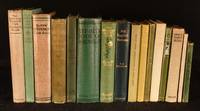
1896Best.-Nr. 973Y18London: Constable and Company; George Newnes; T. Nelson and Sons et al 1896-1954. Cloth. Very Good. 7.5" by 5.5". Not Stated . A pleasing collection of cookery books and various guides to home management with authors including Lucy H. Yates and P. H. Ditchfield. This collection features sixteen volumes the majority of which are various cookery books. Interspersed are guides on hosting homely hints and gardening as well as a biographical work on Isabella Beeton by her niece Nancy Spain and a very scarce autobiography of "international hotelier" Auguste Wild. In the original cloth bindings. The entirety of this set comprises the following: Old English Customs: Extant at the Present Time by P. H. Ditchfield 1896 A Younger Sons" Cookery Book by A Younger Son"s Daughter 1896 Andrew Glendinning"s Apple Tree Cookery Book and Guide to Rational Diet Edited by Albert Broadbent 1902 Homely Hints on Food and Cooking Digestion and Indigestion 1902 The Gardener and the Cook by Lucy H. Yates 1912 More Ways of Entertaining Your Guests by Dorothy Dickinson 1913 A Handbook of Cookery for School and Home by Ada T. Pearson 1914 Easy-to-Make Confectionery and Sweets 1922 The New Butterick Cook Book Revised and Enlarged by Flora Rose 1924 Third printing American Women"s Club Cookery Book Compiled and Edited by Pearl Droste Plogsted 1928 Tit-Bits Book of Wrinkles: A Complete Library of Invaluable Hints on Every Home Subject Edited by A. C. Marshall c1930 Rural Rides by William Cobbett 1932 The Edinburgh Book of Advanced Cookery Recipes 1933 Magic in Herbs by Leonie de Sounin 1946 Fifth printing Mrs Beeton and Her Husband by Her Great Niece Nancy Spain 1948 Mixed Grill in Cairo: Experiences of an International Hotelier by Auguste Wild 1954 In the original cloth bindings. Externally smart with moderate rubbing and bumping across the set most notably to the spine of 'Younger Sons'. Damp spots and marks to the cloth of 'American Women's Club' 'Handbook' and 'Confectionery'. Fading to the spines of 'Advanced' and 'Rural Rides'. Internally firmly bound. Pages are generally bright and clean with offsetting to the endpapers and the odd spot through the majority of volumes. Ownership bookplate tipped-in to the front free endpapers. Contemporary ink inscription to the front free endpaper of 'Old English'. Very Good Constable and Company; George Newnes; T. Nelson and Sons et al hardcover
2025Best.-Nr. x-1032228334Routledge 2025. Paperback. New. 4th edition. 592 pages. 10.00x7.00x9.61 inches. Routledge paperback
2025Best.-Nr. x-103222830XRoutledge 2025. Hardcover. New. 4th edition. 592 pages. 10.00x7.00x9.61 inches. Routledge hardcover
2010Best.-Nr. x-1412986567Sage Pubns 2010. Hardcover. New. 3rd edition. 334 pages. 10.00x7.00x1.00 inches. Sage Pubns hardcover
2016Best.-Nr. 1-1510704809Skyhorse Pub Co Inc 2016. Hardcover. New. 336 pages. 9.00x6.00x1.00 inches. Skyhorse Pub Co Inc hardcover
Best.-Nr. 4142874Walker Books Ltd. Hardcover. Used; Very Good. Simply Brit welcome to our online used book store where affordability meets great quality. Dive into a world of captivating reads without breaking the bank. We take pride in offering a wide selection of used books from classics to hidden gems ensuring theres something for every literary palate. All orders are shipped within 24 hours and our lightning fast-delivery within 48 hours coupled with our prompt customer service ensures a smooth journey from ordering to delivery. Discover the joy of reading with us your trusted source for affordable books that do not compromise on quality. 02/01/1995 Walker Books Ltd hardcover
2009Best.-Nr. 1-1567923631David R Godine Pub 2009. Paperback. New. 576 pages. 8.50x5.50x1.50 inches. David R Godine Pub paperback
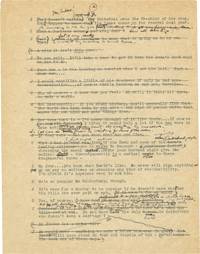
1938Best.-Nr. 163880N.p.: N.p. 1938. James Hilton's typescript draft screenplay for the 1939 film an adaptation of his own 1937 novel the only such adaptation he ever completed. With the author's profuse manuscript ink annotations as well as many pages executed entirely in manuscript ink throughout. Included is a privately commissioned essay by Hilton scholar Kurt Kausler detailing both the history of Hilton's work on the film an analysis and a breakdown of the manuscript. Almost certainly Hilton's first corrected manuscript screenplay for the film. After Jack Warner raised concerns about the script being too long screenwriter Milton Krims was employed to clean up and shorten it-though in the end Hilton received sole credit as screenwriter. A man hires an Austrian governess and both are suspected of murder when his wife is discovered to be dead. 123 leaves a gathering demonstrating the author's method his attention to detail and his extreme frugality with the use of paper the last most likely due to wartime shortages. The script consists of a ribbon copy typescript leaves on both onionskin and paper stock with manuscript emendations on virtually every page in many cases both recto and verso with some leaves executed on the versos of unrelated previous work by Hilton b leaves consisting entirely of text executed in manuscript ink c hand-cut partial leaves and d a handful of later Xerographically duplicated facsimiles of Hilton's original annotated typescript leaves. Included is a very detailed analysis of the manuscript as well as the events surrounding its creation along with a detailed breakdown of the manuscript elements. Hilton's manuscript leaves Very Good to Fine quite supple and well preserved. Housed in a modern white three-ring binder. Leaves individually held in modern mylar page protectors. N.p. unknown
2025Best.-Nr. x-3031732693Springer Nature 2025. Hardcover. New. 392 pages. 10.00x7.00x10.10 inches. Springer Nature hardcover
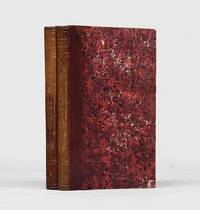
1838Best.-Nr. 167701Paris: Ladvocat 1838. The most important French socialist-feminist of the 1830s and 1840s Second edition published the same year as the first of the radical philosopher's only novel vividly articulating her goal of social revolution through female emancipation. Méphis is uncommonly met with; we trace only one previous auction listing for any edition. The philosophy of Flora Tristan 1803-1844 linked the nascent socialist theories of class struggles with the contested position of women in contemporary society. Following the mixed reception of her previous political works in Méphis she employs the conventions of the novel to visualise her conception of social reform. The work centres on the titular protagonist's relationships with two aristocratic women and the tensions implicit therein - both in his proletariat origins and in the broader patriarchal conventions weighing on them. Tristan draws several "vivid evocations of feminist role models" Cross & Gray p. 2 thereby winning the novel "a secure place in French Romantic literature" Puech quoted in Cross & Gray p. 2. The work gained further notoriety due to the events surrounding its publication. In 1838 Tristan's estranged husband - a failed artist enraged by her literary success - shot her in the street in broad daylight. Miraculously she was not seriously injured and the resulting trial boosted her sales considerably. Tristan's socialist-feminist philosophy anticipates several aspects of Marx and Engels: she most notably coined the term "Workers of the world unite" a full five years before they deployed it in the Communist Manifesto. She is consequently considered "the most important French socialist-feminist of the 1830s and 1840s" Collins & Weil-Sayre p. 229. The second volume includes two of Tristan's articles on the history of western art which had formerly appeared in L'Artiste. 2 vols octavo 209 x 131 mm pp. iv vii 1 365 1; pp. iv 390 2. Wood-engraved vignette to title pages. Contemporary red quarter sheep spines lettered ruled and elaborately decorated in gilt red marbled sides marbled endpapers edges sprinkled black blue silk bookmarkers. Moderate rubbing faint sunning to spines light sporadic foxing and marginal damp staining to contents: a very good copy. Marie M. Collins and Sylvie Weil-Sayre "Flora Tristan: Forgotten Feminist and Socialist" Nineteenth-Century French Studies vol. 1 no. 4 1973; Màire Cross and Tim Gray The Feminism of Flora Tristan 1992. unknown
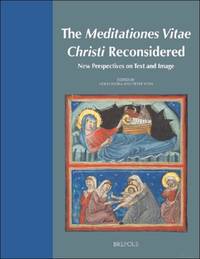
Best.-Nr. 65120Brepols 2021. Hardback 252 pages Size:216 x 280 mm Illustrations:150 col. Languages:English. ISBN 9782503595054. Summary Drawing on diverse literary traditions the author of the fourteenth-century Meditationes Vitae Christi transformed the Gospel accounts into an emotionally charged and vivid narrative that became one of the most popular texts of the late Middle Ages. Over the past few years new theories about the authorship date and original language of the text have emerged raising new questions about this text and its impact on late medieval art and spirituality. The essays in this interdisciplinary volume examine multiple aspects of the Meditationes history from its possible authorship to its manuscript traditions to its reflections in art. TABLE OF CONTENTS Introduction - Holly Flora Tulane University and Peter Tóth British Library Fra Jacopo in the Archives: San Gimignano as a Context for the Meditations on the Life of Christ - Donal Cooper University of Cambridge The Earliest Reference to the Meditationes Vitae Christi: New Evidence for its Date Authorship and Language - Peter Tóth British Library Contemplation in the French and Occitan Versions of the Meditationes Vitae Christi - Maureen Boulton University of Notre Dame The Italian Text of the Paris Manuscript of the Meditationes: Historigraphic Remarks and Further Perspectives - David Falvay Eötvös Loránd University Budapest Reading the Meditationes on the Mount of Light Perugia - Renana Bartal Tel Aviv University Feast Fast and the Feminine: Women at the Table in the Illustrated Meditationes - Holly Flora Tulane University Meditations for a Married Man: The Snite MVC and the Elite Urban Male Reader - Dianne Phillips Independent Scholar A Newly Discovered Illuminated Manuscript of the Meditationes vitae Christi Produced in Fifteenth-Century Veneto Vatican City Biblioteca Apostolica Vaticana MS Reg. Lat. 478 - Lisandra Costiner University of Oxford The Writer as Viewer: Recollecting Art in the Text of the Meditationes vitae Christi - Joanna Cannon Courtauld Institute of Art Mixed Media: Questioning Format in Late Medieval Pictorial Vita Christi Cycles - Lynn Ransom Schoenberg Institute for Manuscript Studies University of Pennsylvania Brepols 2021 hardcover
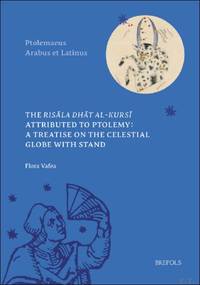
Best.-Nr. 65272Brepols 2024. Hardback xii 245 pages Size:178 x 254 mm Illustrations:6 b/w 28 col. 10 tables b/w. Languages:English Arabic. ISBN 9782503602226. Summary This book deals with the Risla Dht al-kurs a 33-chapter Arabic treatise on the celestial globe with stand. The treatise is attributed to Ptolemy in some manuscripts to the Ottoman scholar Akhawayn in others but is anonymous in most. The book begins with a survey of references to Ptolemaic works in Greek and Arabic sources presenting various works attributed to Ptolemy either preserved in the original Greek or in translation or considered lost including both authentic works and pseudepigrapha. Next follows a critical edition of the treatise Dht al-kurs based on eight of the twenty-three manuscripts studied. The edition is accompanied by an English translation and an extensive mathematical commentary on each chapter enriched with explanatory figures. The comparison between this treatise and the Treatise on the Celestial Globe by Qus ibn Lq d. ca 912 AD presented in parallel with the commentary shows that the former is based on the latter; thus the treatise Dht al-kurs should be considered a Ptolemaic pseudepigraphon. A transcription of the Arabic text of the treatise by Qus ibn Lq based n three of the eighteen examined manuscripts is included so that the reader may compare the two texts. Furthermore in order to examine Akhawayn's association with the treatise a bibliographical and historical investigation is conducted which examines the full range of works attributed to Akhawayn. However the truth about the authorship was probably lost as the result of various rivalries in the late fifteenth century. TABLE OF CONTENTS Preface 1. Introduction 1.1 Ptolemy's authentic works and pseudepigrapha: Research on source materials 1.2 The treatise Dht al-kurs 1.3 The instrument dht al-kurs 1.4 Presentation of the manuscripts 1.5 Who was Akhawayn 2. The Arabic text and translation 3. Commentary on the treatise Dht al-kurs attributed to Ptolemy treatise P and comparison with the treatise on the celestial globe by Qus ibn Lq treatise Q 4. Conclusions 4.1 Comparison between the treatises P and Q 4.2 Possible sources 4.3 Possible date and place of compilation 4.4 The attribution of the treatise to Akhawayn 4.5 Possible relation to Ptolemy Appendix 1: The treatise on the use of the celestial globe with stand by Qus ibn Lq. The titles of the 65 chapters in English translation Appendix 2: Correspondence between the chapters of the various Arabic manuscripts of treatise Q the edition of its Latin translation by Lorch and Martínez Gázquez and treatise P Appendix 3: The Arabic text of the Treatise on the Use of the Celestial Globe with Stand by Qus ibn Lq Bibliography Manuscripts Brepols 2024 hardcover
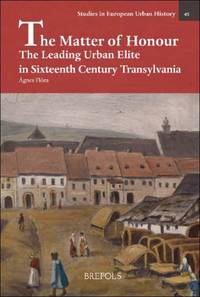
Best.-Nr. 65985Brepols 2019. Hardback 284 pages Size:178 x 254 mm Illustrations:22 b/w 5 col. 7 tables b/w. Languages: English Latin. ISBN 9782503555768. Summary This monograph entails a comparative study of two early modern urban centers in Transylvania: Cluj Kolozsvár Klausenburg and Sibiu Nagyszeben Hermannstadt. It develops a new perspective on urban history in Transylvania by filling the recent historiographical lacuna on early modern urban elites. This book attempts to combine traditional and modern research methods by analyzing and comparing a large volume of unpublished data along three research lines. First the historical background within which of the town elites in Cluj and Sibiu monopolized power are analyzed including the development of town autonomy and governmental systems the legal background of urban leadership its continuity and the conditions under which the political urban elite acted in each town. Secondly a thorough archontological and prosopographical research with a special focus on marriage strategies and professional competence leads to a socio-political characterization of the elites of Cluj and Sibiu. Finally an attempt is made to provide insight into the representation and self-fashioning of these elites. TABLE OF CONTENTS The manuscript has three main chapters an introductory chapter conclusions bibliography and index of names. The introductory chapter starts with the definitions of terms used in the text along with a short review of the elite theories with references to Max Weber Norbert Elias Gaetano Mosca or Vilfredo Pareto. This part is followed by the presentation of the aims and of the methodology pursued during the research. The presentation of the sources was split into two categories: unpublished primary sources and edited documents. Subsequently the historiographical traditions on the topic - both in Hungary/Romania and international - are discussed. The first main chapter is titled 'Respublica - res publica' and it is structured on three subchapters and thirteen sub-sub chapters. The first section 1.1. is dedicated to the legal and institutional framework within which the urban elites of Cluj and Sibiu operated. The main objective of this section is to acquaint the readers with the beginnings of urban government and autonomy in the two towns in order to discuss the whole process of elite formation from the medieval period until the early modern. I have tried here to cutback some erroneously interpreted historical facts that has been reproduced time and again in scholarly works without any constructive criticism. A second section explores the structures of the town governments in the sixteenth century 1.2. the history of the main urban offices and their legal context. A third section ends this chapter by having a closer look on the forces that might have interfered with the process of elite formation or disturbed it. Following Karen Lambrecht's theory elite formation is studied in relation to the court the Church the Reformation movements university and multi-ethnicity. This part gives a deeper insight on the political religious and ethnic realities of the region in the sixteenth century. The second main chapter 'Magistri rei publicae' focuses on the archontological and propographical research on the urban elites. First the legal moral and material criteria of eligibility in public offices are discussed. Presenting several case studies the second part makes a statistical and analytical presentation of the career building and power concentration in a comparative way. The following two subchapters investigate the 'cursus honorum' the advancement of public office-holders within the ranks of the town council and the networking strategies of the local elites 2.4. This section leads to some intriguing aspects of power concentration within the local elites family-networks and business relations are revealed. This main chapter concludes in an analytical subchapter dealing with the question whether the governing elites in Cluj and Sibiu can be categorized as a patrician communities or not 2.5. The third part of this book 'Shaping self- and communal identity' is dedicated to the self-fashioning and by that to the communal individuation through the representation of the elites. Two main aspects are discussed here: the rituals and the ceremonies of the council election constituted by a strong interaction between town and elites and the erudite self-representation of the leaders through art and architecture. The book is provided with a concluding chapter a vast bibliography and an index of names. Brepols 2019 hardcover
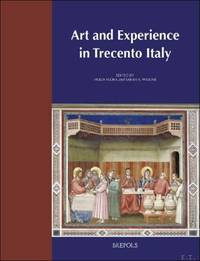
Best.-Nr. 66094Brepols 2019. Hardback 347 pages Size:216 x 280 mm Illustrations:34 b/w 146 col. Language: English.new ISBN 9782503581958. Summary The age of Giotto Dante and Boccaccio the fourteenth century in Italy known as the trecento was a pivotal moment in art history and in European culture. The studies in this volume present new approaches to art in this important but often neglected period of the early Renaissance. Scholars at various stages in their careers discuss a wide range of topics including architecture materiality politics patronage and devotion contributing to a new understanding of how art was made and experienced in this nodal century. These papers were originally presented at the Andrew Ladis Trecento Conference held at Tulane University in November of 2016. TABLE OF CONTENTS Introduction - Holly Flora and Sarah S. Wilkins Dante and the Moment of Florentine Art - Marvin Trachtenberg I. Media and Materiality Networks and Materials: Italian Stained-Glass Windows c. 1280-1400 - Nancy M. Thompson Studying Drawings of the Italian Trecento - Giada Damen II. Likeness and Beauty 'I Porrina': A Hyper-Realistic Portrait in the Collegiata of Casole d'Elsa - Laura Jacobus Beyond Blood: The Crucifixus Dolorosus and the Beauty of Christ - Meredith Raucher Sisson III. Building and Identity The Ponte Vecchio as a Public Good: Civic Architecture and Civil Conflict in Trecento Florence - Theresa Flanigan Roman Versus Gothic in Trecento Architecture - Erik Gustafson Before Palazzo Medici: Earlier Domestic Traditions Shaping the Renaissance Palace in Florence 1380-1420 - Lorenzo Vigotti IV. Artists and Altarpieces Partisan Politics and Giotto's Ognissanti Madonna: Making Invisible Allegiances Visible - Jill Harrison From Giotto to Masaccio and Masolino: Reflections on Two Double-sided Polyptychs in Rome - Damien Cerutti V. Rivalry and Replication The 'Tabernacles' War' c. 1367-1377: Civic versus Papal Authority in Popular-Regime Rome - Claudia Bolgia Simone Martini's Design of the Prototype for the Patron Saints' Altarpieces in Siena Cathedral Inspired by Duccio and Nicola Pisano - Wolfgang Loseries VI. Space and Experience Bodies In and Out of Space in Trecento Painting - Karl Whittington Dissolving the Frame: Phenomenology and Index in Trecento Painting - Michael Grillo A Trecento Artist and Miraculous Images: Simone di Filippo at Bologna - Jessica N. Richardson As the World Turns: Revisiting Ambrogio Lorenzetti's Lost Wheel Map in Siena - Mark Rosen VII. Connoisseurship and Conservation Illuminators from Pistoia and Pisa in Trecento Florence: The Case of Two Antiphonary Commissions - Bryan C. Keene The Painting Techniques of Fourteenth-Century Wall Painting in Northern Italy - Fabio Frezzato VIII. Preservation and Display The Camposanto of Pisa in the Wake of World War Two: Loss and Discovery - Cathleen Hoeniger Some Trecento Objects in the Collection of Stefano Bardini: Additions Subtractions and Restorations - Anita F. Moskowitz In Memoriam: An Address to the Andrew Ladis Trecento Conference November 12 2016 - William Underwood Eiland Brepols 2019 hardcover
2006Best.-Nr. 1-1933052783Key Education Pub Co 2006. Paperback. New. 160 pages. 11.00x8.50x0.41 inches. Key Education Pub Co paperback
2008Best.-Nr. x-0230574017Palgrave Macmillan 2008. Hardcover. New. 240 pages. 8.50x5.50x0.75 inches. Palgrave Macmillan hardcover
2004Best.-Nr. x-0313322961Greenwood Pub Group 2004. Hardcover. New. 180 pages. 9.25x6.00x0.75 inches. Greenwood Pub Group hardcover
1987Best.-Nr. x-0313245185Greenwood Pub Group 1987. Hardcover. New. 9.75x6.75x2.00 inches. Greenwood Pub Group hardcover
2017Best.-Nr. x-0268102333Univ of Notre Dame Pr 2017. Hardcover. New. 276 pages. 9.50x6.25x1.00 inches. Univ of Notre Dame Pr hardcover
1993Best.-Nr. x-0306445778Plenum Pub Corp 1993. Hardcover. New. 508 pages. 10.25x7.00x1.25 inches. Plenum Pub Corp hardcover
1987Best.-Nr. x-0313245193Greenwood Pub Group 1987. Hardcover. New. 9.50x6.50x2.00 inches. Greenwood Pub Group hardcover
2024Best.-Nr. x-0367566419Routledge 2024. Hardcover. New. 240 pages. 9.19x6.13x0.61 inches. Routledge hardcover
1994Best.-Nr. x-0313287651Greenwood Pub Group 1994. Hardcover. New. 664 pages. 9.75x6.50x1.50 inches. Greenwood Pub Group hardcover
1999Best.-Nr. x-0787946796Jossey-Bass Inc Pub 1999. Hardcover. New. 545 pages. 9.75x7.50x1.75 inches. Jossey-Bass Inc Pub hardcover