14 111 résultats
1973réf. B121214Bruxelles, Editions Culture et Civilisation 1973 413 + 596 + 565pp., avec 860 illustrations dans le texte, 32cm., ré-édition de l'édition de 1930, reliures d'éditeur solides, avec ex-libris héraldique, très bon état, poids: 6.1kg., B121214
réf. 47260, Bruxelles, La pensee belge s.d., reliure toile . 410pp.avec 210 ills. + 3 planches, 31cm., bon etat,.
1936réf. Zq21Paris Gallimard 1936 In8 In8 Carre broché 268pp - Nombreuses Planches Photographiques En Hors Texte - papier jauni - petites dechirures au bord de couverture - tout petit manque de papier au 4eme plat et aux 3 dernieres pages de tables sur coin sans gene a la lecture
réf. 127323Bibliothèque d'Education et de Récréation, J. Hetzel et Cie, Paris - Sans date (fin XIXe siècle) - Noté "Deuxième édition" - In-8, reliure demi-basane, plats percalines, dos à 4 nerfs, titre et ciassons ornés de fleurons en doré au dos, tranches mouchetées, blason en doré sur le premier plat, frontispice - 306 pages
réf. 61129, Lannoo, 2008 hardcovers, 2 volumes, in slipcase, 688 pages. 5440 gr. fine. tekst in NL. ISBN 9789020976090.
réf. 20710Paris, Bernard Grasset, 1er ouvrage de la Collection " Flore ", 1943. In-12, broché, couverture imprimée en deux tons et rempliée, 413 pp. Planche en frontispice gravé sur bois par Galanis.
1905réf. FAU510M1905, Paris, Baillière. In-8, broché, 352pp. Avec 72 figures dans le texte.
1892réf. 1196931892 A Paris, Librairie Médicale et Scientifique, Jules Rousset - 1892 - Première édition française - In-8, broché - 584 pages
réf. 10537traduit de l’anglais par E.A. DEFAUCOMPRET Fils Deuxième édition revue et corrigée, ornée d’une carte dépliante en noir. 4 tomes en 4 volume in 8 brochés, Tome premier : faux-titre, titre, XVI, 381 pages. Tome second faux-titre, titre, VIII, 406 pages. Tome troisième faux-titre, titre VIII 364 pages. Tome quatrième faux-titre, titre, 422 pages, une grande carte dépliante en noir (et non en couleurs comme annoncée sur la couverture) Paris Librairie Charles GOSSELIN 1836 sous couverture à la date de 1843. Quelques petits défauts d’usage, sinon bon exemplaire à grande marges tel que paru
Hardcover, 28 x 28 cm, 96 p., 75 illustraties, Engels, Fine copy. Including an index. ISBN 9789058564382. Perfectie, symmetrie, detaillisme, geduld, focus, nauwkeurigheid, passie? het zijn maar enkele begrippen die spontaan opborrelen wanneer we het hebben over Japanse bloemschikkunst. Het zijn ook die karakteristieken die ervoor zorgen dat Japanse floral artists toch nog altijd a league of their own blijven. Oka Hiroyuki, een van de jongste telgen van de huidige generatie Japanse bloemschikkers, is geen uitzondering op de regel. Maar naast dat typische, detaillistische vakmanschap en het streven naar een perfecte uitvoering, is deze jonge kunstenaar begiftigd met een verfrissend gevoel voor humor en een fantastisch oog voor geestige toevalligheden. Deze eerste monografie bevat een wonderbaarlijke collectie van zijn origineel werk dat pas na nauwkeurig kijken al haar geheimen prijsgeeft. Hiroyuki Oka maakt kleurrijke conceptuele kunst die de voorspelbaarheid van de perfectie ver overstijgt.
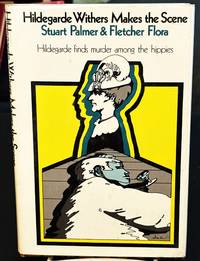
1969réf. 86139Random House 1969. First edition. Near Fine book in a Near Fine dust jacket. Random House unknown
1995Book is in excellent condition. Binding is solid and square, covers have sharp corners, exterior shows no blemishes, text/interior is clean and free of marking of any kind. 218 pages with maps, b&w photos.
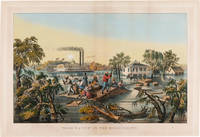
1868réf. 62593New York: Currier & Ives 1868. Scene of African-American Life on the Mississippi During Reconstruction by an Important Woman Artist An excellent Currier & Ives Mississippi River scene created just a few years after the Civil War after an original illustration by the important and prolific artist Frances Palmer. Though ostensibly presented as a nostalgic representation of the South a modern interpretation might conclude that it demonstrates a new sense of freedom and independence felt by formerly enslaved people in the first few years of Reconstruction. This image also demonstrates a simple but poignant and even uncomfortable truth about how life on the Mississippi River is contingent upon external circumstances most notably the whims of the weather. "High Water in the Mississippi presents a scene of a Mississippi River flood in which several former slaves sit atop the roof of a house among the flotsam and jetsam two of the men with long poles trying to recover furniture floating in the river. One man tries to rescue a mule struggling in the water. A plantation house stands in the background with two White residents waving at the large steamship Stonewall Jackson which chugs by in the background. The lithograph is signed "J.M.I. Del." in the image indicating that James Ives drew the lithograph from Palmer's original artwork. The illustration for this Currier & Ives print was created by the important artist Frances Flora Bond Palmer. Palmer 1812–76 was the first woman in the United States to work as a professional artist and to make a living with her art. She produced more Currier & Ives prints than any other artist. Known as Fanny she was according to Gloria Deák "the foremost woman lithographer of her time." Born and raised in England by a cultivated family she was already an accomplished painter and lithographer when she came to America in 1844 at which time she exhibited two works at the National Academy of Design. By 1849 she was working for Currier producing landscapes and still lifes lithographing these prints herself usually after her own sketches. She worked for Currier & Ives from 1849 into the 1870s bringing in much needed income for her family and producing about 200 of the company's best scenes and landscapes. Palmer was one of the most important and prolific artists and lithographers ever employed by Nathaniel Currier and she gave important assistance to Charles Currier in inventing a superior lithographic crayon. This Mississippi River scene is one the most popular pictures among the thirty-plus Mississippi River lithographs produced by the company. "In 1868 three years after the Civil War ended James Ives who had found Palmer to be an excellent collaborator on his visions of broad symbolic images of American life worked with her on eight large important lithographs.Among them is a pair of lithographs - 'High Water' in the Mississippi and Low Water in the Mississippi - this time portraying the mighty river's fickle moods. The subject was particularly timely because Southern levees had been destroyed during the war and serious flooding had occurred in 1862 1865 and 1867" - Rubinstein. Rubinstein notes that the Currier & Ives audience had always enjoyed scenes of natural disasters but goes on to find significant allegorical content in the images depicted in "High Water" and Low Water: "Now in the Reconstruction period instead of focusing on the North's victory both black and white Southerners are seen bravely struggling to recover from the aftermath of a great flood the Civil War.Abolitionists and Radical Republicans could read 'High Water' as a poignant image of newly freed slaves struggling to salvage something for their future the 'forty acres and a mule' promised to them by General Grant but rescinded by President Johnson but to white Southerners and to many Northerners as well Low Water suggested that everyone would be better off if freed black people went peacefully back to work for their former masters instead of demanding their own land or trying to vote and run for office." A fantastic Currier & Ives handcolored lithograph which was originally intended as a companion piece to Low Water in the Mississippi. Toning in the margins from previous matting. Some very light surface wear. Overall very good plus with excellent visual appeal. Charlotte Streifer Rubinstein Fanny Palmer: The Life and Works of a Currier & Ives Artist Syracuse NY 2018 item 3-59 pp.144-45 203. PETERS CURRIER & IVES pp.110-16; items 3944 3946. CURRIER & IVES: CATALOGUE RAISONNÉ 3057 4149. CONNINGHAM 2819 3824. GALE 3057 4150. DEÃK PICTURING AMERICA 647 ref. unknown books
1868réf. 62593New York: Currier & Ives 1868. Scene of African-American Life on the Mississippi During Reconstruction by an Important Woman Artist An excellent Currier & Ives Mississippi River scene created just a few years after the Civil War after an original illustration by the important and prolific artist Frances Palmer. Though ostensibly presented as a nostalgic representation of the South a modern interpretation might conclude that it demonstrates a new sense of freedom and independence felt by formerly enslaved people in the first few years of Reconstruction. This image also demonstrates a simple but poignant and even uncomfortable truth about how life on the Mississippi River is contingent upon external circumstances most notably the whims of the weather. "High Water in the Mississippi presents a scene of a Mississippi River flood in which several former slaves sit atop the roof of a house among the flotsam and jetsam two of the men with long poles trying to recover furniture floating in the river. One man tries to rescue a mule struggling in the water. A plantation house stands in the background with two White residents waving at the large steamship Stonewall Jackson which chugs by in the background. The lithograph is signed "J.M.I. Del." in the image indicating that James Ives drew the lithograph from Palmer's original artwork. The illustration for this Currier & Ives print was created by the important artist Frances Flora Bond Palmer. Palmer 1812–76 was the first woman in the United States to work as a professional artist and to make a living with her art. She produced more Currier & Ives prints than any other artist. Known as Fanny she was according to Gloria Deák "the foremost woman lithographer of her time." Born and raised in England by a cultivated family she was already an accomplished painter and lithographer when she came to America in 1844 at which time she exhibited two works at the National Academy of Design. By 1849 she was working for Currier producing landscapes and still lifes lithographing these prints herself usually after her own sketches. She worked for Currier & Ives from 1849 into the 1870s bringing in much needed income for her family and producing about 200 of the company's best scenes and landscapes. Palmer was one of the most important and prolific artists and lithographers ever employed by Nathaniel Currier and she gave important assistance to Charles Currier in inventing a superior lithographic crayon. This Mississippi River scene is one the most popular pictures among the thirty-plus Mississippi River lithographs produced by the company. "In 1868 three years after the Civil War ended James Ives who had found Palmer to be an excellent collaborator on his visions of broad symbolic images of American life worked with her on eight large important lithographs.Among them is a pair of lithographs - 'High Water' in the Mississippi and Low Water in the Mississippi - this time portraying the mighty river's fickle moods. The subject was particularly timely because Southern levees had been destroyed during the war and serious flooding had occurred in 1862 1865 and 1867" - Rubinstein. Rubinstein notes that the Currier & Ives audience had always enjoyed scenes of natural disasters but goes on to find significant allegorical content in the images depicted in "High Water" and Low Water: "Now in the Reconstruction period instead of focusing on the North's victory both black and white Southerners are seen bravely struggling to recover from the aftermath of a great flood the Civil War.Abolitionists and Radical Republicans could read 'High Water' as a poignant image of newly freed slaves struggling to salvage something for their future the 'forty acres and a mule' promised to them by General Grant but rescinded by President Johnson but to white Southerners and to many Northerners as well Low Water suggested that everyone would be better off if freed black people went peacefully back to work for their former masters instead of demanding their own land or trying to vote and run for office." A fantastic Currier & Ives handcolored lithograph which was originally intended as a companion piece to Low Water in the Mississippi. Toning in the margins from previous matting. Some very light surface wear. Overall very good plus with excellent visual appeal. Charlotte Streifer Rubinstein Fanny Palmer: The Life and Works of a Currier & Ives Artist Syracuse NY 2018 item 3-59 pp.144-45 203. PETERS CURRIER & IVES pp.110-16; items 3944 3946. CURRIER & IVES: CATALOGUE RAISONNÉ 3057 4149. CONNINGHAM 2819 3824. GALE 3057 4150. DEÃK PICTURING AMERICA 647 ref. unknown
1948réf. 00008505New York: Fleming H. Revell Co. 1948 191 pages rear endpage contains a library pocket and the front end page has a stamp from a library. Dust jacket clean of markings quite clean and basically unread for exlibrary. Fleming H. Revell Co. hardcover
1910S.l., s.e., s.d. (vers 1910); in-8 178 x 248 mm, 4 pp., double-feuille (quelques rousseurs et petites déchirures en tête). Tiré à part, en langue anglaise. the Botanical Gazette (Reprinted from) Vol. XXXXIII. June 1907. Bon état.
Hardcover in-folio, 112 pages, nombreuses illustrations en couleurs, carte, cartonnage sous jaquette illustree. Bel exemplaire. [BAT-9]
1900Gebonden, 37pp. geilliustreerd ISBN 9789061748038. Allerlei wetenswaardigheden over in Nederland voorkomende vlinders. Vanaf ca. 9 jaar. Nieuw.
1933Gebonden, half - linnen, originele uitgeversomslag, omslag beduimeld, 14,5x20,5cm, 586pp, geillustreerd z/w. Practische handleiding voor het aanleggen en onderhouden van tuinen benevens beschrijving en kweekwijze van de verschillende soorten van groenten, vrucht- en sierbomen, heesters, planten en bloemen, en wenken voor de cultuur van kamerplanten. Geillustreerd met 373 afbeeldingen.
193096pp., 23cm., originele omslag, goede staat, B89304
193096pp., 23cm., originele omslag (rug verstevigd), verder in goede staat, B103790
1885454pp., 23cm., gecart. band (gemarbreerde platten, linnen rug met titel in goudopdruk), enkele roestvlekjes, stempeltje op titelblad, goede staat, V106644
1946211pp., met 30 zw/w ills. buiten tekst en 1 kaart, ingebonden in moderne gecart. band (enkele vlekjes), 1 blad slecht ingebonden, B99111
197327pp.+ 2 platen buiten tekst, 24cm., gebroch., overdruk uit "Verslagen en Mededelingen van de Koninklijke Vlaamse Academie voor Taal- en Letterkunde" jg.1973, goede staat, P91922