Benton, A. HAntiquariat.de
279 results
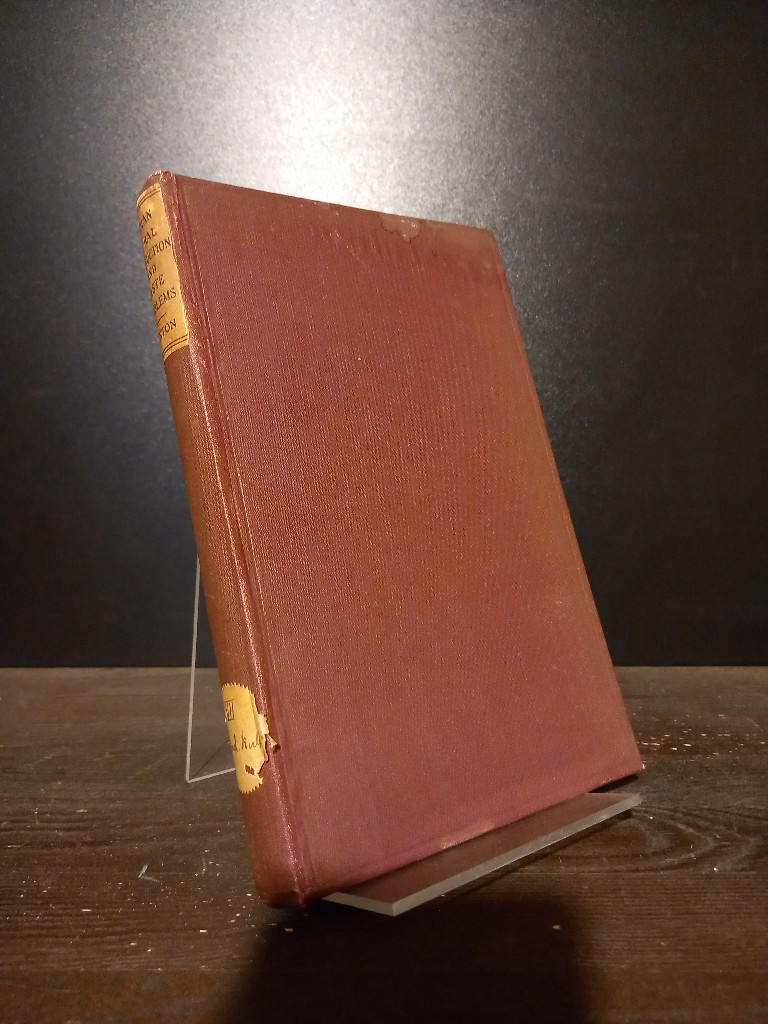
1917ref. 2131313London: Longmans, Green and Co. 1917. XI, (1), 121, (1) Seiten. 8° (22,5 x 15 cm). Orig.-Leinenband mit titelschild auf dem Rücken. [Hardcover / fest gebunden].
2004ref. 139420New York: Spanierman Gallery 2004. Softcover. VG Label & few marks from previous gallery owner. Gray & color illus. stapled wraps 24 pp. 13 color plates 1 BW plate. Issued in conjunction with a 2004 benefit featuring works by Pittsburgh-based artist Aaron Harry Gorson 1872-1933. With essays by Lucian Caste Joel A. Tarr and Rina Youngner. Terrific images of The Steel City and a nod to Andrew Carnegie as well. A nice gift for any Pittsburgher. Spanierman Gallery paperback books
1999ref. 336434New York: Callaway Editions 1999. First. hardcover. near fine. Profusely illustrated. 128 pages. 4to pictorial boards. New York: Callaway Editions 1999. Stated first printing. Various tiny dents to boards still in near fine condition. Includes four-panel fold-out poster. With text by Robert di Caro and G.F. Bernardini. Callaway Editions unknown books
2014Il presente saggio è frutto di accurate ricerche e raccoglie l'eredità del grande orientalista Icilio Vecchiotti; in esso le origini storiche e sociali delle caste indiane vengono analizzate, rivelando così l'autentica cultura vedico-indiana, strutturata secondo un ordine ben diverso, un ordine che rispettava la natura di ogni essere vivente e l'armonia con il cosmo. Invasioni e realtà coloniali hanno portato alla degenerazione di una cultura che oggi ha molto da offrire ad una società moderna sempre più devastata da problemi interiori ed esteriori; ma occorre saper cogliere in modo profondo discipline come lo yoga affinché possa avvenire una reale trasformazione sociale. Troppo spesso l'Oriente è diventato uno stereotipo a nostro uso e consumo e scuole mistiche straordinarie sono state distorte, semplificate o mistificate, diventando una moda o un esercizio da palestra. L'autore si propone di fornire gli strumenti critici necessari per accostarsi ad un sapere valido e sempre attuale. Autori: Valentino Bellucci.
2014br. Il presente saggio è frutto di accurate ricerche e raccoglie l'eredità del grande orientalista Icilio Vecchiotti; in esso le origini storiche e sociali delle caste indiane vengono analizzate, rivelando così l'autentica cultura vedico-indiana, strutturata secondo un ordine ben diverso, un ordine che rispettava la natura di ogni essere vivente e l'armonia con il cosmo. Invasioni e realtà coloniali hanno portato alla degenerazione di una cultura che oggi ha molto da offrire ad una società moderna sempre più devastata da problemi interiori ed esteriori; ma occorre saper cogliere in modo profondo discipline come lo yoga affinché possa avvenire una reale trasformazione sociale. Troppo spesso l'Oriente è diventato uno stereotipo a nostro uso e consumo e scuole mistiche straordinarie sono state distorte, semplificate o mistificate, diventando una moda o un esercizio da palestra. L'autore si propone di fornire gli strumenti critici necessari per accostarsi ad un sapere valido e sempre attuale.
2010In-8° pp. 191, bross. edit. ill. Alcune leggere sottolin.
2012In-8° pp. 428, leg. edit. con sovrac. e targhetta al dorso.
1949Mm 130x195 RARO / RARE. Prima edizione / First edition. "Biblioteca Zamnà". Brossura editoriale, sovraccoperta originale con fessurazioni restaurate al dorso, 278 pagine con una tavola in bianco e nero con ritratto dell'autore in apertura, firma d'appartenenza al frontespizio. Libro in buono stato complessivo. Importante studio sulla Guerra delle Caste (1847 - 1901) scaturita dalla rivolta del popolo Maya della Penisola dello Yucatán contro la popolazione di discendenza europea.
1999Mm 140x220 Collana "Nuovi Saggi". Prefazione di Giulio Giorello. Brossura editoriale con bandelle, 190 pagine una decina delle quali con sottolineature blu e rosse. Opera in ottime condizioni. SPEDIZIONE IN 24 ORE DALLA CONFERMA DELL'ORDINE.
1910Mm 165x250 Brossura editoriale, xiv-513 pagine ancora intonse con testo in lingua francese; due cartine a colori ripiegate in chiusura. Piccole lacune al dorso restaurato e alla quarta di copertina che presenta una gora di umidità al margine superiore con piccoli strappi, alcune fioriture alle prime pagine dell'indice e ai tagli. Buono lo stato complessivo. Spedizione entro 24 ore dalla conferma dell'ordine.
2018Mm 165x230 Prefazione di Roberto Badaracco. Brossura originale, 295 pagine profusamente illustrate a colori. Testo in lingua italiana. Libro in condizioni di nuovo, spedizione in 24 or edalla conferma dell'ordine.
1963Mm 155x250 Volume rilegato in piena tela con sovraccoperta a stampa, 319 pagine. Opera in ottime condizioni. SPEDIZIONE IN 24 ORE DALLA CONFERMA DELL'ORDINE.
1983Mm 150x225 Prima edizione - Volume rilegato in tela con sovraccoperta editoriale, 177-vi pagine. Opera in buone/ottime condizioni. SPEDIZIONE IN 24 ORE DALLA CONFERMA DELL'ORDINE.
2020Mm 140x210 Collana "i Robinson" - Volume nella sua brossura originale, xiv-230 pagine. Copia come nuova; spedizione in 24 ore dalla conferma dell'ordine.
2007The Title 'Voice of Babasaheb Ambedkar written/authored/edited by Dr. Ravindra Kumar Mrs. Kamlesh Kumar', published in the year 2007. The ISBN 9788121209342 is assigned to the Hardcover version of this title. This book has total of pp. 345 (Pages). The publisher of this title is Gyan Publishing House. This Book is in English. The subject of this book is scheduled caste. Size of the book is 14.34 x 22.59 cms Vol:-
2015ABOUT TH BOOK:-This book is putting together various issues from different states in India. The Tribal communities in India represent different levels of the deprivation in a larger, regional, and globalized world. This book aims to place the concept of democracy, development in the tribal context. This volume basically focuses to understand contemporary tribal societies which require a basic appreciation of the historical processes which have been determined the course of successive changes in economic, social cultural, ideological and political life of the tribes. Indian state and governments are talked about as models of federalism in a large and multinational society, ensuring rights of ethnic and religious groups in a truly pluralistic society, and striving for social justice in a society marked by social hierarchies for a long time. However the democratic experiment has notificant challenges, namely that of ensuring inclusive development. Economic equality, social justice, cultural pluralism, human rights, dignity and security are all important aspects of development which have been consolidated and expanded through the existing structure of participatory democracy. But this has not always been an easy task. Indian democracy has been intensively analysesd, debated and criticized for a long time. However, democracy is not only just an elections and government formation process; it is more about values, habits of thoughts and practices, democracy need not electoral but replacement with social justice. Through democratic method existing unequal social, economic and political justice situation can be removed. The tribal's are most affected people in such democratic set up with developmental approach. The new tribal politics will be based on two things the resource politics of the Adivasis and survival politics of the informal sector. This book will be of interest to students and Scholars of Democracy and Development studies, Political Science, Anthropology, and Sociology, Political economy, Tribal studies, Rural Development, and Gender studies. It is widely applicable to all sections of the marginalized whether socially, economically, culturally, academically, politically and Administrators and policy makers. About The Author:- Ramdas Rupavath is Associate Professor, in the Department of Political Science, School of Social Sciences, University of Hyderabad, Hyderabad, Telengana State, India. His areas of specialization include Indian Political Process, Tribal Politics, Land Alienation and Displacement, Democracy, Ethnic and Identity politics and Comparative Politics in Indigenous Societies. He did his M.A., M.Phil, and Ph.D. from Jawaharlal Nehru University, New Delhi. He visited Uppsala University, Sweden as a guest faculty. He has published a book on "Tribal Land Alienation and Political Movements, Socio Economic Patterns from South India, Cambridge Scholars Publishing, United Kingdom (UK) and published many articles in national and international referred Journals. Besides this, he has conducted various national survey and projects which are funded by UGC and ICSSR. He was born in a small hamlet of South Indian Telangana State in 1970s and grew up in the 1980s as part of the first generation born in post-colonial Telangana. Hamlets in India have not changed radically during 68 years of independence. Contents:- CONTENTS:- Acknowledgements 9 Foreword 11 Introduction and Overview 13 List of Contributors 19 I. Fear of Uprising: Post Colonial State, Natural Calamity and the Politics of Development 21 Sajal Nag 2. Impact of Multilingual Education on the Education of Tribal Children in Andhra Pradesh 47 Kandipalli Ramakrishnarao 3. Status of Women and Girl Child in Lambada Community: A Study of South Telangana Region of Andhra Pradesh 58 M Ramulu 4. Mining and Displacement in South Odisha: Perspectives from a Census Survey 78 M Gopinath Reddy and Prajna Paramita Mishra 5. Livelihood in Bangalore: Migration from Villages to City - Displacement and Rehabilitation 91 Salu D ' Souza 6. Livelihood Issues: Land Alienation, Displacement, Rehabilitation and Migration 98 Neelmani Jaysawal 7. Approaches to Tribal Development 111 P Shailaja 8. Contextualising the Tribal Problem in the Background of PESA: Experience from Odisha 122 Pranay Kumar Parida and Smita Raut 9. Rural Decentralisation, People's Participation and In clusive Growth 130 Nupur Tiwari 10. STs as the Beneficiaries of PDS in the Mayurbhanj District of Odisha 141 Prachi Madhumita Mohanty Democracy, Development and Tribes in India 11. Development and Tribal Resistance: A Study of Niyamgiri Movement in Odisha 150 Prof Shyam Sundar Acharya 12. Traditional Storage Practices Adopted by the Tribal Community of Warangal District, Andhra Pradesh 161 R. Arunjyothi, Ch. Sowmya, D. Sreenivas 13. Development-Induced Displacement and Resettlement of Indigenous Communities in India: Policy and Practice 168 Ram Babu Mallavarpu 14. Politics of Inclusion and Exclusion of Tribals in the Local Governance in Odisha: Issues and Concerns 176 Ramchandra Jena 15. Contentious Agitations and State Intervention: An Analysis of Gujjar Agitation for Tribal Status in Rajasthan 183 Ramesh Kumar 16. Globalisation, Accumulation by Dispossession and the Adivasi Struggle for Right to Habitat 200 Rohit Jain 17. Democracy, Development and Tribal Resistance: Contemporary Issues 214 Sravya Katta 18. Democratic Decentralisation and Participation in the Context of Local Governance in the Fifth Scheduled Areas 235 Dambarudhar Garada 19. Concept of Development: Development and its Effects on Adivasis in Andhra Pradesh 253 V. Rajunayak 20. Impact ofMahatma Gandhi National Rural Employment Guarantee Act on Socio-economic Conditions of Tribals: A Case Study of Nuapada District ofOdisha 260 Tapan Kumar Bihari 21. Forest Resources - An Ideal Altern ative for Tribal Development and Health Care 284 Shivesh 22. Problems and Prospects of Mainstreaming Gender in the Bangladesh Civil Service 290 Syed Muhammad Sajjad Kabir and Nazmunnessa Mahtab 23. Political Empowerment of the Marginalised Groups in Nagaland: Emerging Alternatives 305 K. Vrdyasagar Reddy 24. Tribe-Caste Conflict : A Study of Kandhmal Districts of Odisha 323 Ganesh Digal 25. Movement and Politics of ST Reservation in Assam 331 Harsha. S. Index 341. Acknowledgements Foreword Introduction and Overview List of Contributors 1. Tribal Education of Karnataka: Attainments and Challenges KM. Metry 2. Salvation Army Boon or Bane? A Critique of Yerukula Reformation in Andhra Pradesh Malli Gandhi 3. Socio-economic Conditions of Tribals and Resulting Social Alienation Ramdas Rupavath 4. Gender Inequality and Development: A Study on the Toda of Nilgiri Hills in Anthropological Perspective Jakka Parthasarathy 5. Tribal Development and Insurgency Movement in Tripura Harsha S and Antibum Ranglong 6. Voice of Tribals through RTI Act, in Contemporary Democracy: A Case Study of Odisha Akshaya Kumar Nayak 7. Determinants of Students Dropout in Indian Higher Education Bharat Chandra Rout 8. Education Status of Scheduled Tribes in Andhra Pradesh: A Case Study of Lambada Tribe Bikku 9. Development and Displacement–A Question of Human Right: A Case Study of POSCO Project in Odisha Chitta Ranjan Mishra 10. Development Induced Displacement of Tribals in Odisha: Issues and Concerns Dasarathi Bhuiyan 11 13 15 21 23 31 42 52 60 67 70 91 103 109 7 8 Democracy, Governance and Tribes in the Age of Globalised India 11. Ramoshi the Denotified Tribe in India: Understanding their Struggle and Politics of Exclusion Dattatary Bhandalkar 12. Social Exclusion and Marginal Communities: Some Reflection on Development Induced Displacement in India Niharranjan Mishra and Dinabandhu Sahoo 13. Status of Schedule Tribes in Andhra Pradesh: With Special Reference to Educational, Economical, Socio and Political Contexts- A Brief Review C. Rama Mohan Reddy and T. Sasikanth Reddy 14. Policies against Tribals: A Study of Displacement through Development Projects Johani Xaxa 15. Tribal Land Alienation Palla Trinadha Rao 16. Governance in Tribal Areas in Contemporary Time: Tribal Peoples’ Voice and Livelihood from Chhattisgarh Pradip Kumar Parida 17. Environmental Approach to Tribal Development Satchidananda Misra 18. Adivasis from Public Policy Perspective in India Satyam Sunkari 19. Awareness of Human Rights among Tribal and Non-tribal Higher Secondary Students – A Comparative Study KV Sridevi and Asha BN 20. Working of Civil Society Organisations for Development of Tribals: A Study BK Mahakul 21. Empowerment of Tribal’s in Assam: Role of Autonomous District Councils Girija Brahma 22. Politics of SCs and STs Conflict in Kandhamal: Failure of Indian Secularism Himanshu Sekhar Mishra 23. Role of NYKS on Tribal Youth Development: A Case Study of Koraput District, Odisha Janmejay Sahu and Ashok Behera 24. Political Economy of Tribal Development in Madhya Pradesh: The Case of Korku Tribe Janmejaya Mishra 25. Land Alienation of Tribals in Andhra Pradesh Justin Jos 122 132 144 150 157 171 178 190 211 218 232 237 247 257 266 CONTENTS:- 9 26. Contesting Inclusive Development: Exclusion and Marginality among Scheduled Tribes in North Coastal Andhra Pradesh KR Rama Mohan 27. Trends in the Cropping Pattern and Its Impact on the The Title 'Democracy, Development and Tribes in India written/authored/edited by Ramdas Rupavath', published in the year 2015. The ISBN 9788121212489 is assigned to the Hardcover version of this title. This book has total of pp. 704 (Pages). The publisher of this title is Gyan Publishing House. This Book is in English. The subject of this book is Scheduled Caste. Size of the book is 14.34 x 22.59 cms Vol:- 2 Vols. Set
2015ABOUT TH BOOK:-This book is putting together various issues from different states in India. The Tribal communities in India represent different levels of the deprivation in a larger, regional, and globalized world. This book aims to place the concept of democracy, development in the tribal context. This volume basically focuses to understand contemporary tribal societies which require a basic appreciation of the historical processes which have been determined the course of successive changes in economic, social cultural, ideological and political life of the tribes. Indian state and governments are talked about as models of federalism in a large and multinational society, ensuring rights of ethnic and religious groups in a truly pluralistic society, and striving for social justice in a society marked by social hierarchies for a long time. However the democratic experiment has notificant challenges, namely that of ensuring inclusive development. Economic equality, social justice, cultural pluralism, human rights, dignity and security are all important aspects of development which have been consolidated and expanded through the existing structure of participatory democracy. But this has not always been an easy task. Indian democracy has been intensively analysesd, debated and criticized for a long time. However, democracy is not only just an elections and government formation process; it is more about values, habits of thoughts and practices, democracy need not electoral but replacement with social justice. Through democratic method existing unequal social, economic and political justice situation can be removed. The tribal's are most affected people in such democratic set up with developmental approach. The new tribal politics will be based on two things the resource politics of the Adivasis and survival politics of the informal sector. This book will be of interest to students and Scholars of Democracy and Development studies, Political Science, Anthropology, and Sociology, Political economy, Tribal studies, Rural Development, and Gender studies. It is widely applicable to all sections of the marginalized whether socially, economically, culturally, academically, politically and Administrators and policy makers. About The Author:- Ramdas Rupavath is Associate Professor, in the Department of Political Science, School of Social Sciences, University of Hyderabad, Hyderabad, Telengana State, India. His areas of specialization include Indian Political Process, Tribal Politics, Land Alienation and Displacement, Democracy, Ethnic and Identity politics and Comparative Politics in Indigenous Societies. He did his M.A., M.Phil, and Ph.D. from Jawaharlal Nehru University, New Delhi. He visited Uppsala University, Sweden as a guest faculty. He has published a book on "Tribal Land Alienation and Political Movements, Socio Economic Patterns from South India, Cambridge Scholars Publishing, United Kingdom (UK) and published many articles in national and international referred Journals. Besides this, he has conducted various national survey and projects which are funded by UGC and ICSSR. He was born in a small hamlet of South Indian Telangana State in 1970s and grew up in the 1980s as part of the first generation born in post-colonial Telangana. Hamlets in India have not changed radically during 68 years of independence. Contents:- CONTENTS:- Acknowledgements 9 Foreword 11 Introduction and Overview 13 List of Contributors 19 I. Fear of Uprising: Post Colonial State, Natural Calamity and the Politics of Development 21 Sajal Nag 2. Impact of Multilingual Education on the Education of Tribal Children in Andhra Pradesh 47 Kandipalli Ramakrishnarao 3. Status of Women and Girl Child in Lambada Community: A Study of South Telangana Region of Andhra Pradesh 58 M Ramulu 4. Mining and Displacement in South Odisha: Perspectives from a Census Survey 78 M Gopinath Reddy and Prajna Paramita Mishra 5. Livelihood in Bangalore: Migration from Villages to City - Displacement and Rehabilitation 91 Salu D ' Souza 6. Livelihood Issues: Land Alienation, Displacement, Rehabilitation and Migration 98 Neelmani Jaysawal 7. Approaches to Tribal Development 111 P Shailaja 8. Contextualising the Tribal Problem in the Background of PESA: Experience from Odisha 122 Pranay Kumar Parida and Smita Raut 9. Rural Decentralisation, People's Participation and In clusive Growth 130 Nupur Tiwari 10. STs as the Beneficiaries of PDS in the Mayurbhanj District of Odisha 141 Prachi Madhumita Mohanty Democracy, Development and Tribes in India 11. Development and Tribal Resistance: A Study of Niyamgiri Movement in Odisha 150 Prof Shyam Sundar Acharya 12. Traditional Storage Practices Adopted by the Tribal Community of Warangal District, Andhra Pradesh 161 R. Arunjyothi, Ch. Sowmya, D. Sreenivas 13. Development-Induced Displacement and Resettlement of Indigenous Communities in India: Policy and Practice 168 Ram Babu Mallavarpu 14. Politics of Inclusion and Exclusion of Tribals in the Local Governance in Odisha: Issues and Concerns 176 Ramchandra Jena 15. Contentious Agitations and State Intervention: An Analysis of Gujjar Agitation for Tribal Status in Rajasthan 183 Ramesh Kumar 16. Globalisation, Accumulation by Dispossession and the Adivasi Struggle for Right to Habitat 200 Rohit Jain 17. Democracy, Development and Tribal Resistance: Contemporary Issues 214 Sravya Katta 18. Democratic Decentralisation and Participation in the Context of Local Governance in the Fifth Scheduled Areas 235 Dambarudhar Garada 19. Concept of Development: Development and its Effects on Adivasis in Andhra Pradesh 253 V. Rajunayak 20. Impact ofMahatma Gandhi National Rural Employment Guarantee Act on Socio-economic Conditions of Tribals: A Case Study of Nuapada District ofOdisha 260 Tapan Kumar Bihari 21. Forest Resources - An Ideal Altern ative for Tribal Development and Health Care 284 Shivesh 22. Problems and Prospects of Mainstreaming Gender in the Bangladesh Civil Service 290 Syed Muhammad Sajjad Kabir and Nazmunnessa Mahtab 23. Political Empowerment of the Marginalised Groups in Nagaland: Emerging Alternatives 305 K. Vrdyasagar Reddy 24. Tribe-Caste Conflict : A Study of Kandhmal Districts of Odisha 323 Ganesh Digal 25. Movement and Politics of ST Reservation in Assam 331 Harsha. S. Index 341 The Title 'Democracy, Development and Tribes in the Age of Globalised India Reality & Rhetor written/authored/edited by Ramdas Rupavath', published in the year 2015. The ISBN 9788121212984 is assigned to the Hardcover version of this title. This book has total of pp. 353 (Pages). The publisher of this title is Gyan Publishing House. This Book is in English. The subject of this book is Scheduled Caste. Size of the book is 14.34 x 22.59 cms Vol:- Vol. 1st
2015ABOUT TH BOOK:-This book is putting together various issues from different states in India. The Tribal communities in India represent different levels of the deprivation in a larger, regional, and globalized world. This book aims to place the concept of democracy, development in the tribal context. This volume basically focuses to understand contemporary tribal societies which require a basic appreciation of the historical processes which have been determined the course of successive changes in economic, social cultural, ideological and political life of the tribes. Indian state and governments are talked about as models of federalism in a large and multinational society, ensuring rights of ethnic and religious groups in a truly pluralistic society, and striving for social justice in a society marked by social hierarchies for a long time. However the democratic experiment has notificant challenges, namely that of ensuring inclusive development. Economic equality, social justice, cultural pluralism, human rights, dignity and security are all important aspects of development which have been consolidated and expanded through the existing structure of participatory democracy. But this has not always been an easy task. Indian democracy has been intensively analysesd, debated and criticized for a long time. However, democracy is not only just an elections and government formation process; it is more about values, habits of thoughts and practices, democracy need not electoral but replacement with social justice. Through democratic method existing unequal social, economic and political justice situation can be removed. The tribal's are most affected people in such democratic set up with developmental approach. The new tribal politics will be based on two things the resource politics of the Adivasis and survival politics of the informal sector. This book will be of interest to students and Scholars of Democracy and Development studies, Political Science, Anthropology, and Sociology, Political economy, Tribal studies, Rural Development, and Gender studies. It is widely applicable to all sections of the marginalized whether socially, economically, culturally, academically, politically and Administrators and policy makers. About The Author:- Ramdas Rupavath is Associate Professor, in the Department of Political Science, School of Social Sciences, University of Hyderabad, Hyderabad, Telengana State, India. His areas of specialization include Indian Political Process, Tribal Politics, Land Alienation and Displacement, Democracy, Ethnic and Identity politics and Comparative Politics in Indigenous Societies. He did his M.A., M.Phil, and Ph.D. from Jawaharlal Nehru University, New Delhi. He visited Uppsala University, Sweden as a guest faculty. He has published a book on "Tribal Land Alienation and Political Movements, Socio Economic Patterns from South India, Cambridge Scholars Publishing, United Kingdom (UK) and published many articles in national and international referred Journals. Besides this, he has conducted various national survey and projects which are funded by UGC and ICSSR. He was born in a small hamlet of South Indian Telangana State in 1970s and grew up in the 1980s as part of the first generation born in post-colonial Telangana. Hamlets in India have not changed radically during 68 years of independence. Contents:- CONTENTS:- Acknowledgements Foreword Introduction and Overview List of Contributors 1. Tribal Education of Karnataka: Attainments and Challenges KM. Metry 2. Salvation Army Boon or Bane? A Critique of Yerukula Reformation in Andhra Pradesh Malli Gandhi 3. Socio-economic Conditions of Tribals and Resulting Social Alienation Ramdas Rupavath 4. Gender Inequality and Development: A Study on the Toda of Nilgiri Hills in Anthropological Perspective Jakka Parthasarathy 5. Tribal Development and Insurgency Movement in Tripura Harsha S and Antibum Ranglong 6. Voice of Tribals through RTI Act, in Contemporary Democracy: A Case Study of Odisha Akshaya Kumar Nayak 7. Determinants of Students Dropout in Indian Higher Education Bharat Chandra Rout 8. Education Status of Scheduled Tribes in Andhra Pradesh: A Case Study of Lambada Tribe Bikku 9. Development and Displacement–A Question of Human Right: A Case Study of POSCO Project in Odisha Chitta Ranjan Mishra 10. Development Induced Displacement of Tribals in Odisha: Issues and Concerns Dasarathi Bhuiyan 11 13 15 21 23 31 42 52 60 67 70 91 103 109 7 8 Democracy, Governance and Tribes in the Age of Globalised India 11. Ramoshi the Denotified Tribe in India: Understanding their Struggle and Politics of Exclusion Dattatary Bhandalkar 12. Social Exclusion and Marginal Communities: Some Reflection on Development Induced Displacement in India Niharranjan Mishra and Dinabandhu Sahoo 13. Status of Schedule Tribes in Andhra Pradesh: With Special Reference to Educational, Economical, Socio and Political Contexts- A Brief Review C. Rama Mohan Reddy and T. Sasikanth Reddy 14. Policies against Tribals: A Study of Displacement through Development Projects Johani Xaxa 15. Tribal Land Alienation Palla Trinadha Rao 16. Governance in Tribal Areas in Contemporary Time: Tribal Peoples’ Voice and Livelihood from Chhattisgarh Pradip Kumar Parida 17. Environmental Approach to Tribal Development Satchidananda Misra 18. Adivasis from Public Policy Perspective in India Satyam Sunkari 19. Awareness of Human Rights among Tribal and Non-tribal Higher Secondary Students – A Comparative Study KV Sridevi and Asha BN 20. Working of Civil Society Organisations for Development of Tribals: A Study BK Mahakul 21. Empowerment of Tribal’s in Assam: Role of Autonomous District Councils Girija Brahma 22. Politics of SCs and STs Conflict in Kandhamal: Failure of Indian Secularism Himanshu Sekhar Mishra 23. Role of NYKS on Tribal Youth Development: A Case Study of Koraput District, Odisha Janmejay Sahu and Ashok Behera 24. Political Economy of Tribal Development in Madhya Pradesh: The Case of Korku Tribe Janmejaya Mishra 25. Land Alienation of Tribals in Andhra Pradesh Justin Jos 122 132 144 150 157 171 178 190 211 218 232 237 247 257 266 CONTENTS:- 9 26. Contesting Inclusive Development: Exclusion and Marginality among Scheduled Tribes in North Coastal Andhra Pradesh KR Rama Mohan 27. Trends in the Cropping Pattern and Its Impact on the Tribal Households in the Scheduled Areas: A Case Study of Three Scheduled Area Villages from West Godavari District of AP B Nageswara Rao 28. Rural Employment Act and Tribal Women in North East Kapil Sikka and Vijender Singh Beniwal 29. Livelihood Security through Land Distribution: An Empirical Study on Chenchus of Andhra Pradesh L Reddeppa Index 282 289 313 323 339 The Title 'Democracy, Development and Tribes in India Reality & Rhetoric written/authored/edited by Ramdas Rupavath', published in the year 2015. The ISBN 9788121212991 is assigned to the Hardcover version of this title. This book has total of pp. 351 (Pages). The publisher of this title is Gyan Publishing House. This Book is in English. The subject of this book is Scheduled Caste. Size of the book is 14.34 x 22.59 cms Vol:- Vol. 2nd
2019The Title 'Gender, Caste and Social Justice written/authored/edited by Dr. Anji A, Dr. A. Ranjithkumar', published in the year 2019. The ISBN 9789353240400 is assigned to the Hardcover version of this title. This book has total of pp. 279 (Pages). The publisher of this title is Kalpaz Publications. This Book is in English. The subject of this book is Women Studies / Scheduled Caste. Size of the book is 14.34 x 22.59 cms Vol:-
2019The aim in writing this work has been to present an accurate and fairly complete account of the Chamars. The basis of this work has been the Chamars of the United Provinces, but the Chamars and the leather-workers of other parts of India as well have been noted. The writings of Ibbetson, Crooke, Rose, Russell and others have been made use of, and Census Reports, both Imperial and Provincial, have been examined. Similarly, materials from the works of anthropology, ethnology, and animism have been made the basis of investigation. Men of many sub-castes and of all sorts, living in villages and towns, have been interrogated, such as farmers, tanners, shoemakers, wizards, gurus, and servants. The single aim has been in all cases to record the Charmar point of view. The Charmars of the north-west have been influenced by the superstitions of Punjab, while those to the east reflect the peculiar beliefs of the Vindhyas. George Weston Briggs was born in North Branch, Lapeer, Michigan, USAon21 Sep 1874 to Emily Electa Weston. He married Annie Mable Montgomery and had 5 children. Briggs belonged to that generation of British Orientalists of colonized India, who first studied and recorded Indian culture systematically. The White Man’s prejudice notwithstanding, these Orientalists helped the cause of Indic studies with their inscrutable scientific method. Briggs was a U.S. missionary and Indologist. He was educated at Northwestern University and was ordained as priest in 1904. He was a methodist missionary and later, a Professor of English Literature at Reid Christian College in India. In 1912-14, he was an Associate Professor of Mathematics at Col. Pacific. After returning last time from India,in 1925 he became a Professor of Sanskrit language and literature at Drew University’s Theological School.In 1929, he was a Professor of History of Religions at Drew University, Madison. The Title 'The Chamars written/authored/edited by Geo. W. Briggs', published in the year 2019. The ISBN 9788121218085 is assigned to the Hardcover version of this title. This book has total of pp. 298 (Pages). The publisher of this title is Gyan Publishing House. This Book is in English. The subject of this book is Schedule Caste. Size of the book is 14.34 x 22.59 cms Vol:-
2019The aim in writing this work has been to present an accurate and fairly complete account of the Chamars. The basis of this work has been the Chamars of the United Provinces, but the Chamars and the leather-workers of other parts of India as well have been noted. The writings of Ibbetson, Crooke, Rose, Russell and others have been made use of, and Census Reports, both Imperial and Provincial, have been examined. Similarly, materials from the works of anthropology, ethnology, and animism have been made the basis of investigation. Men of many sub-castes and of all sorts, living in villages and towns, have been interrogated, such as farmers, tanners, shoemakers, wizards, gurus, and servants. The single aim has been in all cases to record the Charmar point of view. The Charmars of the north-west have been influenced by the superstitions of Punjab, while those to the east reflect the peculiar beliefs of the Vindhyas. George Weston Briggs was born in North Branch, Lapeer, Michigan, USAon21 Sep 1874 to Emily Electa Weston. He married Annie Mable Montgomery and had 5 children. Briggs belonged to that generation of British Orientalists of colonized India, who first studied and recorded Indian culture systematically. The White Man’s prejudice notwithstanding, these Orientalists helped the cause of Indic studies with their inscrutable scientific method. Briggs was a U.S. missionary and Indologist. He was educated at Northwestern University and was ordained as priest in 1904. He was a methodist missionary and later, a Professor of English Literature at Reid Christian College in India. In 1912-14, he was an Associate Professor of Mathematics at Col. Pacific. After returning last time from India,in 1925 he became a Professor of Sanskrit language and literature at Drew University’s Theological School.In 1929, he was a Professor of History of Religions at Drew University, Madison. The Title 'The Chamars written/authored/edited by Geo. W. Briggs', published in the year 2019. The ISBN 9788121218092 is assigned to the Paperback version of this title. This book has total of pp. 298 (Pages). The publisher of this title is Gyan Publishing House. This Book is in English. The subject of this book is Schedule Caste. Size of the book is 13.34 x 21.59 cms Vol:-
2021About the Book:-The caste system still exercises a tenacious hold on Hindu mind, though it is less tyrannical in its workings now. It has influenced the second largest community in India, the Muslims, too. In this handy book a Hindu scholar conducts a probe into the caste system, its origin, growth, its desirability, and possibilities for modifying or remodelling it in modern times. With this object in view, the author presents the evidence of the Laws of Manu on caste with his interpretations and comments on that evidence. The chapter headings will give an idea of the range and depth of the investigation: The Caste System (its definition, theory, psychology), History of India 250 B.C.– 250 A.D.), The Book Manava-Dharma-Shastra, Treatment of Caste by the Book (meaning of terms like Varna and jati, types of castes, the Four Varnas, occupational castes, possibility of changing one’s caste), Philosophy of Caste (philosophical theories and theory of purity) and Discrimination on Account of Varna (in questions of treatment at the court, taxation, inheritance, marriage and criminal law). Besides, there is an appendix in which the author talks about the radical defects of ethnology. This volume, which first appeared in 1909. About the Auhtor:- Shri Vyankatesh Bapuji Ketkar (2 February 1884 – 10 April 1937) was a sociologist, historian and novelist from Maharashtra, India. He is principally known as the chief editor of Maharashtriya Jnanakosha, the first-ever encyclopedia in the Marathi language. He was born in the city of Raipur in Madhya Pradesh, and was educated in Amravati and Wilson College, Bombay. He left for the United States in 1906 and obtained his PHD from Cornell University in 1911. After a year long sojourn in London (circa 1912) where he met his future wife Edith Kohn, he returned to India. His first appointment in India was as a Professor of Economics, Science of Administration and Universal Jurisprudence at Calcutta University. Ketkar served as the president of two Marathi literary conventions, namely the Sharadopasak Sammelan (in 1926, and the Maharashtra Sahitya Sammelan in 1931. The Title 'HISTORY OF CASTE IN INDIA written/authored/edited by S. V. KETKAR', published in the year 2021. The ISBN 9788121260275 is assigned to the Hardcover version of this title. This book has total of pp. 212 (Pages). The publisher of this title is Gyan Publishing House. This Book is in English. The subject of this book is History, Caste. Size of the book is 14.34 x 22.59 cms Vol:-
2021About the Book:-The caste system still exercises a tenacious hold on Hindu mind, though it is less tyrannical in its workings now. It has influenced the second largest community in India, the Muslims, too. In this handy book a Hindu scholar conducts a probe into the caste system, its origin, growth, its desirability, and possibilities for modifying or remodelling it in modern times. With this object in view, the author presents the evidence of the Laws of Manu on caste with his interpretations and comments on that evidence. The chapter headings will give an idea of the range and depth of the investigation: The Caste System (its definition, theory, psychology), History of India 250 B.C.– 250 A.D.), The Book Manava-Dharma-Shastra, Treatment of Caste by the Book (meaning of terms like Varna and jati, types of castes, the Four Varnas, occupational castes, possibility of changing one’s caste), Philosophy of Caste (philosophical theories and theory of purity) and Discrimination on Account of Varna (in questions of treatment at the court, taxation, inheritance, marriage and criminal law). Besides, there is an appendix in which the author talks about the radical defects of ethnology. This volume, which first appeared in 1909. About the Auhtor:- Shri Vyankatesh Bapuji Ketkar (2 February 1884 – 10 April 1937) was a sociologist, historian and novelist from Maharashtra, India. He is principally known as the chief editor of Maharashtriya Jnanakosha, the first-ever encyclopedia in the Marathi language. He was born in the city of Raipur in Madhya Pradesh, and was educated in Amravati and Wilson College, Bombay. He left for the United States in 1906 and obtained his PHD from Cornell University in 1911. After a year long sojourn in London (circa 1912) where he met his future wife Edith Kohn, he returned to India. His first appointment in India was as a Professor of Economics, Science of Administration and Universal Jurisprudence at Calcutta University. Ketkar served as the president of two Marathi literary conventions, namely the Sharadopasak Sammelan (in 1926, and the Maharashtra Sahitya Sammelan in 1931. The Title 'HISTORY OF CASTE IN INDIA written/authored/edited by S. V. KETKAR', published in the year 2021. The ISBN 9788121260268 is assigned to the Paperback version of this title. This book has total of pp. 212 (Pages). The publisher of this title is Gyan Publishing House. This Book is in English. The subject of this book is History, Caste. Size of the book is 13.34 x 21.59 cms Vol:-
1999trad. di Massimo Caviglione bross. edit. ill. con bandelle, minime tracce d'uso
1978A due lupi di mare, capitani della Marina di Sua Maest?, che hanno amato le navi pi? delle loro donne...Prologo - Copertina: Salvatore Gregorietti Unimark 1 22x14,5 cm., legatura in piena tela, sopraccoperta, pp. 905 (4), prima edizione italiana, buone condizioni. ...grande saga dell'Oriente; lunga vicenda di armi, amori, passioni, cruente guerre per il potere, fascinoso affresco di una societ?...Giappone del 1600, un paese ancora avvolto nel mistero, retto da rigidissime caste e tradizioni e da raffinati rituali, ma anche scosso dalle lotte spietate tra i samurai....


