704 résultats
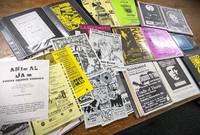
réf. 71248Salt Lake County 2001. Ephemera. Fine. More images available upon request. 745 items. Almost all in fine condition. The flyers and posters range from 1/2 standard sheet size approx. 8.5" x 5" to large posters approx. 17" x 14". Most are standard sheet size 8.5" x 11". Roughly a dozen duplicates are present. An enormous collection documenting live music festivals and performance in the Salt Lake area through the 1990s in the clubs and small venues of the valley. Legendary clubs like the Speedway Cafe Pompadour Bar & Grill Bricks Spanky's Playscool the basement of DV8 Burt's Tiki Lounge Dead Goat Saloon Area 51 The Zephyr Club The Holy Cow now the Urban Lounge and Kilby Court are well represented as well as the holes-in-the-wall like the Moroccan Painted Word Shaggy's Living Room and Green Guinea. Educational and cultural institutions and outdoor venues are also prominently featured in this collection including Bryant Intermediate School the University of Utah Ballroom in the Union Building Westminster College the Indian Walk In Center Draper Park and the Fairgrounds Creative Arts Building. Some places provided venues on a weekly basis other places provided them only a few times or maybe even just once. A number of flyers showcase then unknown bands who first played tiny venues like these and who went on to gain a larger audience and in some cases are still performing today The Vandals Social Distortion Bad Religion GWAR Slayer Johnny Rotten Suicidal Tendencies Korn and many others. Countless local acts are represented including those that performed steadily throughout these years Iceburn; Endless Struggle; Starmy; Red Bennies; Bob Moss; Daughters of the Nile as well as bands that were together for slightly shorter periods Mouthbreather; Gnawing Suspicion; Wovoka etc. Interestingly a handful of local bands that had their origins in the 1980s appear such as Bad Yodelers Potato Heads Dinosaur Bones The Clocks a noise band Slaughterchrist and the Stench. The bands are announced in a way that was standard during this period- with imaginatively designed often do-it-yourself paper flyers posters and handbills. The lion's share are illustrated with no mention of the artist. Some are very simple just delivering the necessary information. This collection manages to document the entirety of the music scene instead of a single genre with numerous examples of posters and handbills promoting Hardcore Punk Pop Rap Metal Industrial Folk Bluegrass Rockabilly Psychobilly Ska/Reggae etc. Not only does this archive highlight the bands and the incredibly diverse musical movements that were moving through Utah during this period but at the same time it calls attention to the promoters who worked so hard to put the shows together find willing venues and get the word out to the public- promoters such as Raunch Modified Heavy Metal Shop Graywhale KRCL and Slug Productions. Finally when flipping through the flyers one can't help but think of the artists behind the scenes who created the flyers thereby playing a large role in advertising the events. The bands that passed through Utah came from far and wide as is evidenced in these flyers and they performed at all types of different venues. They came from Washington D.C. California Missouri Michigan the UK Canada and a multitude of other places. More often than not after a band played the members did not disappear backstage never to be seen again. Instead most of them watched the other bands that were playing and they mingled with the people who had come to support them creating a significant exchange of experiences and ideas. The shows were frequent widening the audience's world and cultivating a sense that there was something to do in a state known for its sheltered lifestyle and conservatism. Many of the shows took place in Salt Lake City however they also radiated out to areas which included Murray Provo Bountiful and Logan. This certainly wasn't the only time in Utah's history that an energetic and creative music movement took hold of the musicians promoters and audiences however the period represented in this collection does symbolize an important piece of the puzzle in the counter-culture history of Utah's live music scene. First and foremost these flyers underscore the ideas and values that were important to the musicians and the people attending these shows: providing "all ages" venues; charging low entry fees often $3 to $7 and occasionally organizing free events; working around Utah's quirky laws such as the private club law which required a patron to pay a fee and fill out an application before entering a bar; and banding together to put on benefit shows for the unsheltered Food Not Bombs Rape Recovery Center Utah Humane Society Best Friends Animal Society Utah Food Bank and U.S. Cuba Friendshipment/Right to Travel among others. A large extremely well preserved assortment of visually interesting concert flyers. While the archive illustrates how diversified the music scene in Utah was during the nineties at the same time it demonstrates the cohesiveness of the local music community- a community which possessed a strong ability to foster an environment which promoted individuality and activism. "Witness the shredding of the Zion Curtain" - from the flyer for Head Fest 95'. unknown books
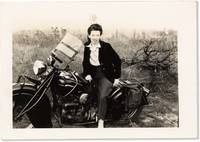
réf. 81167St. Louis: Ozark M.C. 1927-1942. A rich archive of original source documents for one of the earliest motorcycle clubs in the Midwest with clear precursors to the "Outlaw" clubs of the post-WW2 era. Includes minute books for the Club's primary years of activity; founding documents including draft Constitution and By-Laws; membership rolls; correspondence; printed and promotional ephemera and photographs complete inventory in note below. Condition generally Good or better with expected aging to some documents and a few in fragile condition. The archive has been removed from the decomposing ring binders in which it was originally housed and organized into manila file-folders respecting where possible the as-found order of contents. The original binders have been retained and are included with the archive. The entirety comprises sixteen file folders housed in two hinged Hollinger boxes occupying about half a linear foot. INVENTORY: BOX 1: Folder 1. By-Laws and Constitution. Ten items including five drafts in mimeograph with extensive holograph edits; one apparently final draft in typescript on lined paper; related documents including roster of charter members with addresses; suggestions for effective Presidency; directory of other regional motorcycle clubs. Folder 2. Minutes June 15 1928 - October 18th 1929. Continuous; 32 leaves used plus 12 blank Folder 3. Minutes Jan 8 1937 - December 24th 1937. 24 leaves fully used recto & verso Folder 4. Minutes Jan 7 1938 - December 30th 1938. 21 leaves fully used recto & verso Folder 5. Minutes Jan 6 1939 - March 1 1940. 26 leaves most used recto & verso plus about 20 blank leaves as found. Entry for March 1 1949 is annotated possibly at a later date: "This is last meeting." Folder 6. Membership Forms 1935 - 1939. 33 numbered completed forms plus two unnumbered completed in holograph with name date of application record of membership vote and signatures. This presumably comprises a complete list of all Club members from 1935-1939. Folder 7. Miscellaneous correpondence 1930 - 1942. Twelve pieces on various subjects including political statements apparently by Michael Verderber not related to Club activities. Envelopes laid in as found. Folder 8. Printed and promotional items. Six pieces produced by the Club and by others. Folder 9. Midwest Motorcycle Association. Two pieces documenting an attempt by Ozark M.C. members to start a rival association to the American Motorcycle Association. Folder 10. Races Meets and Competitions 1932 - 1939. Sixteen pieces including correspondence race forms sanctioning certificates and related materials relating to competitions and Club meets. Folder 11. American Motorcycle Association 1930 - 1941. Eight items including correspondence bulletins and blank forms from the American Motorcycle Association the main sanctioning body for motorcycle clubs across the U.S. Folder 12. Ephemera including event tickets pit passes business cards club receipt book for 1936. Nine unique items some present in multiples. Folder 13. Photographs. Thirty-nine vintage silver-gelatin photographs most measuring 3" x 5" or the reverse; a few smaller; also twenty-three original negatives some but not all replicating the prints above. Folder 14. Photographs. Three larger format vintage silver-gelatin photographs two measuring ca. 8" x 10"; the third 5" x 7" on card mount this image fully cracked through image at lower third; verso of board held together with masking tape. Folder 15. Michael Verderber personal. Two items relating to 1943 registration certificate for Verderber's Indian Model "4" motorcycle. Folder 16. Fragments and extraneous envelopes as found. BOX 2: Remnants of 3 original binders from which the archive was removed. ------------------------------------- The original Ozark Motorcycle Club was founded in 1927 by a group of twenty St. Louis cycling enthusiasts including Mike Verderber who appears to have been the original keeper of these documents Louis Ahrens first President Fred Tremozini Vice President Hank Eiler and sixteen others. It is unclear when the group began holding formal meetings; extant minutes for this iteration of the club begin with June 15 1928 and end without warning or explanation on Oct 18 1929 leaving about twenty blank leaves in the minute book. As this last recorded meeting was held just six days before the stock market crash the cause for this cessation of club activities may be conjectured. We can find no public mention of the Club in its pre-Depression phase; the minute book included here would appear to be the only record of its existence. The Club was reconstituted on August 16 1935 in the depths of the Great Depression by Verderber and about twenty others. Included here are multiple drafts both in manuscript and mimeograph for the new Club's Constitution and By-Laws which specify that members shall be "White Male Riders and Owners of Motorcycles" emphasis in the original but "may bring their wives or such persons as they see fit to club-affairs." The earliest minutes appear to be missing but the archive's record of meetings is complete from January 1937 to March 1 1940 which appears to have been the Club's last official meeting so marked in the minute book though other evidence included in the archive suggests that the club persisted for at least a few more years perhaps more as a social group than a functioning organization. For the first two years meetings focus mostly on club events including meets tours and rallies. The availability of beer at meetings is a topic that arises with some frequency as does the matter of the American Motorcycle Association for which at least a few members express strong antipathies see our note regarding Outlaw motorcycle clubs below; at one point it appears that a club faction even attempts to launch their own regional association the Midwest Motorcycle Association to challenge the AMA's supremacy in the promotion of meets "gypsy tours" and hill climb events. Eventually the Ozark M.C. appears to have made the decision to affiliate with the A.M.A. though we mysteriouly do not find any vote for this decision in the meeting minutes just correspondence from the AMA sanctioning club events but it clearly cost the club some members: by 1938 membership had dwindled from 22 riders to no more than a dozen. In later years beginning especially around mid-1939 meetings address with increasing urgency the Club's dwindling membership and futile attempts to collect dues from the many members in arears. By early 1940 it seems the eight remaining members can agree on very little; the minutes grow sparse and by March of that year the Club appears defunct. This winding narrative is supported by the archive's many other documents including correspondence which includes several lengthy letters from club president Verderber to prominent public figures including Franklin Delano Roosevelt publicity materials and especially photographs which are remarkable: all are vernacular nearly all captioned with names and dates taken during biker events throughout the midwest evoking the rough-and-tumble nature of early cycling events and the decidedly proletarian milieu in which they took place. "Outlaw" culture was still a few years away from being fully articulated by clubs such as The Outlaws The Boozefighters The Bandidos and others; but its roots are most definitely to be found among these risk-taking beer-drinking blue-collar riders of the Great Depression. The roots of Outlaw motorcycling in America have been widely documented typically traced to the years directly after the Second World War when returnig G.I.'s out of work and deprived of the close bonds they'd formed in battle found an outlet in the rough and occasionally dangerous world of open-road cycling. "Outlaw" Clubs - those that refused to affiliate with the American Motorcycle Association a commercial trade organization founded in 1924 - developed a mostly undeserved reputation for antisocial and sometimes violent behavior cemented in the public imagination by the 1953 Marlon Brando film The Wild One and its many imitators. But as is clear from the evidence in this archive an independent and contrarian spirit prevailed even in the pre-War years and we suspect it was members of Depression-era clubs such as this one who were most active in forming the post-war Outlaw clubs. In fact Verderber in one telling line from a long letter to his girlfriend included here describes himself as an "outlaw" rider - then thinking better of it crosses the word out and replaces it with "independent." By war's end such reticence would be a thing of the past; independent bikers would begin wearing the "outlaw" label proudly and defiantly. And though the use of the term "outlaw" before the war is hardly unnown - the Outlaws M.C. of Chicago were using it as early as 1935 - documentation of these pre-War motorcycle clubs is nearly non-existent making the current archive an invaluable resource for both the study of working-class culture in the midwest and one of the earliest instantiations of a uniquely American subculture. unknown
réf. 81167St. Louis: Ozark M.C. 1927-1942. A rich archive of original source documents for one of the earliest motorcycle clubs in the Midwest with clear precursors to the "Outlaw" clubs of the post-WW2 era. Includes minute books for the Club's primary years of activity; founding documents including draft Constitution and By-Laws; membership rolls; correspondence; printed and promotional ephemera and photographs complete inventory in note below. Condition generally Good or better with expected aging to some documents and a few in fragile condition. The archive has been removed from the decomposing ring binders in which it was originally housed and organized into manila file-folders respecting where possible the as-found order of contents. The original binders have been retained and are included with the archive. The entirety comprises sixteen file folders housed in two hinged Hollinger boxes occupying about half a linear foot. INVENTORY: BOX 1: Folder 1. By-Laws and Constitution. Ten items including five drafts in mimeograph with extensive holograph edits; one apparently final draft in typescript on lined paper; related documents including roster of charter members with addresses; suggestions for effective Presidency; directory of other regional motorcycle clubs. Folder 2. Minutes June 15 1928 - October 18th 1929. Continuous; 32 leaves used plus 12 blank Folder 3. Minutes Jan 8 1937 - December 24th 1937. 24 leaves fully used recto & verso Folder 4. Minutes Jan 7 1938 - December 30th 1938. 21 leaves fully used recto & verso Folder 5. Minutes Jan 6 1939 - March 1 1940. 26 leaves most used recto & verso plus about 20 blank leaves as found. Entry for March 1 1949 is annotated possibly at a later date: "This is last meeting." Folder 6. Membership Forms 1935 - 1939. 33 numbered completed forms plus two unnumbered completed in holograph with name date of application record of membership vote and signatures. This presumably comprises a complete list of all Club members from 1935-1939. Folder 7. Miscellaneous correpondence 1930 - 1942. Twelve pieces on various subjects including political statements apparently by Michael Verderber not related to Club activities. Envelopes laid in as found. Folder 8. Printed and promotional items. Six pieces produced by the Club and by others. Folder 9. Midwest Motorcycle Association. Two pieces documenting an attempt by Ozark M.C. members to start a rival association to the American Motorcycle Association. Folder 10. Races Meets and Competitions 1932 - 1939. Sixteen pieces including correspondence race forms sanctioning certificates and related materials relating to competitions and Club meets. Folder 11. American Motorcycle Association 1930 - 1941. Eight items including correspondence bulletins and blank forms from the American Motorcycle Association the main sanctioning body for motorcycle clubs across the U.S. Folder 12. Ephemera including event tickets pit passes business cards club receipt book for 1936. Nine unique items some present in multiples. Folder 13. Photographs. Thirty-nine vintage silver-gelatin photographs most measuring 3" x 5" or the reverse; a few smaller; also twenty-three original negatives some but not all replicating the prints above. Folder 14. Photographs. Three larger format vintage silver-gelatin photographs two measuring ca. 8" x 10"; the third 5" x 7" on card mount this image fully cracked through image at lower third; verso of board held together with masking tape. Folder 15. Michael Verderber personal. Two items relating to 1943 registration certificate for Verderber's Indian Model "4" motorcycle. Folder 16. Fragments and extraneous envelopes as found. BOX 2: Remnants of 3 original binders from which the archive was removed. ------------------------------------- The original Ozark Motorcycle Club was founded in 1927 by a group of twenty St. Louis cycling enthusiasts including Mike Verderber who appears to have been the original keeper of these documents Louis Ahrens first President Fred Tremozini Vice President Hank Eiler and sixteen others. It is unclear when the group began holding formal meetings; extant minutes for this iteration of the club begin with June 15 1928 and end without warning or explanation on Oct 18 1929 leaving about twenty blank leaves in the minute book. As this last recorded meeting was held just six days before the stock market crash the cause for this cessation of club activities may be conjectured. We can find no public mention of the Club in its pre-Depression phase; the minute book included here would appear to be the only record of its existence. The Club was reconstituted on August 16 1935 in the depths of the Great Depression by Verderber and about twenty others. Included here are multiple drafts both in manuscript and mimeograph for the new Club's Constitution and By-Laws which specify that members shall be "White Male Riders and Owners of Motorcycles" emphasis in the original but "may bring their wives or such persons as they see fit to club-affairs." The earliest minutes appear to be missing but the archive's record of meetings is complete from January 1937 to March 1 1940 which appears to have been the Club's last official meeting so marked in the minute book though other evidence included in the archive suggests that the club persisted for at least a few more years perhaps more as a social group than a functioning organization. For the first two years meetings focus mostly on club events including meets tours and rallies. The availability of beer at meetings is a topic that arises with some frequency as does the matter of the American Motorcycle Association for which at least a few members express strong antipathies see our note regarding Outlaw motorcycle clubs below; at one point it appears that a club faction even attempts to launch their own regional association the Midwest Motorcycle Association to challenge the AMA's supremacy in the promotion of meets "gypsy tours" and hill climb events. Eventually the Ozark M.C. appears to have made the decision to affiliate with the A.M.A. though we mysteriouly do not find any vote for this decision in the meeting minutes just correspondence from the AMA sanctioning club events but it clearly cost the club some members: by 1938 membership had dwindled from 22 riders to no more than a dozen. In later years beginning especially around mid-1939 meetings address with increasing urgency the Club's dwindling membership and futile attempts to collect dues from the many members in arears. By early 1940 it seems the eight remaining members can agree on very little; the minutes grow sparse and by March of that year the Club appears defunct. This winding narrative is supported by the archive's many other documents including correspondence which includes several lengthy letters from club president Verderber to prominent public figures including Franklin Delano Roosevelt publicity materials and especially photographs which are remarkable: all are vernacular nearly all captioned with names and dates taken during biker events throughout the midwest evoking the rough-and-tumble nature of early cycling events and the decidedly proletarian milieu in which they took place. "Outlaw" culture was still a few years away from being fully articulated by clubs such as The Outlaws The Boozefighters The Bandidos and others; but its roots are most definitely to be found among these risk-taking beer-drinking blue-collar riders of the Great Depression. The roots of Outlaw motorcycling in America have been widely documented typically traced to the years directly after the Second World War when returnig G.I.'s out of work and deprived of the close bonds they'd formed in battle found an outlet in the rough and occasionally dangerous world of open-road cycling. "Outlaw" Clubs - those that refused to affiliate with the American Motorcycle Association a commercial trade organization founded in 1924 - developed a mostly undeserved reputation for antisocial and sometimes violent behavior cemented in the public imagination by the 1953 Marlon Brando film The Wild One and its many imitators. But as is clear from the evidence in this archive an independent and contrarian spirit prevailed even in the pre-War years and we suspect it was members of Depression-era clubs such as this one who were most active in forming the post-war Outlaw clubs. In fact Verderber in one telling line from a long letter to his girlfriend included here describes himself as an "outlaw" rider - then thinking better of it crosses the word out and replaces it with "independent." By war's end such reticence would be a thing of the past; independent bikers would begin wearing the "outlaw" label proudly and defiantly. And though the use of the term "outlaw" before the war is hardly unnown - the Outlaws M.C. of Chicago were using it as early as 1935 - documentation of these pre-War motorcycle clubs is nearly non-existent making the current archive an invaluable resource for both the study of working-class culture in the midwest and one of the earliest instantiations of a uniquely American subculture. unknown books
1940réf. 169491United States: c. 1940-60. A visual record of a rarely seen and poorly documented world - an accidental history An unusually extensive group of these evocative "table photographs" striking records of largely African-American audiences in the glamorous sociable and intentionally inclusive world of mid-century nightclubs. Shot by in-house photographers developed on site and sold for a dollar at the end of the evening these quick souvenirs now amount to a rare visual history of a poorly documented milieu. As Gold notes they "turn the camera round": instead of performers we see the audiences - a critical part of what Jason Moran calls the jazz "ecosystem." The collection offers a nationwide survey of venues from the extravagant to the resolutely down-home. At New York's Café Zanzibar with its spectacular floor shows and "Zanzibeauts" the audience was integrated but largely white prompting Langston Hughes's caustic observation about the seating hierarchy - an impression borne out by the image here. Detroit's Gay Bar Lounge another "black and tan" joint catered to a mostly Black clientele and offered a rougher edge: in 1947 the barkeep famously shot two stick-up artists with the.38s kept beneath the cash register. Equally compelling are the histories of Black enterprise that surface. Oakland's Athens Elks Cocktail Lounge home to Lodge 70 of the Improved Benevolent and Protective Order of Elks of the World stood at the centre of West Oakland's vibrant musical scene hosting countless jam sessions and serving as the informal checkpoint for touring African-American musicians. In Los Angeles Dootsie Williams's Dooto Music Center founded by the trumpeter-turned-entrepreneur provided one of the city's foremost Black cultural venues praised by the Los Angeles Sentinel as "the most-needed cultural and recreation center in Southern California." The photographers themselves remain surprisingly elusive though a few can be traced. In Columbus George Pierce ran a record shop and studio in Bronzeville and supplied images to the Ohio Sentinel and other regional papers; in Detroit Earl Fowler's Top Hat Photo developed into a significant presence in the Black Press with Fowler later serving as chief of the Los Angeles bureau of Now! magazine. Beyond these contexts the photographs' enduring appeal lies in the human dramas unfolding across their tabletops: the conviviality style and fleeting alliances captured in a moment of collective ease. A scene from Gamby's in Baltimore is emblematic - six convivial hat-tipping men and two young women smiling through a forest of shot glasses presided over by a portrait of Fats Waller. It is warmly enigmatic yet inviting an offhand welcome extended across time. A more detailed description and full listing is available on request. Together 66 black and white gelatin silver print photographs 62 c.127 x 178 mm; 3 approximately 178 x 254 mm around 50 are in their original plain or printed souvenir folders the balance loose. Loose photos and folders with occasional wear and mild damp-staining some annotations verso of prints and to folders prints occasionally stapled into folders overall the group remains about very good. Ronald Auther "The Oakland Larks" The Shadow Ball Express: African American Baseball Renderings and other Facts of Life online; Clora Bryant et al Central Avenue Sounds; Jazz in Los Angeles 1930s-1950s 1998; Jeff Gold Sittin' In: Jazz Clubs of the 1940s and 1950s 2020; Robert Petersen "Before Motown: L.A.'s Black-owned Music Empire" PBS SoCal online. unknown