82.232 Ergebnisse
1834Best.-Nr. 88467Boston: Carter Hendee and Co 1834-37. First Edition. Five octavo volumes. Uniform plum cloth; printed paper spine labels; 317;275;291;184;262pp. Bindings spine-sunned and slightly worn; volume for 1833 more so with some external damp rippling not affecting text and a small gouge at front joint. Internally very fresh with most pages unopened. Good and sound. The 3rd through 7th volumes of the Institute's proceedings each including transcriptions of lectures on public education by such writers as Joseph Story A.A. Gould C.T. Jackson Beriah Green Warren Burton Walter Channing William A. Alcott Samuel Howe and others. The Institute was founded in 1830 and was a direct progenitor of the National Education Association. Though the vast majority of the Institute's members were from New England it was the first meaningful interstate body of public school instructors and administrators and set standards for public education into the first decades of the 20th century when it was subsumed by the NEA; writing in 1847 the Institute's President Horace Mann wrote: "The Institute may justly be considered as the source of all the improvements in education which have since 1830 been made in New England and other Northern States and its influence is slowly diffusing itself through the uncongenial regions of the South." The lectures are a particular point of interest in this series as they cover a wide variety of topics of interest to historians of education ranging from "The Importance of a Knowledge of the Principles of Physiology to Parents and Teachers" Edward Reynolds 1833 to "The Comparative Merits of Private and Public Schools" Theodore Edson 1837. A key source for early pedagogical theory in America rarely seen in commerce. Carter, Hendee, and Co unknown books
1933Best.-Nr. 87307New York: For Affiliated Schools for Workers Later the American Labor Education Service ALES 1933. First Edition. 28cm. Staple bound white paper stock titled to first leaf. 32pp typewritten rectos only mimeo'd. Some toning to the edges of the front cover some light chipping and creasing to the spine edge of the title leaf "1933" added in ink to the upper front corner of the title sheet strong and solid; internally clean and fresh. A very good copy of an object clearly not intended to last. The first significant progress report issued by the ASW/ALES under the helm of dauntless and energetic educator Eleanor Gwinnell Coit whose name appears at the end of the document and who was appointed to the project in 1929 when it was in its infancy and continued steering the ALES through various advances in workforce education until its disbanding in 1962. Coit's advocacy for worker's education continued unflaggingly until her death in 1976. The primary objective of the ALES was to provide straightforward access to education for the working class access to advocacy and representation for those denied significant autonomy and to advance their rights and safeguards often through support of union initiatives and programs. An interesting takeaway from the report is how many of the "summer" education projects took place on spaces provided by historically women's colleges and higher education institutions like Bryn Mawr Coit herself had followed the then unusual route of higher education earning her degree from Smith before continuing and achieving her Master's from Columbia. A significant amount of the administrational and organizational labor of the early stages of the ALES was performed by women volunteers in higher educational institutions. The ALES under Coit also introduced a number of initiatives devoted to the publication of educational books for workers the majority of which were written by women who in the early 1930's would have found it very difficult to gain traction and recognition in the field of educational and social reform page 11 of this document lists a number of early publications and speaks of the creation of a required reading list for students comprising fiction poetry plays and biographies dealing with the social and economic problems faced by the laboring population and their families: "The Educational Secretary is the Chairman of a committee of Local #189 American Federation of Teachers under the auspices of which has been prepared an ANNOTATED LIST OF MATERIAL FOR WORKERS' CLASSES and a SUGGESTED READING LIST." Footnote #1 at the base of p.8. Necessarily scarce and ephemeral with only a single institutional holding of this title. For Affiliated Schools for Workers [Later the American Labor Education Service (ALES)] unknown books
1819Best.-Nr. 1262421819. London: Dean and Munday 1819. 12mo 35 pp. Original printed wrappers. Covers and folding color frontispiece both detached frontispiece with large chip from top left corner some offsetting but generally clean. § A rare children's puzzle book; no copies on OCLC. The publisher's catalogue on lower wrapper lists "Puzzle-all's entertaining Riddle Book" which was published the previous year and is recorded on OCLC in just a single copy at the British Library. Dean and Munday was headed by two sisters Mary Ann and Anna Maria who were born into the Bailey dynasty of publisher's. Their mother Susanna Bailey printed under her own imprint after the death of her husband and after her death in 1810 willed the company solely to her two daughters. "For whatever reason Susan left her sons only a pittance. In her will 'The whole of my business and.everything thereunto belonging' was left to her daughters. By that time both girls had married apprentices from their parent's shop Mr. Thomas Dean Sr. and Mr. William Munday. Nevertheless Susan's will stipulated adamantly that the business was 'for their own sole use and benefit absolutely not to be subject of control of any present or future husband.my two daughters will share equally any profits arising from the printing business.for their own solo use and benefit absolutely independent of any present or future husbands.' Indeed records show that the company Dean & Munday had both sisters Mary Ann Dean and Anna Maria Munday listed as its principals between 1812 and 1840. Perhaps it was because of all the babies the sisters bore or the customs of the early nineteenth century that regardless of Mother Susan's attempts to ensure the female succession of the business it would become identified primarily with the husbands." From Dean & Son Publishers - A Short History: As published by vintagepopupbooks.com in the May 2013 edition of the Movable Book Society Newsletter "Movable Stationary". unknown books
Best.-Nr. 62320San Francisco: 1930. Broadside 42cm x 23cm. Printed in black on newsprint; text in 32 lines surrounding a central graphic depicting "Politics" in the person of a spoiled child begging to be given the school system to destroy after having broken all his other 'toys' - the State House the trolley and road systems etc. Faint old folds; mild toning to paperstock; still complete and Very Good or better. Broadside issued without imprint or attribution relating to the ongoing debate over control of public schools in San Francisco - a debate that played out more broadly in most American urban school systems through much of the Twentieth Century. The issue at stake here is a proposal Amendment 27 to the San Francisco City Charter to replace appointed School Board representatives with a new Board directly elected by city residents. Objections raised to the amendment by the anonymous authors include assertions that the new system will favor only well-heeled candidates who can afford the cost of campaigning; that the Board will be opened to political manipulation at the expense of teachers and students; and that the work of the Parent-Teacher Association and allied advocacy groups will be marginalized. The so-called "centralization movement" in American education reform began in earnest during the Progressive Era influenced by the growth of corporate consolidation bureaucratization and the "efficiency movement" in other contemporary spheres of public and private administration. Nominally "progressive" in origin centralization sought to remove schools from the political sphere and to place decision-making in the hands of appointed experts. This closed and hierarchical system prevailed in many large urban school districts for most of the 20th century despite frequent attempts such as this one in San Francisco in 1930 to democratize the process. Despite more or less quadrennial attempts to undo the appointed board system San Francisco's school board remained centralized through the 1960s. At least one scholar has noted that in San Francisco at least the debate over centralization had distinct racial undertones; supporters of the appointed Board were deliberately attempting to protect the schools from the influence of majority-Catholic wards. Writing in the context of a similar 1920 San Francisco vote Victor L. Schrader notes that the Protestant working class played a key role in swinging the vote towards centralization: "The Protestant working class acted as a swing vote which was both necessary and aided the vote of the middle and upper classes to bring about a victory for Amendment 37 the 1920 ballot measure.The Protestant working class acted as a deciding block without whose support the centralization measure probably would not have passed" see Victor L. Schrader. "Ethnicity Religion and Class: Progressive School Reform in San Francisco in History of Education Quarterly Vol. 20 no. 4 Winter 1980. Such background would suggest that the current broadside pandering to working class distrust of political figures especially strong in the first years of the Depression to support what was an essentially undemocratic process was more than a little bit cynical. This perhaps explains the absence of any imprint or attribution. Rare and local; no copies separately catalogued in OCLC no others traced in commerce. REF: Snauwaert Dale. "Administration Reform in the Progressive Era: The Chicago Debate" in Democracy Education and Governance: a Developmental Conception. Albany: SUNY Press 1993. Victor L. Schrader. "Ethnicity Religion and Class: Progressive School Reform in San Francisco in History of Education Quarterly Vol. 20 no. 4 Winter 1980. unknown books
1890Best.-Nr. 5955Kutztown PA 1890. Quarter roan over marbled boards measuring 8 x 6.25 inches and comprised of 73 pages of manuscript text including a mixture of notes passed between friends on the verso of the final leaf and on the rear pastedown. Spine largely perished with boards and textblock held together by cords. Several leaves neatly excised towards rear. Containing notes from Fannie Hottenstein's courses in teacher training the present volumes offer researchers a range of study topics including the history of pedagogy and women's increasingly visible place in American education; the book also is a valuable resource for examining how educated young women were thinking through their own lives and roles -- as individuals and as a generation. Trained in one of the most educationally progressive states at the time Fannie Hottenstein was one of a generation of women who could more widely dream about and pursue more independent lives than their matriarchs. Historically Pennsylvania had been a vanguard for public and progressive education. "In his 1830 address to the state legislature Governor George Wold championed the cause of universal public education" as a scaffold for "the security and stability of the individual privileges we have inherited from our ancestors" Explore History. Before the decade was over "more than 1000 local school districts under a single statewide system of instruction" had been founded working to regularize "educational standards curriculum and instructional credentials" in tandem with the 1857 Normal School Act which founded "a network of ten state academies to prepare public school teachers" Explore History. Fannie attended one of these preparing for a career in education that would give her a new level of social and economic independence. Much of Fannie's notebook reflects the kind of rigorous work required to teach middle and high school students. Contents include for example three pages of facts on basic Botany; fifteen pages on the practice of Logic in writing and debate including an extensive section on presenting proper Opposition accompanied by text book page numbers; and five pages on pedagogical methods for helping students develop curiosity and drive it forward into productive study. There are additional fairly staid essay samples on topics such as Influence and Gentleness. Yet it is in the thirteen page essay We Girls that sparks of Fannie's individuality ambition and independence show. In it she reveals how much contact she has had with the period's literature on women's rights and suffrage; she shows her familiarity with anti-feminist arguments in opposition to women like her; and she powerfully expresses her hopes not only for her generation but the ones that follow. Fannie opens: "It is a recognized fact that the degree of civilization of every nation is marked by the social position of woman. Indeed one of the most prominent features of the progress of civilization is her gradual elevation in society and the clear perception and recognition of her rights. In the earlier ages of the world when the sphere of her influence was bounded by the narrow prejudices of the opposite sex her happiness as well as her mental improvement and social rank depended more on what was done for her at the hands of men than on what she could do for herself. All this is changed now." Fannie praises the hard-won changes women accomplished in accessing education and job training; and she touts how many opportunities are available for women to dream about and pursue. This does not mean she's unaware of the challenges that continue -- particularly from men. "We have to contend with the prejudice sometimes entertained against us that our highest destiny in life is to be a pretty piece of furniture in a handsome parlor. Men who entertain this notion we girls must always urge to get their furniture somewhere else." To those who accuse women of being too emotional and insufficiently intellectual she also has a response. "Our aim must be to develop and perfect our entire nature mental social and moral" she argues. Only by embracing both thinking and feeling as strengths can any individual -- man or women she contends -- succeed. Women are in a unique position to embrace both. A truly rich document which also includes brief notes among Fannie and her friends about their flirtations and recent purchases of accessories at the end gives insight into the development of a young woman who would go on to live what she preached. According to the US Census of 1900 Fannie remained single and lived in a boarding house working as an office stenographer. unknown books
1971Best.-Nr. 80643New York: Delacorte Press 1971. First Edition. First Printing. Octavo. 21.5cm. Publisher's black cloth titled and decorated in red and purple gilt. Dustjacket. 184pp. Very light wear to the cloth predominantly shallow bumping to the spine ends a bright clean copy in a dustjacket that has seen some use with creasing and small closed tears to the upper edge of the front panel chipping to the spine ends and some light soiling to the white rear panel. There's tape residue from some unnecessary reinforcement attempts but it is essentially a very good copy with some shelfwear. A groundbreaking work at the time of publication and an exapnsion of the authors' earlier theories on teaching as a radical mechanism for change rather than a reinforcement and continuation of the status quo. Delacorte Press unknown books
1867Best.-Nr. 62239London: George Routledge & Sons 1867. First Edition. First printing. Octavo 19cm. Blue cloth stamped in gilt and blind; noncontinuous pagination; black and white in-text illustrations throughout. Rubbed but bright and straight one central gathering pulled complete around Very Good. Question-and-answer guide for children about household items food animals birds and plants. 62239. George Routledge & Sons unknown books
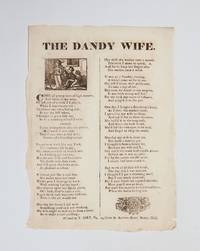
1828Best.-Nr. 5421London: T. Birt 1828. First edition. Single sheet measuring 250 x 185mm and printed in two columns to recto. Some edgewear to margins not affecting text; a bit of foxing and toning largely confined to margins. A scarce and delicate survivor OCLC documents only one example at the National Library of Scotland. The present is the only example on the market. The Dandy Wife is narrated by a man who aimed "to choose me out a loving wife" at the age of twenty-one but whose experience becomes a warning to "all young men of high renown": "If you want a tidy wife Beware of a boarding school." What unfolds is a satire of how the marriage economy is affected when women have access to knowledge -- intellectual and physical -- and how by meeting a man's superficial expectations a woman can fulfill her own more pressing needs. Thinking that a boarding school girl will have the innocence submissiveness and domestic skill he desires the narrator selects a wife from among their ranks. Thinking only of what he can obtain from such a bargain he is unprepared for what an educated woman brings into his house. The Dandy Wife he describes understands the commodity value of her own beauty and material adornment and that these are her key means for acquiring wealth of her own. "She takes one-half of what I earn In drinking gin and tea; Besides such frills and furbelows My Dandy Wife does wear.Her sleeves upon her dandy gown Oh! Lack they're such a size You'd think they were two balloons that in the air would rise." Aside from staying on par with fashion trends her clothing assists her in avoiding domestic tasks she abhors. She refuses to do laundry more than monthly and through ridiculous cooking failures she rapidly establishes that the kitchen is not a showcase for her skillset. Accustomed to a life of learning she is not trained to conduct domestic business. By the ballad's end it becomes clear that the Dandy Wife was savvier in managing a marriage than her husband was. For not only does her superior intellect help her carve out a more satisfying role but she also has physical knowledge that predates him: "The day that I was married I thought I'd got a charming maid But I was much deceived.For scarce five months we'd married been When she had a darling son. T. Birt unknown books
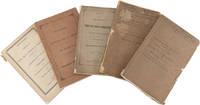
1844Best.-Nr. 56150Boston 1844-45. 1. MANN Horace Seventh Annual Report of the Board of Education; Together with the Seventh Annual Report of the Secretary of the Board. Boston: Dutton and Wentworth 1844. First edition. Octavo 25cm. Original brown paper wrappers with printed title on front untrimmed; 1991pp. Inscribed "J. F. Bumstead Esq. / with best regards from / Horace Mann" on front wrapper. With a few contemporary pencil annotations. A fresh copy edges gently rubbed one or two small stains to wraps: Very Good or better. This copy presented by Mann to J. F. Bumstead-plausibly Josiah Freeman Bumstead 1797-1868 who authored primary school primers readers and spellers published by Ticknor and other Boston firms in the 1840s. 2. MANN Horace. The Common School Journal vol. VI no. 5; March 1 1844. Containing the "Seventh Annual Report of the Secretary of the Board of Education to the Board of Education." PRESENTATION COPY FROM SAMUEL MAY TO ADIN BALLOU. Octavo 26cm. Original paper wrappers printed on front; 64-200pp. Inscribed to "Rev. Adin Ballou / with the best regards of / Sam J. May - / Let all that have eyes read / or all that have ears hear this / admirable document -" With one or two minor marginal pencil marks. Ex libris and discard stamp of Swarthmore College to final leaf. Textblock sound though rubbed but front cover detached rear cover lacking; some staining to outer leaves minor foxing: Good. Presentation copy from Samuel Joseph May 1797-1871 to Adin Ballou 1803-1890 founder of the Hopedale Community. May was one of Mann's allies in establishing the Massachusetts state school system and both he and Ballou were members of the New England Non-Resistance Society a peace organization founded by William Lloyd Garrison. 3. Association of Masters of the Boston Public Schools. Remarks on the Seventh Annual Report of the Hon. Horace Mann Secretary of the Massachusetts Board of Education. Boston: Charles C. Little and James Brown 1844. Octavo 23cm. In original brown paper wrappers printed in black on front; 144pp. Inscribed "B. A. Gould" to front upper cover--possibly pioneering Boston astronomer Benjamin Apthorp Gould 1824-1896. With occasional marginal pencil marks. A fresh copy with one or two tiny chips to spine: Very Good or better. 4. MANN Horace. Reply to the "Remarks" of Thirty-One Boston Schoolmasters on the Seventh Annual Report of the Secretary of the Massachusetts Board of Education. Boston: Wm B. Fowle and Nahum Capen 1844. Octavo 23cm. In original dark beige paper wrappers printed in black on front; 176pp. A sound copy with losses at head and tail of spine joints partly split but holding internally clean: Very Good. 5. ASSOCIATION OF THE MASTERS OF THE BOSTON PUBLIC SCHOOLS. Barnum Field; Wm A. Shepard; S. S. Greene; Joseph Hale. Rejoinder to the "Reply" of the Hon. Horace Mann Secretary of the Massachusetts Board of Education to the "Remarks" of the Association of Boston Masters Upon His Seventh Annual Report. Boston: Charles C. Little and James Brown 1845. First edition. Octavo 22cm. Original beige wrappers printed in black on front; 55 1 56 40 64pp. Inscribed "The Misses Adams / 1 May 1922" on verso of title page. A sound fresh copy with split at front upper joint chip at tail minor dirt to wraps but internally clean: Very Good. Five pamphlets on Horace Mann's 1844 annual report to the Board of Education including two presentation copies of different editions of the report itself and three responses. Mann had toured Europe with his new wife Mary Peabody and friend Samuel Gridley Howe and studied schools in eight countries with special interest in the Prussian school system. His 1844 annual report comparing American and European school systems was received with great offense by Boston schoolteachers. "A group of thirty-one schoolmasters. . . published a sharply worded critique of his seventh Annual Report" targeting "Mann's recommendations for teacher training as well as his opposition to corporal punishment." However this group "soon faced Mann's wrath in the form of written rejoinders" and were ultimately vanquished when "Mann's allies were elected to the Boston School Committee." Despite the controversy Mann's efforts to "merge the best that he found in European educational systems with the principles of the growing American common school movement" saw remarkable success. Under his direction the Board of Education spent over $2 million on improved school buildings increased teacher salaries by over 50% opened fifty new high schools commissioned uniform school textbooks from Boston publishers and alotted time for student exercise-shaping the public school system as we know it ANB. All the titles in this collection are uncommon in the book trade. unknown books
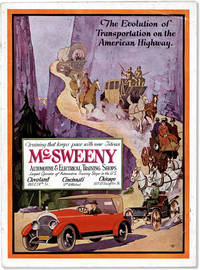
Best.-Nr. 60350Cleveland: McSweeny Automotive & Electrical Training Shops 1925. Quarto. Color pictorial wrappers; 64pp; illus. Mild external wear; contents complete fresh and unmarked - a solidly Very Good copy. Elaborate and well-illustrated prospectus for the McSweeny Automotive Training Shops a chain of private training schools for would-be auto mechanics that operated at least through the early 1930s. In addition to detailed course descriptions the brochure emphasizes the growing need for mechanics due to the explosive growth of the automobile industry in the Twenties; promises that "Mac's Shop-Plan Makes the Big Pay Man." Not recorded in OCLC nor is any other publication by this company. unknown books
1852Best.-Nr. 60524Albany: Gray Sprague & Co. Joel Munsell printer 1852. First Edition. Octavo. Printed self-wrappers; 311pp. Removed with trace of adhesive residue at bound edge lacking cover wrappers if issued else fresh and unmarked Very Good or better. The author now mostly remembered as one of America's leading early hymnodists here stresses the importance of moral and practical education for women to achieve ".the formation of pure and elevated tastes" and develop a "moral sense" and "conscience." See SABIN 9277 for another issue. BIBLIOTHECA MUNSELLIANA p.54. Gray, Sprague & Co. [Joel Munsell, printer] unknown books
1970Best.-Nr. 55998New York: Crusade Against Hunger 1970. Original illustrated poster offset printed in colors on white stock measuring 43.25cm x 56cm ca.17" x 22". Two old folds smoothed-out light wear and handling with adhesive staining to corners on verso with some residual bleed-through; Very Good. An early promotional poster for National School Lunch Week established by John F. Kennedy in 1962 in an effort to "promote the importance of a healthy school lunch in a child's life and the impact it has inside and outside the classroom" School Nutrition Association. The artwork sadly uncredited features a stylized child holding fork and knife aloft in front of a plate of food. Not separately listed in OCLC. Crusade Against Hunger unknown books
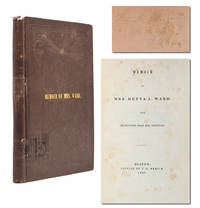
1843Best.-Nr. 4025Berkeley: T.R. Marvin 1843. First edition. Very Good . Original publisher's cloth binding with gilt to front board. Minor loss of cloth to crown of spine. Faint residue of removed library label to spine and front board. Peach endpapers. Light scattered foxing as is typical of the period. Inscribed on the front endpaper by Ward's husband the compiler: "Reverend Mr. Ellingwood with the respects of J.W. Ward." Bookplate on the front pastedown reveals that the recipient Rev. Ellingwood went on to donate the volume to the Theological Seminary of Bangor Maine. A scarce and important example of a published American elegiac volume produced in this case by an eminent family to mourn the loss of an educated woman. Memoirs is unrecorded by OCLC and has never appeared at auction. In their marriage James Wilson Ward and Hetta Lord Hayes Ward united two prominent Northeastern families. A senator and Congregationalist minister James descended from the founders of Plymouth and had attended Andover and Amherst. Hetta the daughter of a judge and niece of a Dartmouth president was herself a graduate of Miss Grant's Seminary Academy. The present volume released "exclusively for private circulation among the friends of the deceased" is a testament to Hetta's value not as a daughter who married well or a wife who effectively managed a house but as a companion an intellectual and an individual. In this sense it deconstructs the period's expectations of separate spheres or hierarchy between sexes. With an opening letter by Susan Hayes Hetta's mother as well as a copy of the eulogy conducted by her husband the book reveals vast details about who Hetta was as a person. Both describe her as tender and affectionate; but time and again emphasis is placed on her mind. Though Hetta was skillful with a needle as a child according to her mother "her numberless questions interested and surprised me.She acquired a fondness for poetry.She became as much interested in the in the study of the exact sciences as in the works of imagination making herself acquainted with the higher branches of Mathematics Algebra Geometry etc." James similarly eulogizes his wife. What becomes clear is that he is grieving the loss of a companion and equal. "If we have found a friend of distinguished excellence and for years rejoiced with that friend in mutual interchange and warm affections it is natural when death intervenes and separates us from the dear object of our love to contemplate their virtues.First characteristic which I would notice which she possessed in an eminent degree is an ardent love of truth.She possessed great powers of abstraction.She saw with great clearness the point of an argument and was quick to distinguish between sophistry.She loved to trace the workings of the human mind." Not satisfied simply to have their own testaments to Hetta's extraordinary mind the compilers included to the last half of the book a collection of her own poetry and prose. A scarce work in a genre underappreciated in American literature and history. Such coterie publications of intimate mourning were uncommon for the time particularly for a woman. National Cyclopedia of American Biography 148. Very Good . T.R. Marvin unknown books
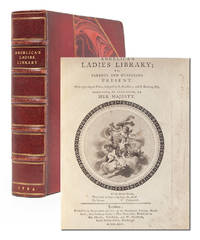
1794Best.-Nr. 3526London: Printed for J. Hamilton 1794. First edition. Finely bound in half morocco over marbled boards ruled in gilt. All edges brightly gilt. Marbled endpapers. Lower front corner skinned. Light offsetting to endpapers. Faint gift inscription to outer margin of title. Header of titlepage shaved close without any loss to text with textblock wide margined and clean. Pages measure approximately 190 x 150mm. Collating 2 vi 440: bound without half title else complete including engraved title and eight plates designed by Angelica Kauffman a founding member of the Royal Academy of Arts. A surprisingly unfoxed and wider-margined copy than is typically found of this compilation of early educational works designed to help usher girls into adulthood. "These sheets were penned by some of the most amiable and well informed subjects of these realms and intended as affectionate legacies of those noble and worthy persons to their amiable offspring for whom they had such tender regard.to point out whatever was desirable and just in forming and perfecting the virtues of the female character." Thus John Hamilton brings together a series of 16 pieces on women's education and etiquette by authors including Dr. Gregory Lady Pennington the Marchioness of Lambert John Dryden and Lady Ann Bothwell. Using illustrations by a well-known female artist who was cutting edge in her own time as a founding member of the Royal Academy of Arts the Ladies Library was purposely suited and adapted for the use of the Female Sex" and for their parents who might want to guide girls into responsible and intelligent womanhood. ESTC T88185. Printed for J. Hamilton unknown books
Best.-Nr. 50433Philadelphia: Penn Monthly 1878. Offprint. First separate edition. Octavo. Sewn pamphlet; printed blue paper wrappers; 12pp; errata slip bound in after final leaf of text. Rear wrapper neatly detached; old tide-line to upper margin of front wrapper; text tight and unmarked - a Good complete and sound copy. Signed in type and end of text by Charles F. Dunbar. Article reprinted from the April 1878 issue of Otis Kendall's Penn Monthly in which Stillé's original article had appeared two months earlier. Dunbar an eminent Harvard economist answers the criticisms of Stillé then provost of the University of Pennsylvania who had taken issue with the profferment of the Harvard Preliminary Examination for Women in the city of Philadelphia. Stillé's argument appears to have been based as much on parochialism as criticism of the exam's content; he was at this time working to raise the profile of Penn among elite American universities and resented the incursion of Harvard onto Penn's home turf. But Stillé evinces more than a little snobbery to say nothing of chauvinism in his assertion that ".no hot-house treatment which forces a precocious and unnatural development can ever produce that fruit which is the support and comfort of human life" - an assertion which Dr. Dunbar answers somewhat caustically: "These truths are well-worn and not denied but if they serve in connection any other purpose than that of a modest rhetorical embellishment it is because the relate to some fancied system quite different from that under discussion." Despite widespread criticisms similar to the ones ably answered by Dunbar in the present essay The Harvard Examinations for Women - quite stringent covering a wide range of subjects and requiring their subjects to answer in at least two languages other than English - eventually became a national standard for the accreditation of young women who were unable whether for reasons of gender or circumstance to attend four-year universities. Stillé meanwhile became one of the University of Pennsylvania's historical icons; ".the extraordinary progress begun in his administration initiated the great expansion that was to continue under his immediate successors." DAB. The pamphlet appears uncommon - though widely catalogued in WorldCat nearly all holdings examined appear to be digital copies of the original held at Harvard's Schlesinger Library. unknown books
1850Best.-Nr. 3448Great Britain 1850. Comprised of 88 manuscript pages of mathematical definitions tables methods and exercises in a single hand with the ownership signature of "Caroline Waters Age 16 yrs" to the front endpaper. Marbled paper vernacular binding measuring 8 x 12 inches and stitched at spine. Caroline's metric measurements and English currency reveal her to be a student somewhere in the UK. Though the commonness of her name and the absence of a specific date prevents us from locating her in genealogy records the manuscript she left behind reveals much about how and why girls of her age and class were being taught arithmetic. Caroline's elegant practiced hand suggests that she is a member of the rising middle class and the opening of the book suggests that she is a beginning to intermediate mathematician. At the top of the first page she defines Arithmetic as "the art of computing by numbers" which "has five principal sic rules for this purpose viz. Numeration Subtraction Addition Multiplication and Division." Using this definition she divides her notebook into a section for each providing a definition for that principle plus clear-cut examples of its use in both Simple and Compound formats. Numeration Subtraction and Addition are grouped together at the front; and after these sections conclude Caroline enters in Practical Questions in Compound Addition and Subtraction. These involve word problems involving the exchange of money and the calculation of wet and dry weights cloth measurements and time. She then mirrors this with Multiplication and Division before adding sections on Decimal Fractions more Practical Questions and sections on Federal Money and Simple Interest. The organization of the manuscript suggests that Caroline copied it out for continued reference where sections are easy to locate and problems clearly illustrate each of the principles. And the emphasis in sample problems on currency conversion monetary exchange and banking implies that her family in some way wanted her to be aware of these concepts. An exceptional and rich document Caroline's notebook is a rich resource for study including but not limited to the history of women's education middle class education women's domestic use of mathematics women in business paleography genealogy gender studies. unknown books
1870Best.-Nr. 3389United Kingdom 1870. Geography notebook of Mary Barker: Quarter black roan over marbled boards measuring 9 x 7 inches. Comprised of a calligraphic title and frontis plus 59 hand drawn-and-colored maps done by a young woman in her first three years of teacher training. Throughout Mary annotates on the margins which year and term she is in and occasionally notes that the map was drawn "From Memory"; and each map has penciled corrections and assessments. with Geography notebook of Allison Jane Gillespy: Quarter cloth over marbled boards. Calligraphic title page and 35 intricately hand drawn maps from the British Empire Europe and the Middle East. A pairing of beautiful and research-worthy notebooks documenting teacher training in the late nineteenth century as well as providing a look into how geographies changed across time and how British educators were being trained to perceive and educate the young about other parts of the world and how they connected to the British empire. With nearly 100 pages combined the notebooks offer scholars important comparative opportunities and means for better understanding the rising number of women educators and authors publishing works that engaged geography and international cultures during the Victorian era. "The Wesleyan Methodists had a school for ministers' daughters at Trinity Hall Southport.which admitted both boarders and day girls.to educate ministers daughters and train teachers" Roach. Pupil teacher programs like the one Mary Barker was enrolled in had become a popular method of producing teachers at a time when the public's access to education expanded and the demand for instructors was at a high. Such programs functioned like an apprentice system taking a senior pupil typically thirteen years old and putting her in a five year assistantship to her own instructor. Pupil teachers typically took on responsibility for teaching lower classes observing their superiors educate the more advanced students and completing their own educations. By the 1870s these programs had become standardized to ensure proper preparation for instructors Robinson. Mary's maps trace this process. As she moved from her first to her third year in this notebook the quality and care she puts into her work improves. Her handwriting and attention to detail matures. And her assessments move from Fair to Good and Very Good. Maps in the notebook include nearby locales such as Ireland Scotland and the British Isles as a whole; European nations including Sweden Norway and Prussia as well as eastern Europe and Russia. Mary also maps out "Arabia" and the "Chinese Empire" as well as "Further India" revealing a wide array of changing borders and shifting cultural attitudes. While Allison does not leave any marker of her class age or school the level of intricacy in her maps suggests she was a senior student or finished instructor. These appear to be fair copies not done from memory but prepared as examples for students or as teaching aids. Together the two provide a comparative opportunity to study the history and politics of mapping nineteenth century girls' education pedagogy and pedagogical training and geography. unknown books
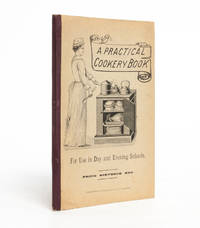
1903Best.-Nr. 3158London and Manchester: John Haywood 1903. First edition. Near Fine. Original pictorial boards with cloth to spine. 76 pages. Faint toning to edges of covers but surprisingly clean overall. Early ownership signature of "Sarah Askworth.1906" to the verso of the front cover and overlaid with tape. Lightly toned throughout but otherwise unmarked without the signs of kitchen use common in such books. Scarce in trade OCLC reports no copies of the present work at institutions. "Around the year 1900 there was a concern about the physical state of the people of Britain. Even though there had been tremendous efforts in the late 19th century to provide better public health housing and education many children were still no more healthy than they had been back in the 1840s. The new Liberal government elected in 1906 passed various measures to try to deal with this problem.and they gave permission for schools to offer meals to their pupils" National Archives. Efforts to consider the link between education and nutrition had begun in the lead-up to the laws however; and the present work is a scarce surviving example of such a cookery. Its compilers note in the preface "This collection of Recipes has been prepared specially for Day and Evening Schools. The instructions of the Education Department.have been embodied." Given the book's brevity it contains a multitude of basic nutritious and locally accessible foods that can be combined for a variety of different meals -- always with an eye to giving growing students the fuel they need to grow and thrive in their schooldays. There is even included a selection of recipes designed for the sickroom when students are ill and need extra care for their health. A research-rich compendium. Near Fine. John Haywood unknown books
1924Best.-Nr. 31532Washington D.C.: S.i. 1924. First Edition. Slim octavo 23cm; beige printed wrappers stapled; 12pp. Pamphlet is vertically folded at center wrappers dusty edgeworn and nearly detached along spine fold; 7 brief passages marked in pencil; Good complete copy. Summary of details regarding the salary scale for the academic faculty of Howard University presented to their Board of Trustees. Includes extracts and correspondence from faculty to members of the board including the full text of Dean Kelly Miller's letter to Dr. Michael O. Dumas and hard data as to proposed pay increases for the various positions. OCLC finds a single copy Emory University. S.i. unknown books
1919Best.-Nr. 28312London: George Allen & Unwin 1919. First Edition. Octavo. Olive drab boards lettered in black on spine and front cover; xvi 336pp. Inserted advertising leaf tipped in before first page of Preface. Tight straight and unmarked copy Near Fine. Social survey of British labourers mainly in the city of Sheffield undertaken immediately following the Great War. The Society was under the directorship though not credited herein of the prominent Fabian Socialist anthroposophist and educator Arthur James Freeman 1886-1972 who also founded the Sheffield Educational Settlement 1918. Among contemporary testimonials included on the inserted advertising leaf is the following from the Daily Mail: ".One of the most interesting social studies that have been made since Charles Booth's Life and Labour in London.Anyone who agrees that 'the proper study of mankind is man' could not fail to find this fascinating." See Helen Smith "Love Sex Work and Friendship: Northern Working-Class Men and Sexuality in the First Half of the Twentieth Century" in Alana Harris & Timothy Jones eds Love and Romance in Britain 1918-1970 Lon: 2015. George Allen & Unwin unknown books
1769Best.-Nr. 1071971769. London: Newbery and Carnan 1769. 2 vols. 16mo xl 264; 286 2 adspp. Original quarter green vellum over black coated boards with paper label to spine. Slight wear and rubbing to extremities; else very good clean copies. § Two from the seven volume series "The Circle of the Sciences" which was an early attempt to introduce children to logic philosophy mathematics etc. All the early editions are scarce. Oliver Goldsmith has been named as a possible contributor to the series. Roscoe J663 and J694. unknown books
Best.-Nr. 1095Steinbeck John. New York University Division of General Education. BOOK ADVERTISING. Materials handbook for the Seminar on Book Advertising Spring Semester 1947. Tabloid size newsprint pages stapled including advertising rates for various American newspapers and examples of book advertisements. Nice full page ad for CANNERY ROW. Fine condition. unknown books
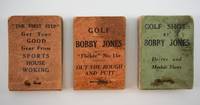
1930Best.-Nr. ST20235London: Harrods Ltd 1930s. FIRST EDITION. 76 x 51 mm. 3 x 2". 100 pp. Original green or orange paper wrappers side stitched titling on front cover and imprint on spine. In a custom-made folding buckram box with book wells for the three books and gilt-stamped marbled paper label inset on spine of the box. Consisting of three bound sets of 50 sequential photographs that when flipped either from back to front or front to back generate a stop motion animation of Bobby Jones demonstrating the proper form for executing a shot with various golf clubs see below. Advertisements on inside wrappers. Donovan & Murdoch 22610. One volume with portions of spine gone at either end with partial loss of imprint wrappers inevitably somewhat soiled corners a bit rounded as expected but still remarkably well preserved especially considering its inevitable hard use being entirely sound and with the photographs in excellent condition. This is a scarce grouping of some of the most charming sports as well as miniature books we've ever offered for sale. In the 1930s the famous London department store Harrods published a series of so-called sports "flicker" books of which these three are perhaps the most famous other sports books involved cricket tennis lacrosse soccer badminton swimming and greyhound racing. Our three "flicker" books when the pages are riffled with one's thumb or fingers show the famous smooth-swinging American golfer Bobby Jones executing shots with various clubs. The first book #11a in the Harrods series features the driver and the mashie. The modern equivalent for this latter piece of equipment is slightly elusive but the "mashie" is an iron club with considerable loft meant to hit a golf ball a relatively short distance with a high trajectory Jones' "driver" has the same meaning today as it did 90 years ago. The second book features shots with a "brassie" roughly equivalent to today's 3- or 4-wood and an "iron" also called a "driving iron" which is like today's 1- or 2-iron. The third book shows Jones putting and escaping from heavy rough with a high-lofted club like today's sand wedge. It is great fun--not to mention still instructive--to riffle through these photographs watching one of the world's most celebrated golf swings come to life complete with Jones' knickers white shirt and flapping tie. It is also a fact of some interest that this English series would feature an American player at a time when British dominance in golf was beginning to erode. Given the physical use to which these items have been subjected it is difficult to believe that they are still intact let alone that they are solid enough to be handled without worry. Harrods Ltd unknown books
1985Best.-Nr. UTHENUC00ajsNick Lyons 1985. Very Good. The League of Women Voters Education Fund. The Nuclear Waste Primer: A Handbook for Citizens. NY: Nick Lyons 1985. 90pp. Illustrated. Glossary. Paperback. Book condition: Very good with rubbing and bumping. Nick Lyons paperback books
1850Best.-Nr. 47824Mexico: Imprenta de M. Murguia 1850. Very Good. Mexico: Imprenta de M. Murguia ca. 1850. First Edition. Broadside 40.5x29.25cm; ornamental border surrounding a series of math-related tables and instructions. Chipping principally to edges occasional staining horizontal fold to center; Very Good. Uncommon and ephemeral broadside printed by the Mexican state for instruction of young students in arithmetic. Approximate date from OCLC which shows four holdings Penn State and U. Conn only in the US. Imprenta de M. Murguia unknown books