78 856 résultats
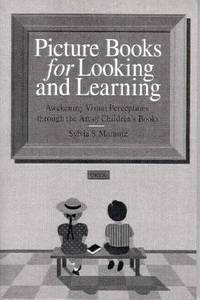
1992réf. 27647Phoenix: Oryx Press. Near Fine. 1992. Paperback. 089774716X . First edition paperback. Near fine in illustrated wraps. . Oryx Press paperback books
2002réf. 20629London: Reaktion Books. As New in As New dust jacket. 2002. Hardcover. 1861891199 . Illustrated. First edition. As new in like dust jacket. . Reaktion Books hardcover books
1995réf. 22154New Haven: Yale University Press. Fine in Fine dust jacket. 1995. Hardcover. 0300055293 . First printing. Fine in a fine dust jacket. . Yale University Press hardcover books
1941réf. 17003Waterbury Connecticut: Waterbury Mfg. Co. 1941 This is a workbook of a student training to be a machinist. The lessons focus on fractions physics and geometry as well as the practical use of specific machines. Contemporary green cloth punch-hole binder with shop sticker on front inner cover. 8 in. x 6 in. . Lower cover detached. Soiling to boards. Some soiling and toning to leaves and some creasing and chipping to edges but overall quite clean. A unique fragile item in very good condition. In 1917 the Smith-Hughes Act of authorized federal funding for vocational schools in the United States. These institutions usually a replacement for traditional high school were established to divert children from low-income families into labor roles often in factories while wealthier children went on to universities. The vocational education movement was prompted in large part by rapid industrialization resulting in a shortage of skilled labor in factories at the same time that more immigrant families were moving into cities and sending their children to public schools. In addition just a year after the passing of the Smith-Hughes Act Mississippi became last state to enact a compulsory education law which caused an additional influx of students to public schools. Waterbury Mfg. Co., hardcover books
1940réf. 010323Boston: D C Heath and Company 1940 Code 4D7 on copyright page. Linen covers mounted on card titled in black ink occasional notes and underlining in pencil. An intermediate level French reader with exercises and a glossary of words. Illustrated with a full-page b&w frontis. Original Wraps. Very Good/No Jacket. 12mo. D C Heath and Company paperback books
1881réf. 010348Boston: D Lothrop & Company 1881 Pictorial boards with cloth spine boards worn along edges corners worn through text block reattached free endpapers lacking. Easy-to-read story about a little girl named Gretna who moves from Sweden to America. Illustrated with engravings by various uncredited artists. . Pictorial Boards. Good Minus/No Jacket. Illus. by Engravings. 4to. D Lothrop & Company unknown books
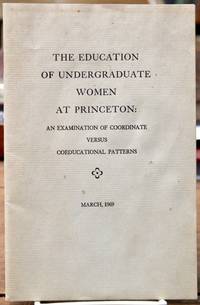
1969réf. 16973Princeton New Jersey: Princeton University March 1969 Pale bule printed paper wrappers. . Octavo. With a full-page table comparing educational models. Fading and light foxing to front cover. Very bright and clean throughout. A very good copy of an uncommon item reporting the results of a study on how Princeton University could implement their decision to admit women. A committee of Princeton students faculty and administrators considered five models for incorporating women into the college: 1 "Separate educational institutions joined by a 'treaty' which makes possible some sharing of facilities and faculty"; 2 "Two institutions with separate formal identities but with one faculty identified with the men's college"; 3 "A separate women's residential college or zone within the University"; 4 "A single institution with an established ratio of women to men students but with no separate residential college"; and 5 "A single institution with no established ratio of women to men students." The present item summarizes the characteristics advantages and disadvantages of the five models. Princeton began admitting undergraduate women in the fall of 1969 under the fourth proposed model. The model allowed women to choose between living on campus in designated spaces women-only dorms or women's sections in larger dorms or living off campus and between eating and socializing in communal spaces with men or in their own dorms and private residences. The text reads: "This model avoids any connotations of 'segregation' and thus is attractive on grounds of principle to those who believe it is important that men and women students learn how to know each other simply as 'people'" p. 9. Princeton University,] books
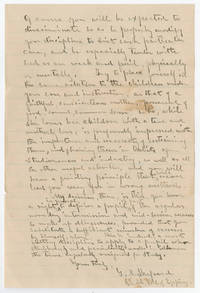
1891réf. 25493".neither have the right to inflict punishment or impose restrictions that will maim or injure the health of the children. As to the particular case under consideration I cannot believe that you are unduly severe or that your restrictions and exactions will hurt a robust stubborn pupil." EDUCATION. GEORGE N. SHEPARD.Autograph Letter Signed as Chairman of the School Board to Mary D. Webster October 5 1891 West Epping New Hampshire. 2 pp. and envelope. Complete Transcript West Epping N.H. Oct. 5 1891 Dear Miss Webster Yours of the 3d inst. is at hand. Your school supplies as ordered are sent by mail this morning. We have no Swinton's Second Readers now on hand therefore I put in for you a McGuffy's Second Reader which I hope will serve your purpose. In relation to authority of teachers you perhaps already understand that they have the same as parents while the children are under their care and that neither have the right to inflict punishment or impose restrictions that will maim or injure the health of the children. As to the particular case under consideration I cannot believe that you are unduly severe or that your restrictions and exactions will hurt a robust stubborn pupil. <2> Of course you will be expected to discriminate so as to properly modify your discipline to suit each particular case and be especially tender with such as are weak and frail physically or mentally. Try to place yourself in the same relation to the children under your care and instruction as that of a faithful conscientious mother possessed of good sound common sense who while she loves her children with a true and motherly love is profoundly impressed with the importance and necessity of restraining them and of training them in habits of studiousness and industry as well as all the other useful activities and you will have a guiding principle that will never lead you very far in wrong methods. My decision then is this you have a right in general to deprive a pupil of part of the regular noonday intermission and mid-session recesses to make up delinquencies provided that you substitute a sufficient number of recesses by himself alone. This is indeed a most fitting discipline to apply to a pupil who stubbornly and persistently wastes in idleness the time regularly assigned for study. Yours truly G. N. Shepard Ch. Sch. Bd. of Epping. George N. Shepard 1824-1903 was born in Epping New Hampshire and educated in the public schools and at Hampton Academy. He married Rowena Lawrence Thyng 1823-1911 in 1845. He taught school was a land surveyor and served as a justice of the peace. By 1860 he was listed as a farmer living with his wife and four children. He represented West Epping in the state legislature from 1860 to 1862. During the Civil War he rose to the rank of captain in Company I of the 11th New Hampshire Infantry from 1862 to 1865. He was wounded at both the Battle of Fredericksburg and the Battle of Cold Harbor. Afterwards he returned to farming then engaged in the mercantile and lumber business. He was postmaster of West Epping from 1876 to at least 1895 and chairman of the school board from 1886 to at least 1895. Mary D. Webster 1854-1935 was born in New Hampshire. By 1870 both she and her older sister Sarah 1848-1929 were school teachers still living with their parents in West Epping Chester township southeastern New Hampshire. By 1910 the two unmarried sisters still lived together in Chester township but Mary listed her occupation as farming at home. books
1885réf. 009096Philadelphia: E H Butler & Co. 1885 Decoratively stamped and titled boards with newer burgundy cloth spine. An unusually fresh copy with minor shelf wear and a few pages with tiny corner bends two pages with faint ink spatter. Simple vocabulary words accompanied by basic sentences and charming engravings on nearly every page. The book was kept in a period plain dust wrapper not original to the book but it will be included. . Quarter Cloth. Very Good Plus/No Jacket. 12mo. E H Butler & Co. hardcover books
1958réf. 009871Dortmund: W Cruwell 1958 Color printed card covers with cloth spine a few small stains pages age-toned at edges. All of the sights and sounds one encounters walking the streets of the town with a guide at the end for what the different traffic signs mean. Illustrated in color throughout. Card Covers. Very Good/No Jacket. Illus. by Hans & Maria Mannhart. 8vo. W Cruwell hardcover books
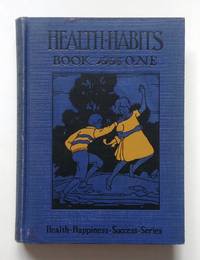
1939réf. 009926Chicago: Lyons & Carnahan 1939 423 pgs. Blue cloth pictorially stamped in black & yellow barely noticeable thin marginal dampstain along the top edge of first few pages otherwise an amazingly well-preserved copy. All about personal hygiene diet exercise and leading a healthy lifestyle. Illustrated in b&w throughout by Vera Stone Norman. . Early Edition. Pictorial Cloth. Very Good Plus/No Jacket. Illus. by Vera Stone Norman. 8vo. Lyons & Carnahan hardcover books
1958réf. 009073Zurich: Kantonaler Lehrmittelverlag 1958 Decorated upper cover with cloth spine soil to cloth and boards edge and corner wear internally clean. One of three volumes published for the use in schools for third year readers this being volume 2. A collection of poetry and prose including fairy tales by the Brothers Grimm and Hans Christian Andersen and one verse by Dr. Heinrich Hoffman. Color artwork throughout by Hans Fischer. There were no English language editions published. . Stated First Edition. Pictorial Boards. Very Good Minus/No Jacket As Issued. Illus. by Hans Fischer. 8vo. Kantonaler Lehrmittelverlag unknown books
1972réf. 008371New York: Harper & Row 1972 Glossy pictorial boards in matching dust jacket which is slightly darkened with tiny chips from spine ends original price intact $2.50. Forest animals come up with their own version of the Olympics after finding the sports section of a newspaper. Humorous color artwork throughout. Scarce. First Printing. Pictorial Boards. Fine/Near Fine. Illus. by Leonard Kessler. 8vo. Harper & Row unknown books
1939réf. 008103Boston: D C Heath and Company 1939 Beige cloth pictorially stamped in maroon and blue light cover soil and surface rubbing internally clean. Easy reading stories featuring Disney characters including Pluto. Illustrated in color throughout. Very Good /No Jacket. Illus. by Walt Disney Studio. 8vo. D C Heath and Company hardcover books
réf. 17554St. Paul Minn.: Webb Publishing Co. Webb Publishing Co. Fourth edition of both items. All editions and all entries in the series are rare with only a few physical copies of each in OCLC. None of the copies recorded in OCLC are first editions. . Each volume in brown paper front cover stapled to stiff board backing at top edge. . Two volumes 6 in. x 10 in. . No. 1 with forty-seven text figures and six fabric samples laid in plus needles thread and some lace. No. 2 with forty-four text figures and eight fabric samples laid in with needles and thread. Also with a large fold-out paper bodice pattern and a small brown paper envelope containing two buttons. Some toning to leaves from the laid-in cloth samples. With a teacher's signature on one page of the workbook for No. 1. Near fine copies in their original envelopes. Instructs students in both basic and complex stitches; sewing hems seams and buttonholes; attaching buttons; and sewing cuffs sleeves ties collars bodices and petticoats. The workbooks also include instructions for teachers and parents. Webb Publishing Co., books
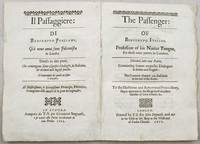
1612réf. ST13801London: printed by Thomas. Snodham. for Iohn Stepneth and are to be sold at his shop at the west-end of Paules Church 1612. FIRST EDITION. 205 x 155 mm. 8 x 6". 18 p.l. 611 1 pp. 601-08 misnumbered 561-68 8 leaves. New unlettered limp vellum by Courtland Benson in imitation of the original binding. STC 1896; ESTC S124314. ◆Half a dozen gatherings a little browned occasional mild foxing or small rust spots additional trivial imperfections otherwise an excellent copy clean and very fresh in a pleasing new binding. This conversation manual by an Italian teacher based in London offers an intriguing glimpse into the lives and concerns of the wealthier classes in 17th century Europe. An early effort to teach language through dialogue the book is part cultural history part guide to better health and it is clear evidence of the importance of the study of Italian in Elizabethan and Jacobean England. The seven dialogues cover subjects from health to travel to servants with Italian and English text on facing pages. Many of the dialogues begin with phrases that will be familiar to all beginning language students: greeting others selecting items of clothing asking prices or directions ordering food. As the conversations progress they explore various topics that one might expect to encounter in polite society. An early morning exchange between master and servant evolves into a discussion of the importance of sleep the optimal amount of sleep for good health and the significance of dreams. A dialogue that begins with ordering meals leads to an involved colloquy about the benefits and disadvantages of fasting and abstinence; the virtues and defects of bread butter meat dairy and eggs; diet recommendations for the healthy and the sick; the best diet for each season; and the importance of a walk after dinner. Other dialogues include advice for travellers observations on the political situation and life at court and finally a discussion of that most eternally fascinating topic: love. This work is of continuing interest and value to linguists as it documents the Benevento Italian dialect which is in need of preservation. It's an extraordinarily rare book probably because it was the sort of volume subjected to hard use: in addition to ours we could trace only two copies in ABPC and RBH since 1948. printed by T[homas]. S[nodham]. for Iohn Stepneth, and are to be sold at his shop at the west-end of Paules Church unknown books
1818réf. 20200395New York NY: E. Conrad 1818. Disbound from presumably a larger accumulation of circulars covers lacking. Wraps. A circular that was distributed by the New York Institution for the Deaf and Dumb and its full title is: "Circular of President and Directors of the Institution for the Instruction of the Deaf and Dumb and the Petition to the Mayor Aldermen and Commonalty of the City of New York with their Favorable Report and Patronage &c." It's purpose is to promote and inform the citizens of New York of both its needs and what had already been done for the school by its Board of Directors and the New York City Legislator. Not a public appeal for donation but encourages generosity. It begins with the accomplish that was written by Silvanus Miller Esq. stating that the directors of the school were "impelled by a sense of duty and a desire to promote the welfare of those unfortunate persons committed to their superintending care to make this appeal to a charitable and benevolent public. deprived of their sense of hearing and the power of speech they posses all those sensibilities and affections . and without the fostering care of benevolent instruction and the steady and kind supervision of endearing friends these children must languish in ignorance remain the monuments of negligence of inattention and oftentimes of wretchedness." It continues on to describe some of the education these children will receive such as "the two handed alphabet" sign language and " the knowledge of connexion sic and the significance of the letters to their uses in spelling and reading and the power of arithmetical numbers combinations and actual calculations" along with the belief that these instructions "must be taught early in life." The next part of the circular is the written petition from the school to the legislators of New York City. It draws comparison between London who had recently funded a school for the Deaf and Dumb and New York often calling New York the "London of America". It includes some information on the founding of the school in the prior year 1817 the current amount of pupils and their needs. At the end there is a listing of the resolved items on the petition in which the legislators agreed to fund $500 towards the school as well as to fund ten students' tuition costs not to exceed $40 per student per year and paid the rent on the school room. It concludes with Board minutes thanking the legislators for the funding as well as detail the cost of schooling and tuition at the school. OCLC-0 Aug 2020 16 pgs. Measures 8" x 5" The school is still in existence today and is in fact known as the second oldest school for the deaf in America. It was renamed at some point to The New York School for the Deaf and is currently located in White Plains NY. E. Conrad unknown books
1920réf. 17300Chicago: Cut Craft Cut Outs American Colortype Co. ca. 1920 First edition. This is one in a series of four "One Room" kits the other rooms shown on the envelope are a dining room bedroom and kitchen. . Buff paper envelope printed in color with an illustration advertising the four possible "One Room" model home scenes. . All richly printed in color. The larger leaf is a rug and the two smaller leaves are printed with furniture pieces to be cut out and assembled into a living room scene. The rug and some of the furniture items are designed in a pseudo-"oriental" style. Wear and toning to edges of envelope creases fragile. The leaves within are clean and bright. A very good copy of a rare and fragile item. Activity kits like the present item were popular educational tools because they inspired children's creativity and helped them practice fine motor skills and techniques that transferred to art lessons like cutting with scissors and folding paper. The present kit is additionally interesting for its distinctly Arts and Crafts era design. The kit includes a model of a Stickley-style settee Tiffany-style lamps and a porcelain vase emblematic of "oriental" interior design trend of the late nineteenth and early twentieth centuries. Cut Craft Cut Outs, American Colortype Co., books
1930réf. 17155Green Bay Wisconsin: ca. 1930s Card paper homemade three-ring binder. 9 in. x 11 in. . With over three dozen pages with fabric swatches sketches and small artworks including two paper weaving samples and a watercolor plus clippings from periodicals laid-in or laid down. Light creasing and wear to pages light occasional offsetting from fabric samples. A very good very robust example of an advanced course in textiles sewing and fashion that also reveals the Depression-era labor history of women in the garment industry. This portfolio represents all the skills a Depression-era woman would need to create her own garments and other textile goods: sewing dyeing and weaving; selecting the right fabrics from stores; repurposing discarded household items into tools to save money e.g. a cigar box into a loom; and much more. Periodical clippings of illustrations of women weaving in industrial and commercial settings indicate that students who completed this correspondence course would not only be able to produce textile goods for their own families but also find skilled employment in the garment industry. books
1855réf. 75393Indianapolis IN.: Austin H. Brown State Printer. Very Good-. 1855. Softcover. This report is soft-bound in light blue wrappers with black printing to the upper cover. The covers show soiling toning and light edge-wear. The string-binding is solid. The contnets are bright and generally clean but with some scattered foxing. . Austin H. Brown, State Printer paperback books
1859réf. 70214Springfield: Bailhache & Baker. Good. 1859. Hardcover. 423 pages rebacked new endpages. The covers are rubbed and the spine is chipped. The contents are bright and complete with a great fold-out frontis. Good. . Bailhache & Baker hardcover books
19336 numéros reliure amateur demi-toile noire, Ecole Sainte-Marie, Montauban, 1933, 23 pp. par numéros Etat moyen (reliure très modeste, cote de bibliothèque au dos, un numéro débroché). Intéressante revue rédigée par les marianistes de Montauban, évoquant les autres établissements français (surtout Tarbes et Caudéran), voire étrangers (Tunis). Les marianistes (Société de Marie) forment une congrégation religieuse catholique fondée en 1817 à Bordeaux par le bienheureux Guillaume-Joseph Chaminade. Celle-ci gère des établissements scolaires et universitaires dans le monde entier. Français
1877Années 1877, 1878, 1879 ,1880, 1881, 1882, 1883, 1884, 1885, 1886, 1887, 1888, 1889, 1890, 1891, 1892, 1893, 1894, 1895, 1896, 1897, 1898, 1899, 1900, 1901, soit 25 fascicule en 1 vol. fort in-8 relié demi-toile à coins marron, couv. cons., Lons le Saunier, Imprimerie et Lithographie Gauthier Frères, circa 30 pp. par fascicule Très intéressant recueil fournissant le détail du tableau du personnel de l'ordre marianiste et détaillant l'intégralité de leurs établissements en France et à travers le monde (Amérique, Japon, Syrie, Océanie...). Etat satisfaisant(ancien cote de bibliothèque au dos en queue) Français
19232 vol. in-8 reliés demi-chagrin noir, Procure Générale, Paris, s.d. (circa 1922-1923), 350 et 390 pp. Bon état pour ce recueil des instructions du Frère Imier de Jésus. Parmi ces circulaires : La sainteté dans la vie religieuse (1914), L'apostolat surnaturel du religieux éducateur (1915), Exemples de sainteté et d'apostolat selon la Règle (1917), La vie intérieure. Ses moyens (1920-1922). Français
19706 vol. in-4 carré reliés plein chagrin rouge, dos à 4 nerfs ornés du sigle doré de l'ONISEP, tête dorée, couv. cons., ONISEP, 1970-1975 Magnifique et rare ensemble parfaitement établi, provenant de la bibliothèque de Gabriel Ventejol, (1919-1987), résistant pendant le guerre, participa à la création du syndicat Force Ouvrière, il présida notamment l'Onisep, ainsi que le Conseil Economique et Social de 1974 à 1987. Bon exemplaire Français