20.478 Ergebnisse
1739Best.-Nr. 10181Londres Jean Nourse 1739 in-4° Fort 20 ffnch ( préface et table )+738 pp, (.) Soit par rapport au gouvernement temporel des états, ou comme chef d'une société chrétienne qui est nécessairement liée avec la religion, en 4 parties. Toutes tranches cirées, dos orné, titre sur pièce de cuir, roulettes sur coupes, filets doubles effacés sur les plats. Frottis d'usage, légers manques de cuir sur coiffe inférieure ; quelques cahiers roussis.
Best.-Nr. 14012, Paris, A.M. Lottin, 1776,, 14 volumes;nouveau parchemin avec title, titlegravure 623pp+624pp+593pp+655pp+656pp. +571pp. +589pp.+630pp .+645pp.+801pp.+638pp.+788pp.+792pp.+830pp. Tables en fin de chaque volume.,
1666In-4°; pp. (16), 184 testatine e bei capilettera figurati incisi su legno. Legatura coeva in piena pergamena con titolo manoscritto al dorso. Leggera uniforme brunitura della carta. Dedica a Ercole Salice, governatore di valtellina. Traduzione dal francese in italiano di questo trattato di morele di Urbain Chevreau (1613-1701), che fu anche segretario della regina Cristina di Svezia, pubblicata nel 1646.
1909288 pages including index. Illustrated with line drawings. Chapters include: Introductory; Different Ends for Which Pictures Have Been Used; The Different Kinds of Pictures; Stereographs and the Stereoscope; Experiences of Travel with Stereographs; The Importance of Environment; The Limitations of Language; The Wide Environment The Stereograph Travel System Gives. Part II includes the following chapters: What are the Necessities of Life; Life is the Purpose of Our Existence; What is the Life We Are Here to Develop?; Happiness vs. Pleasure; The Different Needs of Our Life; The Fundamental Conditions for the Development of the Intellect; The Fundamental Conditions for the Development of the Aesthetic Nature; Fundamental Conditions for the Development of the Moral Nature; Fundamental Conditions for the Development of the Religious Life; Summary and Conclusion. Small dab of liquid paper upon front endpaper. Minimal markings to text. Some pencil markings have been erased. Lettering worn from spine. Above average wear to boards. Hinges intact. Minor lean to spine. Average soiling. Moderate yellowing to contents. Book
1708Best.-Nr. R320006914GUERIN LOUIS. 1706 - 1708. In-12. Relié plein cuir. Etat d'usage, Coins frottés, Dos abîmé, Mouillures. 635 + 656 pages - Plats frottés.. . . . Classification Dewey : 240-Théologie morale et spirituelle
1844Best.-Nr. R260224151PARISIIS. 1844. In-4. Relié cuir dos-coins. Etat d'usage, Couv. convenable, Dos satisfaisant, Rousseurs. 1335+ 1391+LXXXVII+1611pages - petit manque dans la page de titre du tome 1 - EX-LIBRIS R.D. AUG. TRILHE - tampon et étiquette (dos) de bibliothèque - plats jaspés - filets dorés sur le dos - pièces de titre rouge et marrons avec filets auteur titre et tomaison sur le dos - texte en 2 colonnes - Quelques pages non coupées - RELIURE VELIN - 5 PHOTOS DISPONIBLES. . . . Classification Dewey : 240-Théologie morale et spirituelle
193948 pages. Features: Nice colour cover New Year illistration by Russell Sambrook; Gorgeous colour ad inside front cover celebrates the 50th Anniversary of Stovel Company Limited, the publisher of this magazine; News digest includes these headings "A Coming Year of Peace?", "American Isolationism", "Economic Appeasement", "Scared into Sanity", "Ambition or Hardship", "A Moral for Canada", and "Significant Books"; Tragedy and Glamor in Hockey - photo-illustrated article mentions many contemporary stars and teams, and explains the big challenges faced by professional and amateur hockey; Arabia's Warrior-King - magnificent photo-illustrated article on the Saudi Arabia's leader; Gluskap's Showshoes (short story); The Jig-Saw (short story); County Clean Up (short story); Recording the Wars in Europe - article with seven photos, including Hitler crossing the Wildenau frontier; The Mysterious Affair at Styles (part 3 of 5) by Agatha Christie; Hollywood news with photos of Deanna Durbin, Mr. & Mrs. Henry Fonda, Margaret Tallichet, Alland Jones, Robert Young, Barbara Stanwyck, Hedy Lamarr, Sally Eilers, and more; Half-page Italian tourism ad sponsored by E.N.I.T.; The Song of the Dental Demon (short verse); Colour one-page photo-ad for Swift's Premium Ham; Scott's Emulsion ad includes Uncle Dan comic; Personal Finance article; I'm Telling You- self-help article for ladies; Sweet Caporal cigarette ad features photo of Mikky and Pete, two Samoyedes owned by Miss L. Lileda Dodds of Westmount, Quebec; Great Two-page colour-photo-illustrated article entitled "Household Allies" includes photos of 17 vintage home products; World Quotes; Nice back cover ad for the 1939 Pontiac Arrow Coach; and more. Average wear. Unmarked. A worthy vintage copy. Book
1610In Firenze : appresso i Giunti, 1610. (mm. 225 x 160). Splendida legatura ottocentesca in pelle con ricche impressioni dorate ai piatti e al dorso; tassello con titolo al dorso; piccola spellatura ad un angolo. pp. (12), 200. Le pp. 127-128 sono bianche. Insegna dell'Accademia della Crusca sul frontespizio (Buratto. Motto: Il piu bel fior ne coglie. Molte pagine malnumerate. Inferigno Accademico della Crusca è lo pseudonimo di Bastiano de' Rossi. Rara edizione. Bibl: Michel & Michel. Rép. 17. siecle conservés dans la France, vol.7, p.53. Il liber consolationis et consili è un trattato morale sul tema del perdono, inteso non solo come alta virtù umana e cristiana, ma come necessaria dote civile, in una società che sta mutando i suoi orizzonti e che proprio per questo richiede comportamenti ispirati a moderazione. In tempi recenti, l'opera è diventata oggetto di analisi da parte degli storici dell'economia, che hanno individuato in Albertano il pioniere di un nuovo approccio alla questione del progresso individuale e collettivo, fondato sul riconoscimento della liceità della ricchezza, purché ottenuta grazie al lavoro onesto e nell'osservanza del principio evangelico di solidarietà verso i poveri. Il Liber consolationis aveva riscosso subito un notevole successo, perdurato a tutto il XV secolo, e anche dopo. Innumerevoli le edizioni, gli adattamenti, le traduzioni in varie lingue: oltre che più volte nel volgare italiano, in francese, olandese, spagnolo, catalano, tedesco, ceco. Da una versione di Renaud de Louens, il Livre de Mélibée et de Dame Prudence, Geoffrey Chaucer ricavò uno dei suoi Racconti di Canterbury, ossia The Tale of Melibee (Il Racconto di Melibeo). L'illustre dantista Santino Caramella ha ipotizzato che l'opera abbia esercitato un influsso sulla Divina Commedia.
2025Best.-Nr. 100133062Oxford Univ Pr 2025 464 pages in8. 2025. Cartonné. 464 pages.
1757Best.-Nr. 1216711757 Chez Desaint & Saillant, Libraires, à Paris - M.DCC.LVII (1757) - Six volumes in-4, plein veau marbré, dos à cinq nerfs, caissons, fleurons et titre en doré, étiquette de titre sur fond brun - 699 p. + 726 p. + 786 p. + 786 p. + 770 p. + 776 p.
17154 vol. in 1 tomo in-8, pp. (4), 255, (1); 348, (2); (2), 229, (3); (4), 229, (1), 63, (1). Ciascun libro con suo frontespizio; finalini in xilografia. Solida legatura coeva in piena pergamena rigida, titolo ms. al dorso, tagli spruzzati di rosso. Assai coinvolto nella vita politica austriaca, in alcuni scritti il Comazzi (1654-1711) tenta di giungere ad una visione superiore dell'"homo politicus", la cui fisionomia morale deve essere inattaccabile e limpida. "Né il governo solo politica, nè il governo solo Religione quadrano con la pubblica e privata felicità degli uomini, convien tenerli ad un Governo che sia misto di Politica e di Religione ... l'una e l'altra convengono in un medesimo fine, di rendere l'uomo intieramente contento...". L'autore nella prefazione spiega che la Politica e la Religione sono, entrambe, in parte scienza e in parte virtù, e che entrambe hanno il medesimo fine, ovvero la felicità dell'uomo: nella vita mortale l'una e in quella eterna l'altra: "Sono queste le due pupille dell'umana repubblica con le quali veglia sempre il nostro governo, e non è vero che l'occhio della religione resti accecato dalla fede poiché siccome il vedere della scienza umana è una fede in noi stessi, così il credere della religione è un sapere del maestro, il quale vede per noi, ed è tanto più oculato, quanto è più chiara la dottrina di chi l'insegna, di quella di chi impara...". Curiosa edizione stampata a Trento di opera che commenta i fatti del Vangelo dandone una lettura di filosofia morale e politica. Ottimo esemplare.. .
1767Best.-Nr. 1215711767 Chez Nourse, A Londres - M.DCC.LXVII. (1767) - Trois volumes in-4 (21cm X 26cm), reliure plein veau blond raciné, dos à 5 nerfs, caissons, fleurons, titre et tomaison en doré, étiquette de titre sur fond rouge - 527 pages + 643 pages + 747 pages - Illustrations et cartes dépliantes illustrées en N&B hors-texte
Best.-Nr. 106399Par la Compagnie des Libraires, 1698, complet en 2 volumes in-4 de 250x180 mm environ, Tome I : 1f.blanc, une page de titre, 540 pages, 1f. (table), suivi Nouvelles Oeuvres mélées de Saint-Evremont, de la page 489 à 658, 1f. blanc, - Tome II : 1f.blanc, 6ff. ( page de titre, avertissement et table), 488 pages, 1f.blanc, la suite du volume de la page 489 à 658 sont placées à la fin du tome I, plein veau granité fauve, dos à 5 nerfs portant titres et tomaisons dorés, ornés de caissons à riches motifs dorés, coupes dorées (dorures un peu effacées par endroits), texte orné de lettrines, bandeaux et culs-de-lampes magnifiques. Coins émoussés, cuir frotté avec petites taches et trous de ver, début de fente sur un mors externe, coiffes manquantes, taches de cire sur page 47 du tome II, 3 petites auréoles page 387 du même tome, bon état pour le reste. Relié de manière peu conventionnelle (la fin du tome II se trouve à la fin du tome I).
1513Best.-Nr. 82721(Hagenau, Johannes Rynman (Druck von Heinrich Gran), 1513). Titel, 100 (recte 111) Bll., 24 Bll. Register. [= Fehler in der Foliierung: Bl. CX ohne Zählung, Bl. CXI mit C bezeichnet]. 4°. 20,5 cm. Späteres Pgt. mit hs. RTitel.
1860Good Armenian Full modern leather binding. An ex-library stamp on the colophon. Small 4to. (27 x 18 cm). In Armenian. 512, [8] p., engraved plates. Richly illustrated. Stains on pages and edges. Otherwise a good copy. Extremely rare first Armenian edition of Fenelon's "Telemaque". According to Abdolonyme Ubicini's account in his La Turquie actuelle (Paris 1855), Les Aventures de Télémaque was the most popular classic among Levantines in Istanbul in the first half of the 19th century, and it was translated into many languages besides Turkish and Arabic in the Ottoman Empire. The first printed version of a Greek translation dates from the 18th century, while an Armenian version by Ambroise Calfa was published in Paris in 1860. (The Ottoman Reception of Fénelon's Télémaque.; Meral, Arzu). The translator, Ambroise Calfa Nar Bey, Guy de Lusignan, (1831-1906), was a Franco-Armenian historian and linguist from the second half of the 19th century and the beginning of the 20th century. Ambroise Calfa is one of the three sons of Kévork (Georges) -Youssouf Calfa, an Armenian trader living in Constantinople, and Sophie Cantar (or Kantaroglou), daughter of an Armenian merchant or banker from the Ottoman capital. Member of several learned societies, including the Asian Society, Ambroise Calfa published several historical or linguistic works, including an Armenian Calligraphy (Paris, 1853), a work awarded at the Universal Exhibition of 1855, and, above all, an Armenian-French Dictionary ( Paris, Hachette, 1861) dedicated to Emperor Alexander II. (Wikipedia). Les Aventures de Télémaque, fils d'Ulysse (The adventures of Telemachus, son of Ulisses) with the original title is a didactic French novel by Fénelon, Archbishop of Cambrai, who in 1689 became tutor to the seven-year-old Duc de Bourgogne (grandson of Louis XIV and second in line to the throne). It was published anonymously in 1699 and reissued in 1717 by his family. The slender plot fills out a gap in Homer's Odyssey, recounting the educational travels of Telemachus, son of Ulysses, accompanied by his tutor, Mentor, who is revealed at the end of the story to be Minerva, goddess of wisdom, in disguise. OCLC 953068302 (One institutional copy in BnF). (Utopias from the Middle East 3).
1907Very Good English Original wrappers. Cr. 8vo. (19,5 x 13,5 cm). In English, Persian, and Ottoman script (Old Turkish with Arabic letters). 26 p. Abû-Muhammad Muslih al-Dîn bin Abdallâh Shîrâzî, (1193-1292), Persian poet and prose writer, widely recognized as one of the greatest masters of the classical literary tradition. His influence is not limited to Persian literature. He also deeply affected Turkish and Urdu literature and the Western world (Encyclopadiae Iranica). Bostan [i.e. the Orchard] and Gulistan [i.e. the Rose Garden], his famous Works, were translated into many languages and commented. Pendname is one of Sa'dî's poetical works. In this ethical-based work, ethical values such as science, justice, consenting to fate, honesty, patience, generosity, modesty, and grace are praised. Bad habits such as talking to ignorant, cruelty, lie, arrogance, and stinginess are badly criticized. The Persian text of Sa'dî's Pendname, it's an English translation, and Ottoman Turkish translation in verse were printed together in the early 20th century. The work is about some moral characteristics that are seen as "acceptable and submissive" in societies and have been recited with the idea of benefiting people. (Source: A BOOK ON ETHICAL LITERATURE: SAADI'S PENDNAME, Melek Dikmen). Major William Henry Carmichael-Smyth, (1780-1861), was a British military officer in the service of the East India Company and an orientalist. In 1797, at the age of seventeen, he was commissioned into the Bengal Artillery. In 1803, the Second Anglo-Maratha War broke out, and he was present at the battles of Aligarh, Delhi, and Laswari. Carmichael-Smyth returned to India in 1810 as a captain and served in the Invasion of Java in 1811. Thereafter he returned to Bengal and went to Callinger as a field engineer where he was mentioned in dispatches for exemplary valor in 1812. He returned to England in 1820 and was elevated to Major in 1821. Not in Özege.; OCLC 50021435, 1065323294.
1822In-4°; pp. (4), 111, (1), legatura in cartonato rigido con tassello al dorso.
1580In-12°; 1- “Thologi societatis(..)” cc.(3), 93, (6 di cui ultime tre bianche) note manoscritte e timbri ,ad inchiostro, di possesso al frontespizio. Capilettera incise su legno. 2- “De vanitate Mundi” cc. (18), pp. 500. Capilettera incisi su legno. Legatura in piena pelle di scrofa; incisioni al dorso, al piatto superiore e infriore in nero, dorso lacunoso
Best.-Nr. 3626où sont renfermées les plus importantes de la politique & de la morales avec des discours historiques sur chaque fables,nouvelle édition consacrée à l’usage de Mgr le Prince des Asturies. In 12 plein cuir fauve à nerfs,pièce de titre chagrin rouge,2 parties en un volume,titre,frontispice gravé illustré,portrait de Dom Louis Prince des Asturies,XIV,232 pages,titre frontispice illustré gravé,IV table,227 pages, 60 planches gravées à mi-page,marge extérieure fragile sur quelques centimètres en début de la première partie et en fin de la deuxième partie(page 196 à la fin)Amsterdam chez Jean Pauli 1720 bon état d’ensemble
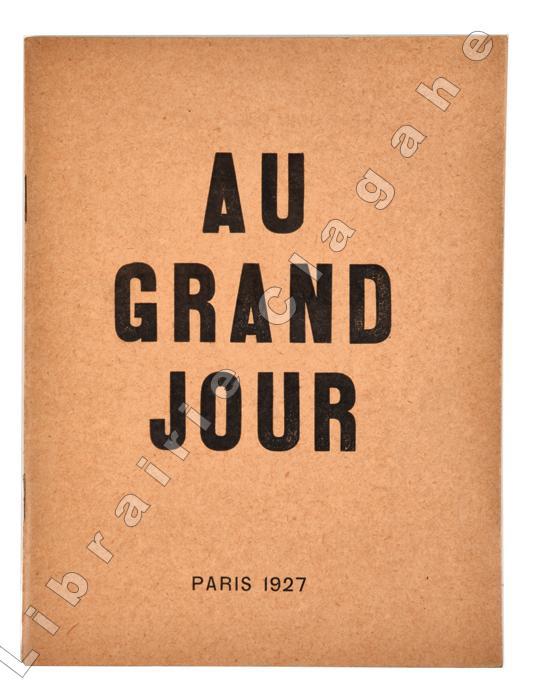
1927Best.-Nr. 20110Paris, pour les Editions Surréalistes, 1927 (mai) ; plaquette in-16 (158 x 120 mm) ; broché, double agraphage ; 28, [2] ff., Imprimeur, le dernier blanc, couverture originale “curry”, avec le titre en grandes lettres.
17521 Vol. In-4 (27x21) cart.rustico coevo.Ampi margini.Timbro di bibl.estinta pag. LVI-376 front. e c. lett. incisio Strappetti al dorso. Molto ben tenuto PROG 15993 CATT_ATT 53
Best.-Nr. 34090Paris Chez les Frères Estienne, Libraires 1778 in 12 (17,5x10,5) 1 volume reliure plein veau fauve de l'époque, dos lisse très orné, caissons fleuron dorés, pièce de titre de cuir marron, tranches marbrées, XV et 465 pages (3). James Fordyce, Docteur en Théologie de l'Universté de Glasgow, & Pasteur d'une Congrégation de la Cité de Londres. Première traduction française (Rare first French translation). Très bel exemplaire ( Photographies sur demande / We can send pictures of this book on simple request )
1712in folio, 34 cm, rilegatura coeva rigida in piena pergamena, titolo manoscritto al dorso che è diviso da 5 nervi, p. (28), 744. Vignetta incisa la frontespizio, iniziali decorate e animate, alcuni finalini e incipit decorati, testo su due colonne. Leggero alone al taglio superiore a circa metà del testo che non disturba la lettura, rari e marginali segni di tarlo. Timbri privati al risguardo e al frontespizio
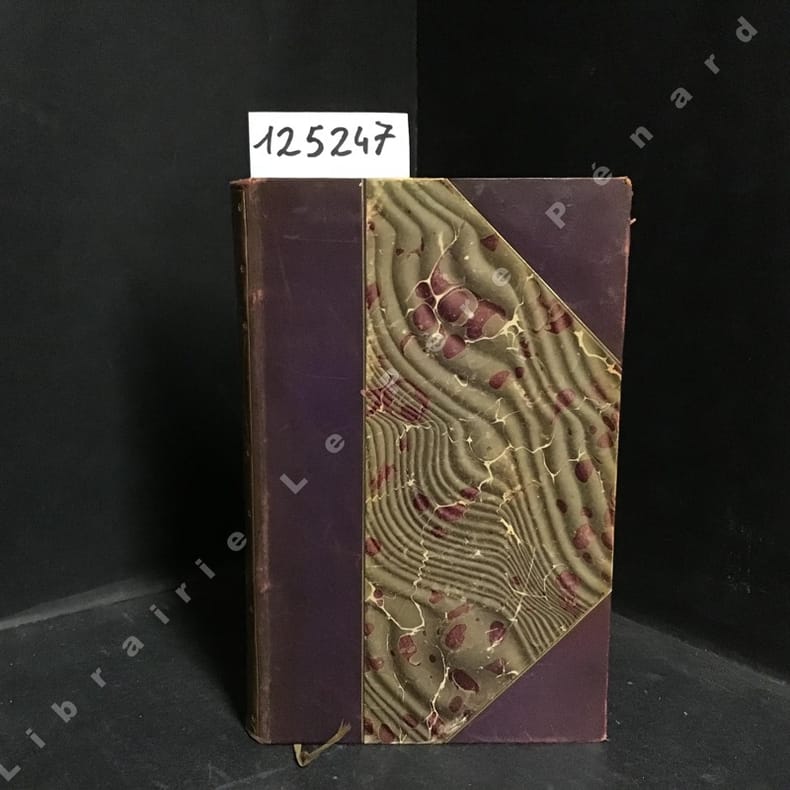
1881Best.-Nr. 1252471881 Bruxelles, Gay et Doucé - 1881 - 1 volume in-8 (13x19cm environ); demi basane à coins (couverture d'origine conservée); dos lisse; titre, auteur et décors en doré au dos; tranche de tête dorée; signet - 272 pages - Edition imprimée en tout à 500 exemplaires, celui-ci porte le numéro 268
1550In-8°; cc 24, capilettera incisi su legno; numerose note manoscritte nel testo; legatura in cartonato, tagli in azzurro. L’opera contiene riflessioni di vario genere circa i costumi, i vizi della gola e della lussuria, la pazzia, anche di Alessandro Magno, la parola di Cristo ecc. Adams M 2091