3.188 Ergebnisse
Best.-Nr. 124489aafStuttgart, Verlag v. Ferdinand Enke, 1902, gr. in-8°, XIV + 650 S., kleines Instituts-Stempel Ausgeschieden’ auf Verso-Titelbl., Original-Pappband.
1880Very Good Turkish, Ottoman (1500-1928) Original cloth bdg. Foolscap 8vo. (18 x 12 cm). In Ottoman script (Old Turkish with Arabic letters). [16], 318 p. Lithographed Edition. Early edition of this first translation of Fenelon's "Telemaque"; made by Yusuf Kamil Pasha (1808-1876), under the influence of the leading French writers and thinkers like La Fontaine, Racine, Voltaire, Montesquieu, Rousseau; which introduced early Ottoman / Turkish literature to the utopian city called "Salante" for the first time. Özege 20335.; This edition cannot be found in OCLC. (Utopias from the Middle East 2).
1967Very Good Turkish Original wrappers. 12mo. (16 x 12 cm). In Turkish. 16 p. First and only edition of this extremely rare pamphlet written by Turkish Islamist-Nationalist journalist Eygi, who criticizes the understanding of Islam in the 1960s, through the symbol of the first fictional utopian land and vision in Turkish literature called "Darürrahat" [i.e. The Door of Peace] in Ismail Gaspirinskiy (1851-1914)'s book "Darürrahat Müslümanlari" [i.e. The Muslims of Darrürrahat] published in 1887, in Kazan. Mehmed Sevket Eygi was a Turkish journalist, writer, columnist, and Holocaust denier. He had Islamist-nationalist views. After graduating from university in 1956, he worked as a translator at the Directorate of Religious Affairs for two years. Eygi began publishing the daily Bugün newspaper and its publishing house in 1966, where this book will also be published as the third book of the publishing house. While making this criticism, he used the first utopia text of Turkish literature called "Darürrahat Muslims" by Gaspirinskiy as a symbol. Ismail Gaspirinskiy (or Gaspirali) was an ideologist, author, journalist, publisher, educator, and major. Gaspirali's work called Muslims of Darurrahat (Comfortable Country) was published in 1891 after the first issuance in Tercuman Newspaper as the continuation of Letters of Frengistan. Cannot be found in any data as well as OCLC. (Utopias from the Middle East 1).
1736Cum annotationibus, & additionibus ad singulas decisiones, Partim exaratis ab ipsomet R.P.D. Ansaldo, & partim ab Andrea Lupardo J.C. ejus primo studiorum Auditore, nunc vero in Romana Curia advocato. Centuria, seu tomus secundus 1 33x22 cm., [10] cc., 634 pp., capilettera, legatura coeva in piena pergamena, dorso brunito, fregio manoscritto, tasselli rossi con titolo, autore e fregi dorati, firma d'appartenenza in calce al frontespizio, testo a due colonne, alcuni segni di tarlo, frontespizio bicromo, marca tipografica, alcune carte brunite, strappo senza mancanze all'interno delle pagg. 3-4, una carta strappata al margine esterno senza pregiudizio, in latino Secondo volume dell'opera pubblicata in 9 tomi dal 1711 al 1777. Raccoglie le decisioni della Sacra Romana Rota, raccolte e ordinate dall'autore.
1823[Manoscritto-Filosofia] (cm21x14) 1823-24, mz pergamena originale. Manoscritto cartaceo del XIX sec. in latino, di unica mano. -- cc. 40 num., cc. 120, -- cc. 60, cc. 5 nn. + 7 bianche con titolo entro cornice, in gotico e capilettere. Al fine degli argomenti semplici decorazioni. L' opera è divisa in 4 parti: logica (32 capitoli); metaphisica(12 cap. con 12 di psicologia); theologia naturalis (4 cap.); etica (8 cap.). Segue un copioso e dettagliato indice di consultazione. In fine un breve compendio della filosofia in italiano. Chiarissima grafia ed ottima conservazione. Il manoscritto fu redatto a Chiavari.[f28] Libro
161912mo (128x74 mm); leg. in piena pergamena, con titolo manoscritto al dorso, tracce di legacci tagliati, capitelli; pp. (18), 501, (30); inc. al frontespizio con marca dei Gesuiti, capilettera e finalini inc. in legno. Rarissima edizione di Sant'Omero (risultano invece più comuni le prime edizioni di Lione, apud Horatium Cardon, e di Roma, apud Iacobum Mascardum, entrambe del 1617) del testo scolastico in latino a cura del famoso storico gesuita Famiano Strada (1572-1679), meglio conosciuto per il De Bello Belgico, anche se quest'opera lo rese altrettanto popolare. Trattasi di una raccolta di conferenze, tenute al Collegium Romanum, sullo stile retorico e poetico e altri argomenti letterari. Il libro è ora ricordato per due diverse poesie neolatine in un concorso immaginario, presumibilmente sotto il patrocinio di Leone X, in cui famose figure rinascimentali appaiono in veste di poeti romani. Pietro Bembo appare come Lucrezio, e il poema datogli da Strada ha un posto minore nella preistoria delle telecomunicazioni come anticipazione del telegrafo elettrico. Baldassare Castiglione appare come Claudiano, e la sua poesia, la gara tra il musicista e l'usignolo, è diventato più famosa di qualsiasi opera di Claudiano stesso. Di quest'opera ci sono due belle, ma molto diverse, imitazioni contemporanee in lingua inglese, la prima a cura di John Ford, The Lover's Melancholy (1629), l'altra a cura di Richard Crashaw, Music's Duel. Prov.: Indicazione di appartenenza al frontespizio con nome illeggibile e data 1630. Rif.: Edizione non censita da ICCU, che invece registra l'edizione di Roma del 1617 (IT\ICCU\TO0E\001497) e quella di Lione sempre del 1617 (IT\ICCU\UBOE\005898). OCLC, 459097790. Cond.: Lieve brunitura delle pagine dovuta alla normale patina del tempo; opera in condizioni generali molto buone. -- Rare Saint-Omer edition of the Latin schoolbook, first published in 1617, by the famous Jesuit historian Famiano Strada (1572-1679), best known for De Bello Belgico (1632), even though these lectures, on style and criticism and other literary topics, at the Collegium Romanum, were also very popular. The book is now remembered for two of several neolatin poems in an imaginary pageant supposedly under the patronage of Leo X, in which notable Renaissance figures appear in the guise of Roman poets (II, 5-6). Pietro Bembo appears as Lucretius, and the poem given to him by Strada has a minor place in the prehistory of telecommunications as an anticipation of the electric telegraph (Sir Thomas Browne tried it, but found it didn't work - Pseudoxia II, 3). Baldassare Castiglione appears as Claudian, and his poem, the contest between the musician and the nightingale, became better known than anything by Claudian himself. There are two fine, but very different, contemporary imitations in English, the first by John Ford in The Lover's Melancholy (1629), the other by Richard Crashaw, as Music's Duel. Cf. Gordon, Lucretius, 303-7 (who does not know this edition). Ownership entry on title-page dated 1630. Contemp. overlapping vellum (somewhat browning). Light browning at leaves, due to usual patina of time; copy in very good condition.
1860Very Good Turkish, Ottoman (1500-1928) In contemporary cloth bdg. Marbled boards. Serlevha colored in purple in its contemporary period. Roy. 8vo. (24 x 17 cm). In Ottoman script. [6], 360 p. Nevâdir-i Süheylî: Acaibü'l-meâsir ve garaibü'n-nevâdir. It is a widely read work and is a corpus of prose stories written in the period of Murad IV. In the work, which includes 204 stories under thirty-one chapters, Süheylî added stories from his own time to the corpus generally chosen from the Turkish-Islamic history as well. The stories, almost all of which were instructive and exemplary, were selected from various books in Arabic, Persian and Turkish, and the lessons to be learned at the end of each were written separately, and the adaptation path was followed in the translated stories. Hegira: 1276 = Gregorian: 1860. TBTK 774.; Özege 32. Second Edition. Five copies in OCLC: 163633062. Tahir, Bursali Mehmed, Ahlâk kitaplarimiz (Books on ethics) 46.
Best.-Nr. 104495Paris, Jean Houzé 1597, 150x90mm, reliure parchemin de l’époque, déchirure au milieu du dos. Intérieur propre. Brunet, 1, 1037.
Best.-Nr. 117824Nice, A l’Enseigne du Chant des Sphères - Editions d’Art Sefer 1973 - 1974, 270x210mm, reliure plein chagrin avec auteur, titre et tomaison dorés au dos à quatre faux-nerfs. Ornementations à froid au dos et sur les plats avec des encadrements dorés. Tranche supérieure dorée. Garde papier velour. Mise à part dos insolé, très belle reliure sous étui marbré. Très bel exemplaire sur papier vélin de Rives filigrané Sefer avec Léopard au Parchemin, numéroté n.° 857 / 2140.
1670Best.-Nr. 33392-ya8Lugdunum Batavorum (Brittenburg) & Amstflod: Gaasbekios 1670. 359 Seiten. Pergament mit durchgezogenen Bändern und handgestochenen Kapitalbändern (der Einband nachgedunkelt, etwas bestoßen, der Buchblock zwischen dem Frontispiz und dem Titelblatt leicht angebrochen, auf dem vorderen Vorsatzblatt kleine Annotationen von alter Hand, sonst sehr gutes und sauberes Exemplar) 10 x 5,5 cm. [3 Warenabbildungen]
17332 opere in un solo volume, 16 cm, rilegatura coeva in piena pergamena rigida, titolo e fregio coevo manoscritto al dorso diviso da 4 nervi, p. (1), 94, 145, (3). Bella marca xilografica al frontespizio. Alcune testatine e capolettera xilografati a motivo allegorico. Esemplare raro e fresco.
1849Best.-Nr. 1190081849 La Guillotière, Imprimerie de J.M. Bajat - 1849 - In-8, demi basane noire; dos lisse avec filets dorés, titre, nom de l'auteur et "Commune de Lyon" en doré - 282 p.
Best.-Nr. 106663A Lyon, Chez Jean-Marie Bruyset, Librairie rue Mercière, au Soleil, 1756, 1 volume in-8 de 208x128 mm environ, 122 pages, demi basane vert olive, titres dorés sur dos lisse orné de frises dorées et fleurons à froid, tranches jaspées. Avec des figures dans le texte, certaines pleine page. Rousseurs légères, cuir et cartonnage frottés, mors internes fendus par endroits mais structure solide, page de titre restaurée, quelques notes manuscrites sur celle-ci, sinon bon état intérieur..
1938Best.-Nr. 20378Paris L'âge Nouveau 1938 In-8 Carrés 17 premiers Numeros de Janvier 38 à Juillet 39, collation sur demande,pour le N°1 De Janvier 38, la quatrième de couverture est en mauvais état les autres sont en bon état .
1804Best.-Nr. GR275OXONII, Typ. Clarendoniano, 1804. In-8o, 327 p., rel. pleine veau contemp., mors restaure, dos a nerfs orne, roulette sur les plats. Exemplaire propre avec beaucoup de commentaires.
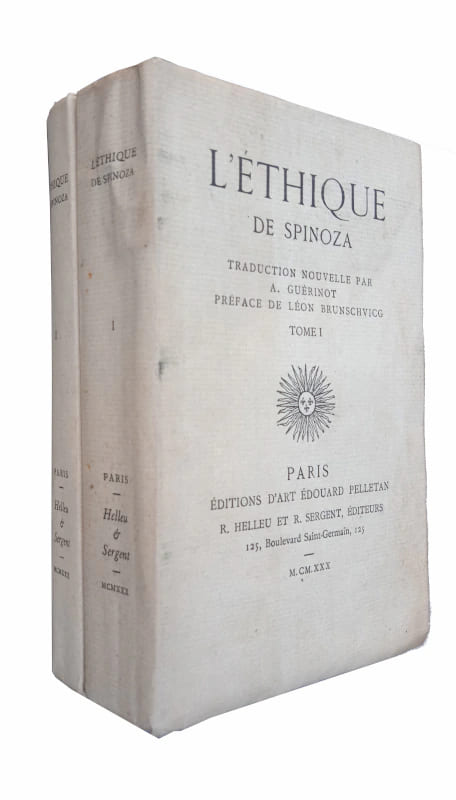
1930Best.-Nr. vd1627Editions d'art Edouard Pelletan, R. Helleu et R. Sergent, éditeurs 125 Boulevard Saint-Germain, 125 Broché 1930 "Rare édition, recherchée, tirage unique à 1285 exemplaires, ici un des 965 exemplaires du tirage ""courant"" 2 volumes in-16 (environ 16 x 10,5 cm), couverture à rabats. Tome I : frontispice (portrait de Spinoza), XXXII & 447 pages, Tome II frontispice (autre portrait gravé de Spinoza) pagination continue de la page 450 à la page 732. Préface de Léon Brunschvicg. Traduction nouvelle par A; Guérinot. Edition originale de cette traduction ; bel état. Livraison a domicile (La Poste) ou en Mondial Relay sur simple demande."
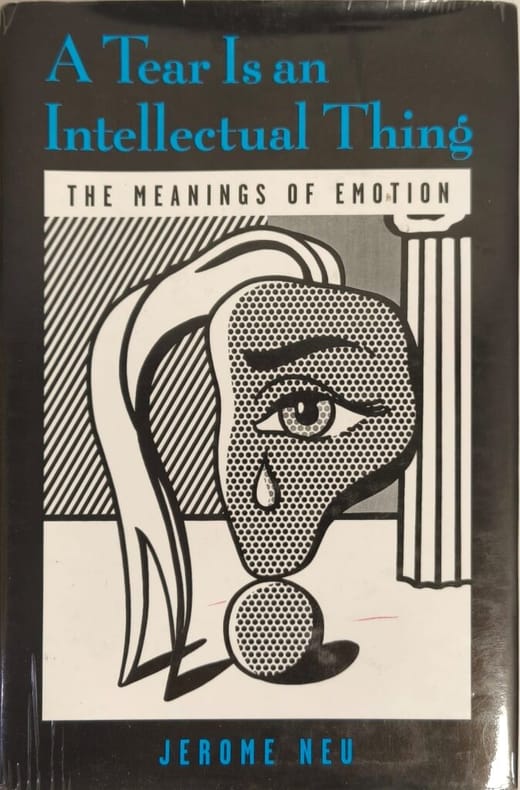
2000Best.-Nr. 5530Oxford University Press 2000 352 pages 16 21x2 77x23 52cm. 2000. Relié. 352 pages. Cet ouvrage de Jerome Neu explore la nature complexe des émotions à travers une approche interdisciplinaire mêlant philosophie et psychanalyse. Il examine des questions telles que la perversion du désir sexuel l'inceste la fierté dans les politiques identitaires et la relation entre compréhension émotionnelle et liberté s'inspirant de l'espoir spinoziste que comprendre nos vies peut nous rendre plus libres
1782Dedicato a Monsignor Stefano Giustiniani Vescovo d'Albenga 2 26x20.5 cm., [VIII], 412 ; 375 pp., marca tipografica al frontespizio, testatine incise, legatura in mezza pergamena, titolo manoscritto al dorso, prima edizione, firme di appartenenza, in italiano
1821Prefazione del traduttore (S.M.) - Introduzione - celebre trattato sulle passioni umane 4 22x14 cm., in brossura originale con cornice e titoli a stampa, pp. XV (1), 237; 241; XXXI Prefazione (1), 398; XLVIII Prefazione, 493 non refilate, su carta forte bianca, prima edizione italiana, buone condizioni. RARO
1877Complet en 5 tomes: xvi,336 + xvi,340 + 362 + xv,432 + xi,416 pp., br.orig., 23cm., qqs.rousseurs, non coupé
1877Best.-Nr. R54031Paris/ Bruxelles, Palmé/ Lebrocquy-Albanel 1877-1881 Complet en 5 tomes: xvi,336 + xvi,340 + 362 + xv,432 + xi,416 pp., br.orig., 23cm., qqs.rousseurs, non coupé
Chez Depelafol, Paris. 1822. In-12 Carré. Broché. Etat d'usage. Couv. légèrement passée. Dos abîmé. Intérieur acceptable. 401 pages pour le tome I, 344 pages pour le tome II, et 376 pages pour le tome III. Illustrés de gravures en noir et blanc en frontispices. Annotations d'époque sur les premiers plats. Légères mouillures. A relier. Nouvelle édition. Par M. Blanchard, Chan. d'Avenay. Orné de figures en taille-douce, gravées avec soin.
1822Best.-Nr. RO40116626Chez Depelafol, Paris. 1822. In-12. Broché. Etat d'usage, Couv. légèrement passée, Dos abîmé, Intérieur acceptable. 401 pages pour le tome I, 344 pages pour le tome II, et 376 pages pour le tome III. Illustrés de gravures en noir et blanc en frontispices. Annotations d'époque sur les premiers plats. Légères mouillures. A relier.. . . . Classification Dewey : 170-Ethique
Best.-Nr. 56017aafStockholm, Haeggström, 1858, in-8vo, gest. Front.-Portr. (Swedenborg) + XII (recte II) + 276 S. Besitzvermerk a.V., Hldr., Rücken mit goldgepr. Titel und Vergoldung, etwas berieben, Ecken leicht bestossen.
Best.-Nr. 16502La Haye, chez Pierre Paupie, 1740. 2 vol. in-12, XVI-479 + 476[4] pp., veau marbré brun de l'époque, filets dorés en encadrement sur les plats, au centre le nom d'Elie Puisié entouré d'une couronne d'or, dos à nerfs orné de caissons et de fleurons dorés, pièce de titre rouge, pièce de tomaison rouge, tranches rouges (frottements, mors fendus, quelques petites rousseurs, manque le portrait de l'auteur).