1978Best.-Nr. 11174Greenleaf Classics Adonis Classic 1978. 1st. paperback. Very good book is unread but with some page tanning. Vintage gay pulp paperback novel. Greenleaf Classics, Adonis Classic paperback
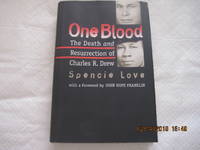
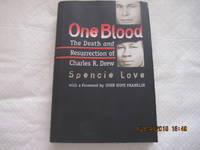
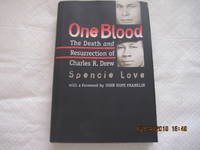
1996Best.-Nr. #2229-22019One Blood traces both the life of the famous black surgeon and blood plasma pioneer Dr. Charles Drew and the well-known legend about his death. On April 1 1950 Drew died after an auto accident in rural North Carolina. Within hours rumors spread: the man who helped create the first American Red Cross blood bank had bled to death because a whites-only hospital refused to treat him. Drew was in fact treated in the emergency room of the small segregated Alamance General Hospital. Two white surgeons worked hard to save him but he died after about an hour. In her compelling chronicle of Drew's life and death Spencie Love shows that in a generic sense the Drew legend is true: throughout the segregated era African Americans were turned away at hospital doors either because the hospitals were whites-only or because the 'black beds' were full. Love describes the fate of a young black World War II veteran who died after being turned away from Duke Hospital following an auto accident that occurred in the same year and the same county as Drew's. African Americans are shown to have figuratively 'bled to death' at white hands from the time they were first brought to this country as slaves. By preserving their own stories Love says they have proven the enduring value of oral history. Insurance & handling is included free. Extra Charges/Fees apply on Shipments Outside The U.S. and Expedited Shipments. Oversize and/or heavy books may require additional fees. Will advise Updated 2.23.2025 Biblio #2229-22019 University of North Carolina Press hardcover
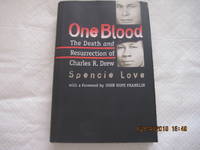
1996Best.-Nr. #2230-22019One Blood traces both the life of the famous black surgeon and blood plasma pioneer Dr. Charles Drew and the well-known legend about his death. On April 1 1950 Drew died after an auto accident in rural North Carolina. Within hours rumors spread: the man who helped create the first American Red Cross blood bank had bled to death because a whites-only hospital refused to treat him. Drew was in fact treated in the emergency room of the small segregated Alamance General Hospital. Two white surgeons worked hard to save him but he died after about an hour. In her compelling chronicle of Drew's life and death Spencie Love shows that in a generic sense the Drew legend is true: throughout the segregated era African Americans were turned away at hospital doors either because the hospitals were whites-only or because the 'black beds' were full. Love describes the fate of a young black World War II veteran who died after being turned away from Duke Hospital following an auto accident that occurred in the same year and the same county as Drew's. African Americans are shown to have figuratively 'bled to death' at white hands from the time they were first brought to this country as slaves. By preserving their own stories Love says they have proven the enduring value of oral history. General Interest/Race Relations. Insurance & handling is included free. Extra Charges/Fees apply on Shipments Outside The U.S. and Expedited Shipments. Oversize and/or heavy books may require additional fees. Will advise Updated 2.23.2025 Biblio #2230-22019 University of North Carolina Press hardcover
1996Best.-Nr. #2231-22019One tiny chip on edge. One Blood traces both the life of the famous black surgeon and blood plasma pioneer Dr. Charles Drew and the well-known legend about his death. On April 1 1950 Drew died after an auto accident in rural North Carolina. Within hours rumors spread: the man who helped create the first American Red Cross blood bank had bled to death because a whites-only hospital refused to treat him. Drew was in fact treated in the emergency room of the small segregated Alamance General Hospital. Two white surgeons worked hard to save him but he died after about an hour. In her compelling chronicle of Drew's life and death Spencie Love shows that in a generic sense the Drew legend is true: throughout the segregated era African Americans were turned away at hospital doors either because the hospitals were whites-only or because the 'black beds' were full. Love describes the fate of a young black World War II veteran who died after being turned away from Duke Hospital following an auto accident that occurred in the same year and the same county as Drew's. African Americans are shown to have figuratively 'bled to death' at white hands from the time they were first brought to this country as slaves. By preserving their own stories Love says they have proven the enduring value of oral history. General Interest/Race Relations. Insurance & handling is included free. Extra Charges/Fees apply on Shipments Outside The U.S. and Expedited Shipments. Oversize and/or heavy books may require additional fees. Will advise Updated 2.25.2025 #2231-22019 Biblio 9.16.2020 4 copies University of North Carolina Press hardcover
1996Best.-Nr. #2232-22019One Blood traces both the life of the famous black surgeon and blood plasma pioneer Dr. Charles Drew and the well-known legend about his death. On April 1 1950 Drew died after an auto accident in rural North Carolina. Within hours rumors spread: the man who helped create the first American Red Cross blood bank had bled to death because a whites-only hospital refused to treat him. Drew was in fact treated in the emergency room of the small segregated Alamance General Hospital. Two white surgeons worked hard to save him but he died after about an hour. In her compelling chronicle of Drew's life and death Spencie Love shows that in a generic sense the Drew legend is true: throughout the segregated era African Americans were turned away at hospital doors either because the hospitals were whites-only or because the 'black beds' were full. Love describes the fate of a young black World War II veteran who died after being turned away from Duke Hospital following an auto accident that occurred in the same year and the same county as Drew's. African Americans are shown to have figuratively 'bled to death' at white hands from the time they were first brought to this country as slaves. By preserving their own stories Love says they have proven the enduring value of oral history. General Interest/Race Relations Insurance & handling is included free. Extra Charges/Fees apply on Shipments Outside The U.S. and Expedited Shipments. Oversize and/or heavy books may require additional fees. Will advise Updated 2.23.2025 Biblio #2232-22019 Biblio 9.16.2020 4 copies University of North Carolina Press hardcover
1989Best.-Nr. 43429Chicago: Haase-Mumm Publishing 1989. First edition. 279 pp w/index. Corners lightly tapped else very near fine in full blue cloth. Lacks dust jacket. Pasted inside the front cover is a label designating “This copy is no. 323 of the first edition.” Chicago: Haase-Mumm Publishing hardcover
2006Best.-Nr. 18532new oversize hc expedited & international shipping not available--FEMINISTS University of Illinois Press hardcover
1917Best.-Nr. 7682nd edition with a prologue by D. P. Isaac Rovira. Hardcover in half-leather. Well preserved. 345 p. No erasures. Pages slightly yellowed due to the action of time. Size: 15x22cm. Full title: "Problema de la pena de muerte y de sus sustitutivos legales. sustitutivo para la represión del anarquismo" Hijos de Reus hardcover
1989Best.-Nr. mon0003830846Haase-Mumm Pub Co 1989T. hardcover. Very Good. 1.6000 11.2000 8.4000. First Edition Signed and Dated by the author.rnrn Haase-Mumm Pub Co hardcover
1936Best.-Nr. 28655Chicago: Reilly and Lee Co 1936. HBDJ 1936 red illustrated cloth Hardcover black Titles. Condition: GOOD. Dust Jacket Condition: GOOD. Cloth. Good Plus/Good Plus. 8vo . Interior browned ink name on endpaper.Nice period dustwrapper is a bit sunned and has some minor soiling and wear to margins .225 pages ADS IN BACK. Hardcover. Good/Good. Chicago: Reilly and Lee Co hardcover
1921Best.-Nr. 019259Washington: Government Printing Office 1921. Hardcover. Good/No Jacket. 4to - over 9¾ - 12" tall. Red Boards with spine darkened so title is worn. Front hinge shownig at Page "Letter of Transmission."third page. Pen mark in margin page 67 Government Printing Office hardcover
2022Best.-Nr. AME_9781009294416Cambridge University Press 2022. 1ST. Hardcover. New/New. _ Cambridge University Press hardcover
2020Best.-Nr. AME_9781108830041Cambridge 2020. 1st. Hardcover. New/New. _ Cambridge hardcover
Best.-Nr. SKU0650806Viking 2016-09-06. hardcover. New. 6x1x9. New Textbook Ships with Tracking Viking hardcover
Best.-Nr. 188059952X.Gpaperback. Good. Access codes and supplements are not guaranteed with used items. May be an ex-library book. paperback
Best.-Nr. 0898988373.Gpaperback. Good. Access codes and supplements are not guaranteed with used items. May be an ex-library book. paperback
Best.-Nr. 538776-nnew. unknown
1990Best.-Nr. Q-0905483847Whittet 1990-01-01. Hardcover. New. In shrink wrap. Looks like an interesting title! Whittet hardcover
1998Best.-Nr. Q-0760303703Motorbooks 1998-12-13. Paperback. New. New. In shrink wrap. Looks like an interesting title! Motorbooks paperback
Best.-Nr. 1949042022.Ghardcover. Good. Access codes and supplements are not guaranteed with used items. May be an ex-library book. hardcover
1998Best.-Nr. Q-1884836380University of Akron Press 1998-11-01. Paperback. New. New. In shrink wrap. Looks like an interesting title! University of Akron Press paperback
Best.-Nr. 0030013283.Ghardcover. Good. Access codes and supplements are not guaranteed with used items. May be an ex-library book. hardcover
Best.-Nr. 21159814like new. unknown
Best.-Nr. 41498779like new. unknown
1996Best.-Nr. SKU0566785Waveland Pr Inc 1996-06-30. paperback. Good. 8x0x11. Textbook May Have Highlights Notes and/or Underlining BOOK ONLY-NO ACCESS CODE NO CD Ships with Tracking Waveland Pr Inc paperback