1981réf. 2110502150413738Shueisha 1981. Soft Cover. Fine. Volume: 1 Shueisha paperback
1950réf. 85339Francis Day 1950 approx.
1957réf. 111490Warner Chappell 1957
2013réf. Q-0878083383William Carey Library 2013-06-20. Paperback. New. In shrink wrap. Looks like an interesting title! William Carey Library paperback
réf. DADAX1462865666New unknown
1995réf. 2090502113704830Not Available 1995. Soft Cover. Fine. The book is in fine condition. Not Available paperback
réf. 131452237X.Gpaperback. Good. Access codes and supplements are not guaranteed with used items. May be an ex-library book. paperback
1993réf. 2111902153100907Kyuryudo 1993. Soft Cover. Fine. Volume: 1 Kyuryudo paperback
1831réf. 65276London: T. Hookham 1831. Small 8vo. viii 300 pp. Bound in blue paper boards with white paper spine. Boards are marked with rubbing to the extremities and some loss. Binding firm with some scattered spotting. The author Thomas Love Peacock was a great friend and contemporary to the romantic poet Percy Bysshe Shelley and was best know for his satiric novels. . Good. Paper Covered Boards. First Edition. 1831. T. Hookham 1831 hardcover
réf. 27544P., Editions du Feu Nouveau (numéro spécial 1945 de l'Anneau d'Or), 1947, grand in 8° broché, 213pp. ; non coupé ; couverture faéne, petite déchirure sans manque en tête du dos.
1883réf. 1919A Bruxelles, Chez Henry Kistemaeckers, 1883. In-8 de [2]-236 pages, demi-maroquin rouge à coins orné d’un double filet doré, dos à nerfs, tête dorée.
1861réf. C106223London: Parker Son And Bourn 1861. First Edition. Hardback. Hardcover Hardcover. Very Good. First Edition. Hardback. 8vo. pp viii 315 1st Edition. Rebound in half dark green leather marbled boards and matching endpapers lettered gilt at the spine with 4 raised band and gilt patterning. Light rubbing endpapers a little foxed otherwise very good. Top edge gilt. .Peacock's final novel originally serialised in 'Fraser's Magazine' in 1860.Amusing and urbane novel beginning at an eccentrically attended house party at Gryll Grange. Parker, Son, And Bourn, hardcover
1933réf. 27821933 une revue, brochée crème in-octavo, Monogramme ex-libris manuscrit en rouge : G C de Georges Courville célèbre Libraire Balzacien de la rue bonaparte sur la couverture au recto, de la page 721 à la page 960 + table du cinquième volume + 8 pages de publicité, 1933 Paris Editeur Imprimerie Brodard et Taupin,
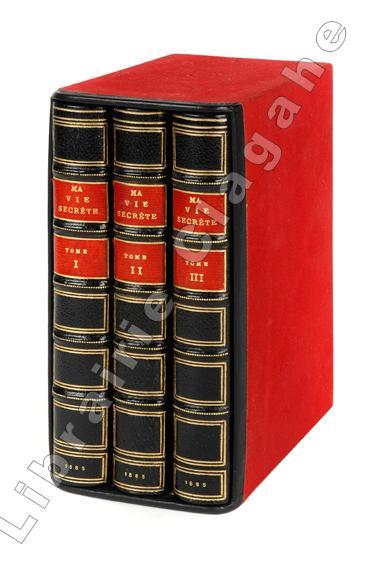
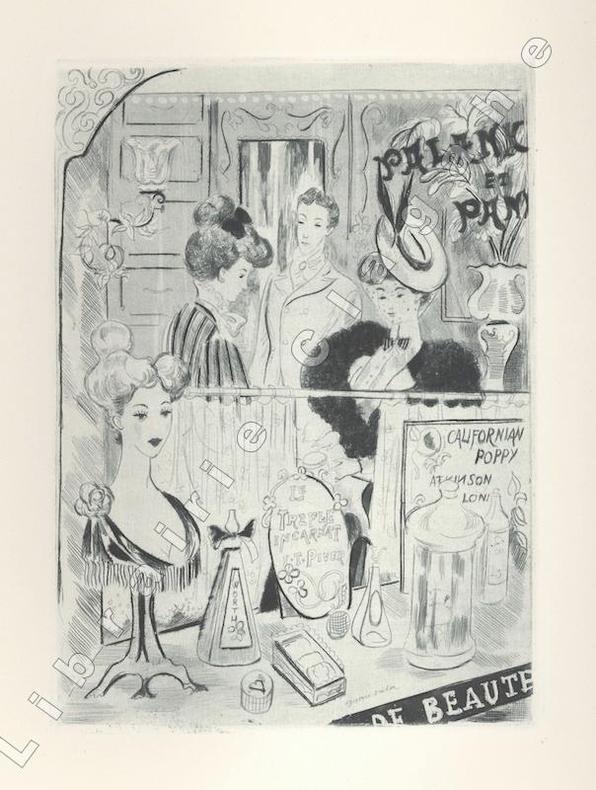
1885réf. 19897Londres (Paris), s.n. (Marcel Seheur), 1885 (1932) ; 3 tomes, petit in 8 carré, plein chagrin noir, dos à nerfs soulignés d’un pointillé doré et double cadre doré sur les caissons, double pièce rouge de titre et tomaison, double encadrement des plats, tête dorée, contreplats et gardes en suédine rouge, couverture rose illustrée et dos conservés, non rogné, étui de suédine rouge bordé de box noir (reliure de l’époque) ; 138, [6] pp. bl. ; [4] bl., pp. 153-272 ; [4] bl., pp. 281-403, [3], [2] ff. bl. avec bien entendu les faux-titres, titres et frontispices à chaque volume ; 26 lithographies libres hors-texte, aquarellées au pochoir et au pinceau, très nombreux dessins, en-têtes et culs-de-lampes libres tirés en bistre, dessin répété aux trois couvertures tiré en bistre, par le peintre Berthommé-Saint-André.
1943réf. 138724Perth: British and Foreign Bible Society 1943. Hardcover. Very Good. Perth British and Foreign Bible Society 1943 revised edition/ 1930. Octavo 64 pages. Flush-cut blind-stamped limp blue cloth lettered in blind 'Mark' on the front cover; all edges dyed red; minimal loss to silverfish to the leading edges of the first and last leaves both blanks; an excellent copy. James Robert Beattie Love 1889-1947 clergyman and missionary was Superintendent of the Presbyterian mission at Kunmunya north of Derby from 1927 to 1940. British and Foreign Bible Society hardcover
1932réf. 19788Paris, aux dépens de la Société des Bibliophiles du Papier, 1932 (Imprimerie Stelmans) ; in 8, vélin ivoire, titre imprimé sur le premier plat, tête dorée, garde de papier marbré à tourbillons, façon XVIIe (reliure non signée mais très probablement de Canape et Corriez) ; [1]f. bl., [8], 125, [1] pp., [1] f. bl., frontispice gravé par Omer Bouchery et bandeaux dessinés par J. Bruna, étui.
réf. 201110721Paris, Flammarion, 1999 ; in-4, 167 pp., cartonnage de l'éditeur. Avec jaquette.
réf. 20A Paris. Chez Louis Janet, libraire. Sans date [vers 1820]. In-24 de (1) f., 16, (24), 17 à 32 pp., 8 planches hors texte : maroquin rouge à grain long, dos richement orné, roulette et filet dorés sur les plats, coupes et tranches dorées. Etui de papier maroquiné à l’identique.
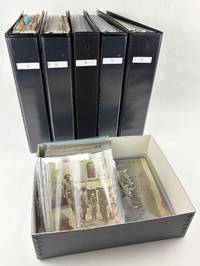
1910réf. 6245Various locations 1910. Very good. Approximately 150 letters totaling around 600pp. With approximately 250 photographs. Several letters with envelopes stamps clipped. Old folds some light wear and soiling. An extensive archive of letters and photographs belonging to an American diplomat in Morocco and Ethiopia. Guy Robert Love 1876-1913 was a dentist in Coshocton Ohio when he sought adventure in 1907 -- opening up a dentistry practice in Tangier Morocco. In June 1908 he was appointed Vice Consul in the United States diplomatic corps and then took the same post at Addis Ababa in Abyssinia now Ethiopia during the last years of the venerable Emperor Menelik II. Although the United States had previously appointed African-American consuls such as Frederick Douglass Love was not Black. His letters here are primarily written to his mother along with several other family members and most are several pages long. The bulk of the correspondence was sent from Abyssinia and is on American Legation letterhead. The correspondence begins on October 7 1907 with Love's arrival at Gibraltar and he then sends his first letter from Tangier on October 30 1907. On December 27 1907 he explains his market niche: "There are a couple of Spanish dentists here who work very cheap. They get the cheap class as my prices are way over their heads. I get the rich Moors and foreign ministers and members of the diplomatic corps." In quick order he was able to meet Kaïd Sir Harry Maclean a famed Scottish instructor to the Moroccan army March 2 1908 and on June 20 1908 he reports "I had a new job last Monday and Tuesday. Was appointed clerk of the U.S. Consulate Court here." By November 28 1908 he was considering following the consul to a new position in Abyssinia. He discusses the consul Hoffman Philip on January 5 1909: "We are to be I think the only Americans in Addis Ababa. He was one of Theodore Roosevelt's Rough Riders in the Cuban campaign and has been here as consul general ever since." Philip's connections proved handy as they made the long journey from Morocco through the Mediterranean -- en route to Ethiopia Love crossed paths with ex-president Theodore Roosevelt who was on his way to beginning the Smithsonian-Roosevelt African expedition. A postscript of April 9th encloses a faded snapshot of him with Roosevelt on deck and another of "Kermit Roosevelt & the naturalists going ashore at Ismailia halfway through canal. They shot birds & joined boat at Suez." Another photograph shows Theodore and Kermit Roosevelt with Love aboard a launch boat per the caption. They parted ways on April 17th in Aden Arabia: "Everyone was at the rail to get a look at Mr. Roosevelt. They had a big teddy bear on a platform just under the bridge and all cheered when we passed as Mr. R was enjoying it as much as anyone. Mr. Rosevelt bid me good bye and wished me all the success in the world and asked me to express his gratitude to Emperor Menelik for his kindness." Love's first letter from Ethiopia was May 2 1909 at Dire Dawa between Djibouti and Addis Ababa where he remained for several weeks waiting for Mr. Philip and trying to secure transportation to the capital. He arrived in Addis Ababa on June 19th and a fragment of a letter from July 6th describes his first encounter with the Emperor: "We were notified that Menelik would be pleased to receive us at the Guebbi palace on Tuesday the 6th." With perhaps 10000 in attendance "all standing except his majesty who was propped up on cushions on his throne. It was a very formal affair but he is a good sort but is certainly not going to last many moons. His voice is very weak and he was breathing quite heavy." Love attended a banquet on the anniversary of Menelik's coronation on September 30 1909: "The two court fools made fools of themselves during the feast and a man was brought in for our benefit as a curiosity who sat on the floor in front of the king and eat over half a bullock raw. I don't blame you for not believing this." The Ethiopian staple injera is described: "Native bread was also served in huge quantities and is like an enormous pancake." He accompanied Philip for a personal audience with the Emperor and Empress on October 15th. Their interpreter "is usually a very proud old man and is highly respected by all the natives but they are all held in such subjection by the Emperor that they are scared to death in his presence." The letters are full of good local color. On October 28 1909 Love explains mail delays: "It was supposed that the couriers had been murdered in the Dankali country as the couriers of July 9 had been as the natives there have been looting caravans and amusing themselves general at someone else's expense and inconvenience but the couriers turned up last night and said the delay was caused by the mules dying on the way and as there are no animals in that part of the country except camels and they are owned by hostile tribes it was a difficult matter to get mules." On November 5 1909 he reports: "The Emperor had a third stroke last Thursday and is not expected to live but a few days. The crown prince Lij Iyasu has been publicly proclaimed successor and for the past week the government affairs have been practically in his hands." The Emperor lived four more years until December 1913 longer than Consul Love did. He died suddenly several months earlier only in his mid-thirties. The regular correspondence comes to an end on December 31 1910 although Love remained in Addis Ababa for more than two years after that. Only two later letters are present dated March 1911 and August 1912. The collection also includes a large collection of photographs taken by Love in North Africa and Abyssinia. Most are about 3½ x 5½ inches plus one larger cabinet card of Love and two views of Love's 1913 funeral procession. A fabulous record of American diplomacy in Eastern Africa during the early-20th century. unknown
1910réf. 6245Various locations 1910. Very good. Approximately 150 letters totaling around 600pp. With approximately 250 photographs. Several letters with envelopes stamps clipped. Old folds some light wear and soiling. An extensive archive of letters and photographs belonging to an American diplomat in Morocco and Ethiopia. Guy Robert Love 1876-1913 was a dentist in Coshocton Ohio when he sought adventure in 1907 -- opening up a dentistry practice in Tangier Morocco. In June 1908 he was appointed Vice Consul in the United States diplomatic corps and then took the same post at Addis Ababa in Abyssinia now Ethiopia during the last years of the venerable Emperor Menelik II. Although the United States had previously appointed African-American consuls such as Frederick Douglass Love was not Black. His letters here are primarily written to his mother along with several other family members and most are several pages long. The bulk of the correspondence was sent from Abyssinia and is on American Legation letterhead. The correspondence begins on October 7 1907 with Love's arrival at Gibraltar and he then sends his first letter from Tangier on October 30 1907. On December 27 1907 he explains his market niche: "There are a couple of Spanish dentists here who work very cheap. They get the cheap class as my prices are way over their heads. I get the rich Moors and foreign ministers and members of the diplomatic corps." In quick order he was able to meet Kaïd Sir Harry Maclean a famed Scottish instructor to the Moroccan army March 2 1908 and on June 20 1908 he reports "I had a new job last Monday and Tuesday. Was appointed clerk of the U.S. Consulate Court here." By November 28 1908 he was considering following the consul to a new position in Abyssinia. He discusses the consul Hoffman Philip on January 5 1909: "We are to be I think the only Americans in Addis Ababa. He was one of Theodore Roosevelt's Rough Riders in the Cuban campaign and has been here as consul general ever since." Philip's connections proved handy as they made the long journey from Morocco through the Mediterranean -- en route to Ethiopia Love crossed paths with ex-president Theodore Roosevelt who was on his way to beginning the Smithsonian-Roosevelt African expedition. A postscript of April 9th encloses a faded snapshot of him with Roosevelt on deck and another of "Kermit Roosevelt & the naturalists going ashore at Ismailia halfway through canal. They shot birds & joined boat at Suez." Another photograph shows Theodore and Kermit Roosevelt with Love aboard a launch boat per the caption. They parted ways on April 17th in Aden Arabia: "Everyone was at the rail to get a look at Mr. Roosevelt. They had a big teddy bear on a platform just under the bridge and all cheered when we passed as Mr. R was enjoying it as much as anyone. Mr. Rosevelt bid me good bye and wished me all the success in the world and asked me to express his gratitude to Emperor Menelik for his kindness." Love's first letter from Ethiopia was May 2 1909 at Dire Dawa between Djibouti and Addis Ababa where he remained for several weeks waiting for Mr. Philip and trying to secure transportation to the capital. He arrived in Addis Ababa on June 19th and a fragment of a letter from July 6th describes his first encounter with the Emperor: "We were notified that Menelik would be pleased to receive us at the Guebbi palace on Tuesday the 6th." With perhaps 10000 in attendance "all standing except his majesty who was propped up on cushions on his throne. It was a very formal affair but he is a good sort but is certainly not going to last many moons. His voice is very weak and he was breathing quite heavy." Love attended a banquet on the anniversary of Menelik's coronation on September 30 1909: "The two court fools made fools of themselves during the feast and a man was brought in for our benefit as a curiosity who sat on the floor in front of the king and eat over half a bullock raw. I don't blame you for not believing this." The Ethiopian staple injera is described: "Native bread was also served in huge quantities and is like an enormous pancake." He accompanied Philip for a personal audience with the Emperor and Empress on October 15th. Their interpreter "is usually a very proud old man and is highly respected by all the natives but they are all held in such subjection by the Emperor that they are scared to death in his presence." The letters are full of good local color. On October 28 1909 Love explains mail delays: "It was supposed that the couriers had been murdered in the Dankali country as the couriers of July 9 had been as the natives there have been looting caravans and amusing themselves general at someone else's expense and inconvenience but the couriers turned up last night and said the delay was caused by the mules dying on the way and as there are no animals in that part of the country except camels and they are owned by hostile tribes it was a difficult matter to get mules." On November 5 1909 he reports: "The Emperor had a third stroke last Thursday and is not expected to live but a few days. The crown prince Lij Iyasu has been publicly proclaimed successor and for the past week the government affairs have been practically in his hands." The Emperor lived four more years until December 1913 longer than Consul Love did. He died suddenly several months earlier only in his mid-thirties. The regular correspondence comes to an end on December 31 1910 although Love remained in Addis Ababa for more than two years after that. Only two later letters are present dated March 1911 and August 1912. The collection also includes a large collection of photographs taken by Love in North Africa and Abyssinia. Most are about 3½ x 5½ inches plus one larger cabinet card of Love and two views of Love's 1913 funeral procession. A fabulous record of American diplomacy in Eastern Africa during the early-20th century. unknown books
1947réf. 20378Paris, Emile-Paul Frères (imprimerie de Daragnès), 1947 ; petit in-4° en feuilles sous couverture crème illustrée, chemise-étui de l'éditeur ; 266, [6] pp. et [2] ff. blancs et en tout, 32 eaux-fortes et aquatintes y compris celle de la couverture, dont 16 hors-texte.
réf. 15484Bernard Quartich 11 Grafton Street New Bond Street London. Printed by Taylor and Francis Red Lion Court London 1911. 3pp. 8vo. Bifolium. On aged card with wear to extremities. The text attributed to Wallis by the British Library catalogue is on the verso of the first leaf; and facing this behind a tissue guard is the print. Wallis discusses the 'feeble' nature of the 'various engaged portraits of Shelley' and explains Peacock's reservations in endorsing Lasinio's engraving of Leisman's painting. Uncommon: five copies on COPAC the British Library entry attributing the publication to Henry Wallis. Image on application. Bernard Quartich, 11 Grafton Street, New Bond Street, London. Printed by Taylor and Francis, Red Lion Court, London, 1911. unknown
1975réf. LFA-126722765Revue de 128 pages, format 155 x 240 mm, illustrée, brochée couverture couleurs, publiée en 1975, bon état
1777réf. 110809A Genève, [Cazin] Sans ed. 1777 Deux tomes en un. In-18 reliure d’attente, titre et tomaison manuscrits au dos lisse.. 13 cm sur 7,4. Frontispice- XIV-178-1f.-frontispice-194 pages -1f. Les deux frontipices sont les portraits des amants gravés sur cuivre et signés Boily. Bandeaux et culs-de-lampe. Reliure quelque peu patinée avec menus frottement et rousseurs. Petite auréole d’humidité sans atteinte au texte sur huit derniers feuillets. Infime manque sur feuillet blanc in fine. Intérieur assez frais. Bon état d’occasion.
1923réf. 9621923 Paris, Images de Paris, 1923. 21,5 x 14 cm, non paginé (12 ff. n. ch.), 2 gravures sur bois originales à pleine page, ill. en noir dans le texte, agrafé.